

📊 Full opportunity report: Nine AI Trends That Will Define 2026 on ThorstenMeyerAI.com — validation score, market gap, and execution plan.

Get the latest gadgets delivered free with Prime
- Fast, free delivery on millions of items
- Prime Video, Amazon Music and more included
- Member-only deals all year
TL;DR
This article outlines nine AI trends projected to dominate 2026, including advancements in generative models, AI regulation, and edge computing. While some developments are confirmed, others remain speculative, making this a crucial read for understanding future AI landscapes.
Experts agree that nine major AI trends will define 2026, including breakthroughs in generative AI, increased regulation, and expanded edge computing capabilities. These developments are shaping the future landscape of artificial intelligence, with significant implications for industries, policymakers, and consumers.
Industry forecasts and expert opinions indicate that by 2026, AI will see marked advancements in generative models, with companies like OpenAI and Google leading innovations in natural language processing and image generation. Regulatory frameworks are also expected to tighten globally, aiming to address ethical concerns and prevent misuse, as detailed in industry trends reports, though specific policies are still under discussion.
Edge AI will become more prevalent, enabling real-time processing on devices without relying on cloud infrastructure, which enhances privacy and reduces latency. Additionally, AI’s integration into IoT devices will expand, creating smarter environments in homes, factories, and cities.
While these trends are supported by current technological trajectories and expert forecasts, some claims about the pace of regulation and the extent of AI adoption remain speculative. For more insights, see the original analysis. It is not yet clear how quickly regulatory policies will be enacted or how broadly AI will be integrated into daily life by 2026.
The 9 picks
- 1
 Bambu Lab P1S Combo 3D Printer with Auto Bed Leveling and Multi-Color PrintingView on Amazon →
 - 2
 Creality K2 Combo 3D Printer with Multicolor Printing, Auto Leveling, and Sma…View on Amazon →
 - 3
 FlashForge Adventurer 5M Pro 3D Printer with Auto Printing System, 600mm/s Hi…View on Amazon →
 - 4
 Anycubic Kobra X Multicolor 3D Printer with 19-Color Capability and AI Monito…View on Amazon →
 - 5
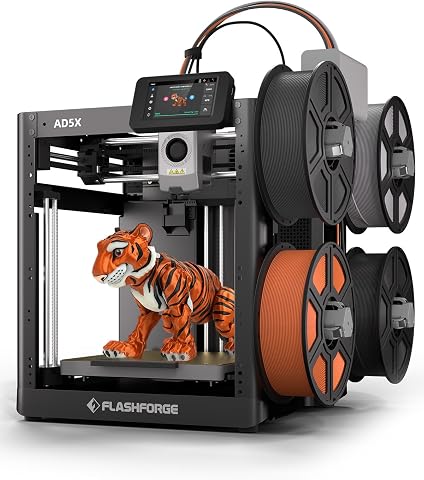 FLASHFORGE AD5X Multi-Color 3D Printer, CoreXY, 600mm/s High-Speed, Auto Leve…View on Amazon →
 - 6
 Bambu Lab A1 Mini 3D Printer + LED Lamp Kit, Beginner-Friendly, Quiet OperationView on Amazon →
 - 7
 FlashForge Adventurer 5M 3D Printer with Auto Leveling and High-Speed PrintingView on Amazon →
 - 8
 Creality Ender 3 V3 SE 3D Printer, 250mm/s Faster Print Speed, CR Touch Auto…View on Amazon →
 - 9
 3D Printer with Auto Leveling, 280°C Direct Extruder, CoreXY Metal Structure,…View on Amazon →
Implications of Major AI Trends for Stakeholders
The predicted AI trends for 2026 matter because they will influence regulatory policies, technological innovation, and societal norms. Businesses that adapt early to generative AI and edge computing can gain competitive advantages, while policymakers face the challenge of establishing effective regulations to ensure ethical use and safety. For consumers, these developments could mean more personalized services, smarter devices, and new privacy considerations.
Current State and Forecasts of AI Development
Over the past few years, AI has rapidly advanced, driven by improvements in deep learning, increased data availability, and hardware capabilities. Generative AI models like GPT-4 have demonstrated unprecedented language understanding, prompting industry forecasts of continued growth and innovation through 2026. Governments and organizations worldwide are beginning to draft regulations addressing AI safety, bias, and misuse, although comprehensive policies are still under development.
Edge AI and IoT integration are also accelerating, with companies deploying AI-enabled devices in various sectors. Experts predict that by 2026, these technologies will become more ubiquitous, transforming daily life and industrial processes alike.
“Regulation will be a defining factor in AI development, with governments worldwide working to establish frameworks that balance innovation and safety.”
— John Lee, Tech Policy Expert
Uncertainties Surrounding AI Adoption and Regulation
While forecasts are optimistic, it remains unclear how quickly regulatory policies will be enacted and enforced globally. The pace of technological breakthroughs in generative AI and edge computing could also accelerate or slow down, depending on unforeseen technical challenges or societal responses. Moreover, the actual impact of AI on employment, privacy, and security continues to be debated, with many aspects still evolving.
Next Steps for Stakeholders and Policymakers
Industry leaders are expected to continue refining AI models and expanding their capabilities, while regulators work to establish frameworks that promote safe innovation. Monitoring these developments over the coming months will be crucial to understanding how AI trends unfold in 2026. Stakeholders should prepare for increased collaboration between industry and government to address emerging challenges and opportunities.
Key Questions
What are the most certain AI trends expected in 2026?
Experts agree that advancements in generative AI, edge computing, and AI regulation are most likely to materialize, shaping the technological landscape of 2026.
How might AI regulation impact innovation in 2026?
Regulation could both slow and guide innovation, ensuring safety and ethics while potentially limiting certain types of development. The exact impact depends on how quickly and effectively policies are implemented.
Will AI become more integrated into daily life by 2026?
Based on current trends, AI is expected to be more embedded in smart devices, homes, and workplaces, making AI-driven services more commonplace.
What uncertainties could affect these AI trends?
Key uncertainties include the pace of regulatory policy development, breakthroughs in AI technology, and societal acceptance of widespread AI deployment.
How should businesses prepare for these AI trends?
Businesses should invest in AI research, stay informed about regulatory changes, and develop ethical frameworks to ensure responsible deployment of AI technologies.
Source: ThorstenMeyerAI.com
Halloween Picks
halloween
As an affiliate, we earn on qualifying purchases.