
📊 Full opportunity report: Discover The Benefits Of AI-Driven Studio Condenser Microphones In 2026 on ThorstenMeyerAI.com — validation score, market gap, and execution plan.
TL;DR
In 2026, AI-driven studio condenser microphones are emerging as a game-changer for audio professionals. They offer enhanced sound quality, adaptive features, and improved usability, impacting both amateur and professional recording setups.
In 2026, the integration of artificial intelligence into studio condenser microphones is becoming a defining trend, with several manufacturers launching models that leverage AI for enhanced performance. These innovations are discussed in the original analysis. These new microphones aim to deliver superior sound quality, adaptive noise reduction, and intelligent features that simplify recording workflows, making them highly relevant for both professional studios and home setups.
Leading audio brands such as RØDE, Audio-Technica, and Shure have announced or launched AI-enabled condenser microphones in 2026. For more details on top models, see the best studio condenser microphones. These models utilize AI algorithms to dynamically adjust parameters like gain, polar pattern, and noise suppression in real time, based on the recording environment and source. For example, the RØDE NT1 Signature Series now includes an AI-driven noise reduction feature that automatically minimizes background hiss without sacrificing audio fidelity, a claim supported by the company’s spokesperson.
Industry experts emphasize that these AI features are designed to improve sound clarity, especially in less controlled environments, and to streamline setup processes. Learn more about how AI is shaping audio technology in this detailed report. Additionally, AI integration allows microphones to learn and adapt to user preferences over time, offering a personalized recording experience. However, it is important to note that the core hardware—such as capsule quality and build—remains consistent with traditional high-end models.
How AI Microphones Impact Recording Quality and Workflow
The adoption of AI-driven microphones in 2026 marks a significant shift in audio recording, providing users with tools that enhance sound quality and ease of use. For professional studios, these microphones reduce post-processing time and improve consistency, especially when capturing vocals and instruments in variable environments. For hobbyists and content creators, AI features simplify setup and improve results without requiring extensive technical knowledge. This development could democratize high-quality recording, making professional-grade audio accessible to a broader audience.
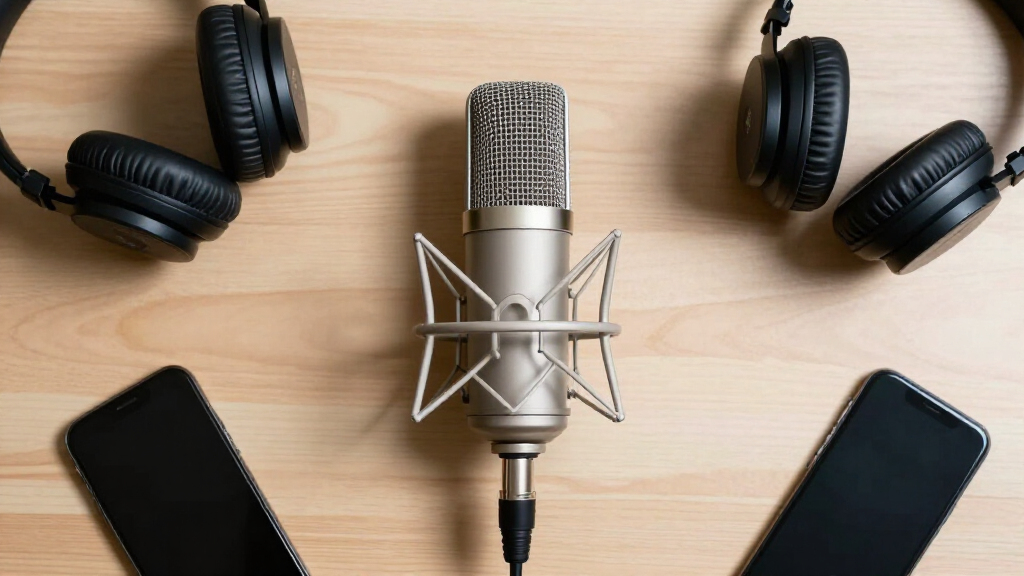
AI-driven studio condenser microphone
As an affiliate, we earn on qualifying purchases.
As an affiliate, we earn on qualifying purchases.
Evolution of Studio Microphones and AI Integration
Traditional studio condenser microphones have long been valued for their sound quality and reliability. Over recent years, advancements in digital signal processing and machine learning have paved the way for AI integration in audio equipment. In 2024, rumors and early prototypes hinted at AI-powered microphones, but 2026 sees these models becoming commercially available. This follows a broader industry trend towards smarter, more adaptable audio gear that can automatically optimize performance based on recording conditions.
Previous models relied heavily on manual adjustments and static settings, which could be challenging for less experienced users. The new AI-enabled microphones aim to address this gap by offering intelligent, automatic adjustments that improve performance in real time, aligning with the increasing demand for user-friendly yet high-quality audio solutions.
“Our new NT1 Signature Series incorporates AI-driven noise reduction that adapts to the environment, ensuring pristine sound quality even in challenging settings.”
— RØDE spokesperson
best AI-enabled condenser microphone 2026
As an affiliate, we earn on qualifying purchases.
As an affiliate, we earn on qualifying purchases.
Limitations and Challenges of AI Microphone Adoption
While AI-driven microphones show promise, questions remain regarding their performance across various environments and complex acoustic settings. Concerns about data privacy, firmware stability, and the long-term reliability of AI algorithms are ongoing. Experts advise that AI features may sometimes produce inconsistent results or require user oversight, particularly in professional contexts.
professional AI microphone for vocals
As an affiliate, we earn on qualifying purchases.
As an affiliate, we earn on qualifying purchases.
Upcoming Releases and Industry Adoption Trends in 2026
Manufacturers are expected to enhance AI functionalities in upcoming models, with increased integration into digital audio workstations. Industry projections suggest that AI-enabled microphones will become standard in higher-end and mid-range products by the end of 2026, driven by consumer interest in smarter recording solutions. Firmware updates and software improvements are likely to further refine AI capabilities over time.
Recording professionals should stay informed about these developments, as early adoption could provide advantages in sound quality and workflow efficiency.
home studio AI condenser microphone
As an affiliate, we earn on qualifying purchases.
As an affiliate, we earn on qualifying purchases.
Key Questions
Are AI-driven microphones suitable for professional studio use?
Many AI-enabled microphones are designed to meet professional standards, offering features like adaptive noise reduction and real-time parameter adjustments that benefit high-quality studio recordings. Effectiveness depends on the specific model and application.
Do AI features make microphones more complicated to operate?
AI integration generally aims to simplify operation by automating adjustments, making microphones more accessible for users with varying experience levels. Advanced users can often customize AI settings to suit their preferences.
Will AI microphones replace traditional models?
While AI-driven microphones are increasingly popular, traditional models remain relevant, especially for users who prefer manual control or work in environments where AI features may be less effective. AI is likely to complement rather than replace existing technology.
What are the main benefits of AI in studio microphones?
Benefits include enhanced sound clarity, adaptive noise suppression, easier setup, and personalized recording experiences. These features can help achieve professional results with less technical effort.
Source: ThorstenMeyerAI.com