TL;DR

Get the latest gadgets delivered free with Prime
- Fast, free delivery on millions of items
- Prime Video, Amazon Music and more included
- Member-only deals all year
Thorsten Meyer AI’s 2026 comparison identifies eight condenser microphones suited to recording workflows that may include AI software. The RØDE NT1 Signature Series leads the overall recommendations, while questions remain about testing methods, prices and the meaning of “AI-compatible.”
Thorsten Meyer AI has identified eight studio condenser microphones for recording workflows that may incorporate AI tools, naming the RØDE NT1 Signature Series as its leading overall choice for low self-noise and a warm sound. The comparison matters to musicians, podcasters and creators choosing hardware for AI-assisted editing, cleanup or production, although the source does not report a standardized testing process.
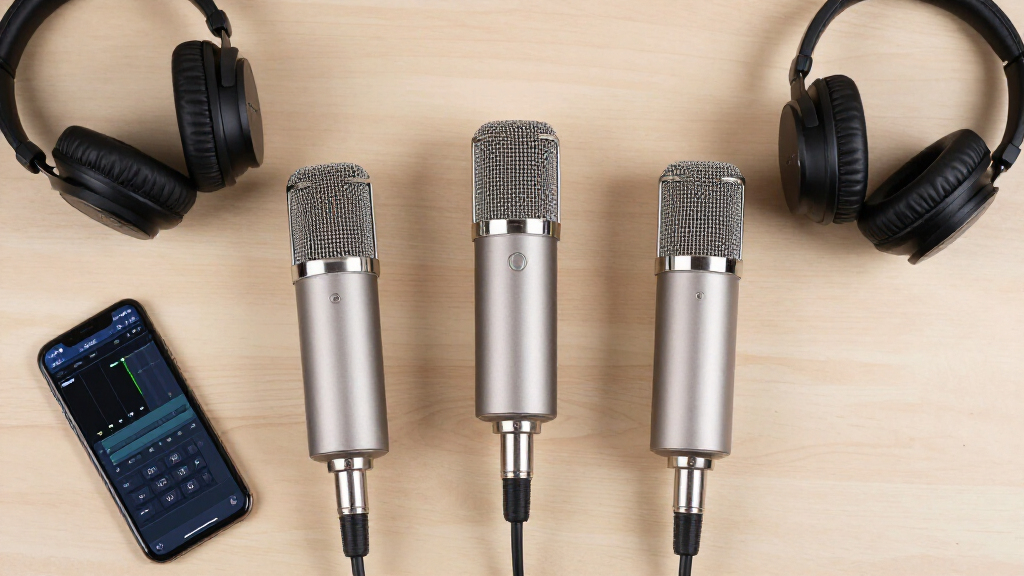
The eight selections are the AKG P120, MAONO A04 Gen2, Audio-Technica AT2035, an unidentified XLR condenser microphone kit, Audio-Technica AT2020, RØDE NT1 Signature Series, Shure SM4 and Mackie EM-91C. Seven named brands or product categories are represented, spanning budget home-studio equipment, dual-connection creator kits and conventional professional XLR microphones.
The comparison describes the RØDE NT1 Signature Series as the strongest overall option for professional voice and music recording. It has a one-inch large-diaphragm cardioid capsule and comes with a shock mount, pop filter and XLR cable. The source favors it for its stated low self-noise, smooth response and warm sound, but provides no measurements or direct recordings supporting the ranking.
The Audio-Technica AT2035 is presented as a mid-range studio choice with a shock mount, high-pass filter and switchable pad. The Shure SM4, rated for a maximum sound-pressure level of 140 dB in the source material, is recommended for vocal clarity and durability. The lower-cost selections include the Audio-Technica AT2020 and Mackie EM-91C, while the MAONO A04 Gen2 adds USB and XLR connectivity for creators moving between computer-based and interface-based setups.
The Future of Audio: 8 AI-Compatible Studio Condenser Microphones
Eight microphones for recording workflows that may include AI cleanup, transcription, voice processing or production. The RØDE NT1 Signature Series leads the source comparison—but “AI-compatible” describes a workflow, not built-in intelligence.
Eight models, three broad use cases
The recommendations span professional studio work, budget home recording, and creator-focused podcasting or streaming setups. Rankings below reflect the supplied source’s positioning.
RØDE NT1 Signature Series
Low-noise large-diaphragm model presented as the strongest professional voice and music choice.
XLR · Shock mount · Pop filter · CableAudio-Technica AT2035
Flexible studio option with tools for handling room rumble and louder sources.
XLR · High-pass filter · Switchable padShure SM4
Recommended for vocal clarity, robust construction and demanding sound-pressure levels.
XLR · Cardioid · 140 dB max SPL citedAKG P120
All-purpose option for vocals and louder instruments, with a broad stated bandwidth.
20 Hz–20 kHz · 150 dB SPL · −20 dB padMAONO A04 Gen2
The only named selection offering direct USB convenience alongside upgrade-friendly XLR.
USB + XLR · 192 kHz/24-bit · 30 Hz–16 kHzAudio-Technica AT2020
A familiar entry point for lower-cost home studios using an interface-based setup.
XLR · Cardioid · Phantom powerMackie EM-91C
Budget-oriented cardioid condenser supplied with practical recording accessories.
XLR · Shock mount · Cable includedUnidentified XLR Kit
A condenser microphone with desktop stand, but no manufacturer or exact model is supplied.
XLR · Desktop stand · Verify before purchaseAI begins after the microphone captures sound
No built-in AI system is identified in these microphones. Compatibility means their audio can reach software that performs cleanup, separation, transcription or generative processing.
Voice, instrument or ambient audio enters the recording chain.
The capsule captures detail, room tone and unwanted noise alike.
The signal reaches a computer directly or through an XLR interface.
Software may denoise, transcribe, separate speakers or alter voices.
Cleaner source audio generally requires less aggressive correction.
Low self-noise
Reduces microphone-generated hiss before software processing begins.
Suitable polar pattern
Helps control room reflections and off-axis sound at capture time.
Clean gain staging
Interfaces, phantom power and preamp settings remain part of the result.
Connection, positioning and practical fit
USB favors immediate computer access. XLR adds interface requirements but supports modular upgrades and greater control over the recording chain.
| Model | USB | XLR | Primary fit | Notable inclusion | Verification flag |
|---|---|---|---|---|---|
| RØDE NT1 Signature | ✗ No | ✓ Yes | Pro voice + music | Mount, filter, cable | ~ Ranking unmeasured |
| Audio-Technica AT2035 | ✗ No | ✓ Yes | Mid-range studio | Pad + high-pass filter | ~ Price absent |
| Shure SM4 | ✗ No | ✓ Yes | Vocals + durability | 140 dB max SPL cited | ~ Samples absent |
| AKG P120 | ✗ No | ✓ Yes | Loud sources + vocals | −20 dB pad | ~ Interface required |
| MAONO A04 Gen2 | ✓ Yes | ✓ Yes | Creators + streaming | Dual connection | ~ XLR cable absent |
| Audio-Technica AT2020 | ✗ No | ✓ Yes | Budget home studio | Established format | ~ Current price needed |
| Mackie EM-91C | ✗ No | ✓ Yes | Budget recording | Mount + XLR cable | ~ Availability needed |
| Unidentified XLR kit | ✗ No | ✓ Yes | Desktop starter use | Desktop stand | ✗ Model unknown |
Useful shortlist, incomplete verification
Claims about warmth, clarity and sound quality should be read as source evaluations—not independently verified results.
No controlled protocol
Room conditions, preamp settings, microphone placement and scoring formula are undisclosed.
No matched recordings
Direct audio samples are not provided to support relative sound-quality claims.
“AI-compatible” undefined
The phrase appears to describe workflow compatibility rather than certification or built-in AI.
Purchase data missing
Current prices, warranties, regional availability and some package details require confirmation.
Capture quality still sets the ceiling for AI audio.
The source winner: RØDE NT1 Signature Series for professional voice and music recording.
The flexible connector: MAONO A04 Gen2 for users moving between USB and XLR setups.
Before buying: verify model revision, current price, package contents, phantom-power needs and independent noise measurements.
AI Workflows Still Depend on Hardware
AI recording software can remove noise, separate speakers, generate transcripts or alter voices, but its results still begin with the quality of the captured signal. A microphone with low self-noise and suitable sensitivity can give processing software cleaner source audio, reducing the amount of correction required later. The comparison’s focus on noise floors, polar patterns and connection types reflects that relationship between recording hardware and software.
The list also highlights a practical split between USB convenience and XLR flexibility. USB microphones can connect directly to computers running AI applications, while XLR models generally require an audio interface and phantom power. The latter arrangement can support equipment upgrades and more control, but it raises cost and setup demands for new users.
Products Worth Considering

LG UltraGear 27-Inch QHD OLED Gaming Monitor, 240Hz, 0.03ms, G-SYNC Compatible, FreeSync Premium Pro, HDMI 2.1

Amazon Kindle Paperwhite Signature Edition (12th Generation, 2024), 32 GB, Metallic Black

LG UltraGear 32GX850A-B 32-Inch 4K UHD Glossy OLED Gaming Monitor
As an affiliate, we earn on qualifying purchases.
Eight Models Across Three Use Cases
The recommendations cover three broad recording needs: professional studio work, home recording and podcasting or streaming. The AKG P120 is positioned as a durable all-purpose model, with a cardioid pattern, 20 Hz–20 kHz bandwidth, 150 dB maximum sound-pressure level and a minus-20 dB pad. Thorsten Meyer AI says that combination suits loud instruments and vocals, although the microphone lacks USB connectivity and requires phantom power.
The MAONO A04 Gen2 is the only named model in the supplied material offering both USB and XLR connections. Its listed specifications include 192 kHz/24-bit recording and a 30 Hz–16 kHz frequency response. Accessories may reduce the cost of assembling a starter system, though the source says an XLR cable is absent and phantom power is needed when the microphone is used in XLR mode.
The report’s broader guidance favors low self-noise, high sensitivity and a polar pattern suited to the room and source. It also says higher-priced microphones tend to offer lower noise and stronger construction, while acknowledging that some budget products can still provide usable results.
“This microphone is well-suited for users who need a robust, versatile condenser for both studio and live scenarios without extra features they won’t use.”
— Thorsten Meyer AI’s verdict on the AKG P120
Testing Gaps Limit Direct Comparisons
The source material does not disclose controlled listening tests, identical preamp settings, room conditions, reviewer identities or a scoring formula. It is also unclear whether all eight products were tested directly or compared from published specifications. Claims about warmth, clarity and sound quality should consequently be read as the source’s evaluations, not independently verified findings.
“AI-compatible” is not defined as a technical certification in the supplied material. Most microphones can feed AI software through USB or an audio interface, so the label appears to describe workflow compatibility rather than a dedicated AI feature. One selection is identified only as an XLR condenser microphone with a desktop stand, leaving its manufacturer and exact model unknown. Current prices, warranty terms and regional availability are also absent.
Buyers Await Tests and Current Pricing
Readers comparing these models will need to check current prices, package contents and interface requirements before buying. Independent noise measurements and matched audio samples would help establish whether the RØDE NT1 ranking holds across vocals, instruments, untreated rooms and AI-assisted post-production. Product revisions and software support may also change during 2026, making model numbers and connection requirements worth verifying at purchase.
Key Questions
Which microphone ranks first in the comparison?
The RØDE NT1 Signature Series is presented as the leading overall choice for professional voice and music recording, based on its low-noise design, warm sound and included accessories.
Do these microphones contain built-in AI?
The supplied material identifies no built-in AI system in the microphones. They are compatible with workflows in which recorded audio is sent to AI-enabled editing or production software.
Which option supports both USB and XLR?
The MAONO A04 Gen2 supports USB and XLR connections. The source lists 192 kHz/24-bit recording, but says XLR operation requires phantom power.
Which models target lower-cost home studios?
The Audio-Technica AT2020 and Mackie EM-91C are positioned as budget-oriented choices. Both are cardioid condenser microphones, and the Mackie package includes a shock mount and XLR cable.
Can the rankings be independently verified?
Not from the supplied material alone. It provides product specifications and verdicts but no test protocol, recordings or complete scoring data, leaving direct performance comparisons unverified.
Source: Thorsten Meyer AI