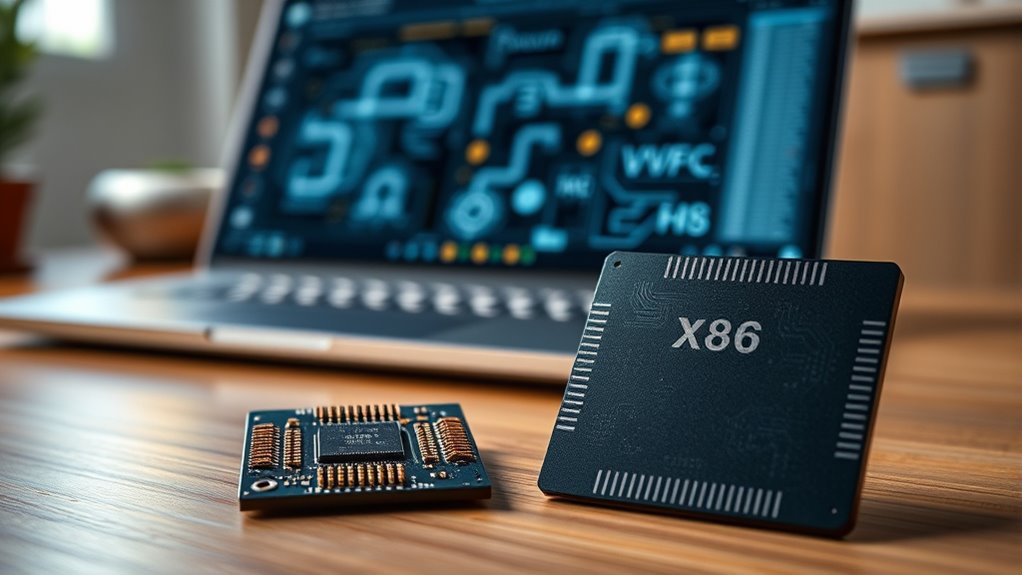

Choosing between ARM and x86 processors affects your laptop’s performance, power usage, and software compatibility. ARM chips are more energy-efficient, run cooler, and extend battery life, making them ideal for portability. x86 processors offer higher performance and better support for legacy software, but they often consume more power. To understand how these differences impact your device’s efficiency and future trends, keep exploring what the architecture options can do for you.

Get the latest gadgets delivered free with Prime
- Fast, free delivery on millions of items
- Prime Video, Amazon Music and more included
- Member-only deals all year
Key Takeaways
- ARM processors prioritize power efficiency and thermal management, leading to longer battery life and lighter, portable devices.
- x86 chips offer higher performance and broad software compatibility, ideal for demanding applications and legacy systems.
- Architecture choice impacts device design, with ARM enabling slimmer, cooler laptops, while x86 requires robust thermal solutions.
- The growing ecosystem of ARM software support is expanding, influencing future device capabilities and sustainability.
- Both architectures are evolving to balance performance, energy efficiency, and environmental impact, shaping future laptops.
Products Worth Considering

Bose QuietComfort Headphones (2nd Gen), Wireless Noise-Cancelling Over-Ear Headphones, Eucalyptus Green

Jackery Explorer 2000 v2 Portable Power Station with Two 200W Solar Panels

Amazon Kindle Paperwhite (12th Generation, 2024), 16 GB, 7-inch Display, Jade
As an affiliate, we earn on qualifying purchases.
Understanding the Architectures: ARM vs. X86
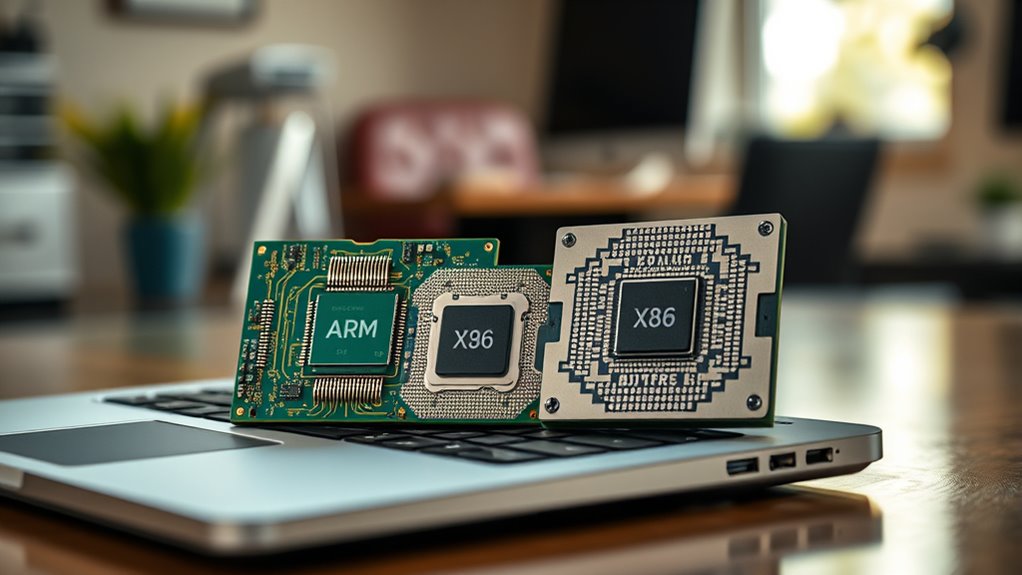
To understand the differences between ARM and x86 architectures, it’s essential to recognize their fundamental design goals. ARM chips prioritize simplicity and power efficiency, which influences their chip manufacturing and results in smaller, less complex processors. They use a reduced instruction set computing (RISC) approach, meaning their instruction sets are streamlined, with fewer instructions that execute quickly. This design contributes to their power efficiency and makes them suitable for mobile devices. Conversely, x86 chips focus on performance and backward compatibility. They utilize a complex instruction set computing (CISC) design, featuring extensive instruction sets that handle more complex operations. This difference in instruction sets affects how each architecture is built and optimized. ARM’s design allows for lower power consumption, making it ideal for mobile devices, while x86’s complexity supports high-performance computing in desktops and servers. Innovative European Cloud Servers are designed to leverage these architectures for sustainable and secure cloud solutions. Additionally, the instruction set architecture influences the software compatibility and overall system performance of a device. Furthermore, understanding these differences helps in making informed technology decisions for various applications.
Performance and Power Efficiency Considerations

When comparing ARM and x86 processors, performance and power efficiency are key factors that often influence your choice. ARM chips typically excel in power efficiency due to their simpler architecture and advanced manufacturing processes, which reduce thermal output and improve thermal management. This efficiency allows ARM-based devices to run cooler and extend battery life. Additionally, manufacturing processes play a fundamental role: smaller process nodes enable better power efficiency and performance in both architectures. Manufacturing advancements also contribute to device longevity, ensuring that devices can maintain optimal performance over time. The availability of optimized software and applications can further impact the overall performance experience of these chips. On the other hand, x86 processors generally deliver higher performance, especially for demanding tasks, but they tend to generate more heat, requiring more robust thermal management solutions. Furthermore, software compatibility remains a critical consideration, as many legacy applications are optimized for x86 architectures. Ultimately, your decision depends on whether you prioritize longer battery life and cooler operation or raw computing power.
Software Compatibility and Ecosystem Support

While ARM processors excel in power efficiency, their software ecosystem isn’t as extensive as that of x86 platforms. x86 processors, backed by decades of development, support a broad range of operating systems, applications, and developer tools, making them ideal for tasks requiring broad compatibility. This mature software ecosystem guarantees that most legacy and specialized software runs smoothly, reducing compatibility issues. Developers have access to a wide array of tools and resources tailored for x86 architectures, simplifying software creation and optimization. Conversely, ARM’s ecosystem is growing but still lags behind in support for certain professional and legacy applications. If your work depends on specific software or extensive ecosystem support, x86 remains the more reliable choice for compatibility and seamless performance. Additionally, understanding credit card security measures is essential for safeguarding your data in digital transactions. Recognizing software ecosystem maturity can help you make informed decisions about hardware investments. Furthermore, the software compatibility landscape is continuously evolving, with ongoing efforts to enhance ARM’s support for diverse applications. Being aware of software adoption trends can help anticipate future compatibility improvements and opportunities.
Impact on Battery Life and Portability
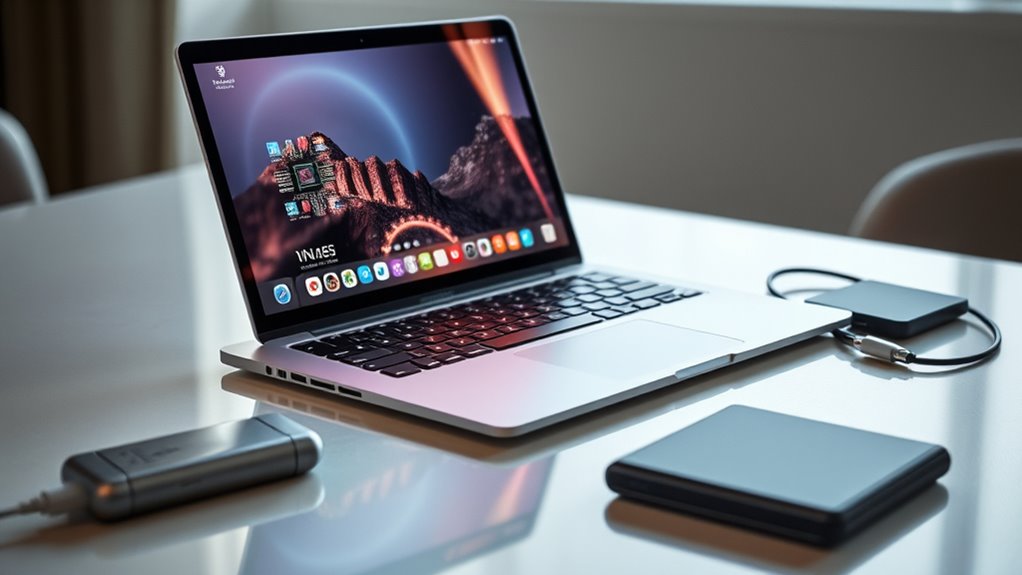
ARM processors substantially enhance battery life and portability because their design emphasizes energy efficiency. This focus on battery optimization means your device consumes less power, allowing longer use on a single charge. As a result, laptops equipped with ARM chips are lighter and more portable, making them ideal for on-the-go use. The reduced power draw also means less heat generation, which can lead to slimmer device profiles. These portability advantages are especially noticeable in ultrabooks and tablets, where maintaining a sleek design is essential. With improved battery life, you won’t need to carry charging cables everywhere, giving you greater freedom and convenience. Additionally, the power efficiency of ARM processors contributes to less heat output, which helps in designing thinner, more comfortable devices. This increased efficiency also supports sustainable technology by reducing energy consumption and environmental impact. The energy-efficient architecture of ARM chips is a key factor in their growing popularity for mobile and portable devices. Furthermore, advancements in thermal management enable these processors to operate effectively even in compact form factors. Moreover, the flexibility in design of ARM processors allows manufacturers to create more innovative and versatile devices that cater to diverse user needs. Overall, ARM processors help you enjoy longer-lasting devices that are easier to carry and use throughout your busy day.
Future Trends and What to Expect
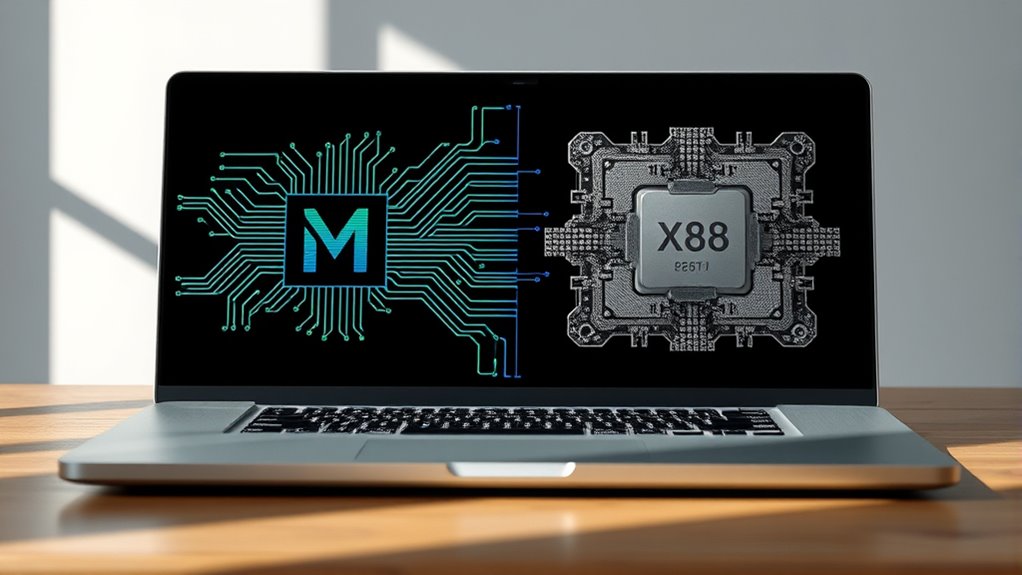
Looking ahead, the evolution of ARM and x86 processors will considerably shape the future of computing devices. As chip innovation accelerates, we expect to see more powerful, energy-efficient designs that cater to diverse needs, from ultra-portables to high-performance workstations. ARM’s growing market adoption suggests it will become more prevalent in laptops and servers, challenging traditional x86 dominance. Meanwhile, x86 processors will continue to refine performance and compatibility, maintaining their presence in mainstream PCs. Future trends point toward hybrid architectures that combine the best of both worlds, enabling greater versatility and efficiency. As these trends unfold, your choices will be influenced by how these advancements impact device performance, battery life, and software compatibility, making understanding these developments increasingly important. Additionally, the art of crafting with eco-friendly materials is increasingly integrated into technology products, promoting sustainability alongside innovation. Recognizing the importance of chip architecture in shaping device capabilities can help consumers make more informed decisions as the landscape evolves. Moreover, developments in manufacturing processes will further enhance chip efficiency and sustainability, impacting both performance and environmental footprint.
Frequently Asked Questions
How Do ARM and X86 Processors Compare in Cost?
In regard to cost comparison, ARM processors tend to be more affordable than x86 chips, especially for mobile devices and budget-friendly laptops. You’ll find ARM-based devices often have a lower price tag because of their design and manufacturing efficiencies. An affordability analysis shows that if you’re on a tight budget, ARM options might be better, while x86 processors usually cost more but offer greater compatibility and performance for demanding tasks.
Can ARM Chips Run High-End Gaming Applications Effectively?
Don’t judge a book by its cover; ARM chips can handle high-end gaming, but with caveats. While they excel in mobile gaming and offer impressive graphics performance, they often fall short on the most demanding AAA titles compared to x86 processors. ARM chips are improving rapidly, making them suitable for casual gaming and lighter workloads, but for top-tier gaming experiences, x86 remains the better choice.
What Security Features Differentiate ARM From X86 Architectures?
You’ll find that ARM processors prioritize security with features like secure boot, which verifies your system’s integrity during startup, and hardware encryption, protecting your data at a hardware level. In contrast, x86 chips often rely on software-based security measures. These hardware security features in ARM chips help prevent malware and unauthorized access, giving you a more secure computing environment right out of the box.
Are There Environmental Impacts Associated With Manufacturing Each Architecture?
You might not realize it, but the environmental impacts of manufacturing ARM and x86 chips are significant. ARM processors tend to have a smaller carbon footprint due to their focus on sustainable manufacturing and lower energy consumption. Recyclability concerns are also better addressed with ARM chips because of their simpler design. X86 manufacturing, however, often involves more resource-intensive processes, leading to greater environmental strain overall.
How Quickly Are Software Developers Adopting Arm-Based Platforms?
You’ll find that the developer shift to ARM-based platforms is accelerating, driven by energy efficiency and performance gains. As more developers adopt ARM, they focus on software optimization to guarantee applications run smoothly. This change means you’ll see better app performance on ARM devices over time, with increased compatibility and innovation. The growing adoption reflects a broader industry move towards ARM, making your experience more seamless and future-proof.
Conclusion
Choosing between ARM and x86 is like picking the right vehicle for your journey—you want one that’s reliable and suits your needs. ARM’s efficiency is like a sleek electric car, perfect for long drives without draining your battery. Meanwhile, x86 offers the horsepower for heavy-duty tasks, akin to a sturdy truck. Your choice shapes your tech experience, so consider where you’re headed and what matters most—power, portability, or future-proofing.