
TL;DR

Get the latest gadgets delivered free with Prime
- Fast, free delivery on millions of items
- Prime Video, Amazon Music and more included
- Member-only deals all year
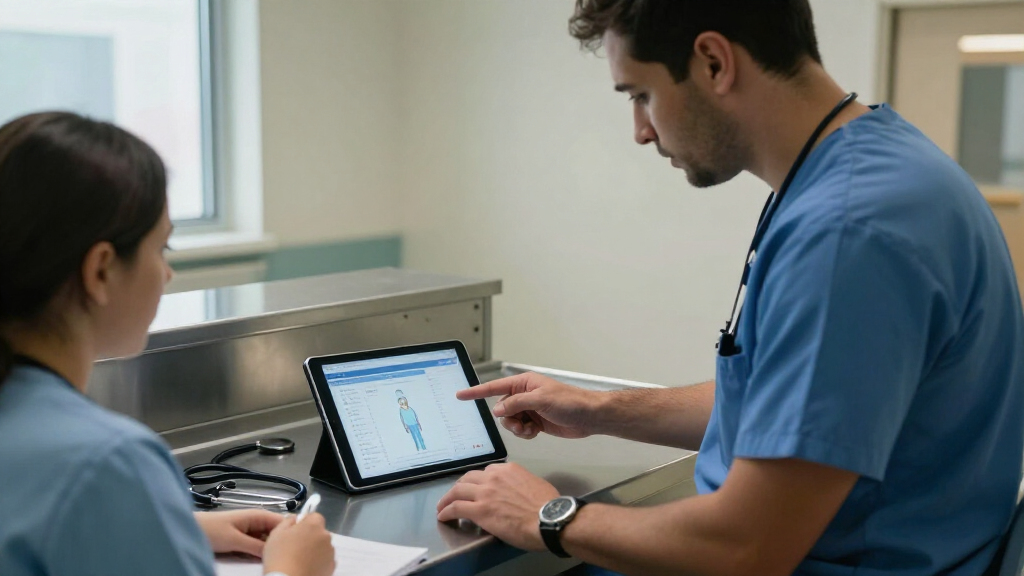
Google announced a self-paced certificate designed to teach healthcare professionals practical uses of AI, with lessons focused on non-clinical work and responsible use. The company says the four-course program takes less than five hours and may qualify learners for up to 5.0 AMA PRA Category 1 Credits™.
Google announced the Google AI for Healthcare Professionals Certificate on Oct. 29, a self-paced training program intended to help healthcare workers use AI for non-clinical tasks such as scheduling, preparing patient-friendly materials and reviewing lengthy emails. The company says the four-course program takes less than five hours and places safety, privacy and professional judgment at the center; its practical effect on workloads and patient care has not been established in the announcement.
The certificate was developed by clinicians at Google with experience in internal medicine, pediatrics, critical care, emergency medicine and public health. Google says the curriculum was reviewed by academic and professional organizations and drew on draft Association of American Medical Colleges (AAMC) competencies for artificial intelligence in medical education. The company says those draft competencies were still under development when the course was initially designed.
The program comprises four courses. According to Google, they cover foundational AI use and evaluating outputs; communicating complex medical information in accessible formats; streamlining administrative work, including scheduling and email review; and using AI to support continuing education, such as summarizing research and preparing presentations. The company also says learners can use natural-language instructions to create simple tools without coding.
Google says the certificate may earn learners up to 5.0 AMA PRA Category 1 Credits™. It reports that NYU Grossman School of Medicine, the University of Alabama at Birmingham and Touro University are offering the training to faculty, residents or medical students. Purdue University School of Nursing is among the nursing institutions offering it. The announcement does not detail enrollment numbers or report outcomes from these institutions.
Training for AI in Daily Care Work
The announcement addresses a practical challenge for healthcare teams: AI tools are becoming part of work, while staff may not have dedicated training on how to use them. Google cites a survey finding that nine out of 10 doctors want dedicated AI training. It also points to a National Nursing Workforce Survey in which nearly one in three registered nurses planned to leave or retire because of unsustainable workloads. These figures are cited by Google; the announcement does not provide the surveys’ dates, samples or methods.
The course’s emphasis on administrative rather than diagnostic tasks is relevant to how healthcare organizations may introduce AI. Summarizing messages or making patient information easier to understand could support routine work, but training alone does not show that such tools will save time or improve care. Healthcare professionals still need to assess AI-generated material, protect patient information and apply their own clinical judgment. Google describes those safeguards as part of the curriculum, but independent evidence of the program’s results is not yet available.
Products Worth Considering

Bose TV Speaker Compact Soundbar with Bluetooth and HDMI-ARC, Black

Anker SOLIX C1000 Gen 2 Portable Power Station

LG UltraGear 27-Inch QHD OLED Gaming Monitor, 240Hz, 0.03ms, G-SYNC Compatible, FreeSync Premium Pro, HDMI 2.1
As an affiliate, we earn on qualifying purchases.
A Short Course With Institutional Adopters
Google presents the certificate as one contribution to continuing education, rather than a substitute for clinical training or professional oversight. Its intended audience spans healthcare roles, and the lessons are designed to fit busy schedules through self-paced study. The scope matters: the announced examples focus on supporting communication, education and administration, not delegating clinical decisions to AI.
Several universities are named as offering the certificate to learners or staff, giving the announcement an early institutional dimension. However, Google’s release does not say whether participation is mandatory, how the schools will assess learning, or whether the course is integrated into degree or professional development requirements. The named adopters indicate availability at those institutions, not broad sector-wide uptake.
“I’ve heard loud and clear from healthcare professionals how much need there is for a thoughtful but practical educational resource on AI, made specifically for healthcare.”
— Dr. Michael Howell, Google chief health officer
Outcomes and Course Access Details
The announcement does not provide independent evaluations showing whether completing the certificate reduces administrative workload, improves patient communication or changes care outcomes. It also does not state the price, enrollment capacity, eligibility requirements or whether course materials are available beyond the named institutions. Google directs interested learners to its registration page but gives no additional access details in the report.
The survey figures cited by Google lack methodological detail in the announcement, so their findings cannot be assessed fully from this source alone. It is also unclear how often the curriculum will be updated as AI tools, professional guidance and privacy requirements change. The course description says safety and privacy are central, but does not specify particular tools or provide a detailed account of how learner data and patient information are handled during exercises.
Enrollment and Program Evaluation
Google directs healthcare professionals to grow.google/healthcare to learn more and register. The company has not announced a course launch schedule beyond its Oct. 29 announcement or specified a date for publishing participation or evaluation results. The next evidence to watch for is how institutions incorporate the lessons, how many professionals complete them and whether evaluations show practical effects on administrative work.
Healthcare organizations considering the program will also need to determine how its guidance fits their own policies, approved technology and privacy obligations. For now, the announcement establishes the course’s stated curriculum, format and early institutional availability, but not its effectiveness in routine practice.
Key Questions
What is the Google AI for Healthcare Professionals Certificate?
It is a four-course, self-paced program that Google says teaches healthcare professionals practical AI use, with an emphasis on non-clinical tasks and responsible handling of outputs.
How long does the certificate take?
Google says the program is designed to be completed in less than five hours. The announcement does not give a detailed estimate for each course.
Does the training teach AI to make clinical decisions?
Google describes lessons on administrative work, patient communication and professional learning. It says the course emphasizes clinical judgment, safety and privacy; the announcement does not present it as training to delegate clinical decisions to AI.
Can the certificate count toward continuing medical education?
Google says participants may earn up to 5.0 AMA PRA Category 1 Credits™. The announcement does not specify how many credits an individual learner will receive.
Has Google shown that the course improves patient care?
No outcome evidence is provided in the announcement. Google describes giving professionals more time for patient care as a goal, but reports no measured effects on workload or patient outcomes.
Source: blog.google