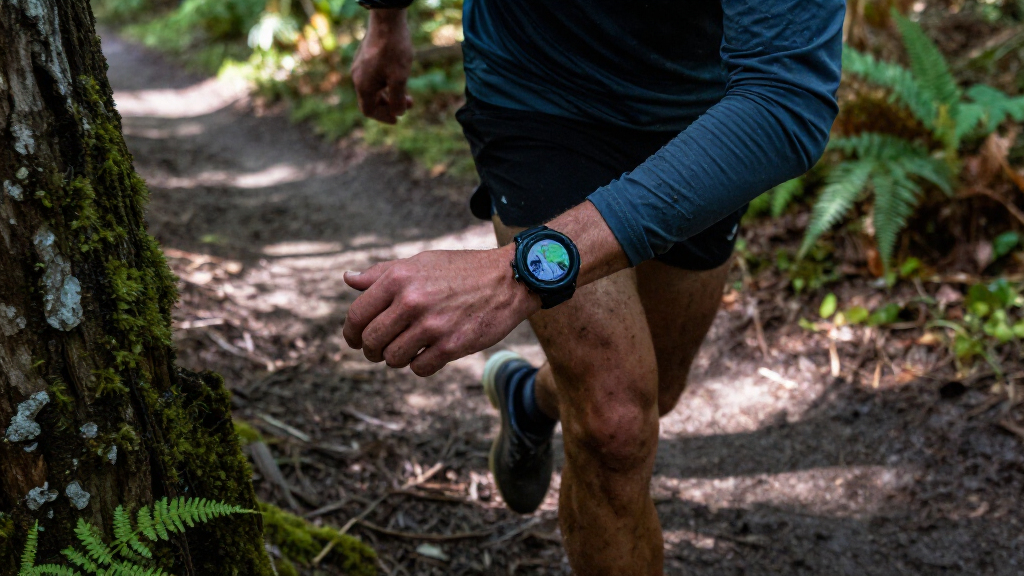

The best Garmin GPS watch for most buyers is the fēnix 8, which balances multisport training, outdoor navigation, and everyday smartwatch features. For long outings, the Enduro 3 prioritizes battery life, while the Forerunner 970 is a stronger fit for runners and triathletes who want a dedicated training tool. The main tradeoffs are size, complexity, battery priorities, and how much sport-specific data you need. A capable entry-level watch can cover basic running without the bulk or feature load of a flagship. Read on for a breakdown of all 15 picks and the buyer each one suits best.

Get the latest gadgets delivered free with Prime
- Fast, free delivery on millions of items
- Prime Video, Amazon Music and more included
- Member-only deals all year
Complete the kit



Key Takeaways
- The fēnix 8 is the broadest all-rounder in this lineup; specialized models make more sense when battery life, running data, or marine features matter more than versatility.
- Enduro 3 and fēnix 7X Pro Solar solve different endurance needs: Enduro centers on long battery life, while the fēnix 7X Pro adds a built-in flashlight and a wider multisport role.
- Forerunner models span distinct levels of commitment. The Forerunner 55 and 165 suit simpler running needs, while the 570 and 970 target runners who want a more advanced training and triathlon setup.
- Instinct watches favor rugged practicality over polished displays. The Instinct 3 Solar, Instinct E, and Instinct 2X Solar Tactical Edition differ in feature set and intended use, so buyers should match the specific model to their needs rather than treat them as interchangeable.
- Some listings are close alternatives rather than distinct models: the two Forerunner 55 entries describe the same core watch, and the renewed fēnix 7X Sapphire Solar requires closer attention to condition and return terms.
| Garmin Instinct 3 Solar Rugged GPS Smartwatch, 45 mm, Black |  | Best for Rugged Solar Endurance | Display: 0.9-inch | Case size: 45 mm | Case material: Fiber-reinforced polymer | VIEW LATEST PRICE | See Our Full Breakdown |
| Garmin Forerunner 55 GPS Running Smartwatch, Black |  | Best for First-Time Running Watch Buyers | Display size: 1.04 inches | Activity profiles: 17 | Satellite systems: GPS, GLONASS, and Galileo | VIEW LATEST PRICE | See Our Full Breakdown |
| Garmin epix Pro (Gen 2) Sapphire, High Performance Smartwatch, 47mm, Black |  | Best Premium AMOLED GPS Watch | Display: 1.3-inch always-on AMOLED | Case size: 47 mm | Lens: Scratch-resistant sapphire | VIEW LATEST PRICE | See Our Full Breakdown |
| Garmin fēnix 7X Sapphire Solar GPS Smartwatch, Mineral Blue Titanium with Whitestone Band (Renewed) |  | Best for Big-Screen Solar Navigation | Display: 1.4-inch LCD touchscreen, 390 × 390 resolution | Lens: Power Sapphire | Case material: Titanium | VIEW LATEST PRICE | See Our Full Breakdown |
| Garmin Forerunner 55 GPS Running Watch with Daily Suggested Workouts, Black |  | Best Value for Everyday Run Training | Display: 1.04 inches | Battery life: Up to 2 weeks in smartwatch mode; up to 20 hours in GPS mode | GPS: Built-in GPS | VIEW LATEST PRICE | See Our Full Breakdown |
| Garmin fenix 7X Pro Solar Multisport GPS Smartwatch with Built-in Flashlight – Black |  | Best for Extended Off-Grid Adventures | Display: 1.4-inch sunlight-visible MIP; 480 × 272 resolution | Battery: Up to 37 days in smartwatch mode with solar charging under stated conditions | Solar conditions: Three hours daily in direct sunlight at 50,000 lux | VIEW LATEST PRICE | See Our Full Breakdown |
| Garmin quatix® 7X Solar Edition, Marine GPS Smartwatch |  | Best for Boating and Marine Control | Display: 1.4-inch always-on display; 480 × 272 resolution | Lens: Solar-powered Power Sapphire | GPS: Multi-band GNSS with GPS, GLONASS, and Galileo | VIEW LATEST PRICE | See Our Full Breakdown |
| Garmin Forerunner® 570, 42mm, Aluminum, Whitestone/Cloud Blue |  | Best for Small-Wrist Runners | Case size: 42 mm | Display: AMOLED touchscreen with button controls | Battery: Up to 10 days smartwatch mode; up to 18 hours GPS mode | VIEW LATEST PRICE | See Our Full Breakdown |
| Garmin Instinct E Rugged GPS Smartwatch, 45 mm, Charcoal |  | Best Rugged GPS Value | Case size: 45 mm | Battery: Up to 16 days | Water resistance: 10 ATM; 100 meters | VIEW LATEST PRICE | See Our Full Breakdown |
| Garmin vívoactive 5 GPS Smartwatch, 42 mm, Black |  | Best Everyday Fitness Pick | Case size: 42 mm | Display: AMOLED | Battery: Up to 11 days in smartwatch mode | VIEW LATEST PRICE | See Our Full Breakdown |
| Garmin Instinct 2X Solar Tactical Edition Smartwatch – Coyote Tan |  | Best for Tactical Outdoor Use | Case size: 50 mm | Case material: Fiber-reinforced polymer | Band: Silicone, 26 mm wide | VIEW LATEST PRICE | See Our Full Breakdown |
| Garmin Forerunner 165 GPS Running Smartwatch, 43 mm, Black |  | Best for Everyday Runners | Case size: 43 mm | Display: AMOLED touchscreen | GPS: Built-in GPS | VIEW LATEST PRICE | See Our Full Breakdown |
| Garmin Forerunner 970 GPS Running and Triathlon Smartwatch, 47 mm, Carbon Gray Titanium, Black/Whitestone |  | Best Premium Running and Triathlon Watch | Case size: 47 mm | Display: AMOLED touchscreen with button controls | Bezel and lens: Titanium bezel and sapphire lens | VIEW LATEST PRICE | See Our Full Breakdown |
| Garmin Enduro™ 3, Solar, 51 mm, Sapphire, Black UltraFit Nylon Strap |  | Best for Ultra-Endurance Battery Life | Case size: 51 mm | Weight: 63 g | Bezel and lens: Titanium bezel and scratch-resistant sapphire lens | VIEW LATEST PRICE | See Our Full Breakdown |
| Garmin fēnix 8 Multisport GPS Smartwatch, 47 mm, Black |  | Best All-Around Multisport Watch | Case size: 47 mm | Display: 1.4-inch AMOLED | Bezel: Stainless steel | VIEW LATEST PRICE | See Our Full Breakdown |
| Garmin GPS watch | Water resistance | Display | Case size | GPS |
|---|---|---|---|---|
| Garmin Instinct 3 Solar Rugged | 10 ATM; 100 meters | 0.9-inch | 45 mm | Multi-band GPS with SatIQ; GLONASS and Galileo |
| Garmin Forerunner 55 GPS Runni | 50 meters | — | — | — |
| Garmin epix Pro | 100 meters | 1.3-inch always-on AMOLED | 47 mm | Multi-band and multi-GNSS with SatIQ |
| Garmin fēnix 7X Sapphire Solar | 100 meters | 1.4-inch LCD touchscreen, 390 × 390 resolution | — | — |
| Garmin Forerunner 55 GPS Runni | 50 meters | 1.04 inches | — | Built-in GPS |
| Garmin fenix 7X Pro Solar Mult | 100 meters | 1.4-inch sunlight-visible MIP; 480 × 272 resolution | — | Multi-band GPS with SatIQ technology |
| Garmin quatix® 7X Solar Editio | 100 meters | 1.4-inch always-on display; 480 × 272 resolution | — | Multi-band GNSS with GPS, GLONASS, and Galileo |
| Garmin Forerunner® 570 | 50 meters | AMOLED touchscreen with button controls | 42 mm | Multi-band GPS |
| Garmin Instinct E Rugged GPS S | 10 ATM; 100 meters | — | 45 mm | Built-in GPS with multi-GNSS support |
| Garmin vívoactive 5 GPS Smartw | — | AMOLED | 42 mm | Built-in GPS |
| Garmin Instinct 2X Solar Tacti | 10 ATM (100 meters) | — | 50 mm | — |
| Garmin Forerunner 165 GPS Runn | 50 meters | AMOLED touchscreen | 43 mm | Built-in GPS |
| Garmin Forerunner 970 GPS Runn | 50 meters | AMOLED touchscreen with button controls | 47 mm | — |
| Garmin Enduro™ 3 | 100 meters | — | 51 mm | — |
| Garmin fēnix 8 Multisport GPS | Diving support to 40 meters | 1.4-inch AMOLED | 47 mm | Multi-band GPS with SatIQ technology |
More Details on Our Top Picks
Garmin Instinct 3 Solar Rugged GPS Smartwatch, 45 mm, Black
The Instinct 3 Solar is the rugged, battery-focused choice in this group. Its solar lens can support unlimited smartwatch-mode battery life under the stated conditions, while multi-band GPS, a compass, and a barometric altimeter give it stronger navigation credentials than the Forerunner 55. The built-in flashlight and 10 ATM water rating suit outdoor use where a bright AMOLED screen is less important than durability and practical tools. The tradeoff is its 0.9-inch display: it is compact and functional, but less suited to viewing rich maps or detailed metrics than the larger epix Pro or fēnix 7X. Solar performance also depends on regular outdoor exposure, so I would not choose it expecting unlimited battery life without meeting Garmin’s conditions.
Pros:- Solar charging can extend smartwatch-mode battery life substantially under specified conditions.
- Multi-band GPS, compass, and barometric altimeter support outdoor navigation.
- Built-in LED flashlight offers variable intensities and strobe modes.
- 10 ATM water rating and design tested to thermal and shock resistance standards.
Cons:- Unlimited smartwatch-mode battery life depends on all-day wear and at least three hours outdoors daily in 50,000-lux conditions.
- The 0.9-inch display is less suited to maps and dense training data than the epix Pro’s AMOLED screen.
- Garmin Pay and emergency features depend on compatible services, a paired phone, or network coverage.
Best for: Hikers, trail runners, and outdoor users who prioritize rugged construction, navigation sensors, and fewer charging stops over a large, vivid display.
Not ideal for: Runners who want detailed maps or an easy-to-read large screen, or buyers who spend little time outdoors and cannot meet the solar-charging conditions.
- Display:0.9-inch
- Case size:45 mm
- Case material:Fiber-reinforced polymer
- Battery:Unlimited in smartwatch mode with solar charging under stated conditions
- Water resistance:10 ATM; 100 meters
- GPS:Multi-band GPS with SatIQ; GLONASS and Galileo
- Sensors and tracking:Heart rate, sleep, Pulse Ox, calories, hydration, and stress
- Payment:Garmin Pay
Our verdict“Choose the Instinct 3 Solar if ruggedness and solar-supported endurance matter more to you than a large, detailed display.”
Garmin Forerunner 55 GPS Running Smartwatch, Black
The Forerunner 55 keeps the focus on accessible running guidance rather than outdoor navigation or premium smartwatch features. Its suggested daily workouts and free 5K, 10K, and half-marathon plans give newer runners a practical next step after tracking pace, distance, and wrist-based heart rate. At 37 grams, it is much lighter than the rugged Instinct 3 Solar and less imposing than the fēnix 7X. That simplicity has limits: it uses multi-satellite positioning but does not list the more advanced multi-band GPS found on the Instinct, and its feature set is less suited to backcountry navigation. I would pick it for straightforward run training, not as a do-everything outdoor watch. This listing does not specify battery duration, so buyers comparing charging intervals should look at the other Forerunner 55 listing, which provides figures.
Pros:- Suggested daily workouts help structure training without requiring a separate coaching plan.
- Free training plans cover 5K, 10K, and half-marathon distances.
- Tracks running pace, distance, speed, heart rate, and everyday activity.
- Lightweight 37-gram design is less cumbersome than the rugged Instinct and fēnix models.
Cons:- Battery-life duration is not specified in this product’s listed data.
- Its GPS listing names GPS, GLONASS, and Galileo but not multi-band positioning.
- Bluetooth is the listed connectivity, with no cellular capability specified.
Best for: New runners who want route and pace tracking plus guided 5K, 10K, or half-marathon training without a large multisport watch.
Not ideal for: Trail and backcountry users who need multi-band positioning, advanced navigation tools, or a clearly specified long GPS battery life.
- Display size:1.04 inches
- Activity profiles:17
- Satellite systems:GPS, GLONASS, and Galileo
- Water resistance:50 meters
- Weight:37 g
- Band material:Silicone
- Case material:Resin
- Connectivity:Bluetooth
Our verdict“Choose this Forerunner 55 if you want a light, uncomplicated running watch with training guidance and do not need advanced navigation.”
Garmin epix Pro (Gen 2) Sapphire, High Performance Smartwatch, 47mm, Black
The epix Pro (Gen 2) Sapphire pairs a bright, always-on AMOLED display with serious training and navigation tools, making it the premium screen-first option here. Its sapphire lens and titanium construction add protection, while multi-band GPS with SatIQ, preloaded TopoActive maps, and Up Ahead prompts support more involved routes than the Forerunner 55. Advanced training metrics such as hill score, endurance score, and training readiness can help athletes interpret workload rather than just collect activity data. Compared with the fēnix 7X Sapphire Solar, the epix Pro puts more emphasis on a vivid display; the fēnix offers a larger 1.4-inch screen and solar charging. The epix tradeoff is that its AMOLED display and broad feature set make it a more demanding, more complex choice than a basic running watch.
Pros:- 1.3-inch always-on AMOLED display makes training data and maps easy to read.
- Sapphire lens and titanium construction add scratch resistance and a premium build.
- Multi-band GPS with SatIQ and preloaded maps support demanding routes.
- Hill score, endurance score, training readiness, and HRV status add depth for training and recovery.
Cons:- Its extensive training and navigation features may be unnecessary for casual runners.
- Unlike the solar fēnix 7X Sapphire Solar, this listing does not specify solar charging.
- A 47 mm case and 70 g listed weight may feel large compared with the Forerunner 55.
Best for: Multisport athletes and frequent hikers who want an AMOLED screen, detailed maps, advanced training analysis, and a durable sapphire-and-titanium build.
Not ideal for: Runners seeking a lightweight, straightforward training watch, or outdoor users who prioritize solar charging and a larger display over AMOLED clarity.
- Display:1.3-inch always-on AMOLED
- Case size:47 mm
- Lens:Scratch-resistant sapphire
- Case and bezel:Titanium
- GPS:Multi-band and multi-GNSS with SatIQ
- Navigation:Preloaded TopoActive maps, ski resort maps, and Up Ahead prompts
- Water resistance:100 meters
- Weight:70 g
Our verdict“Pick the epix Pro if a vivid AMOLED display and advanced mapping matter more to you than a simpler interface or solar charging.”
Garmin fēnix 7X Sapphire Solar GPS Smartwatch, Mineral Blue Titanium with Whitestone Band (Renewed)
The renewed fēnix 7X Sapphire Solar is the large-format choice for buyers who want mapping, training tools, and solar-assisted battery life in one rugged watch. Its 1.4-inch display gives maps and workout data more room than the epix Pro’s 1.3-inch screen, while the solar-charging Power Sapphire lens supports longer stretches between charges. Multi-band navigation, preloaded maps, music storage, and a built-in flashlight make it more expedition-ready than the Forerunner 55. The tradeoff is the renewed condition: this unit may have light body scratches, and its battery is listed as retaining more than 80% of original capacity. It also has a large case, so I would favor the Instinct 3 Solar for a more compact rugged option, or the epix Pro for a newer-feeling AMOLED display.
Pros:- 1.4-inch display provides more space for maps and training data than the epix Pro’s 1.3-inch screen.
- Power Sapphire solar lens can extend battery life in smartwatch and GPS modes.
- Multi-band navigation, preloaded maps, and a built-in LED flashlight support outdoor use.
- Combines touchscreen operation with button controls and includes 32 GB of storage.
Cons:- Renewed condition may include light scratches on the body.
- Battery condition is listed as more than 80% of original capacity, not a new battery.
- The large 7X case may be less comfortable for smaller wrists than the 45 mm Instinct 3 Solar.
Best for: Hikers and multisport users who want a large map-friendly screen, solar charging, and broad navigation features and are comfortable buying a renewed watch.
Not ideal for: Buyers who want a new-condition device, a compact watch, or the epix Pro’s AMOLED display and premium screen presentation.
- Display:1.4-inch LCD touchscreen, 390 × 390 resolution
- Lens:Power Sapphire
- Case material:Titanium
- Battery life:Up to 28 days indoors or 37 days with solar in smartwatch mode; up to 89 hours indoors or 122 hours with solar in GPS mode
- Water resistance:100 meters
- Navigation:GPS, GLONASS, Galileo, and multi-band GNSS
- Storage:32 GB
- Condition and battery:Renewed; more than 80% of original battery life
Our verdict“Choose this renewed fēnix 7X if you want a large solar-powered mapping watch and accept cosmetic wear and a reduced battery-capacity threshold.”
Garmin Forerunner 55 GPS Running Watch with Daily Suggested Workouts, Black
This Forerunner 55 is the clearest pick for runners who want useful coaching and dependable GPS without paying for the navigation and durability features of the Instinct 3 Solar or fēnix 7X. Personalized daily workout suggestions, race-planning tools, and support for activities such as cycling, pool swimming, and HIIT make it more versatile than a run-only tracker. Its stated battery life—up to two weeks in smartwatch mode and 20 hours in GPS mode—also gives buyers a concrete charging expectation, unlike the other Forerunner 55 listing in this roundup. The compromise is a basic 50-meter water-resistant resin build and limited customization, with some options requiring a compatible phone app. I would choose it for road and track training, but not for detailed trail maps or multi-band GPS.
Pros:- Personalized daily workout suggestions and race-planning tools support regular run training.
- Built-in GPS tracks distance, pace, and route.
- Battery life is specified at up to two weeks in smartwatch mode and 20 hours in GPS mode.
- Activity profiles cover running, cycling, pool swimming, Pilates, HIIT, and more.
Cons:- The 50-meter water resistance and resin case are less rugged than the Instinct 3 Solar or fēnix 7X.
- PacePro is not compatible with on-device courses.
- Some customization features require a compatible smartphone app.
Best for: Road runners and fitness beginners who want daily workout suggestions, race planning, built-in GPS, and clear battery-life figures in a light, simple watch.
Not ideal for: Trail runners and hikers who need advanced route navigation, multi-band GPS, or the rugged construction and solar options of the Instinct and fēnix lines.
- Display:1.04 inches
- Battery life:Up to 2 weeks in smartwatch mode; up to 20 hours in GPS mode
- GPS:Built-in GPS
- Water resistance:50 meters
- Case material:Resin
- Band material:Silicone
- Storage:32 MB
- Connectivity:Bluetooth
Our verdict“Choose this Forerunner 55 for approachable run coaching and known battery figures, but look to the Instinct 3 Solar for tougher terrain and richer navigation.”
Garmin fenix 7X Pro Solar Multisport GPS Smartwatch with Built-in Flashlight – Black
The fenix 7X Pro Solar is the strongest fit here for long outings where battery life, navigation, and visibility matter more than a compact case. Its solar lens can support up to 37 days in smartwatch mode under specified sunlight conditions, while multi-band GPS with SatIQ adjusts positioning for the surroundings. Preloaded maps and the built-in flashlight make it more useful after dark or away from familiar routes than the Forerunner 570, which is more focused on running plans and training feedback.
The tradeoff is its 96 g weight and substantial 1.4-inch watch format, which may feel cumbersome for smaller wrists or everyday wear. It also lacks built-in music storage, and Pulse Ox availability varies by country. I’d choose it for backcountry mileage and long, self-supported trips, not as a lightweight run-first watch.
Pros:- Solar charging can extend smartwatch battery life to up to 37 days under the stated sunlight conditions.
- Multi-band GPS with SatIQ and preloaded maps support navigation across varied terrain.
- Built-in LED flashlight adds practical visibility for early starts and nighttime activity.
- Large sunlight-visible MIP display is suited to outdoor use.
Cons:- At 96 g, it is heavier than the smaller Forerunner 570 and may be less comfortable on smaller wrists.
- No built-in music storage or streaming capability is listed.
- Pulse Ox is unavailable in some countries.
Best for: Hikers, endurance athletes, and outdoor travelers who want long battery life, detailed maps, and a flashlight on the wrist.
Not ideal for: Runners seeking a smaller, lighter daily training watch, or buyers who want onboard music storage.
- Display:1.4-inch sunlight-visible MIP; 480 × 272 resolution
- Battery:Up to 37 days in smartwatch mode with solar charging under stated conditions
- Solar conditions:Three hours daily in direct sunlight at 50,000 lux
- GPS:Multi-band GPS with SatIQ technology
- Water resistance:100 meters
- Weight:96 g
- Case:Fiber-reinforced polymer with steel rear cover
- Controls:Buttons and touchscreen
Our verdict“Choose the fenix 7X Pro Solar for demanding outdoor trips where battery life, mapping, and a built-in flashlight outweigh size and weight.”
Garmin quatix® 7X Solar Edition, Marine GPS Smartwatch
The quatix 7X Solar earns its place by connecting Garmin’s outdoor-watch tools to a compatible boat setup. It can control supported chartplotter and marine functions, including autopilot and Fusion stereo features, while tide information and anchor-drag alerts can help keep key boat details close at hand. Multi-band GNSS, TopoActive maps, and optional coastal or inland charts also give it more range beyond the water than a dedicated marine instrument. Compared with the fenix 7X Pro Solar, its defining advantage is marine-device integration rather than the built-in flashlight.
This is a specialized choice: many headline boat controls require compatible Garmin equipment, and optional chart products may be needed for particular waterways. Its 1.4-inch case is also large, while the product information does not specify a battery-life figure. I’d shortlist it for boat owners first; land-focused athletes can get a more direct fit from the Forerunner 570.
Pros:- Remote control for compatible chartplotters, autopilot, and Fusion stereo systems.
- Marine-oriented tide information and anchor-drag alerts when paired with supported devices.
- Multi-band GNSS and built-in sensors support outdoor navigation.
- Includes TopoActive maps and supports optional coastal and inland charts.
Cons:- Many marine-control features depend on compatible Garmin devices.
- Optional charts may be needed for specific coastal or inland navigation.
- The large 1.4-inch format may not suit smaller wrists, and battery life is not specified in the supplied product data.
Best for: Boat owners with compatible Garmin chartplotters or marine devices who also want a multisport GPS watch for land activities.
Not ideal for: Buyers without compatible marine equipment, or runners who prioritize a smaller watch and a dedicated training interface.
- Display:1.4-inch always-on display; 480 × 272 resolution
- Lens:Solar-powered Power Sapphire
- GPS:Multi-band GNSS with GPS, GLONASS, and Galileo
- Water resistance:100 meters
- Navigation:Preloaded TopoActive maps; optional BlueChart g3 and LakeVü g3 charts
- Sensors:3-axis compass, gyroscope, and barometric altimeter
- Controls:Buttons and touchscreen
- Marine connectivity:Control and data features for compatible Garmin marine devices
Our verdict“Pick the quatix 7X Solar if you own compatible Garmin marine gear and want a watch that can serve both on the boat and on land.”
Garmin Forerunner® 570, 42mm, Aluminum, Whitestone/Cloud Blue
For runners who want structured coaching without the bulk of a rugged adventure watch, the 42 mm Forerunner 570 is the clearest fit in this group. Garmin Coach plans, daily suggested workouts, and training readiness connect recent exercise, sleep, recovery, and HRV status to help guide the next session. Its AMOLED display is more vivid than the MIP screen on the fenix 7X Pro Solar, while multi-band GPS helps maintain positioning in challenging environments. The microphone and speaker add wrist-based calls when paired with a phone.
That training-first design comes with less endurance than the solar fenix: the 570 is rated for up to 18 hours in GPS mode and 10 days in smartwatch mode. Its 50-meter water rating is also below the 100-meter ratings on the Instinct E and fenix. I’d favor it for focused running and triathlon training, but not for extended off-grid navigation.
Pros:- 42 mm case offers a smaller-wrist alternative to the larger fenix and quatix models.
- Adaptive Garmin Coach plans, daily suggested workouts, and training readiness support structured training.
- Multi-band GPS is suited to running routes with challenging reception.
- Built-in microphone and speaker support calls when paired with a smartphone.
Cons:- Up to 18 hours of GPS use is less suited to long expeditions than the solar fenix 7X Pro.
- 50-meter water resistance is lower than the 100-meter rating of the Instinct E.
- Many phone-linked calling and safety features depend on a compatible, connected smartphone.
Best for: Runners and triathletes with smaller wrists who want adaptive training guidance, multi-band GPS, and an AMOLED screen.
Not ideal for: People planning long, remote outings who need extensive battery endurance or the fenix’s preloaded navigation maps.
- Case size:42 mm
- Display:AMOLED touchscreen with button controls
- Battery:Up to 10 days smartwatch mode; up to 18 hours GPS mode
- GPS:Multi-band GPS
- Water resistance:50 meters
- Case material:Aluminum
- Storage:8 GB
- Activity profiles:More than 30, including running, triathlon, cycling, and open-water swimming
Our verdict“Choose the Forerunner 570 if your priority is guided run or triathlon training in a smaller, bright-screen GPS watch.”
Garmin Instinct E Rugged GPS Smartwatch, 45 mm, Charcoal
The Instinct E is the practical pick for buyers who want a durable GPS watch without the mapping and solar complexity of the fenix 7X Pro. Its MIL-STD-810 thermal and shock resistance, 10 ATM water rating, and up-to-16-day battery life suit rough daily use, hiking, and water activities. Multi-GNSS, a compass, and a barometric altimeter provide core navigation support, while heart-rate, sleep, and Pulse Ox tracking cover everyday wellness. Compared with the AMOLED Forerunner 570, the Instinct E puts ruggedness and longer stated smartwatch battery life ahead of a bright, run-focused screen.
The tradeoff is a simpler feature set: the supplied data does not list preloaded maps, solar charging, or the fenix’s flashlight. Its 128 MB storage is also modest, and Pulse Ox is not available everywhere. I’d choose it for hard-wearing basics, not for map-led exploration or polished training analysis.
Pros:- MIL-STD-810 thermal and shock resistance supports demanding everyday use.
- Up to 16 days of battery life in the supplied product description.
- 10 ATM water resistance and multi-GNSS support outdoor and water activities.
- Compass, barometric altimeter, and health tracking cover useful core functions.
Cons:- The supplied specifications do not list preloaded maps or solar charging.
- Its feature set is less training-focused than the Forerunner 570.
- Pulse Ox is unavailable in some countries, and the listed storage is 128 MB.
Best for: Outdoor users who need a shock- and temperature-resistant GPS watch with long battery life and basic navigation sensors.
Not ideal for: Map-dependent hikers or runners seeking adaptive coaching, multi-band GPS, or an AMOLED touchscreen.
- Case size:45 mm
- Battery:Up to 16 days
- Water resistance:10 ATM; 100 meters
- Durability:MIL-STD-810 thermal and shock resistance
- GPS:Built-in GPS with multi-GNSS support
- Sensors:3-axis compass and barometric altimeter
- Health tracking:Wrist-based heart rate, sleep monitoring, and Pulse Ox
- Case and band:Fiber-reinforced polymer case; silicone band
Our verdict“Choose the Instinct E for rugged GPS essentials and extended smartwatch battery life, but step up to the fenix if you need maps and more advanced navigation.”
Garmin vívoactive 5 GPS Smartwatch, 42 mm, Black
The vívoactive 5 makes the most sense for people who want GPS workout tracking and useful smartwatch features without stepping up to the Forerunner 570’s race-training emphasis. Its AMOLED display, more than 30 sports apps, music storage, and Garmin Pay cover a broad mix of daily routines and workouts. Up to 11 days of smartwatch battery life is close to the Forerunner 570’s 10-day figure, while the 42 mm case keeps it in the same smaller-watch category. Unlike the Instinct E, it adds onboard music storage and a more vivid screen.
It is less suited to serious navigation: the product data lists built-in GPS but does not specify multi-band positioning, mapping, or expedition-focused durability. The supplied display resolution is incomplete, and health metrics are estimates rather than medical measurements. I’d pick it for general fitness and everyday convenience, not for remote trips or advanced run coaching.
Pros:- AMOLED display and 42 mm case suit everyday wear and workout viewing.
- More than 30 sports apps cover a wide range of activities.
- Music storage and Garmin Pay add phone-free convenience for workouts and errands.
- Up to 11 days of smartwatch battery life.
Cons:- The supplied data lists built-in GPS but does not specify multi-band GPS or mapping.
- It lacks the Forerunner 570’s listed adaptive coaching and training-readiness features.
- The supplied display resolution is incomplete, and health metrics are estimates.
Best for: Everyday fitness users who want GPS activity tracking, an AMOLED screen, music storage, and contactless payments in a 42 mm watch.
Not ideal for: Backcountry users needing rugged construction and advanced navigation, or competitive runners seeking the Forerunner 570’s training-readiness tools.
- Case size:42 mm
- Display:AMOLED
- Battery:Up to 11 days in smartwatch mode
- GPS:Built-in GPS
- Sports apps:More than 30
- Connectivity:Bluetooth, USB, and Wi-Fi
- Weight:1.31 ounces
- Dimensions:1.7 × 1.7 × 0.43 inches
Our verdict“Choose the vívoactive 5 for everyday fitness, music, and smartwatch convenience; choose the Forerunner 570 for more structured running and race training.”
Garmin Instinct 2X Solar Tactical Edition Smartwatch – Coyote Tan
The Instinct 2X Solar Tactical Edition puts ruggedness and field-ready tools ahead of a polished smartwatch experience. Its multi-band GNSS helps maintain precise positioning, while the solar charging can support unlimited smartwatch-mode battery life with three hours of direct sunlight daily. The built-in flashlight, waypoint projection, stealth mode, and night-vision goggle compatibility make it a more specialized choice than the Forerunner 165, which is better suited to everyday running and training guidance. It also offers heart rate, sleep, and stress tracking, though Pulse Ox availability varies by country. The tradeoff is its large 50 mm case: it can feel bulky, and its tactical features will be surplus for runners who mainly want a comfortable training watch.
Pros:- Solar charging can provide unlimited smartwatch-mode battery life with sufficient daily sunlight
- Multi-band GNSS, compass, and barometric altimeter support outdoor navigation
- Built-in flashlight includes variable intensity and an SOS strobe
- MIL-STD-810 construction and 10 ATM water resistance suit demanding conditions
Cons:- The 50 mm case may feel oversized on smaller wrists
- Tactical functions add little value for everyday runners
- Pulse Ox availability varies by country
Best for: Hikers, field professionals, and outdoor users who want rugged GPS navigation, extended solar battery life, and tactical tools.
Not ideal for: Runners seeking a smaller, lighter watch for training, or buyers who have no use for tactical features and prefer a less bulky fit.
- Case size:50 mm
- Case material:Fiber-reinforced polymer
- Band:Silicone, 26 mm wide
- Weight:67 g
- Water resistance:10 ATM (100 meters)
- Satellite navigation:GPS and multi-band GNSS
- Sensors:3-axis compass and barometric altimeter
- Solar charging:Can support unlimited smartwatch-mode battery life with 3 hours of direct sunlight per day
Our verdict“Choose the Instinct 2X Solar Tactical Edition if rugged construction, solar endurance, and tactical functions matter more than a compact fit or running-first simplicity.”
Garmin Forerunner 165 GPS Running Smartwatch, 43 mm, Black
The Forerunner 165 is the running-first option here for buyers who want clear training feedback without the bulk and specialized tools of the Instinct 2X Solar Tactical Edition. Its built-in GPS and wrist-based heart rate tracking cover the basics, while personalized workout and race guidance can help newer or recreational runners structure their training. The AMOLED touchscreen makes stats easier to read, and physical buttons give another way to control the watch mid-run. Up to 11 days in smartwatch mode limits frequent charging, though its GPS runtime is shorter than the more endurance-focused Garmin options in this lineup. Smart safety and tracking features depend on a compatible phone and network coverage, so this is not a standalone communications device.
Pros:- Built-in GPS and wrist-based heart rate tracking
- Personalized workout and race training guidance
- AMOLED touchscreen paired with physical button controls
- Up to 11 days of battery life in smartwatch mode
Cons:- Up to 19 hours of GPS-mode battery life is less suited to long endurance events
- Safety and tracking features require a compatible smartphone and network coverage
- Garmin Pay availability depends on supported countries and payment networks
Best for: New and recreational runners who want built-in GPS, guided training, readable workout data, and a lighter everyday smartwatch.
Not ideal for: Ultrarunners or backcountry users who need extensive battery life, advanced mapping, or specialized navigation features.
- Case size:43 mm
- Display:AMOLED touchscreen
- GPS:Built-in GPS
- Battery life:Up to 11 days in smartwatch mode; up to 19 hours in GPS mode
- Water resistance:50 meters
- Storage:4 GB
- Connectivity:Bluetooth, USB, and Wi-Fi
- Activity profiles:25+
Our verdict“Pick the Forerunner 165 for accessible running guidance and an AMOLED display, rather than the longer battery life and navigation focus of the outdoor-oriented models.”
Garmin Forerunner 970 GPS Running and Triathlon Smartwatch, 47 mm, Carbon Gray Titanium, Black/Whitestone
The Forerunner 970 is the lineup’s premium pick for runners and triathletes who want training data, full-color maps, and multisport tools in one watch. Its multi-band GPS and maps make route following more capable than the running-focused Forerunner 165, while the sapphire lens and titanium bezel add a tougher finish. The AMOLED screen, built-in flashlight, and up to 15 days of smartwatch battery life broaden its usefulness beyond workouts. It is not as focused on extreme battery endurance as the solar-powered Enduro 3, and some running metrics require a separately sold HRM 600. Wrist-based calling also depends on a paired smartphone; the watch is not a phone replacement. ECG availability varies by country and is limited to users aged 22 or older.
Pros:- Multi-band GPS and full-color maps support route guidance
- Sapphire lens and titanium bezel provide a durable premium build
- Training, recovery, multisport, and running-dynamics features
- Built-in LED flashlight and up to 15 days in smartwatch mode
Cons:- Some running metrics require a separately sold HRM 600 monitor
- Wrist-based calling requires a paired smartphone
- ECG availability varies by country and is limited to users aged 22 or older
Best for: Committed runners and triathletes who want detailed training and recovery metrics, built-in maps, and a premium display and case.
Not ideal for: Ultramarathoners prioritizing maximum GPS runtime, or buyers who want calling and smart features without carrying a paired phone.
- Case size:47 mm
- Display:AMOLED touchscreen with button controls
- Bezel and lens:Titanium bezel and sapphire lens
- Battery life:Up to 15 days in smartwatch mode; up to 26 hours in GPS mode
- GPS and navigation:Built-in multi-band GPS with full-color maps
- Water resistance:50 meters
- Features:LED flashlight, multisport tracking, ECG app, microphone, and speaker
- Connectivity:Bluetooth; smartphone pairing for calls and notifications
Our verdict“Choose the Forerunner 970 if you want a premium, map-equipped training watch for running and triathlon, not the Enduro 3’s longer solar endurance.”
Garmin Enduro™ 3, Solar, 51 mm, Sapphire, Black UltraFit Nylon Strap
The Enduro 3 is built around a different priority from the Forerunner 970: keeping a GPS watch running through long outdoor efforts. Its solar charging supports up to 320 hours in GPS mode under the stated 50,000-lux conditions, while smartwatch mode can reach up to 90 days with the specified sunlight exposure. Those figures make it the clearest choice here for ultrarunners and extended adventures, rather than athletes looking for the Forerunner 970’s running-and-triathlon emphasis or AMOLED display. The preloaded TopoActive maps and dynamic round-trip routing help with outdoor route planning, and the nylon band is designed for long-distance comfort. Its 51 mm case is still large, and the headline battery figures depend on substantial sunlight.
Pros:- Solar-supported GPS battery life reaches up to 320 hours under specified sunlight conditions
- Up to 90 days of smartwatch-mode battery life under specified sunlight conditions
- Preloaded TopoActive maps and dynamic round-trip routing support outdoor navigation
- Titanium bezel, sapphire lens, LED flashlight, and 63 g listed weight
Cons:- The 51 mm case may be too large for smaller wrists
- Maximum battery figures depend on the stated 50,000-lux solar conditions
- A non-AMOLED display may not suit buyers who prioritize a vivid touchscreen
Best for: Ultrarunners, long-distance hikers, and cyclists who need extended GPS runtime, outdoor maps, and a lightweight-feeling watch for prolonged wear.
Not ideal for: Buyers who want a compact watch, an AMOLED display, or battery performance that does not rely on strong solar exposure.
- Case size:51 mm
- Weight:63 g
- Bezel and lens:Titanium bezel and scratch-resistant sapphire lens
- Band:UltraFit nylon
- Water resistance:100 meters
- Battery life:Up to 90 days in smartwatch mode with specified solar exposure
- GPS battery life:Up to 320 hours with solar charging under specified 50,000-lux conditions
- Navigation:Built-in GPS; GLONASS and Galileo support; TopoActive maps and dynamic round-trip routing
Our verdict“Choose the Enduro 3 for long events and solar-assisted GPS endurance; choose the Forerunner 970 instead for a running-and-triathlon focus and AMOLED display.”
Garmin fēnix 8 Multisport GPS Smartwatch, 47 mm, Black
The fēnix 8 is the most balanced choice for buyers who want one Garmin GPS watch to cover varied sports, navigation, and everyday smartwatch tasks. Its multi-band GPS with SatIQ, 1.4-inch AMOLED screen, and built-in flashlight make it more versatile for mixed training and outdoor use than the running-specific Forerunner 165. It also adds 40-meter dive capability, music storage, contactless payments, and a speaker and microphone for calls when paired with a phone. Battery life reaches up to 16 days in smartwatch mode, though it does not approach the solar-assisted GPS endurance of the Enduro 3. Its broad feature set may be unnecessary for buyers who only need basic running guidance, and some health features have regional limits.
Pros:- Multi-band GPS with SatIQ supports multisport navigation
- 1.4-inch AMOLED display and built-in LED flashlight
- 40-meter dive rating alongside broad activity tracking
- Music storage, Garmin Pay, and up to 16 days in smartwatch mode
Cons:- Calls and smart notifications require smartphone pairing
- ECG and Pulse Ox availability varies by region
- Broad multisport capabilities may be unnecessary for buyers focused only on basic running
Best for: Multisport athletes who want one premium GPS watch for training, navigation, diving, music, and everyday notifications.
Not ideal for: Runners who want a simpler, smaller training watch, or endurance athletes whose main requirement is the Enduro 3’s extended solar GPS runtime.
- Case size:47 mm
- Display:1.4-inch AMOLED
- Bezel:Stainless steel
- Battery life:Up to 16 days in smartwatch mode; up to 47 hours in GPS mode
- GPS:Multi-band GPS with SatIQ technology
- Water resistance:Diving support to 40 meters
- Connectivity:Wi-Fi; built-in speaker and microphone
- Additional features:Music storage, Garmin Pay, multisport tracking, and notifications
Our verdict“Pick the fēnix 8 if you want a versatile multisport GPS watch with AMOLED and dive support, rather than a running-only or maximum-endurance model.”

How We Picked
I ranked these watches by how well their GPS, training features, battery priorities, comfort, and everyday usability match identifiable buyer needs. I gave more weight to a clear role and a useful balance of capabilities than to a long feature list; an outdoor-focused watch does not outrank a running watch simply because it covers more activities. I also considered whether the size and design make sense for the intended use, since a large case can be a poor fit for daily wear even when its feature set is appealing.
The order places the most versatile choices ahead of narrower specialist picks, while keeping entry-level and value-oriented options visible for buyers who do not need a flagship. I treated the two Forerunner 55 listings as one core model, not as separate tiers, and judged the renewed fēnix 7X Sapphire Solar with the added uncertainty of its condition. Product names alone do not establish that every feature is present in every configuration, so buyers should verify the exact model, size, edition, and listing details before choosing.
Factors to Consider When Choosing Best Garmin GPS Watches
Garmin’s range can be confusing because watches built for similar activities may make very different compromises. I would start with how you plan to use GPS, then narrow the choice by fit, battery needs, and the training data you will actually consult.
Match the watch to your main activity
Start with the activity you do most often, not the longest list of sports a watch can track. Runners may benefit more from a Forerunner’s training focus than from paying for a broad multisport suite. Hikers and outdoor users should check whether navigation and rugged construction fit their regular routes and conditions. A marine-focused model has a clearer case when boating functions are part of your routine, not just an occasional curiosity. If you split time across several sports, a versatile model can prevent you from outgrowing a narrow choice. Avoid buying a specialist watch for a hobby you might try once.
Choose case size for your wrist and routine
Case size affects more than appearance: it can change comfort during sleep, running, and all-day wear. Larger watches often leave more room for a large display or battery capacity, but may feel cumbersome on smaller wrists or under sleeves. A smaller case can be easier to wear consistently, which matters if you want to use activity and sleep tracking day after day. Try to compare the case dimensions of your current watch or measure your wrist before choosing from product names alone. Do not assume that a premium model’s largest size is the best fit for outdoor use. Comfort is a feature you notice on every outing.
Treat battery needs as a use pattern, not a headline
Battery life depends on how you use GPS, display settings, sensors, and connected features, so a quoted maximum may not match your routine. Think about your longest typical activity and how often you are willing to charge between sessions. Solar charging can support longer use in suitable conditions, but it should not be treated as a substitute for checking the model’s stated battery performance. For daily training, convenient charging may matter more than an extreme endurance design. For multi-day outings, extra battery headroom can reduce planning and charging worries. Match the watch to your real schedule rather than an occasional once-a-year adventure.
Pay for training data you will use
Advanced training metrics are most useful when they shape a decision: adjusting a workout, managing recovery, or tracking progress toward a goal. If you mainly want GPS pace and a record of runs, a simpler Forerunner may be easier to learn and operate. Triathletes and structured-training runners may have stronger reasons to choose a higher-end Forerunner. Before paying for more data, ask whether you will check it regularly and know what action it suggests. A crowded menu can add friction rather than improve training. The best feature set is the one that supports your habits.
Decide how much ruggedness and smartwatch polish matter
Outdoor durability, screen style, and daily convenience can point toward different models. Rugged Instinct options suit buyers who value a practical outdoor design, while other Garmin families may better match those who want a more polished everyday watch. A bright, colorful display can be appealing for maps and general use, but screen preferences also affect battery expectations. Check the materials and edition rather than assuming every watch in a family is built the same way. If the watch will spend most of its time at work or at home, comfort and glanceability may outrank extra protective features. If it will see rough use, a simpler design may feel more appropriate.
Check listing details, editions, and included condition
Garmin names can hide meaningful differences in size, solar capability, materials, and intended use. Confirm the exact generation and edition before comparing two listings, especially when model names are similar. Renewed products require an extra check of the seller’s condition description, included accessories, warranty coverage, and return policy. Duplicate listings may describe the same core watch with different wording, so do not treat them as separate upgrades without evidence. Also confirm the band and case size; those details affect fit and replacement choices. A careful listing check can prevent a mismatch that feature comparisons alone will not catch.
Frequently Asked Questions
Is the fēnix 8 worth choosing over the Forerunner 970?
Choose the fēnix 8 if you want one watch to cover a broad mix of multisport training and outdoor use. The Forerunner 970 is the more focused match for runners and triathletes who want a dedicated training watch. The decision is less about which model is universally better and more about whether outdoor versatility or running-specific priorities lead your routine. If you rarely use outdoor features, the fēnix’s broader role may not add enough value for you. Compare the exact size and feature configuration before deciding.
Which Garmin GPS watch in this lineup makes sense for a first-time running watch buyer?
The Forerunner 55 is a straightforward starting point for someone who mainly wants GPS running and daily suggested workouts. The Forerunner 165 is another option if you want a more modern step up while staying in a running-oriented family. I would not choose a high-end multisport watch simply because it has more functions; extra menus and training data can be unnecessary for a new runner. Consider whether you expect to take up structured training or other sports soon. If not, keep the choice focused on comfortable fit and the running features you will use.
Are the two Forerunner 55 listings different watches?
Both listings name the Garmin Forerunner 55, and one calls out daily suggested workouts in its title. That wording alone does not establish a separate hardware tier or a distinct model. Compare the full listing details, including case, band, included accessories, and seller information, before treating them as different choices. If those details match, base your decision on the listing’s condition and purchase terms rather than assuming one watch has extra capabilities. This roundup treats them as the same core model.
Should I choose an Instinct model or a Forerunner for outdoor running?
Pick a Forerunner if running training and a dedicated running experience are your main priorities. An Instinct is a better match when rugged outdoor use and a practical adventure-oriented design matter more than a running-first focus. Your routes and habits should guide the choice: regular trail outings may favor the Instinct approach, while road training plans point more naturally to a Forerunner. Compare the exact Instinct edition because the models in this lineup are not identical in purpose. Fit and display preference can also shape which one you will wear consistently.
Does a renewed fēnix 7X Sapphire Solar make sense instead of a newer Garmin watch?
It may suit a buyer who specifically wants that fēnix 7X Sapphire Solar configuration and is comfortable reviewing a renewed listing carefully. A newer model may be a better fit if you want the latest generation or prefer less uncertainty about condition. Check the seller’s description, warranty, included accessories, and return terms before comparing it with new options. Do not assume the word “renewed” guarantees a particular cosmetic or battery condition. The right call depends on how much listing uncertainty you are willing to accept for the features you want.
Conclusion
For the broadest mix of training and outdoor use, I recommend the fēnix 8 as best overall. Buyers focused on endurance outings should look first at the Enduro 3 as the specialist pick, while runners and triathletes have a more direct match in the Forerunner 970. For a simpler entry into GPS running, the Forerunner 55 is the beginner-friendly choice; the Forerunner 165 is a step-up alternative for buyers who want a more developed running watch. The Forerunner 55 is also the value-oriented pick for basic running needs, while the epix Pro (Gen 2) Sapphire is a premium option for buyers drawn to its high-performance positioning. Choose an Instinct for rugged outdoor use, the quatix 7X Solar for marine priorities, and the fēnix 7X Pro Solar when its built-in flashlight and multisport focus suit your routine. The best Garmin GPS watch is the one whose size, features, and activity focus match how you actually spend your time.