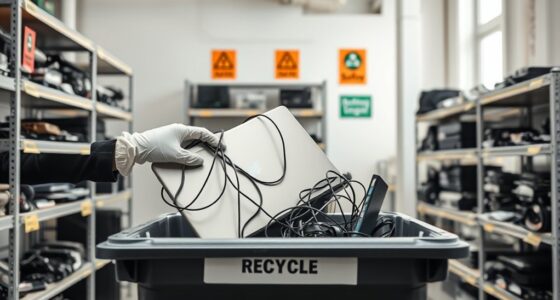

Most states prohibit tossing electronic devices like computers, monitors, cell phones, and other electronics in regular trash due to hazardous materials such as lead, mercury, and cadmium. Instead, you must recycle or dispose of e-waste at authorized collection centers or through designated programs. Many states require you to stay compliant with local laws and use specific disposal options to avoid fines and environmental harm. Want to discover more about how you can responsibly dispose of your electronics?

Get the latest gadgets delivered free with Prime
- Fast, free delivery on millions of items
- Prime Video, Amazon Music and more included
- Member-only deals all year
Key Takeaways
- Many states ban disposing of electronics like computers and monitors in regular trash due to hazardous materials.
- E-waste laws typically require dropping off electronics at designated recycling centers or collection events.
- Certain devices, such as cell phones and TVs, are often prohibited from landfills under state regulations.
- Manufacturers may be responsible for free recycling options, preventing improper disposal of outdated electronics.
- Proper disposal and recycling help prevent toxic substances from leaching into the environment and landfills.
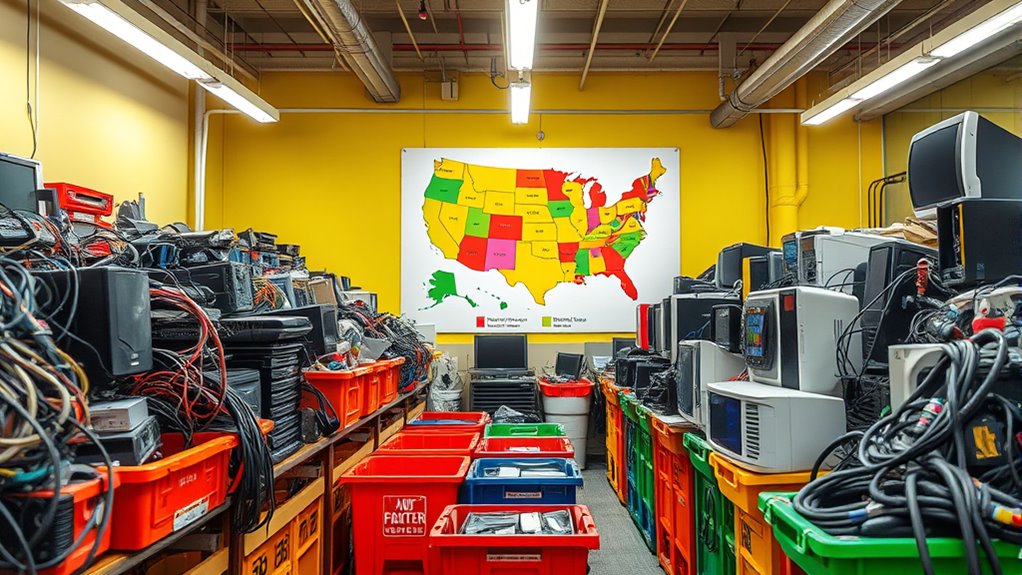
Electronic waste, or e‑waste, poses significant environmental and health challenges, prompting states to establish specific laws for its proper disposal and recycling. These laws aim to regulate how you handle outdated electronics, guaranteeing they don’t end up in landfills where toxic substances can leach into the environment. When it comes to e‑waste, understanding your state’s disposal regulations and recycling strategies is vital. Many states require manufacturers to take responsibility for the collection and recycling of electronics, making it easier for you to dispose of your devices responsibly. Knowing what’s legal helps you avoid fines and guarantees you’re doing your part to protect the environment.
States with strict e‑waste laws often set clear disposal regulations that specify what types of electronics must be recycled and how. These regulations typically cover computers, monitors, cell phones, and other electronic devices. You might be required to take your e‑waste to designated collection centers or participate in take-back programs. Some states even ban the disposal of certain electronics in regular trash, emphasizing the importance of recycling strategies designed to reduce landfill waste. The goal is to keep hazardous components, like lead, mercury, and cadmium, out of the environment. By following these rules, you help prevent pollution and support recycling initiatives that recover valuable materials like metals and plastics. Proper disposal methods are essential to ensure compliance and environmental safety.
States often require recycling of computers, monitors, and cell phones to prevent hazardous materials from polluting the environment.
Many states have created convenient options for responsible e‑waste disposal. For example, electronics retailers often host recycling events or accept old devices for free, making it easier for you to comply with disposal regulations. Local governments may also organize periodic e‑waste collection days or establish permanent drop-off sites. These efforts are part of broader recycling strategies that aim to maximize resource recovery while minimizing environmental impact. Staying informed about your state’s specific laws ensures you’re not unknowingly violating regulations or contributing to environmental harm. It’s simple: if you know where and how to recycle your electronics, you’re actively participating in a sustainable solution.
In some states, manufacturers are required by law to provide free recycling options or fund e‑waste recycling programs. These measures make it easier for you to responsibly dispose of electronics without extra costs. Understanding your options and adhering to disposal regulations ensures you’re compliant and environmentally conscious. Proper recycling strategies include not only dropping off your devices at authorized centers but also wiping personal data beforehand. By doing so, you protect your privacy and support the safe recycling of electronics. Ultimately, staying aware of your state’s e‑waste laws helps you play a part in reducing pollution, conserving resources, and promoting a healthier planet.
As an affiliate, we earn on qualifying purchases.
Frequently Asked Questions
Are There Penalties for Illegal E-Waste Disposal?
Yes, there are penalties for illegal e-waste disposal. Enforcement agencies actively monitor and enforce regulations, and if you dispose of e-waste improperly, you could face legal consequences such as fines or other penalties. It is crucial to follow your state’s e-waste laws to avoid these issues. Staying compliant helps protect the environment and ensures you’re not subject to enforcement actions or legal consequences for improper disposal.
How Do I Find Authorized E-Waste Recycling Centers?
Think of finding authorized e-waste recycling centers as a treasure hunt—you want the genuine gems, not the fakes. Start by checking for recycling certification and visit your local government or manufacturer’s website. Many communities host collection events where you can drop off your devices safely. These trusted options guarantee your e-waste’s journey ends responsibly, giving you peace of mind that your old gadgets won’t cause harm.
Can I Donate Old Electronics Instead of Discarding Them?
Yes, you can definitely donate old electronics instead of discarding them. Electronics donation is a great recycling alternative that benefits charities or schools. Look for local donation centers or programs that accept your devices, and always wipe personal data beforehand. Donating extends your device’s life and reduces e-waste, helping the environment. Check with authorized e-waste recycling centers if your electronics aren’t eligible for donation or if they’re damaged.
Are There Exemptions for Small Businesses Regarding E-Waste Laws?
Think of small business exemptions from e-waste collection policies as a lifeboat amid strict regulations. Yes, some states offer small business exemptions, allowing you to handle e-waste more flexibly. However, these vary by state, so it’s vital to check your local laws. Always stay informed about small business exemptions, as they can help you avoid penalties while responsibly managing your electronic waste.
What Are the Environmental Impacts of Improper E-Waste Disposal?
Improper e-waste disposal harms the environment by releasing hazardous materials like lead, mercury, and cadmium into the soil and water. These toxic substances contaminate ecosystems, threatening wildlife and human health. When you toss electronics improperly, you risk ecosystem contamination and contribute to pollution. Proper recycling helps prevent these environmental impacts, protecting natural resources and reducing exposure to hazardous materials that can cause long-term damage.
electronic waste recycling center
As an affiliate, we earn on qualifying purchases.
As an affiliate, we earn on qualifying purchases.
Conclusion
Understanding e-waste laws might feel like walking a maze, but remember, every responsible choice you make is a beacon of hope in a world drowning in digital debris. By staying informed and tossing your electronics responsibly, you become a guardian of the environment, turning your actions into ripples of change. Together, we can clear the clutter and let the planet breathe easier, one mindful disposal at a time. Your choices light the path to a cleaner, greener future.
computer and monitor recycling kit
As an affiliate, we earn on qualifying purchases.
As an affiliate, we earn on qualifying purchases.
As an affiliate, we earn on qualifying purchases.
Halloween Picks
halloween
As an affiliate, we earn on qualifying purchases.