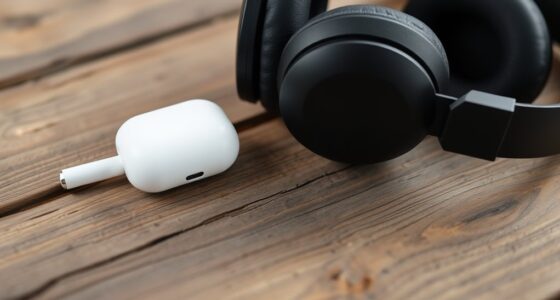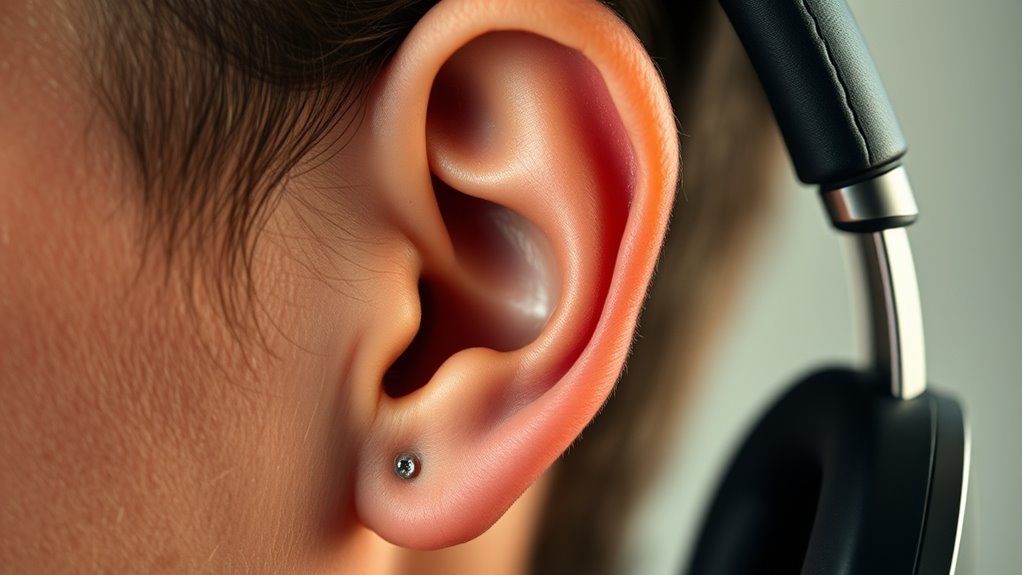

To protect your ears, keep headphone volume below 60% of the maximum and avoid turning it up in noisy environments. If you can’t hold a conversation comfortably or need to raise the volume constantly, it’s too loud. Remember to take breaks every hour and use noise-canceling headphones to lower the volume needs. Staying aware of your listening habits helps prevent irreversible damage—dive deeper to learn how to keep your hearing safe over time.

Get the latest gadgets delivered free with Prime
- Fast, free delivery on millions of items
- Prime Video, Amazon Music and more included
- Member-only deals all year
Key Takeaways
- Keep headphone volume below 60% of maximum to prevent ear damage.
- Use noise-canceling headphones to listen at lower volumes in noisy environments.
- Limit listening sessions to no more than one hour without breaks to protect ear health.
- If you can’t hold a conversation comfortably, the volume is likely too loud.
- Enable volume limit features on devices to avoid unintentionally listening at harmful levels.
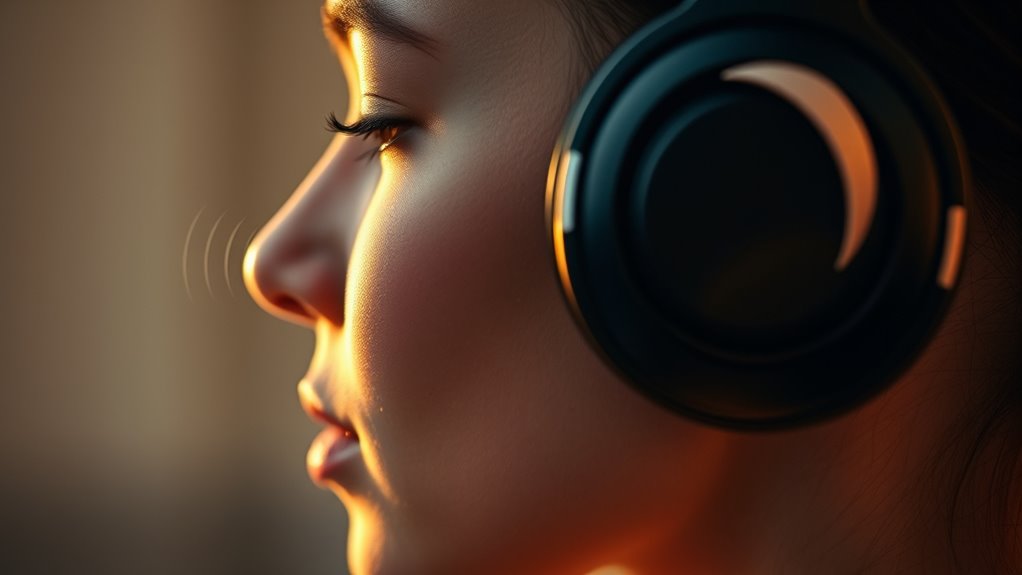
Listening to headphones at high volumes can cause lasting damage to your ears. When you listen too loud, you risk damaging your ear canal, which can lead to pain, ringing, or even long-term hearing loss. The key to protecting your ears is developing good volume awareness—being mindful of how loud you turn up your device. When you crank up the volume, you’re not just risking temporary discomfort; you’re potentially harming the delicate structures inside your ear, especially the tiny hair cells responsible for translating sound into signals your brain interprets. Once damaged, these cells don’t regenerate, making hearing loss permanent in severe cases.
Listening at high volumes can cause irreversible ear damage and long-term hearing loss.
To understand how loud is too loud, consider the environment and duration of listening. If you find yourself needing to turn the volume up to hear clearly over background noise, it’s a sign you should either reduce the noise level or use noise-canceling headphones. Listening at high volumes for extended periods increases the risk of ear canal damage and accelerates hearing deterioration. It’s a common mistake to think that louder is better; often, people get used to high volumes and forget that their ears are being subjected to harmful levels. Regularly checking your volume awareness can help prevent this.
A good rule of thumb is to keep your headphone volume below 60% of the maximum. Many devices now include volume limit settings or warnings to help you stay within a safe range. If you’re unsure, use the “halfway” mark as a guideline—if you can’t carry on a conversation comfortably while listening, the volume is likely too high. Also, take breaks. Giving your ears a chance to rest after every hour of listening can drastically reduce the risk of ear canal damage. Continuous exposure to loud sounds, even if only for a short time, adds up over days and weeks, gradually causing irreversible harm.
Additionally, understanding the horsepower of electric dirt bikes can serve as a reminder that the same principles of sound and power apply to protecting your hearing—using controlled, moderate levels ensures optimal performance without damage. Protecting your ears isn’t just about avoiding immediate pain; it’s about maintaining your hearing health long-term. Being aware of how loud you listen and recognizing the signs of potential damage can save you from future struggles with hearing loss or tinnitus. Remember, your ears are delicate, and once damaged, the effects are often permanent. Embrace volume awareness, use volume-limiting features, and take regular breaks to ensure that your enjoyment of music and audio doesn’t come at the expense of your hearing health. Your ears will thank you for it in the years to come.
noise-canceling headphones with volume limit
As an affiliate, we earn on qualifying purchases.
As an affiliate, we earn on qualifying purchases.
Frequently Asked Questions
How Long Can I Safely Listen at High Volumes?
You should limit your listening at high volume levels to no more than 15 minutes a day. The louder the volume, the shorter your hearing duration should be to prevent damage. For safe hearing, keep the volume below 60% of the maximum and take regular breaks. Listening at high volumes for extended periods can cause irreversible hearing loss, so always be mindful of your volume levels and duration.
What Are Signs of Hearing Damage From Headphones?
You might notice ear fatigue or a muffled feeling, which signals your hearing threshold is being pushed. If sounds become distorted or you experience ringing or pain after listening, it’s a warning sign of damage. These symptoms show your ears are struggling and that your hearing could worsen over time. Don’t ignore these signs; taking breaks now can help preserve your hearing and prevent long-term loss.
Do Different Headphone Types Pose Different Risks?
Yes, different headphone types pose varying risks. In-ear earphones, for example, may cause discomfort if too tight, affecting earphone comfort and increasing the risk of damage. Over-ear headphones are usually more comfortable and durable, making them safer for long-term use. However, regardless of type, using high volume levels can harm your hearing. Always choose headphones that balance comfort, durability, and safe listening practices to protect your ears.
Can Using Headphones at Low Volume Still Cause Hearing Loss?
Yes, even at low volume, your hearing can suffer if you ignore noise isolation and volume control. When you keep volume low but don’t block out external noise, you may turn up the volume unknowingly, risking damage. To protect your ears, use noise-isolating headphones and set a safe volume. Stay mindful, monitor your listening, and remember: moderation minimizes the risk of long-term hearing loss.
How Often Should I Take Breaks When Listening to Music?
You should take breaks every hour when listening to music, especially if you keep the volume within safe limits. This practice helps protect your ear health and prevents hearing fatigue. Lowering the volume limits on your headphones also reduces strain, so you can enjoy your music longer without risking damage. Remember, regular breaks allow your ears to recover and maintain ideal hearing quality over time.
ear protection headphones for safe listening
As an affiliate, we earn on qualifying purchases.
As an affiliate, we earn on qualifying purchases.
Conclusion
Remember, your ears are like delicate gardens—easily overwhelmed and hard to restore once damaged. Keep the volume in check, and don’t let your favorite tunes become sneaky thieves of your hearing. Think of your headphones as keys to a treasure chest; too loud, and you risk losing the precious sound forever. Protect your hearing now, and let your love for music grow wild and free, not muffled by the shadow of silence.
over-ear headphones with volume control
As an affiliate, we earn on qualifying purchases.
As an affiliate, we earn on qualifying purchases.
child-safe volume limiting headphones
As an affiliate, we earn on qualifying purchases.
As an affiliate, we earn on qualifying purchases.
Columbus Day / Indigenous Peoples' Day Picks
long weekend sales
As an affiliate, we earn on qualifying purchases.