
📊 Full opportunity report: Future-Proof Your Warehouse Safety With AI Near-Miss Detection on IdeaNavigator AI — validation score, market gap, and execution plan.
TL;DR
AI technology is being tested to analyze existing warehouse CCTV footage for near-misses, such as forklift-pedestrian proximity and rack contact. This development could improve safety monitoring and lower insurance premiums for warehouses.
AI-based near-miss detection technology is being tested for use with existing warehouse CCTV footage to help safety managers identify unsafe events in real-time or retrospectively. This development aims to improve safety oversight, reduce accidents, and potentially lower insurance costs for warehouses and third-party logistics providers.
The proposed system uses vision models capable of classifying forklift-pedestrian proximity, blind-corner conflicts, rack contact, and speed violations from commodity CCTV feeds. The initial pilot involves processing two weeks of archived footage from three mid-market warehouses, with the goal of generating weekly clips and severity reports for safety meetings, according to IdeaNavigator AI.
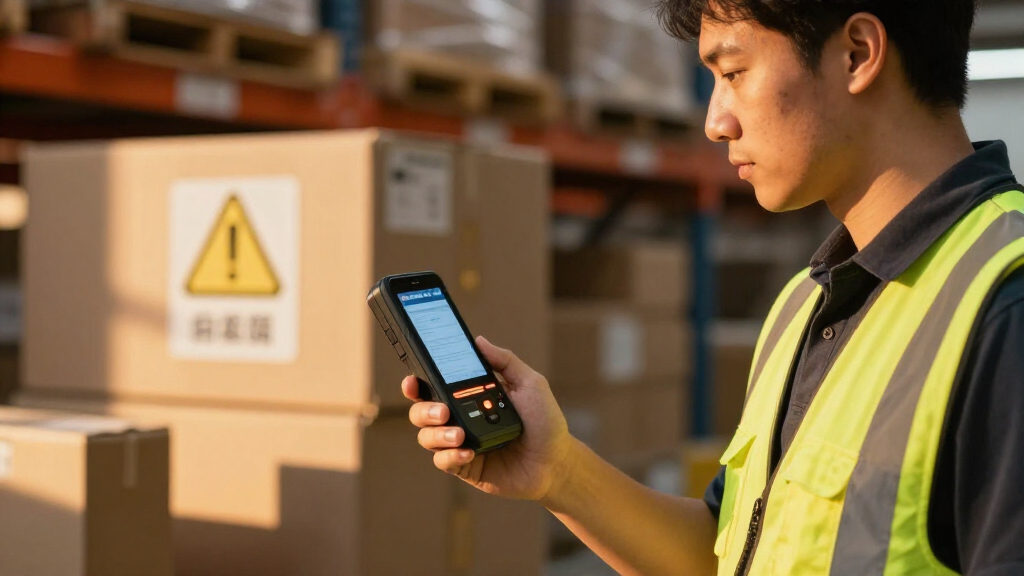
Safety managers at warehouses currently record hundreds of hours of CCTV daily, but most footage remains unanalyzed until an incident occurs, often leading to injuries or insurance claims. The new AI aims to automate the review process, flagging near-misses and unsafe behaviors that are otherwise difficult to detect manually.
Market experts note that this technology aligns with broader trends in industrial safety and environmental health and safety (EHS) software, and insurers are increasingly rewarding documented safety improvements, making this a potentially cost-effective solution for facilities.
Potential Impact on Warehouse Safety and Insurance Costs
This technology could significantly improve preventive safety measures in warehouses by providing real-time alerts and detailed incident reports. By systematically identifying near-misses, warehouses can address hazards proactively, potentially reducing injuries and operational disruptions. Additionally, documented safety improvements may lead to lower insurance premiums, offering financial incentives for early adoption.
Safety managers and industry analysts emphasize that integrating AI into existing CCTV infrastructure is a practical step toward smarter safety protocols, especially given the large volume of footage that currently goes unanalyzed. The ability to review and act on near-misses before they result in injuries could transform warehouse safety culture.
warehouse CCTV near-miss detection software
As an affiliate, we earn on qualifying purchases.
As an affiliate, we earn on qualifying purchases.
Growing Adoption of AI for Industrial Safety Monitoring
Warehouses and 3PL providers record extensive CCTV footage daily, but manual review is time-consuming and often incomplete. Recent advances in vision models now enable classification of safety-critical events from commodity CCTV feeds, making automated near-miss detection feasible. The idea of leveraging existing infrastructure aligns with ongoing efforts to improve safety without significant capital investment.
This initiative builds on prior developments in AI safety monitoring, which have shown promise in manufacturing and construction sectors. The current pilot reflects a broader industry trend toward data-driven safety management, with insurers actively encouraging such innovations to reduce claims and improve safety records.
“Processing existing CCTV footage with AI can reveal near-misses that would otherwise go unnoticed, enabling proactive safety interventions.”
— an anonymous researcher
AI safety monitoring system for warehouses
As an affiliate, we earn on qualifying purchases.
As an affiliate, we earn on qualifying purchases.
Uncertainties About Implementation and Effectiveness
It is not yet clear how accurately the AI models will classify near-misses in diverse warehouse environments or how effectively safety managers will adopt the technology. The pilot program is still in early testing, and results regarding false positives, user acceptance, and cost savings are pending.
Further, the scalability of this solution across different warehouse sizes and operational setups remains to be demonstrated, along with integration challenges with existing CCTV systems.
As an affiliate, we earn on qualifying purchases.
Next Steps for Pilot Testing and Industry Adoption
The initial pilot will run over the coming weeks, processing archived footage and generating safety reports. Success will be measured by safety managers’ willingness to pay for the service and the reduction in near-miss incidents. If results are promising, broader deployment and integration with safety protocols are expected in the next 6-12 months.
Industry stakeholders will monitor pilot outcomes, and further developments may include real-time alerts and expanded event detection capabilities.
As an affiliate, we earn on qualifying purchases.
Key Questions
How does the AI detect near-misses in warehouse CCTV footage?
The AI uses vision models trained to classify proximity events, blind-corner conflicts, rack contact, and speed violations from existing CCTV feeds, flagging potential safety hazards.
Will this technology reduce warehouse accidents?
While early results are promising, it remains to be seen how effectively the AI can prevent incidents. The goal is to identify near-misses proactively, which could lead to fewer accidents over time.
What are the costs involved for warehouses adopting this system?
The system is proposed as a per-facility monthly subscription scaled by camera count, with potential savings from insurance premium reductions and improved safety outcomes.
Is this AI solution compatible with all CCTV setups?
The initial focus is on commodity RTSP feeds, which are common in warehouses. Compatibility with specialized or proprietary systems may require additional development.
When will this technology be widely available?
The pilot testing is ongoing, with broader industry adoption expected within the next year if results are favorable.
Source: IdeaNavigator AI