
📊 Full opportunity report: Smart Resellers Use Value Scanners For Lego Bricks on IdeaNavigator AI — validation score, market gap, and execution plan.

Get the latest gadgets delivered free — and shop member deals
- Fast, free delivery on millions of items
- Access to Prime Big Deal Days deals on October 6–7
- Prime Video, Amazon Music and more included
TL;DR
A new app prototype uses photo analysis to estimate the value of loose Lego bricks, offering collectors and resellers a quick, rough price range. The tool aims to streamline valuation and sales, with testing underway among collectors.
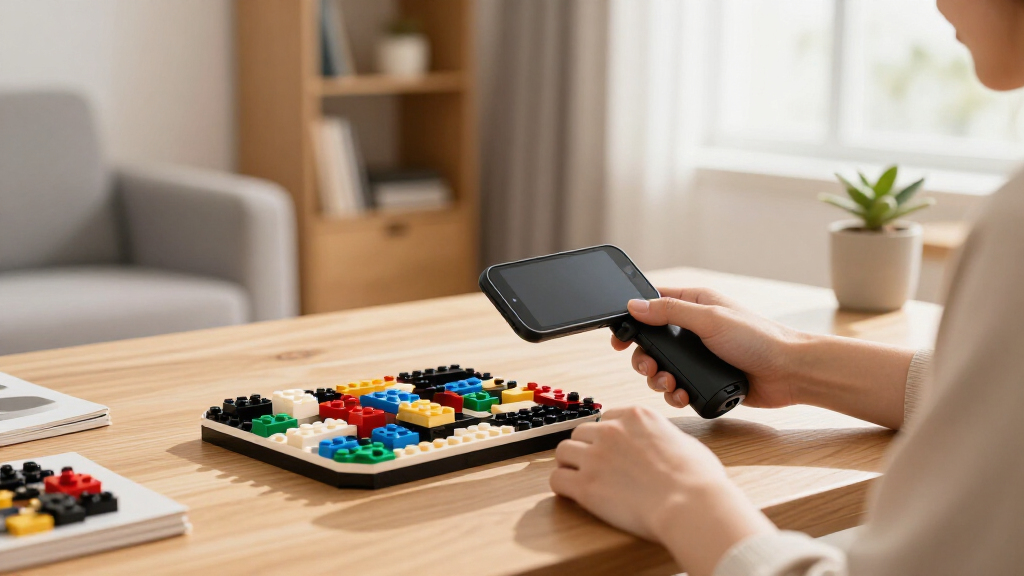
A new photo-based value scanner for loose Lego bricks is being tested to help collectors and resellers quickly estimate their pile’s worth, addressing a longstanding challenge in the secondary Lego market. The tool aims to provide a rapid, approximate valuation based on a photograph, potentially transforming how collectors assess and sell their bricks.
The proposed app allows a user to photograph a sample of their loose Lego pile, which then generates a rough value range and highlights high-value parts suitable for individual sale. The concept is designed specifically for collectors holding unsorted tubs of bricks, who currently lack efficient methods for estimating their pile’s worth or deciding which parts to sell separately.
According to an anonymous researcher involved in the project, the app will use image recognition and part-level price data from platforms like BrickLink to generate estimates. The initial testing involves manually appraising photos from fifteen collectors and comparing the app’s estimates with actual resale prices to validate its accuracy.
Developers plan to monetize the tool through subscription or per-scan fees for collectors and resellers, aiming to create a market for quick, accessible Lego valuation tools. The project is still in the prototype phase, with further development and testing scheduled.
Implications for Lego Resale and Collecting Markets
This development could significantly impact the secondary Lego market by making valuation faster and more accessible, potentially increasing sales and trade volume. For individual collectors, it offers a way to better understand their assets’ worth without extensive manual research, possibly encouraging more frequent trading. Resellers could benefit from more precise pricing, reducing guesswork and increasing profit margins.
As the Lego resale market grows, tools like this could become standard, influencing how collectors and traders assess their inventory and make buying or selling decisions. The ability to quickly estimate value from a photo might also attract new users to the market, expanding the community of Lego enthusiasts and traders.
As an affiliate, we earn on qualifying purchases.
Growing Demand for Digital Valuation Tools in Lego Collecting
While secondhand Lego trading is brisk on platforms like BrickLink and eBay, there has been no widely available tool that simplifies the valuation process for loose, unsorted bricks. Currently, collectors manually estimate value based on part rarity, condition, and market prices, which can be time-consuming and imprecise.
The idea of a photo-based value scanner emerges amid increasing demand for digital tools that streamline trading. Similar concepts have found success in other collectibles markets, prompting developers to adapt image recognition and AI to Lego collecting. The project is still in early development, with validation ongoing through manual comparison of app estimates against actual resale prices.
It remains unclear how accurately the app will perform across diverse brick piles and whether it will be adopted widely by the community. Further testing and refinement are planned before a broader rollout.
“The goal is to provide collectors with a quick, rough estimate of their pile’s value based on a single photo, reducing the need for manual research.”
— an anonymous researcher
As an affiliate, we earn on qualifying purchases.
Accuracy and Adoption Challenges in Photo-Based Valuation
It is not yet clear how precise the app’s estimates will be across different types and sizes of Lego piles, or how well it will perform with highly mixed or rare parts. The validation process is ongoing, and community acceptance remains uncertain as the tool is still in testing phases.
Additionally, questions remain about the scalability of the app, its ability to handle large or complex piles, and how it will be integrated into existing resale workflows.
As an affiliate, we earn on qualifying purchases.
Next Steps for Validation and Market Integration
Developers plan to expand testing to include more collectors and diverse Lego piles, refining the AI algorithms for better accuracy. They aim to publish detailed validation results and seek feedback from the community.
A broader beta release is expected once initial testing confirms the tool’s reliability. Future updates may include features like batch scanning, integration with resale platforms, and enhanced part recognition capabilities.
As an affiliate, we earn on qualifying purchases.
Key Questions
How accurate is the photo-based Lego value scanner?
The accuracy is currently being tested; early results involve comparing app estimates with actual resale prices. Final accuracy levels are not yet confirmed.
Will the app be free or require payment?
The developers plan to monetize through subscriptions or per-scan fees, targeting collectors and resellers.
Can this tool identify rare or unique Lego parts?
The app aims to recognize individual parts from photos, but its ability to identify rare or complex pieces is still under development and testing.
When will the app be widely available?
A broader release depends on successful validation and refinement, with no specific date yet announced.
How will this tool impact Lego resale prices?
If accurate, it could lead to more precise pricing, potentially increasing trade volume and profits for sellers, but its real-world impact remains to be seen.
Source: IdeaNavigator AI
Fall Picks
fall essentials
As an affiliate, we earn on qualifying purchases.