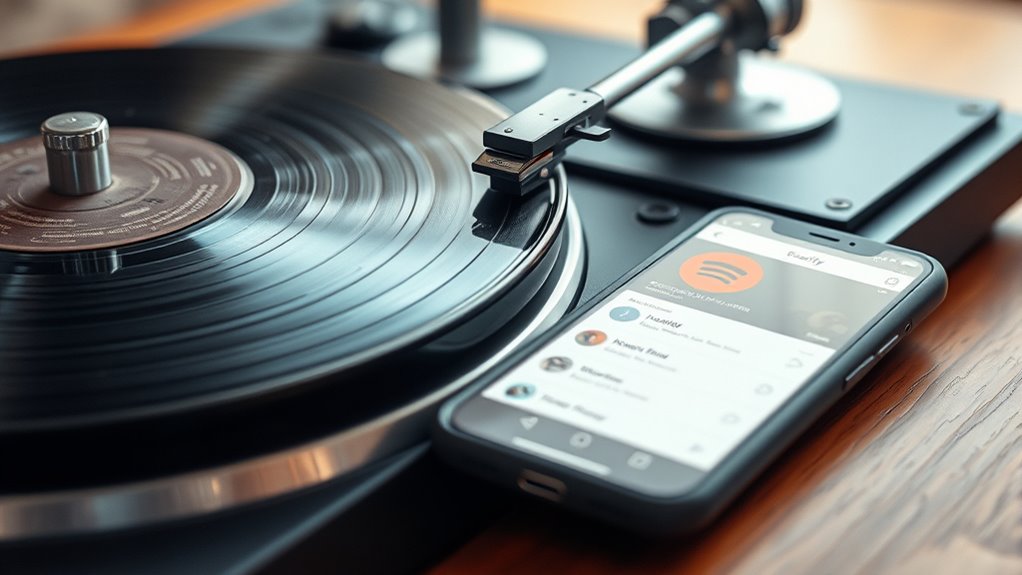

If you prefer a richer, warmer sound, you’ll notice vinyl’s analog process preserves nuances digital often compresses. Handling records creates a tactile ritual that deepens your emotional connection and engagement. Many feel vinyl’s imperfections and physicality add character and authenticity digital streaming can’t match. While digital offers convenience and instant access, vinyl’s ritual and sound quality appeal to those seeking a more mindful, immersive listening experience. Want to explore more about what makes vinyl special?
Key Takeaways
- Vinyl provides warmer, more natural sound quality due to analog processing, which many audiophiles find more authentic than digital streaming.
- The tactile experience of handling records and creating playlists fosters a deeper emotional connection with music.
- Analog media like vinyl preserve subtle audio nuances and imperfections that digital compression often loses.
- The ritual of playing vinyl enhances mindfulness and appreciation, contrasting with the instant access of digital platforms.
- Physical albums and artwork add visual and emotional value that digital streaming lacks.
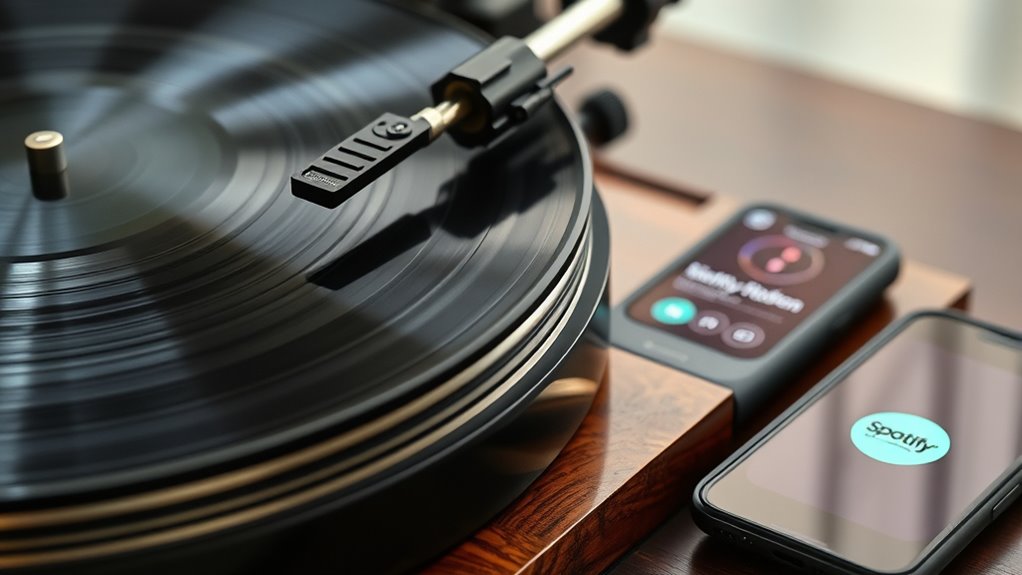
When it comes to listening to music, the choice between analog and digital formats can considerably impact your experience. If you’re someone who appreciates the tangible, warm qualities of sound, you might find yourself drawn to analog formats like vinyl records. But if convenience and instant access are more your style, digital streaming might seem unbeatable. Still, many audiophiles lean toward vinyl over digital streaming, and their reasons often boil down to texture, authenticity, and emotional connection.
Cassette tape nostalgia plays a significant role here. It reminds you of a time when music was more personal—handwriting track lists, creating mixtapes, and hearing that distinctive hiss that became part of the listening experience. That nostalgia isn’t just about retro appeal; it’s about the tactile nature of handling physical media. Vinyl offers a similar sense of ritual: placing the record on the turntable, gently dropping the needle, and watching the grooves spin. These actions create a more engaged, immersive experience that digital streaming simply can’t replicate. Digital files, on the other hand, are just a click away—accessible instantly on your device—making it incredibly convenient but somewhat detached from the physical act of listening.
Many audiophiles argue that vinyl sounds warmer and more natural. The analog process preserves the nuances of the original recording, resulting in a richer, fuller sound. Digital streaming, while offering unmatched convenience, often compresses audio files, losing some of those subtle details. This difference can be especially noticeable on high-quality sound systems, where the richness of vinyl truly shines. For these enthusiasts, that authenticity matters more than the ease of access. They prefer the deliberate, mindful act of selecting a record, cleaning it, and listening attentively, feeling more connected to the music itself.
Vinyl’s analog warmth captures subtle nuances, offering a richer, more authentic listening experience that digital compression often loses.
Additionally, the sound quality of vinyl is often considered superior because it is less susceptible to digital artifacts like compression and data loss. Of course, digital streaming offers incredible variety and portability. You can access millions of songs instantly, create playlists on the fly, and explore genres from around the world. It’s perfect for everyday listening, especially when you’re on the move. But for those who cherish the ritual and sound quality of vinyl, the digital convenience often falls short of providing the same emotional resonance. They value the physicality of record sleeves, the crackle and pop that add character, and the deliberate pace that encourages deeper appreciation.
In the end, whether you prefer the tactile charm of vinyl and cassette nostalgia or the effortless convenience of streaming, it all comes down to what enriches your listening experience. Each format has its own appeal, but for many audiophiles, the soulful, authentic sound of analog remains unmatched.

Vinyl Record Player Turntable with Built-in Bluetooth Receiver & 2 Stereo Speakers, 3 Speed 3 Size Portable Retro Record Player for Entertainment and Home Decoration
【Vintage Record Player】Bluetooth Input & AUX Audio input & RCA line-out & Headphone jack. 2 Built in stereo…
As an affiliate, we earn on qualifying purchases.
As an affiliate, we earn on qualifying purchases.
Frequently Asked Questions
How Does Vinyl Longevity Compare to Digital Formats?
Vinyl records, with proper record preservation, can last for decades, sometimes even centuries, thanks to their format durability. Digital formats, however, rely on technology and storage media that may degrade or become obsolete over time. You should prioritize careful handling and storage of vinyl to maintain sound quality, while regularly updating digital backups. Both formats can be long-lasting, but vinyl’s physical nature often offers superior longevity when properly cared for.
Can Digital Music Ever Fully Replicate Vinyl Sound Quality?
Digital music can’t fully replicate vinyl sound quality, as it’s like trying to capture the warmth of a sunset with a camera. While digital clarity offers pristine, exact sound, it often lacks the analog warmth that vinyl provides. You might find digital sounds crisp and clean, but vinyl’s rich, textured qualities create a more immersive experience. Essentially, digital can come close, but the soul of vinyl remains unmatched in authenticity.
Are There Health Concerns With Vinyl Record Manufacturing?
Yes, there are health risks associated with record manufacturing, especially during the vinyl production process. You might be exposed to chemicals like solvents, adhesives, and phthalates, which can pose respiratory and skin health concerns. It is crucial to follow safety guidelines, wear protective gear, and guarantee proper ventilation. Being aware of these hazards helps you reduce health risks while enjoying the process of creating or handling vinyl records.
What Are the Environmental Impacts of Vinyl Versus Digital?
Think of vinyl as a garden that needs careful tending, with its manufacturing footprint leaving a lasting mark on the environment. Its production involves plastics and chemicals, contributing to pollution and resource use. Digital music, like a breeze, has a smaller environmental impact, requiring less energy and waste. While vinyl’s warm sound is cherished, its environmental footprint is larger than the minimal impact of streaming digital files.
How Do Storage Costs Differ Between Vinyl and Digital Music Collections?
You’ll find that digital music collections are much more cost-efficient due to their high storage density, requiring minimal physical space and lower ongoing costs. Vinyl records, on the other hand, demand more storage space and incur higher costs for shelving and maintenance. Digital files are easier to back up and organize, making them more practical for large collections, while vinyl’s physical nature makes storage more expensive and less flexible.

HIGH FIDELITY – SOUNDTRACK : ORANGE VINYL
As an affiliate, we earn on qualifying purchases.
As an affiliate, we earn on qualifying purchases.
Conclusion
You might find that choosing vinyl feels like holding onto a treasured photograph, rich with warmth and character that digital sometimes lacks. Just like a handwritten letter carries more personality than an email, many audiophiles prefer the authentic, immersive experience of analog sound. Studies show vinyl sales have surged, proving that sometimes, going back to the basics offers a deeper connection. In the end, whether digital or analog, it’s your personal soundtrack that truly matters.

Daakro AK45 Stereo Audio Amplifier,300W Home 2 Channel Wireless Bluetooth 5.0 Power Amplifier System, Home Amplifiers FM Radio, USB, SD Card, with Remote Control Home Theater Audio Stereo System
【300W POWER】Daakro AK45 Digital Audio Amplifier Fully upgraded design, 300W+300W peak power and 40W+40W rated power, perfectly suitable…
As an affiliate, we earn on qualifying purchases.
As an affiliate, we earn on qualifying purchases.

Big Fudge Vinyl Record Cleaning Kit – 4-in-1 Vinyl Record Cleaner Kit for Records Includes Ultra-Soft Velvet Brush Cleaning Liquid Stylus Brush and Storage Pouch – Pro Records Care
Vinyl Cleaning Kit: Eliminate dust, dirt, and fingerprints with our ultra-soft velvet brush and XL cleaning solution in…
As an affiliate, we earn on qualifying purchases.
As an affiliate, we earn on qualifying purchases.