
Fitness trackers estimate calories burned by combining data from sensors like heart rate monitors and accelerometers. These devices analyze your activity type, intensity, duration, and personal details such as age and weight. Advanced algorithms make these estimates more accurate, but factors like device fit, sensor quality, and movement type can affect precision. Want to discover how different devices compare and tips for trusting your data? Keep exploring to find out more.
Key Takeaways
- Fitness trackers estimate calories burned using data from heart rate sensors, accelerometers, and activity type and intensity.
- Algorithms personalize calculations based on user-specific factors like age, weight, and gender.
- Data analysis incorporates GPS, motion patterns, and machine learning to improve accuracy over time.
- Sensor placement, device calibration, and movement type influence the precision of calorie estimates.
- Overall accuracy varies; high-end devices tend to be more reliable than basic models, but all have some margin of error.
The Sensors and Data Collection Methods
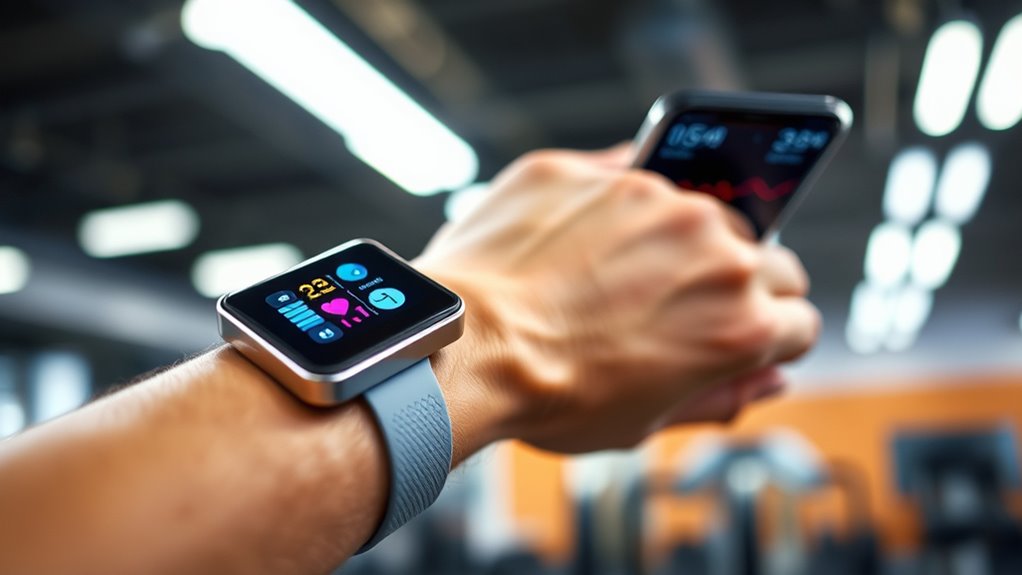
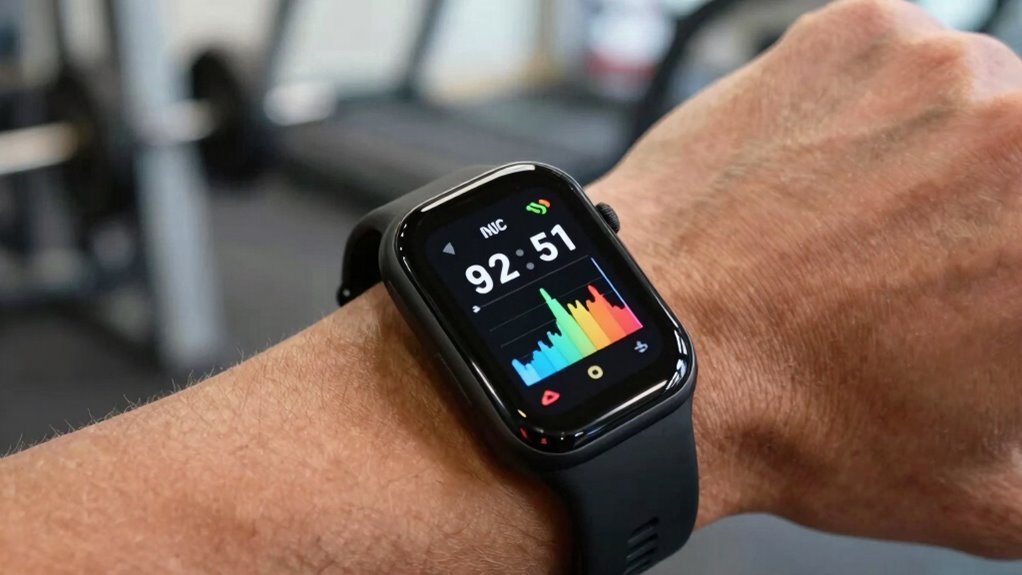
Since fitness trackers rely on sensors to gather data, understanding how these devices collect information is essential. Your tracker uses a heart rate sensor to monitor your pulse continuously, giving real-time data on your cardiovascular activity. Alongside this, the accelerometer captures accelerometer data, which tracks your movement patterns, steps, and overall activity level. The accelerometer detects tiny changes in motion, helping the device determine when you’re walking, running, or resting. Together, these sensors provide a detailed picture of your activity. The heart rate sensor offers insights into intensity, while accelerometer data tracks volume and frequency of movement. By combining these inputs, your tracker can better estimate your calorie expenditure during different activities. This sensor synergy forms the foundation of how fitness trackers monitor your physical effort. Additionally, some advanced devices incorporate smart home integration features to enhance data accuracy and provide personalized feedback, leveraging sensor data for more precise monitoring. Moreover, ongoing improvements in sensor technology continue to increase the reliability of calorie calculations, making the measurements more accurate and reliable.
How Algorithms Estimate Calories Burned
Once your fitness tracker collects data from its sensors, algorithms step in to interpret this information and estimate your calorie burn. These calorie algorithms analyze your activity type, intensity, and duration to provide an exercise estimation of calories burned. They consider factors like heart rate, steps taken, and motion patterns to improve accuracy. The algorithms use predefined formulas that factor in your age, weight, and gender to personalize estimates. Additionally, connected equipment enhances data collection and algorithm precision. Incorporating wearable device features like GPS and accelerometers can further enhance the detail and accuracy of these calculations. Advanced calculation models leverage machine learning techniques to refine estimations over time, making the data increasingly reliable. Understanding fitness technology advances helps users better interpret their activity data and make informed health decisions.
Factors Affecting Tracker Accuracy
Several factors can influence how accurately your fitness tracker estimates calories burned. Your heart rate plays a vital role, as higher rates typically mean more calories burned, but inaccurate wrist readings can skew results. Step count accuracy depends on the device’s sensors and placement; miscounted steps lead to errors. Other elements include device quality, skin tone, and movement type. The table below highlights common factors affecting accuracy:
| Factor | Impact | Tip |
|---|---|---|
| Heart rate sensor | Inaccurate readings reduce estimate quality | Wear snugly, keep sensor clean |
| Step count | Miscounts can inflate or deflate calories | Check device calibration |
| Skin tone | Affects sensor light reflection | Use devices with advanced sensors |
| Movement type | Non-walking activities may be underestimated | Choose activity-specific trackers |
| Device placement | Poor positioning skews data | Wear on the wrist snugly |
Additionally, software algorithms used in trackers can influence the overall accuracy of calorie estimates. It is also important to note that different devices may use varying measurement techniques, which can further impact their precision. Furthermore, sensor technology advancements continue to improve the reliability of calorie calculations in modern fitness trackers.
Comparing Different Devices and Their Precision
When choosing a fitness tracker, understanding how different devices vary in precision is essential. Some trackers excel at measuring heart rate, offering more accurate calorie estimates during workouts. Others focus on stride length, improving step count accuracy and energy expenditure calculations. Higher-end models often use advanced sensors, like optical heart rate monitors and accelerometers, to refine data. Cheaper devices may rely on basic algorithms, leading to less reliable results. You’ll notice differences in how well trackers adapt to your activity level, especially during varied intensities. Some devices sync with GPS, enhancing distance and stride length accuracy, which directly impacts calorie calculations. Additionally, reliable backup power options can ensure your fitness tracker stays charged during extended use or outdoor activities. It’s also helpful to consider how sensor technology impacts the overall accuracy of the device. For example, newer models incorporate advanced sensors that better detect subtle movements and physiological signals, improving data quality. Moreover, the incorporation of calibration features can help personalize the device’s measurements to your unique activity patterns, further enhancing accuracy. Understanding how data processing algorithms work can also give insights into the potential accuracy of calorie calculations. Ultimately, selecting a device depends on whether precision in heart rate, stride length, or overall activity tracking matters most to you.
Tips for Interpreting Your Fitness Data
To make the most of your fitness data, it’s important to understand what the numbers really mean. Your heart rate provides insight into how hard you’re working during exercise, helping you gauge intensity and progress. Remember, a higher heart rate isn’t always better—it should match your fitness goals. Step counting gives a clear picture of your activity level throughout the day, but don’t rely solely on these numbers. Look for patterns over time rather than focusing on daily fluctuations. Consider how your heart rate and step data relate to your overall activity and energy expenditure. Use this information to set realistic goals and track improvements. Additionally, understanding measurement accuracy helps you make more informed decisions about your progress and adjust your efforts accordingly. Recognizing how AI-driven research can influence fitness technology might also lead you to more innovative tools for tracking your health. For example, advancements in sensor technology continue to improve the reliability of these devices.
Frequently Asked Questions
Can Fitness Trackers Measure Calories Burned During Non-Exercise Activities?
Yes, your fitness tracker can measure calories burned during non-exercise activities. It uses your step counter to track movement and your heart rate to gauge effort levels. This combination helps estimate calories burned during daily activities like walking, cleaning, or even standing. Keep in mind, though, that accuracy varies based on device quality and how well it fits you. Regularly syncing data improves overall tracking performance.
How Do Different Body Types Affect Calorie Estimates?
Your body type influences calorie estimates because of differences in body composition and metabolic variations. A higher muscle mass burns more calories at rest, so your tracker might underestimate or overestimate your calories burned if it doesn’t account for this. Similarly, metabolic rates vary among individuals, affecting accuracy. Keep in mind that fitness trackers use general algorithms, so they may not perfectly reflect your unique body composition and metabolic differences.
Do Waterproof Trackers Provide the Same Accuracy Underwater?
Waterproof sensors aim to keep up with your swim, but their underwater accuracy can vary like a boat on choppy seas. While many waterproof trackers are designed to handle water, some may lose precision underwater, especially during vigorous activity. You might notice slight differences in calorie estimates, but overall, quality waterproof trackers generally provide reliable data. Just remember, the more advanced the device, the better your chances of accurate underwater readings.
Can User Input Errors Significantly Impact Calorie Calculations?
User input errors and incorrect user calibration can greatly impact your calorie calculations. If you enter inaccurate data like weight, age, or activity type, the tracker won’t give precise results. Always double-check your data entry and regularly calibrate your device to improve accuracy. Small mistakes can lead to big discrepancies, so being attentive ensures your fitness tracker provides the most reliable calorie estimates possible.
Are There Specific Features That Improve Calorie Measurement Precision?
Yes, features like sensor calibration and advanced algorithm complexity improve calorie measurement precision. Regularly calibrating sensors guarantees accurate data collection, reducing errors. Sophisticated algorithms analyze your heart rate, movement, and personal data more effectively, leading to better estimates. Look for fitness trackers with these features, as they tend to provide more reliable calorie counts, especially during varied activities, helping you track progress more accurately and make informed fitness decisions.
Conclusion
Understanding how fitness trackers calculate calories helps you make sense of your progress. While they’re valuable tools, remember they’re like a compass—guiding you, not giving a perfect map. Keep in mind factors like device type and activity level can sway accuracy. Use your tracker as a helpful guide, but trust your body and instincts too. With a little knowledge, you’ll navigate your fitness journey with confidence and clarity.