Smart glasses have the potential to be the next big thing, offering innovative features like AR, smart integration, and stylish designs. However, challenges like limited battery life, high costs, privacy concerns, and design hurdles still hold back wider adoption. If these issues are addressed, they could become mainstream, but caution remains. Stick around to discover how future innovations might determine whether smart glasses succeed or fade away.
Key Takeaways
- Technological advancements and stylish designs boost smart glasses’ potential, but privacy, battery, and cost concerns hinder widespread adoption.
- Industry leaders are focusing on integrating AR, health features, and seamless connectivity to increase consumer appeal.
- Consumer skepticism, privacy fears, and high prices remain significant barriers to mainstream success.
- Market saturation and limited growth potential could cause smart glasses to become a passing fad without sustained innovation.
- Long-term viability depends on balancing technological progress, user trust, and addressing key usability and privacy challenges.
The Evolution of Smart Glasses: From Concept to Reality
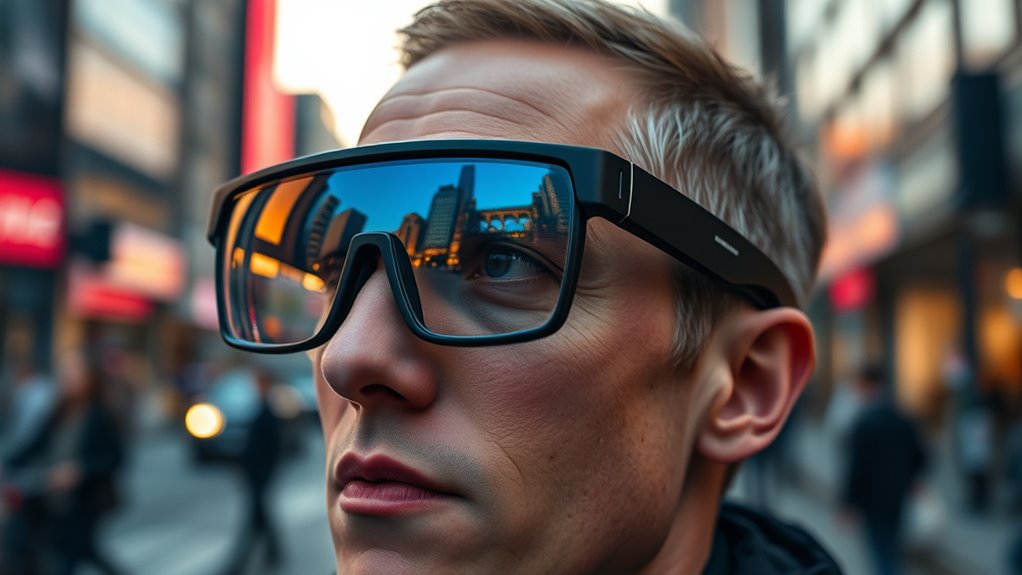
The journey of smart glasses from a futuristic idea to a tangible product has been marked by rapid technological advances and shifting consumer expectations. Over time, they’ve evolved from bulky prototypes to sleek, stylish accessories, reflecting a significant fashion evolution. Designers now prioritize aesthetics, blending functionality with trendiness to appeal to a broader audience. However, this progress also raises ethical implications, such as privacy concerns and data security. As smart glasses become more integrated into daily life, you need to contemplate how they impact personal privacy and societal norms. The transformation highlights a delicate balance between innovation and responsibility, shaping how these devices are perceived and adopted. Additionally, the development of energy-efficient cloud solutions plays a crucial role in supporting the infrastructure needed for secure and sustainable smart device ecosystems. Furthermore, advancements in wireless connectivity enable seamless data transfer and real-time interaction, enhancing user experience and functionality. This progress underscores the importance of color accuracy in making these devices more appealing and user-friendly. Moreover, ongoing research into user interface design is vital for improving ease of use and accessibility. Battery technology also continues to improve, supporting longer usage times and reducing device size, which is essential for widespread adoption. Ultimately, this evolution marks a pivotal step in turning a visionary concept into an everyday reality.
Key Features and Innovations Driving the Market
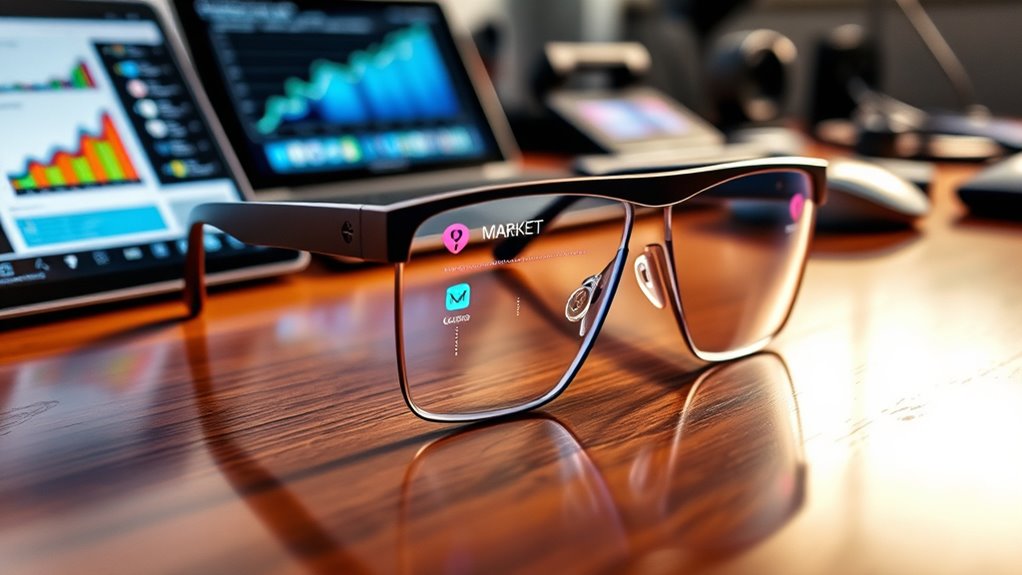
Smart glasses are pushing the market forward with augmented reality capabilities that augment your experience. Their lightweight, stylish designs make them easy to wear all day without feeling bulky. Plus, advanced connectivity features ensure seamless integration with your devices, keeping you connected on the go. These innovations are also driving the development of specialist sites that help users maximize their tech investments effectively. Additionally, ongoing research and user feedback are essential to addressing potential challenges like privacy concerns and ensuring reliable performance. Incorporating wearable tech into daily routines can enhance outdoor safety and convenience, especially for activities like hiking and camping. Integrating smart home technology can further enhance user convenience by enabling control of connected devices directly through the glasses. Staying informed about cutting-edge trends can help consumers make smarter decisions as this technology evolves.
Augmented Reality Capabilities
Augmented reality capabilities are the driving force behind the evolving appeal of smart glasses, offering innovative features that enhance user interaction. These capabilities overlay digital information onto your real-world view, making tasks more intuitive and immersive. However, privacy concerns arise as these devices collect and share data in real-time, raising questions about user security. Battery limitations also restrict extended use, often requiring frequent recharging that hampers seamless experience. To deepen your understanding:
| Key Features | Implications |
|---|---|
| Real-time data overlays | Enhances productivity |
| Continuous AR display | Risks privacy breaches |
| Power consumption challenges | Affects device longevity |
These innovations are exciting but face hurdles like privacy and battery issues that could slow market adoption.
Lightweight and Stylish Design
As designers tackle the privacy and battery challenges of AR smart glasses, they’ve shifted focus toward creating devices that are more comfortable and stylish. This push for fashion innovation enhances user comfort by making smart glasses feel natural and unobtrusive. To achieve this, manufacturers are:
- Incorporating sleek, lightweight materials for minimal weight
- Using slim, modern frames that blend with everyday fashion
- Prioritizing ergonomic designs for extended wear
- Offering customizable styles to match personal taste
- Integrating subtle aesthetics that eliminate the “tech look”
These innovations make smart glasses more appealing, encouraging adoption by seamlessly fitting into your daily wardrobe. The emphasis on lightweight and stylish design isn’t just about looks; it’s about making technology feel like a natural extension of your personal style.
Advanced Connectivity Features
Advanced connectivity features are transforming smart glasses from simple accessories into powerful, integrated devices. With wearable sensors, your glasses can monitor health metrics, track movement, and provide real-time feedback. These sensors enable seamless data collection without extra effort, making your experience more intuitive. Voice recognition further enhances connectivity by allowing you to control functions hands-free, answer calls, or access information simply by speaking. This technology makes interactions more natural and efficient, reducing dependency on touchscreens or manual inputs. Together, wearable sensors and voice recognition create a smarter, more responsive device capable of integrating with your other gadgets and cloud services. As a result, smart glasses become not just stylish accessories but essential tools for productivity, health, and connectivity on the go.
Major Players and Their Latest Offerings

Major companies are racing to establish dominance in the smart glasses market, each revealing their latest offerings to capture consumer interest. These wearable technology devices focus on improving the user interface, making interactions more intuitive and seamless. Leading brands like Apple, Google, and Snap are pushing boundaries with new designs and features, aiming to blend style with functionality. They emphasize lightweight frames, improved battery life, and integrated sensors. To deepen your understanding, consider:
- Advanced display technology for clearer visuals
- Voice-controlled commands for hands-free use
- Enhanced privacy features to address concerns
- Compatibility with existing ecosystems
- Customizable options for personal style
- Electrical concepts are fundamental to the development of safe and effective wearable devices.
These innovations demonstrate how major players are refining their products to meet the evolving expectations of consumers, shaping the future of wearable technology.
Consumer Reception and Adoption Challenges
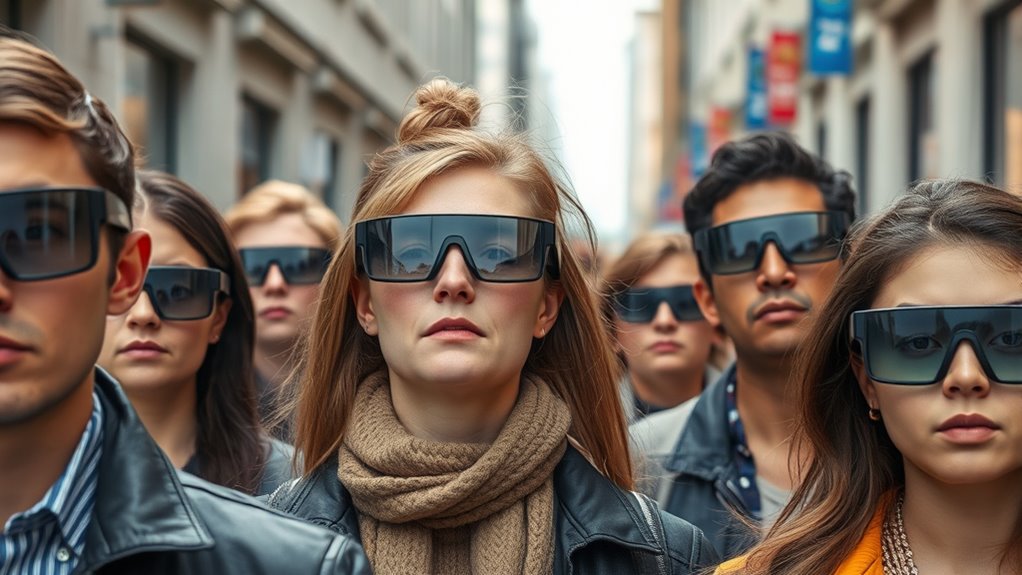
Despite the innovative features and sleek designs introduced by leading brands, consumer reception of smart glasses remains mixed. Many remain skeptical about their practicality and privacy impact, fueling market skepticism. Building consumer trust proves difficult when fears of constant surveillance and high costs persist. Adoption challenges are evident in hesitant purchases and limited long-term use. Imagine the following:
| User Experience | Perception | Market Response |
|---|---|---|
| Confusing controls | Privacy concerns | Slow sales growth |
| Limited app support | Style envy | Hesitation to buy |
| Battery life doubts | Trust issues | Modest market size |
| High price tags | Skepticism | Slow adoption rates |
| Privacy fears | Consumer trust | Market uncertainty |
These factors hinder widespread adoption, keeping smart glasses from reaching their full potential. Additionally, user interface design plays a critical role in shaping consumer perceptions and can either facilitate or hinder adoption success. As the privacy implications of constant data collection become more apparent, overcoming such concerns remains a significant hurdle for manufacturers. Furthermore, market education about the benefits and limitations of smart glasses could help alleviate some consumer doubts. Recognizing the importance of perceived value can also influence consumers’ willingness to adopt new technology. Moreover, integrating AI-powered personalization into smart glasses could enhance user experience and demonstrate their practical benefits.
Technical Hurdles: Battery Life, Design, and Usability
You’ll find that limited battery life hampers continuous use, making it tough to rely on smart glasses all day. At the same time, balancing ergonomic comfort with sleek design remains a major challenge for manufacturers. These issues directly impact how usable and appealing the devices are to everyday users. Additionally, addressing auditory processing challenges in users could enhance the overall experience by improving sound clarity and communication. Incorporating seasonal maintenance tips to optimize device longevity and performance can also be beneficial.
Limited Battery Duration
Limited battery life remains a significant obstacle for smart glasses, as most devices struggle to balance power consumption with sleek design and user convenience. Battery drain occurs quickly if features like displays and sensors aren’t optimized, making it hard to extend usage time. Effective power management is essential but challenging, often leading to compromises on performance or size. To improve battery duration, manufacturers must innovate in areas such as energy-efficient components and smarter software. Without breakthroughs, smart glasses risk becoming impractical for daily use. Consider these points:
- Compact batteries limit overall capacity
- High power demands reduce runtime
- Continuous data streaming accelerates battery drain
- Balancing performance with energy efficiency is tough
- Advanced power management techniques are critical for success
Ergonomic and Aesthetic Challenges
Designing smart glasses that are both comfortable to wear and visually appealing presents significant technical hurdles. Achieving an ergonomic design requires balancing lightweight materials with sturdy construction, so they don’t feel bulky or cause discomfort during extended use. You need to contemplate how the glasses fit different face shapes and guarantee they’re easy to adjust. At the same time, maintaining aesthetic appeal is vital; bulky or unattractive designs can deter users. Developers struggle to create sleek, stylish frames that accommodate all necessary hardware without sacrificing style. The challenge lies in integrating components seamlessly, avoiding obtrusive elements that ruin the look. Additionally, hardware integration remains a complex task, as miniaturizing components while preserving durability and performance is critical. Ultimately, you must prioritize both comfort and visual appeal to make smart glasses a desirable everyday accessory, not just a tech novelty.
Privacy and Security Concerns in Smart Glasses
As smart glasses become more integrated into daily life, concerns about privacy and security grow sharper. You might not realize how much data privacy is at stake when using these devices. Hackers pose hacking risks that could expose sensitive information or spy on you without consent. To better understand, consider these points:
- Unauthorized data collection can happen without your knowledge
- Live video streaming could reveal private moments
- Bluetooth and Wi-Fi connections increase hacking vulnerabilities
- Stored data might be targeted in cyberattacks
- Facial recognition features could compromise anonymity
- The proliferation of connected devices raises security concerns that users must address to protect their personal information.
- Ensuring proper encryption protocols can help mitigate some of these security risks and protect user data.
These risks highlight the importance of security measures. Protecting your data privacy requires awareness and cautious use, as vulnerabilities in smart glasses could lead to serious privacy breaches.
The Impact of Cost and Accessibility on Adoption
The high cost of smart glasses often acts as a significant barrier to widespread adoption, making them inaccessible to many potential users. Cost barriers prevent a broad audience from experiencing their benefits, limiting market growth. Accessibility issues also play a role, as advanced features and hardware can be difficult to obtain or afford. If smart glasses remain priced out of reach, only a small segment of consumers will consider adopting them. This restricts innovation to a niche market and slows overall progress. To truly become mainstream, manufacturers need to address these issues by reducing production costs and offering more affordable options. Without improvements in affordability and accessibility, the technology risks remaining a luxury rather than transforming everyday life for the masses. Well-sourced coverage helps ensure that the development of such technologies is guided by accurate information and broad consensus. Additionally, addressing cost and accessibility challenges is crucial for fostering wider adoption and technological advancement, which can be hindered by high prices and limited availability. Building on this, manufacturers’ pricing strategies must evolve to make smart glasses more competitive in the consumer market.
Future Trends and Potential Breakthroughs
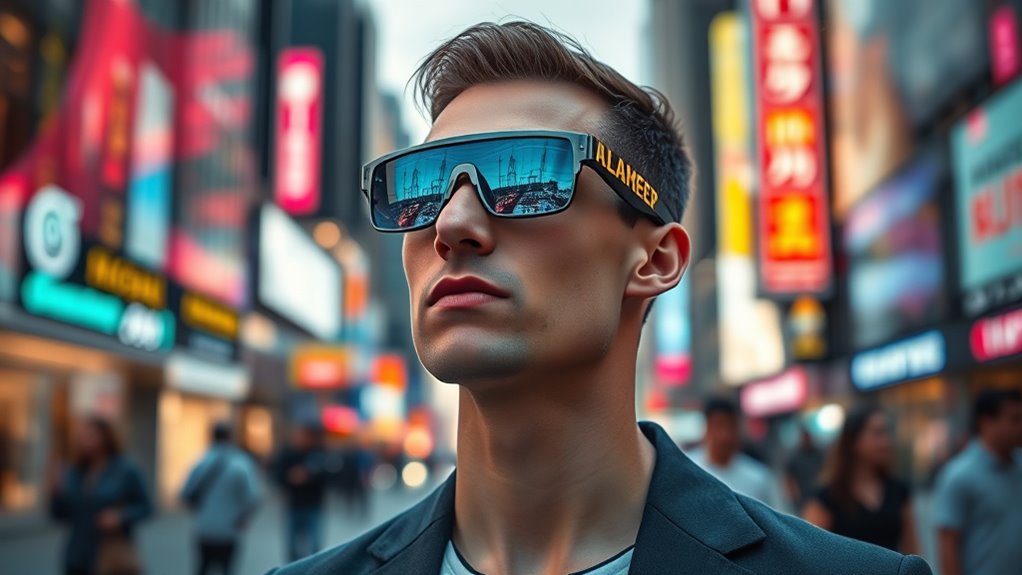
Advancements in technology and manufacturing are paving the way for innovative breakthroughs that could reshape the future of smart glasses. You might see enhanced wearable health features, such as real-time vital sign monitoring and personalized health insights, making these devices essential health companions. Fashion integration will likely improve, allowing seamless blending with your personal style through customizable frames and stylish designs. Future trends may include expanded augmented reality capabilities, more intuitive interfaces, and better battery life, ensuring longer, more practical use. These developments aim to make smart glasses more appealing and functional, encouraging widespread adoption.
- Wearable health sensors that track more than just steps
- Fashion-forward designs for every style
- Enhanced AR for immersive experiences
- Smarter, more discreet interfaces
- Extended battery life for all-day use
Assessing the Long-Term Viability of Smart Glasses
Evaluating the long-term viability of smart glasses requires considering both technological sustainability and market acceptance. If market saturation occurs quickly, demand may decline, making sustained growth difficult. Consumer skepticism about privacy, usability, and value also hampers adoption. To visualize these factors:
| Factors Influencing Viability | Key Concerns |
|---|---|
| Technological Sustainability | Battery life, durability |
| Market Saturation | Limited growth potential |
| Consumer Skepticism | Privacy, usefulness, price |
If these challenges aren’t addressed, smart glasses risk becoming a fleeting trend rather than a lasting innovation. Continuous advancements and consumer trust will determine whether smart glasses can carve out a long-term niche or fade into obscurity.
Frequently Asked Questions
How Do Smart Glasses Compare to Smartphones in Daily Usability?
Smart glasses offer wearable convenience that keeps your hands free and enhances screen portability, making them more seamless than smartphones for quick info access. You can glance at notifications or directions without pulling out a bulky device, improving daily usability. However, smartphones still surpass smart glasses in overall functionality and battery life. While smart glasses excel in discreet, on-the-go use, they currently complement rather than replace smartphones in your daily routine.
What Are the Environmental Impacts of Producing Smart Glasses?
You might not realize it, but producing smart glasses impacts the environment through their environmental footprint. Manufacturing involves rare materials and energy-intensive processes, which pose sustainability challenges. These devices often contribute to electronic waste if not properly recycled. To minimize your impact, support brands committed to eco-friendly production and recycling programs. Being mindful of these factors helps reduce the sustainability challenges associated with smart glasses and promotes a greener future.
Can Smart Glasses Fully Replace Traditional Eyewear?
Smart glasses can’t fully replace traditional eyewear yet because of privacy concerns and aesthetic appeal. You might worry about being recorded unknowingly or feeling uncomfortable with bulky designs. While they offer advanced features, many users prefer the classic look and simplicity of regular glasses. Until manufacturers improve privacy safeguards and create sleeker, more stylish options, smart glasses will likely remain a complementary gadget rather than a complete replacement.
How Do Smart Glasses Integrate With Existing Digital Ecosystems?
Smart glasses seamlessly integrate with your existing digital ecosystem by syncing with your smartphones, cloud services, and apps, allowing you to access notifications, navigation, and multimedia effortlessly. However, you need to be mindful of privacy concerns and data security, as these devices collect and transmit personal information. Ensuring strong encryption and managing permissions help protect your data while enhancing your connected experience.
What Legal Regulations Govern the Use of Smart Glasses in Public?
You should know that legal regulations for smart glasses in public focus on privacy concerns and data security. Laws vary by country, but many require user consent before recording or transmitting data. You must respect others’ privacy rights and avoid unauthorized recording, as violations can lead to fines or legal action. Staying informed about local laws helps you use smart glasses responsibly and avoid unintentional legal issues.
Conclusion
While smart glasses are shaping up to be the next big thing, they still have a long way to go before hitting their stride. Technical hurdles, privacy worries, and high costs are holding them back. But if manufacturers can iron out these kinks, they could really take off. Don’t count them out just yet—you might be holding the future in your hands sooner than you think. The ball’s in their court now.