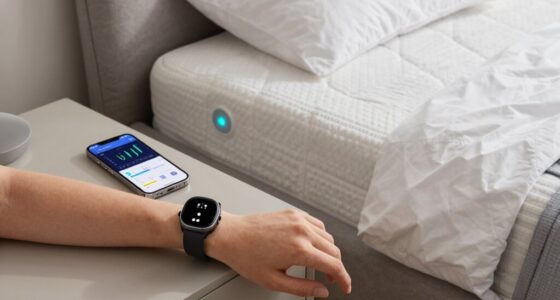
Wearables measure blood oxygen through pulse oximetry using light sensors, and ECG with built-in electrodes to track electrical signals. Their accuracy depends on device quality, proper placement, calibration, and environmental factors like movement or skin tone. While they provide useful health trends, they don’t match the precision of medical equipment. To understand how these features can support your health, keep exploring how technology continues to improve in this field.

Get the latest gadgets delivered free with Prime
- Fast, free delivery on millions of items
- Prime Video, Amazon Music and more included
- Member-only deals all year
Key Takeaways
- Wearable ECG and blood oxygen sensors are improving but still can’t match medical-grade device accuracy due to technical limitations.
- Factors like skin tone, movement, and sensor placement can significantly affect measurement accuracy.
- Proper calibration, firmware updates, and high-quality sensors enhance reliability but cannot eliminate all errors.
- Wearables provide valuable trend data but may have measurement variability, requiring cautious interpretation for clinical decisions.
- Data security and privacy are crucial as accurate health readings are transmitted and stored digitally, necessitating robust protections.
As an affiliate, we earn on qualifying purchases.
How Wearables Measure Blood Oxygen Levels
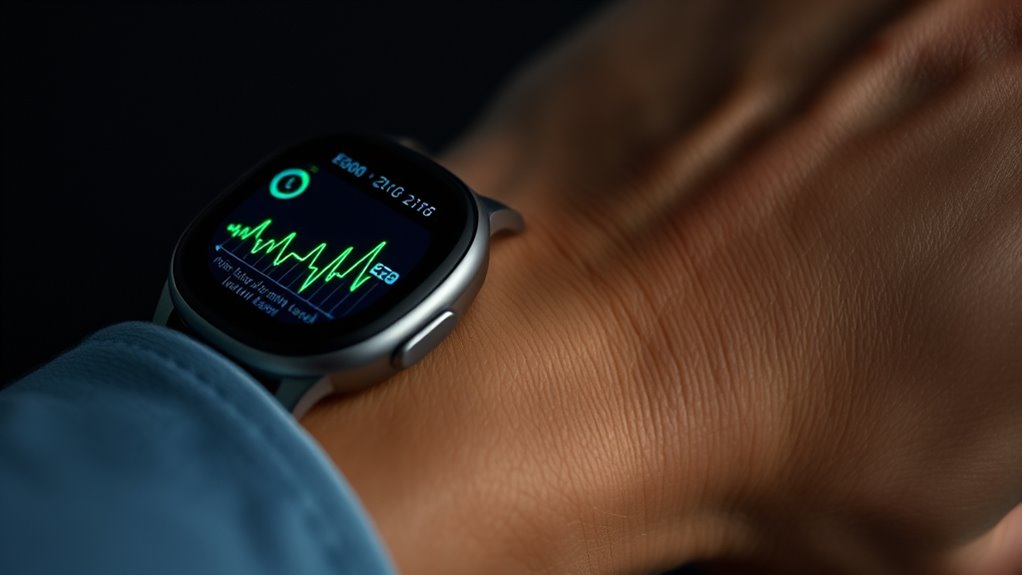
Wearables measure blood oxygen levels primarily through a technique called pulse oximetry. This method uses sensors that emit light into your skin and detect how much is absorbed by blood. Accurate readings depend on proper sensor calibration, guaranteeing the device interprets data correctly. Manufacturers often update calibration algorithms to improve precision and reliability. As you use these devices, consider data privacy—your health information is transmitted and stored digitally. Reputable brands implement encryption and strict privacy policies to protect your data. While pulse oximetry provides quick insights, remember that environmental factors or movement can affect accuracy. Proper sensor calibration is essential for accuracy, ensuring that measurements reflect your true blood oxygen levels. Always verify your device is well-calibrated and sourced from trustworthy manufacturers to get the most reliable blood oxygen measurements while safeguarding your privacy. Incorporating quality components can significantly enhance the overall performance of health wearables, especially when paired with accurate measurement techniques. Regular device updates, including firmware upgrades, can further improve measurement consistency and security.
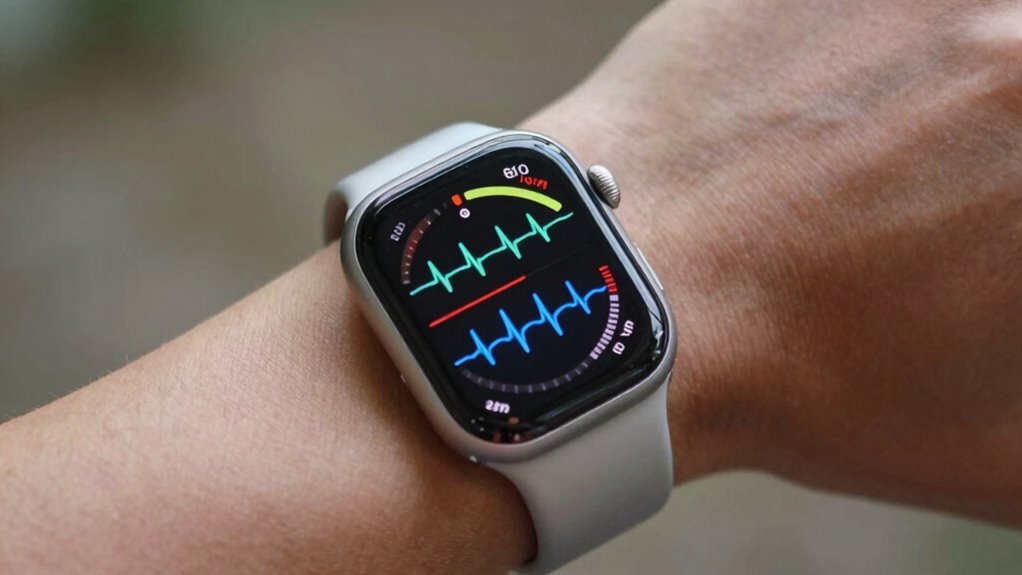
ECG fitness tracker with ECG sensors
As an affiliate, we earn on qualifying purchases.
As an affiliate, we earn on qualifying purchases.
The Technology Behind ECG Functionality in Devices
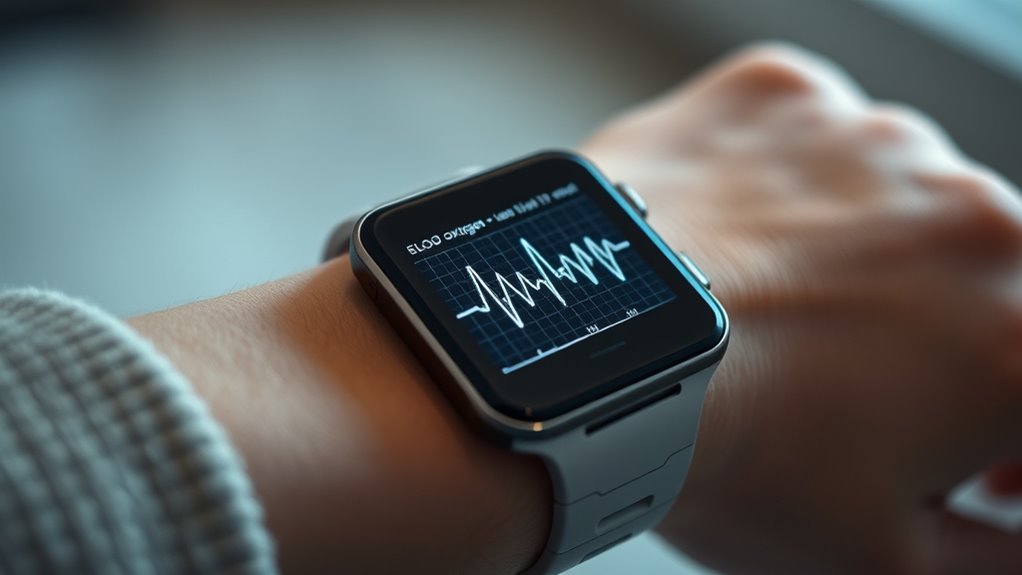
Building on how wearables measure blood oxygen levels, their ECG functionality relies on embedded electrodes that detect the heart’s electrical signals. To guarantee accuracy, manufacturers perform regular sensor calibration, which fine-tunes the device’s readings. When you record an ECG, your device captures electrical signals and processes them through algorithms that filter noise and improve reliability. Data encryption plays a vital role here, safeguarding your sensitive health information during transmission and storage. As you use the device, it continuously updates calibration settings to maintain precision. Additionally, secure data encryption methods ensure your ECG data remains private, preventing unauthorized access. Proper sensor calibration is essential for maintaining consistent and accurate health data over time. Regular software updates also help in optimizing sensor performance, ensuring ongoing accuracy and reliability. Incorporating advanced calibration techniques can further enhance measurement accuracy and device reliability. Moreover, ongoing research and development in sensor technology contribute to improved overall device performance.
As an affiliate, we earn on qualifying purchases.
Factors Affecting the Accuracy of SpO2 Readings
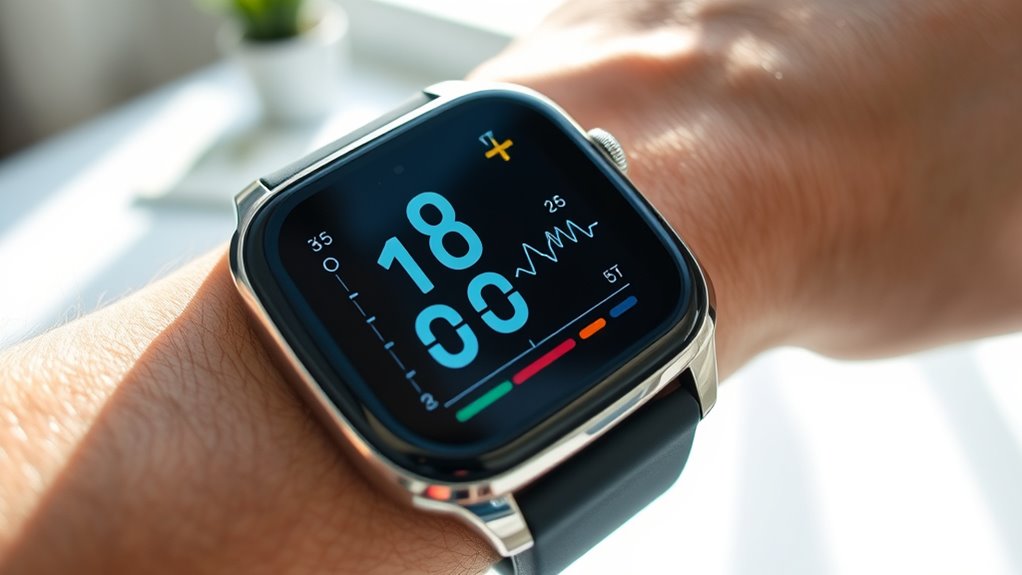
Your SpO2 readings can be affected by several factors. Variations in skin tone, inconsistent wrist placement, and movement during measurement can all introduce errors. Understanding these influences helps you get more accurate and reliable results. Additionally, wearable device accuracy can vary depending on the quality of sensors and calibration. A methodical approach to measurement can help minimize errors and improve consistency. Regularly updating device firmware and following manufacturer guidelines can further enhance measurement reliability.
Skin Tone Variations
Skin tone variations can substantially impact the accuracy of SpO2 readings from wearables. Darker skin pigmentation can absorb more light, making it harder for sensors to detect the oxygen saturation levels accurately. This effect occurs because the device’s light-emitting diodes (LEDs) may be less effective in penetrating pigmented skin. To improve accuracy, consider these factors:
- Thicker or darker skin can lead to underestimation of blood oxygen levels.
- Variations in skin pigmentation influence how much light is absorbed, affecting sensor readings.
- Calibration algorithms may need adjustment to account for diverse skin tones for more reliable results.
- Sensor technology continues to evolve to better accommodate different skin tones and improve measurement precision.
- The development of multispectral sensors aims to enhance measurement accuracy across various skin tones, contributing to more equitable health monitoring.
- Additionally, advanced optical techniques are being researched to further reduce disparities caused by skin pigmentation, enhancing overall measurement reliability.
- Awareness of these factors can help users interpret data more critically, especially if readings seem inconsistent across different skin tones. Additionally, ongoing research and advances in optical sensor design are crucial for reducing measurement disparities related to skin pigmentation.
Wrist Placement Consistency
Wrist placement consistency plays a essential role in obtaining accurate SpO2 readings from wearables. If your device isn’t positioned correctly, the sensors may not make proper contact with your skin, leading to unreliable results. Make certain your wrist is steady and the wearable sits snugly but comfortably. Proper strap tightness is critical—if it’s too loose, the sensor won’t stay in place, causing fluctuations; if too tight, it can restrict blood flow and distort readings. Always wear your device in the same position each time you check your blood oxygen levels to improve accuracy. Adjust the strap to achieve a secure fit without discomfort. Maintaining consistent wrist placement and strap tightness helps your wearable deliver more reliable and precise SpO2 measurements. Additionally, understanding device vulnerabilities can help you take proactive steps to protect your health data. Being aware of sensor contact issues can further improve measurement reliability and help you troubleshoot inconsistent readings. Regularly cleaning the sensor surface can also prevent interference and ensure optimal sensor performance.
Motion Artifacts Interference
Have you ever noticed fluctuations in your SpO2 readings during activity? That’s often due to motion artifacts, which cause interference noise and disrupt accurate measurements. When you move excessively, your wearable’s sensors struggle to get a stable signal. To minimize this, consider these tips:
- Keep your device snug but comfortable to reduce shifting.
- Limit sudden or vigorous movements during readings.
- Ensure your skin is clean and dry for better sensor contact.
- Using drone insights and understanding sensor technology can help you optimize device placement for improved accuracy.
- Being aware of sensor technology helps you better interpret your health data and recognize potential inaccuracies.
- Understanding how motion artifacts impact data quality allows you to take proactive steps to reduce their effects.
Motion artifacts are a common source of interference noise, leading to inconsistent SpO2 data. By reducing unnecessary movement and maintaining proper device placement, you can improve accuracy and get more reliable health insights from your wearable.
wearable health monitor with ECG and SpO2
As an affiliate, we earn on qualifying purchases.
As an affiliate, we earn on qualifying purchases.
Limitations of Wearable ECG Monitoring
While wearable ECG devices offer a convenient way to monitor heart activity, they still face significant limitations that can affect accuracy and reliability. One major issue is battery life; frequent charging can interrupt continuous monitoring, leading to gaps in data. Additionally, some devices require tight skin contact for accurate readings, which can compromise user comfort, especially during extended use. Movement or improper placement can cause signal disruptions, making it harder to detect irregularities reliably. Moreover, certain wearable designs may not fit all body types comfortably, leading to inconsistent contact and reduced accuracy. These limitations highlight that, despite technological advances, wearable ECG devices still have hurdles to overcome before matching the precision of medical-grade equipment. Understanding device limitations is crucial for users to interpret data appropriately and seek professional medical advice when necessary. Furthermore, sensor placement plays a critical role in ensuring the reliability of the readings, emphasizing the importance of proper device positioning. Additionally, device calibration is essential to maintain measurement accuracy over time and different usage scenarios.
Comparing Wearable Data to Medical-Grade Equipment

When comparing wearable device data to medical-grade equipment, you should consider measurement precision and consistency. Variability in results can affect how reliable the data is for health decisions. Using medical-grade benchmarks helps you understand how close your wearable readings are to clinical standards.
Device Measurement Precision
Comparing the measurement precision of wearables to medical-grade equipment reveals significant differences that impact their reliability. Wearables often struggle with accuracy due to inconsistent sensor calibration, which can be influenced by factors like skin contact and movement. As a user, your understanding of device limitations is vital. To improve measurement accuracy, consider these steps:
- Regularly calibrate your device if the manufacturer offers calibration options.
- Ensure proper sensor placement and skin contact to reduce errors.
- Educate yourself on how environmental factors, such as temperature, affect readings.
Variability in Results
Variability in results between wearables and medical-grade equipment can be significant, affecting your confidence in the data. Differences often stem from sensor calibration issues, which can cause discrepancies in readings. Wearables may not be calibrated as precisely as clinical devices, leading to inconsistent measurements. Additionally, data synchronization problems can create timing mismatches, making it harder to compare results accurately. These factors contribute to variability, meaning your wearable’s blood oxygen or ECG readings might not reliably reflect the actual medical data. To improve consistency, manufacturers need to focus on proper sensor calibration and ensure seamless data synchronization. Recognizing these limitations helps you interpret wearable health data more critically, understanding that some variation is inherent in consumer devices versus professional medical equipment.
Medical Grade Benchmark
Medical-grade equipment sets the standard for accuracy and reliability in measuring blood oxygen levels and ECG signals. When comparing wearable data to these benchmarks, consider three key factors:
- Proper sensor calibration ensures measurements are precise and consistent, reducing discrepancies between devices.
- Medical devices undergo rigorous validation, making their data a trusted reference point for accuracy.
- Data security protocols protect sensitive health information, making sure your data remains confidential and unaltered during comparisons.
Common Errors and Troubleshooting Tips
Even though wearable devices are designed to provide accurate blood oxygen and ECG readings, several common errors can compromise their performance. One key issue is improper sensor calibration, which can lead to inaccurate data. Ensuring your device is correctly calibrated is essential for reliable results. Additionally, user education plays a crucial role; understanding how to position sensors properly and follow device instructions improves accuracy. Common mistakes include poor skin contact, movement during measurements, or wearing the device too loosely. To troubleshoot, check the device’s calibration regularly and follow manufacturer guidelines. Here’s a quick overview:
| Error | Cause | Fix |
|---|---|---|
| Inaccurate readings | Poor sensor calibration | Recalibrate device according to instructions |
| Bad contact with skin | Loose or improper placement | Adjust fit for snug, stable contact |
| Movement during use | User motion | Keep still during measurements |
The Role of Firmware and Sensor Quality
High-quality firmware and sensors are essential for guaranteeing accurate blood oxygen and ECG readings in wearable devices. Proper sensor calibration is crucial; if sensors aren’t calibrated regularly, inaccuracies can occur. Firmware updates also play a vital role because they fix bugs, improve algorithms, and enhance measurement precision. To optimize your device’s performance, you should:
- Keep your firmware up to date to benefit from the latest improvements.
- Ensure sensors are calibrated correctly, either automatically or manually, depending on the device.
- Regularly verify sensor contact and cleanliness to maintain measurement accuracy.
Understanding the Clinical Significance of Wearable Readings

Accurate firmware updates and proper sensor calibration are vital for reliable wearable measurements, but understanding what these readings mean in a clinical context is equally important. When your device measures blood oxygen or ECG, it provides valuable data, but interpreting this information requires knowledge of its clinical significance. For example, a low blood oxygen reading might indicate a respiratory issue, while irregular ECG patterns could signal an arrhythmia. Keep in mind that sensor calibration ensures data accuracy, but your health insights also depend on how this data is used responsibly. Data privacy is essential; you should trust that your health information is protected and only shared with authorized providers. Understanding these factors helps you make informed decisions about your health, beyond just the numbers displayed.
Future Developments in Wearable Health Monitoring
Advancements in sensor technology and data analysis are rapidly transforming wearable health monitoring devices. AI integration will enable these devices to provide more personalized insights, predictive alerts, and real-time health assessments. As technology advances, you can expect:
AI-driven sensors will make wearable health devices more personalized, accurate, and secure for users.
- Smarter algorithms that analyze your data more accurately, helping detect health issues early.
- Enhanced AI-powered features that adapt to your lifestyle and medical history.
- Improved data privacy measures, ensuring your sensitive health information remains secure while still benefiting from continuous monitoring.
These developments will make wearables more reliable and user-friendly. However, it’s essential to stay aware of data privacy concerns, as increased connectivity also raises risks. Future wearables will balance innovation with secure data handling, ensuring your health data stays protected.
Frequently Asked Questions
Can Wearable Blood Oxygen and ECG Readings Replace Medical Diagnostics?
Wearable blood oxygen and ECG readings can’t replace professional medical diagnostics due to consumer reliability and device limitations. While they offer useful health insights, these features aren’t as precise as clinical tools. You should see a healthcare provider for accurate diagnoses, especially if readings indicate potential issues. Rely on wearables for monitoring trends, but don’t rely solely on them for critical health decisions.
How Do Environmental Factors Influence Wearable Sensor Accuracy?
Environmental factors can considerably impact wearable sensor accuracy, with studies showing up to 30% variance due to sensor interference. You might notice readings fluctuate with temperature changes, humidity, or exposure to sunlight. Environmental variability can cause sensors to misread blood oxygen levels or ECG signals, making it crucial to take these conditions into account. To improve accuracy, keep your device clean, avoid extreme environments, and ensure proper fit during use.
Are There Privacy Concerns With Continuous Health Data Collection?
Yes, privacy concerns exist with continuous health data collection. You should be aware that your data security depends on how well companies protect your information. Always check if they obtain your explicit user consent before collecting sensitive health data. Stay informed about their privacy policies and security measures. By doing so, you can better safeguard your personal health information and make certain it isn’t misused or exposed without your permission.
Which Wearable Devices Are Fda-Approved for Medical Use?
Find fantastic FDA-approved medical devices like the Apple Watch Series 6 and Fitbit Sense that offer reliable health readings. These wearable devices have gained genuine government approval, giving you peace of mind while monitoring essential signs like blood oxygen levels and ECG data. Such devices are designed for medical use, ensuring you access accurate, authorized health insights right on your wrist, making your wellness journey safe, simple, and surprisingly seamless.
How Frequently Should I Calibrate My Wearable’s Sensors?
You should calibrate your wearable’s sensors as recommended by the manufacturer, usually once every few weeks or after any firmware updates. Regular sensor calibration helps maintain wearable accuracy, ensuring your health data remains reliable. If you notice inconsistent readings, it’s a good idea to recalibrate sooner. Consistent calibration keeps your device functioning at its best, giving you more confidence in your blood oxygen and ECG measurements.
Conclusion
While wearables offer convenient health insights, their blood oxygen and ECG readings aren’t foolproof. Think of them as helpful guides, but not replacements for medical-grade equipment. The accuracy depends on sensor quality, firmware, and proper use. Remember, technology evolves—so trust these devices as part of a broader health picture, not the sole authority. Ultimately, questioning their readings reminds us that true health understanding comes from combining technology with professional medical advice.
Halloween Picks
halloween
As an affiliate, we earn on qualifying purchases.