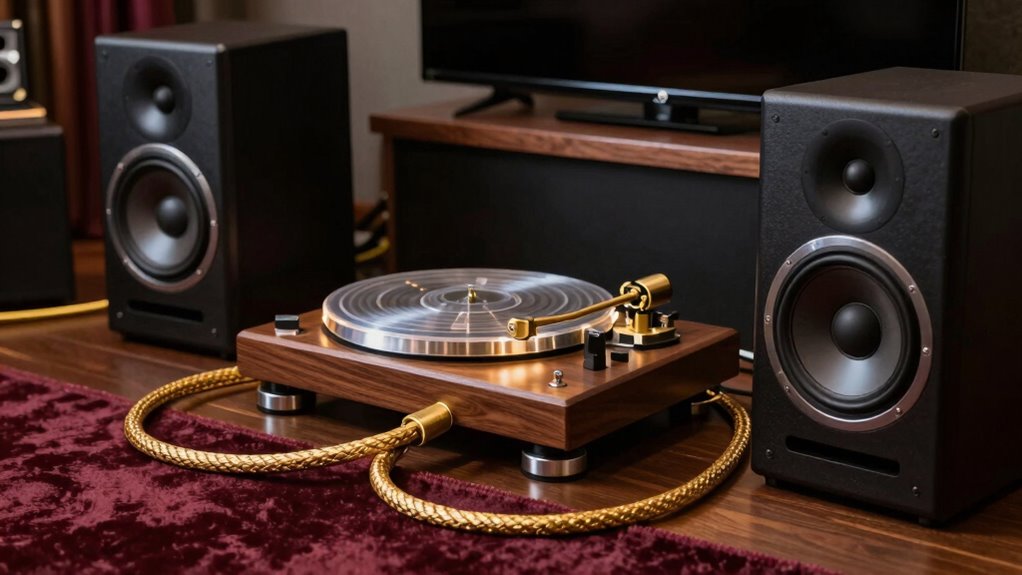

High-end cables costing thousands claim to boost sound quality, but scientific studies often show little real difference from cheaper options. Many audiophiles report hearing improvements, yet these are frequently influenced by expectations and psychological factors like the placebo effect. Material quality and construction matter, but the price often reflects branding and rarity more than performance. Curious about the true value and what experts say? Keep exploring; you’ll uncover the facts behind this audio obsession.
Key Takeaways
- Scientific evidence shows minimal to no measurable sound quality difference between $1,000 cables and cheaper alternatives.
- Perceived improvements often stem from psychological biases like the placebo effect and expectation bias.
- High-end cables typically use better materials and craftsmanship but do not necessarily enhance audio performance.
- The significant price premium mainly reflects branding, exclusivity, and luxury marketing rather than technical necessity.
- Actual audio gains from expensive cables are often negligible; value depends more on perception than measurable quality.
Top picks for "weird world audiophil"
Open Amazon search results for this keyword.
As an affiliate, we earn on qualifying purchases.
The History Behind High-End Cables
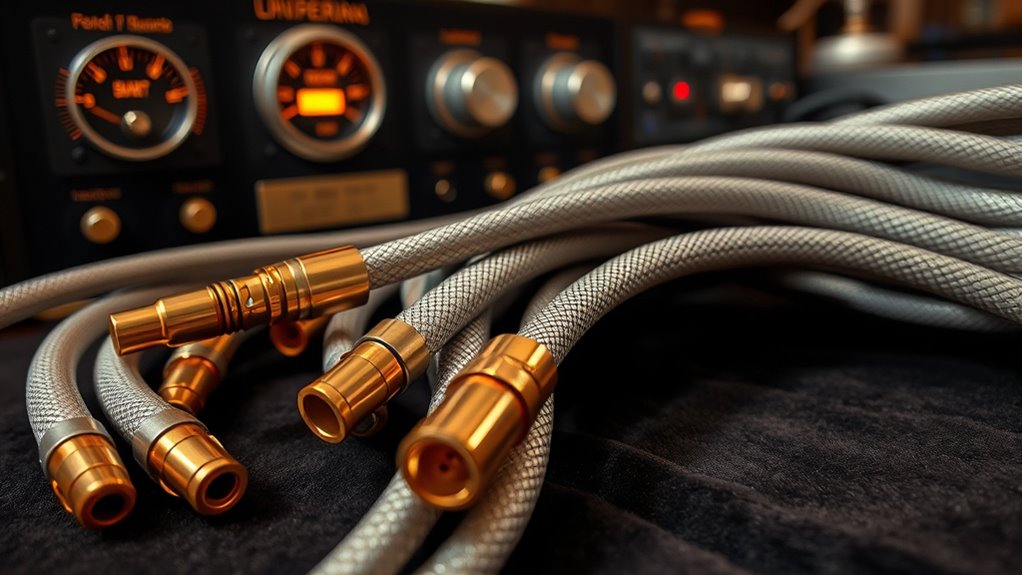
The history of high-end audio cables is rooted in the desire for flawless sound quality, which has driven audiophiles to seek out better materials and designs over the decades. Early on, vintage connectors like RCA and XLR became prized for their durability and reliable signal transfer. As technology advanced, cable aesthetics gained importance, with manufacturers emphasizing sleek designs and premium finishes to appeal to enthusiasts. These vintage connectors not only ensured better sound but also added a visual appeal that reflected quality and craftsmanship. Over time, this focus on both function and form fueled the development of high-end cables, turning them into collectible items. Today, their rich history of innovation and craftsmanship continues to influence the premium cables used in high-fidelity audio setups. Additionally, the integration of European cloud innovation in manufacturing processes has promoted more sustainable and secure production standards for these premium cables.
What Makes a Cable “High-End” or “Premium
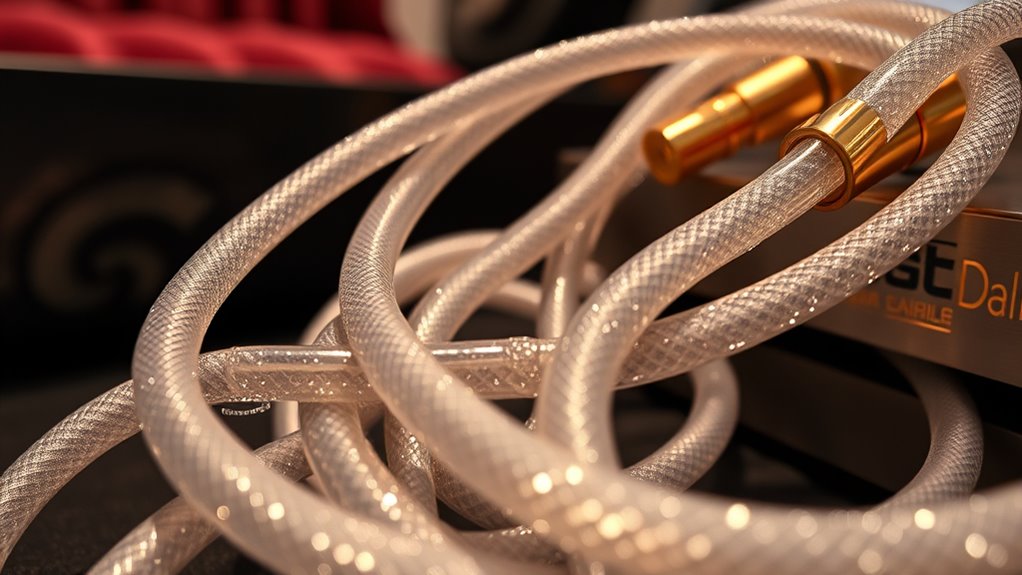
Building on the rich history of craftsmanship and innovation, understanding what sets a cable apart as “high-end” or “premium” starts with examining key quality factors. Material composition plays a vital role; premium cables often use high-quality conductors like oxygen-free copper or silver, ensuring better signal transfer and durability. The insulation and shielding also matter, reducing interference for cleaner sound. Beyond technical specs, branding prestige influences perceived value—well-known brands often associate their reputation with superior craftsmanship and quality control. A high-end cable isn’t just about expensive materials; it’s about the careful selection and combination of components designed to deliver ideal performance. Additionally, material quality and manufacturing processes significantly impact the overall performance and longevity of the cable. Recognizing the design and construction of a cable can also reveal its potential for durability and consistent performance over time. Proper testing and certification further ensure that a cable meets industry standards and expectations for quality. Incorporating industry standards and certifications can provide additional assurance of a cable’s quality and safety. Moreover, a detailed understanding of cable impedance and capacitance can help in matching cables with specific audio systems for optimal results. Ultimately, what makes a cable “premium” is a blend of exceptional material composition and the trust that comes with a reputable brand.
The Science of Sound: Do Cables Really Matter?
You might wonder if the quality of a cable truly affects sound, or if it’s just a myth. Factors like conductivity, material quality, and signal interference can influence how accurately sound travels. Understanding these points helps you decide whether expensive cables are worth the investment for your listening experience. Additionally, considering how color accuracy about audio equipment can lead to more informed choices might enhance your overall satisfaction with your sound system. Recognizing that Free Floating designs in audio setup can also impact sound clarity can further inform your purchasing decisions. Moreover, being aware of passive voice detection techniques can help you improve your writing clarity and engagement. To ensure your system performs optimally, being mindful of security measures in your setup is also beneficial.
Conductivity and Material Quality
Although many audiophiles believe that more expensive cables deliver superior sound, the science behind conductivity and material quality offers a clearer perspective. Conductivity testing shows that high-quality materials, like oxygen-free copper or silver, can transmit signals more efficiently, reducing energy loss. However, the differences in conductivity between pricey and standard cables are often minimal because most cables meet basic standards. Material quality also matters; premium cables typically use better insulators and protective coatings, making them less prone to wear and corrosion over time. These enhancements can contribute to more consistent performance, especially in demanding setups. Additionally, the perceived sonic differences are often influenced by psychological factors such as expectations and placebo effects. Some studies suggest that psychological perception can significantly impact a listener’s experience, regardless of the actual cable quality. Moreover, manufacturing standards play a crucial role in ensuring reliability and durability across different cable brands. Ensuring adherence to quality assurance protocols can help maintain consistent product performance. Ultimately, understanding the material quality helps you make more informed choices, but it doesn’t guarantee a sonic leap with expensive cables.
Signal Interference Effects
Signal interference can substantially impact audio quality, but whether cables are to blame depends on their environment and design. Ground loops occur when multiple grounding points create a loop, introducing hum or buzzing into your sound. Electromagnetic interference (EMI) from nearby electronics, power lines, or wireless devices can also induce noise in audio cables. High-quality cables often include shielding to reduce EMI, but environment plays a key role. If your setup has poor grounding or is near sources of electrical noise, even expensive cables may not prevent interference. Proper grounding, minimizing electromagnetic sources, and using well-shielded cables help maintain sound clarity. Additionally, cable construction—including materials and shielding—can significantly influence their susceptibility to interference. A well-designed cable with effective shielding techniques can better resist external electromagnetic fields. The materials used in cable manufacturing, such as copper or silver, also contribute to their overall performance and noise reduction capabilities. Understanding crosstalk and its effects is essential for audiophiles aiming to preserve audio fidelity. Even the length of the cable can influence susceptibility to interference, especially in longer runs. Ultimately, cable design matters, but understanding and controlling interference sources is vital to preserving audio fidelity.
Perceived Audio Differences
Many audiophiles believe that high-quality cables produce noticeably better sound, but scientific studies often challenge this perception. Perceived audio differences are mainly rooted in subjective listening rather than measurable changes. When you listen, your brain interprets subtle cues that may not be caused by the cable itself but by expectations or biases. In blind tests, most people struggle to distinguish expensive cables from cheaper alternatives, suggesting that perceived improvements are often psychological. This phenomenon, known as the placebo effect, can influence your judgment during subjective listening. While you might swear you hear a difference, objective measurements show little to no variation in sound quality attributable solely to cable differences. Ultimately, perceived audio differences often stem from perception rather than actual technical improvements.
The Price Tag: Why Are Some Cables So Expensive?

The high price of some audio cables often puzzles even dedicated audiophiles, but several factors contribute to their steep costs. First, luxury branding plays a big role, as high-end companies market exclusivity and prestige, driving up prices. Second, material scarcity influences costs; rare metals like pure silver or gold are used for better conductivity and durability, making production more expensive. Third, craftsmanship matters—meticulous assembly, quality control, and attention to detail add to the price. These elements combine to create a product that’s marketed as premium, often beyond practical necessity. When you see a cable costing thousands, remember it’s not just about performance, but also about brand image and rare materials, both fueling the luxury appeal and high price tags. Additionally, Material Selection highlights how the choice of materials and manufacturing processes can significantly impact the final cost. Moreover, Manufacturing Processes such as hand-wiring and precision testing further elevate the price point, emphasizing quality and exclusivity.
Anecdotal Evidence: Do Audiophiles Notice a Difference?
You might believe you notice a difference when switching to expensive cables, but personal experiences can be influenced by expectations or surroundings. The placebo effect often makes it seem like there’s a change, even if there isn’t. Environmental factors like room acoustics and equipment setup also play a role in what you hear. Additionally, individual perceptions can be shaped by critical listening skills, which are developed through experience and training.
Personal Listening Experiences
Despite scientific debates, many audiophiles swear they can hear differences when switching to high-end cables. You might notice that your personal bias influences what you perceive, especially if your listening environment isn’t ideal. Here’s what often happens:
- Your expectations shape your perception, making subtle changes seem more noticeable.
- The acoustics of your space can amplify or diminish certain sounds, affecting your judgment.
- Repeated listening sessions may reinforce your belief in a difference, whether or not one exists.
Ultimately, your personal listening experiences are subjective. While some genuinely hear improvements, others might simply be influenced by their environment or biases. Recognizing these factors can help you better understand your perceptions.
Placebo Effect Influence
Many audiophiles firmly believe that swapping in high-end cables results in noticeable sound improvements, but this perception often hinges on the placebo effect. Your sensory perception can be easily influenced by cognitive bias, leading you to believe that the more expensive cable sounds better, even if there’s no real difference. When you expect an upgrade, your brain may interpret subtle changes as significant, reinforcing the illusion of improved sound quality. This psychological phenomenon shows how powerful perception can be—your expectations shape what you hear. Without objective testing, it’s difficult to distinguish genuine improvements from those created by bias. Ultimately, your subjective experience may be more about belief than actual audio performance, highlighting the importance of questioning whether what you hear is real or simply psychological suggestion.
Environmental Factors Impact
Environmental conditions such as room acoustics, background noise, and speaker placement can markedly influence how audiophiles perceive sound differences. These factors can make subtle changes seem more noticeable or obscure real distinctions. For example:
- Environmental noise can mask or mimic sound quality variations, making it hard to tell if a cable makes a difference.
- Room acoustics, including reflections and reverberations, shape how sound waves reach your ears, affecting perception.
- Speaker placement influences soundstage and clarity, which can lead you to believe certain cables produce better results.
Because of these factors, your environment plays a pivotal role in your listening experience. Small differences might seem significant, but they could result from changes in room acoustics or noise rather than the equipment itself.
The Role of Placebo Effect in Sound Perception
The placebo effect plays a significant role in how people perceive sound quality, often influencing their experience more than the actual equipment does. Your sensory perception can be heavily affected by expectation bias, making you believe a more expensive cable sounds better even if there’s no real difference. This psychological trick can lead you to perceive improvements simply because you expect them. To illustrate, consider the following:
| Perception | Expectation Bias | Reality |
|---|---|---|
| Thinks sound is clearer | Believes expensive cables are better | No measurable difference |
| Feels more immersive | Expects richer sound | No actual change in audio quality |
| Notices subtle details | Assumes high cost equals high quality | No technical evidence |
Your mind plays a big role in how you experience audio, regardless of the equipment.
Comparing Budget vs. Luxury Cables: What Do Tests Show?

When comparing budget and luxury cables, you’ll find that sound quality differences are often subtle or unnoticeable in blind tests. It’s important to weigh whether the higher cost truly offers a significant improvement worth the investment. A clear cost-benefit analysis helps you decide if the upgrade makes sense for your setup.
Sound Quality Differences
Although many audiophiles believe that expensive cables deliver superior sound quality, scientific tests often tell a different story. When comparing budget and luxury cables, the differences are subtle or nonexistent in controlled listening tests. Here’s what the research shows:
- The sound quality variations are usually below the threshold of human perception, meaning you likely won’t notice a difference during everyday listening.
- Factors like wireless convenience and aesthetic design often influence preferences more than actual audio improvements.
- Many high-end cables are marketed with claims of superior conductivity, but tests indicate that premium materials rarely impact sound noticeably.
Ultimately, unless you have an extremely high-end system, the difference in sound quality doesn’t justify the hefty price tag.
Cost-Benefit Analysis
Are expensive cables worth the investment when considering overall value? When performing a cost-benefit analysis, tests often show minimal differences between budget and luxury cables. You need to contemplate if the higher cost justifies the marginal improvements in sound quality. Many blind tests reveal that most listeners cannot reliably distinguish expensive cables from cheaper ones, questioning their cost justification. Here’s a quick comparison:
| Feature | Budget Cables | Luxury Cables | Notes |
|---|---|---|---|
| Material Quality | Good | Premium | Slightly better in luxury |
| Durability | Adequate | Superior | Longer lifespan |
| Sound Difference | Usually None | Marginal | Often indistinguishable |
| Price | Low | High | Significant cost gap |
| Value Assessment | Low | Variable | Depends on listener focus |
Ultimately, your choice hinges on perceived value versus actual performance.
The Psychology of Investment in Audio Equipment
Investing in high-end audio equipment often goes beyond just improving sound quality; it taps into a deep-seated desire for personal satisfaction and status. You might find yourself influenced by three key factors:
- The allure of marketing hype, which amplifies the perceived value of expensive gear.
- The desire to associate with brands known for their reputation and exclusivity.
- The need for validation through owning top-tier equipment that signals your dedication.
These elements drive your choices more than technical necessity does. You’re not just after better sound—you seek affirmation and social standing. This psychological pull makes it easy to justify costly upgrades, even when the actual audio benefits are marginal. It’s about feeling good and fitting into a community that values prestige.
When to Consider Upgrading Your Cables
Knowing when to upgrade your cables can make a noticeable difference in your audio experience, but it’s not always obvious. If you notice a decline in sound clarity, background noise, or inconsistent performance, it’s time to contemplate an upgrade. Market trends also influence this decision; as new cables with improved cable aesthetics and materials emerge, they can enhance both form and function. Here’s a quick guide:
| Indicator | Consider Upgrading |
|---|---|
| Deteriorating sound quality | Yes |
| Visible cable damage | Yes |
| Outdated connectors | Yes |
| Changes in system setup | Yes |
| Preference for aesthetics | If cable looks better, it might improve experience |
Stay alert to these signs to optimize your listening.
The Future of Audio Cables and Technology
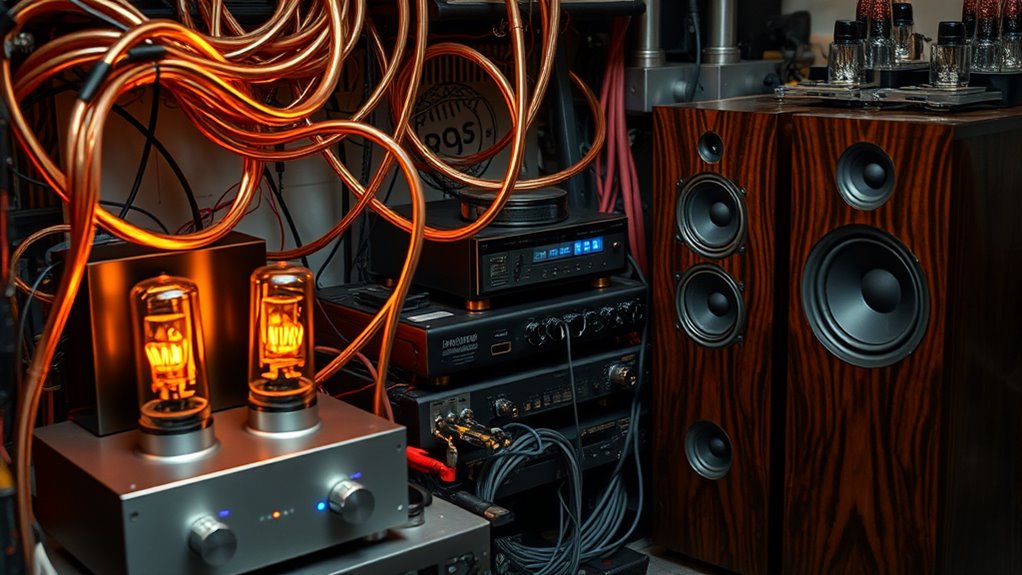
Advancements in audio cable technology are poised to transform how we experience sound, building on the ongoing improvements in cable design and materials. Wireless transmission is becoming more reliable, reducing the need for physical cables and increasing convenience. Digital formats are driving innovation, allowing for higher resolution and better sound quality without bulky hardware. Here’s what to expect:
Advances in wireless and digital audio tech will revolutionize sound quality, convenience, and device compatibility.
- Faster, more stable wireless connections that rival wired performance.
- Enhanced digital formats that deliver lossless, studio-quality audio.
- Smart cables that adapt to device compatibility and optimize signal transfer.
These innovations will make high-fidelity sound more accessible, seamless, and future-proof, changing the way you connect and enjoy your audio setup.
Frequently Asked Questions
Can Cable Materials Truly Influence Audio Quality Significantly?
Yes, cable materials can influence audio quality, but the impact varies. High-quality materials may provide better conductivity and durability, which can enhance sound clarity. Your choice should also consider cable aesthetics and brand reputation; a well-designed cable from a trusted brand might offer more consistent performance. However, remember that beyond a certain point, improvements become subtle, so weigh your investment against overall audio system quality.
Is There Scientific Consensus Supporting the Superiority of Expensive Cables?
Scientific studies haven’t proven that expensive cables deliver measurable differences in audio quality. You might notice subjective improvements, but these aren’t backed by conclusive research. The scientific consensus suggests that factors like equipment quality and room acoustics matter more. So, while high-priced cables may seem appealing, their superiority isn’t supported by solid evidence, and your listening experience likely depends more on other elements in your setup.
Do Audiophiles’ Subjective Preferences Outweigh Objective Measurements?
You trust your subjective preferences more than objective measurements because psychoacoustic biases influence your perception, making you hear what you want to hear. Brand influence also plays a role, convincing you that expensive cables deliver better sound. While science shows limited evidence for significant differences, your personal experience and biases often outweigh purely objective data, leading you to prefer high-priced cables despite the lack of measurable audio improvements.
How Does Cable Upgrade Impact Overall Sound System Performance?
Upgrading your cables can substantially improve your sound system by reducing interference and boosting signal clarity. You’ll notice a cleaner, more detailed audio experience as noise diminishes and the true essence of your music shines through. While the impact varies depending on your setup, investing in quality cables often enhances overall performance, making every note more precise and immersive. So, a cable upgrade is worth considering for better sound quality.
Are Luxury Cables Worth Their High Cost Compared to Standard Options?
Sure, luxury cables are worth it if you’re into interference reduction and aesthetic appeal, right? They promise a sleek look and less noise, making your setup feel like art. But honestly, for most listeners, standard cables deliver similar sound quality without draining your wallet. So if you crave bragging rights and a fancy vibe, go for the high-end. Otherwise, save your cash and enjoy your music!
Conclusion
Ultimately, whether you hear the difference or just see the shiny, pricey cables as a status symbol, it’s your ears that matter most. Imagine your favorite song filling the room, every note clear and vibrant — that’s the goal. If a $1,000 cable promises better sound and sparks joy, go for it. But remember, true audio magic happens when your passion meets your listening space, not just the price tag.