
TL;DR

Get the latest gadgets delivered free with Prime
- Fast, free delivery on millions of items
- Prime Video, Amazon Music and more included
- Member-only deals all year
A 2026 comparison of 10 USB microphones identifies noise handling, onboard controls and flexible connections as the features making the biggest difference for streamers and podcasters. The report supports the value of smarter audio hardware, but it does not establish that the tested products use artificial intelligence.
A 2026 comparison of 10 USB microphones has identified noise handling, onboard controls and flexible connectivity as the features with the greatest practical impact on streamers and podcasters. The Thorsten Meyer AI guide ranked the Logitech Blue Yeti as the strongest choice for most users, while its findings also show that the increasingly common “AI microphone” label remains poorly defined.
The guide compared microphones from eight brands using audio quality, pickup patterns, onboard controls, connectivity and price. It selected the Logitech Blue Yeti for its rich condenser sound and four pickup patterns: cardioid, omnidirectional, bidirectional and stereo. That range allows one microphone to cover solo streams, interviews and group recordings, though its size and weight make it less suitable for small desks or travel.
For creators recording alone, the report found that higher prices did not always produce better voice recordings. The metal-bodied FIFINE K669B delivered competitive cardioid sound at a lower price, but it lacks a mute button, headphone output and gain control. The ZealSound K66, by comparison, includes gain, mute, echo and zero-latency monitoring, features the report said can matter more during live broadcasts than capsule specifications.
Recording conditions created the clearest division. Sensitive condenser microphones such as the Blue Yeti and K669B can capture detailed speech, but they also pick up keyboards, reflections and other room noise. The FIFINE AM8 dynamic microphone was the only tested model described as forgiving of loud keyboards and untreated rooms. Its USB and XLR connections also let users begin with a direct computer connection and later add an audio interface.
Live Controls Reshape Creator Workflows
For streamers, a microphone affects more than recorded sound. Instant mute, direct monitoring and gain adjustment can prevent avoidable broadcast problems without requiring creators to open software menus during a live session. Hardware noise management can also reduce the time podcasters spend cleaning dialogue after recording.
Those improvements help explain why microphones marketed as smart or AI-enabled are attracting attention in 2026. Yet the comparison indicates that the measurable gains come from pickup design, signal controls and room-noise rejection, not from an AI designation by itself. For buyers, the main consequence is that workflow features may carry more value than branding, especially when recordings happen live or on a fixed production schedule.
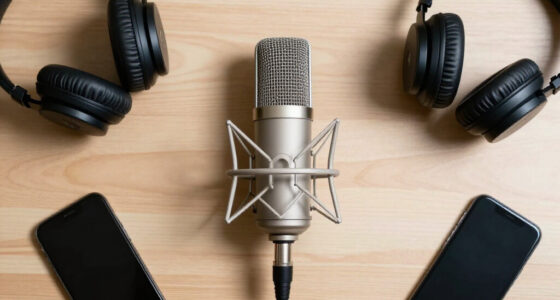
USB microphone with noise cancellation
As an affiliate, we earn on qualifying purchases.
As an affiliate, we earn on qualifying purchases.
USB Mics Expand Beyond Basic Recording
USB microphones have long offered a direct route from microphone to computer, removing the need for a separate interface. The 2026 lineup adds multi-device support, live monitoring and dual USB/XLR output across a wider range of prices. Compact products such as the Blue Yeti Nano target beginners and crowded desks, while conference and gooseneck models focus on calls, dictation or group pickup.
The report found a clear lower-price limit. Models costing less than $30, including the CMTECK G009 and compact gooseneck microphones, could provide understandable speech for calls but did not match the fuller sound expected in audience-facing productions. The findings separate basic speech intelligibility from the consistency and depth required for podcasts or streams.
“Room noise proved to be the hidden dividing line.”
— Thorsten Meyer AI’s 2026 USB microphone guide
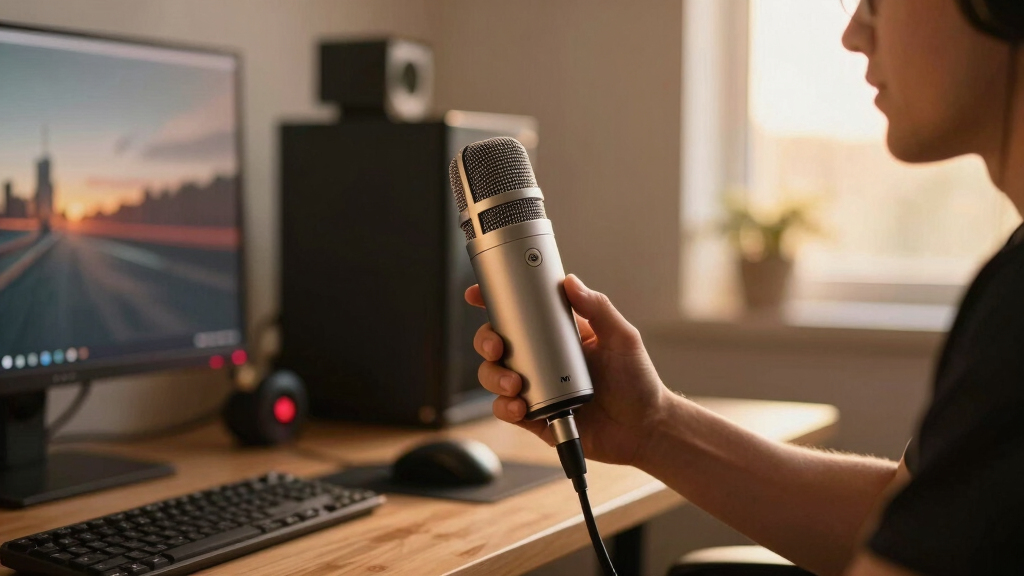
microphone with onboard controls for streaming
As an affiliate, we earn on qualifying purchases.
As an affiliate, we earn on qualifying purchases.
AI Label Lacks a Clear Test
The source material does not identify machine-learning models, adaptive algorithms or independently tested AI functions in the ranked microphones. Some products advertise noise cancellation, but the guide does not establish whether that processing uses artificial intelligence or conventional digital filtering. It is also unclear whether the products were evaluated through controlled acoustic measurements or extended real-world trials.
The rankings come from a single buyer’s guide, and no raw recordings, latency results or standardized noise-rejection scores were provided. Claims about a microphone being a “game changer” should consequently be treated as an interpretation of workflow gains, not a confirmed technical category. The Blue Yeti recommendation may also change depending on room acoustics, desk space and whether the buyer needs USB or XLR output.
flexible connection USB microphone
As an affiliate, we earn on qualifying purchases.
As an affiliate, we earn on qualifying purchases.
Independent Audio Tests Must Follow
Manufacturers are likely to add more automatic level control, background-noise reduction and voice processing to creator microphones, but future comparisons will need to identify which functions genuinely use AI and which rely on established audio processing. Matched recording samples, latency measurements and untreated-room tests would give buyers clearer evidence.
Creators choosing equipment now should match the microphone to the recording environment. A dynamic model such as the FIFINE AM8 may suit a noisy room, while the Blue Yeti’s multiple pickup patterns offer more flexibility in a quiet space. The next test for the category is whether new processing features produce repeatable gains without distorting voices or adding delay.
As an affiliate, we earn on qualifying purchases.
Key Questions
What makes a microphone an AI microphone?
The term usually refers to automated voice processing, such as noise removal, level adjustment or speaker isolation. In this comparison, however, no specific AI model or machine-learning feature was documented, so the label cannot be verified for the tested products.
Which microphone did the 2026 guide rank first?
The guide selected the Logitech Blue Yeti as the best option for most people because it combines four pickup patterns, condenser sound and onboard controls. Its large footprint and sensitivity to room noise remain drawbacks.
What is the best lower-cost option for solo recording?
The report named the FIFINE K669B as its value choice. Its metal construction and cardioid recording performed well for solo speech, although it lacks mute, monitoring and gain controls.
Are condenser microphones suitable for noisy rooms?
They can capture detailed voices, but models such as the Blue Yeti and K669B may also record keyboards and room reflections. The guide favored the dynamic FIFINE AM8 when background noise was a concern.
Do streamers need both USB and XLR?
Not always. USB supports a simple computer connection, while XLR allows later use with an interface or mixer. A dual-output microphone offers an upgrade path without replacing the microphone.
Source: Thorsten Meyer AI
Halloween Picks
halloween
As an affiliate, we earn on qualifying purchases.