
🔍 Read the full analysis: 10 AI Tools For A Range Of Tasks In 2027 on ThorstenMeyerAI.com

Get the latest gadgets delivered free with Prime
- Fast, free delivery on millions of items
- Prime Video, Amazon Music and more included
- Member-only deals all year
TL;DR
The supplied material is a camera-lens buying guide, not a report of an AI-tools announcement. It discusses 10 lenses for different photographic needs, including standard zooms, an ultra-zoom and a portrait prime; its rankings and performance assessments are editorial judgments from the source.
The supplied source compares 10 camera lenses for photographers, but it does not identify any AI tools or report a 2027 announcement; see the original lens analysis. Its main recommendation is the Tamron 28-75mm F/2.8 Di III VXD G2 as a general-purpose zoom, while it describes the Sony FE 24-70mm F2.8 GM II as a higher-cost option for photographers prioritizing optical performance.
The comparison says it weighs optical performance, autofocus reliability and value, including sharpness, aberration control, bokeh, handling and price. These are the source author’s selection criteria and judgments; the supplied text does not provide a testing dataset, methodology detailed enough to reproduce the rankings, or independent verification.
The named options span different uses: the Tamron 28-75mm G2 and Sony FE 24-70mm GM II are standard zooms; the Canon RF 24-70mm is presented as a fast professional zoom; the Tamron 17-70mm is aimed at APS-C users; and the Nikon 28-400mm is described as an all-in-one travel zoom. The source also names a Canon RF 85mm portrait prime and a Canon RF 24-105mm f/4L for photographers who may prefer a lighter aperture and broader range.
The supplied excerpt does not actually list all 10 models. It gives no complete ranking or detailed specifications for several lenses, so a full, accurate 10-item comparison cannot be reconstructed from this material alone. It also supplies no prices, test results, or date tied to the products’ availability.
The 10 picks
- 1
 Canon RF 24-70mm F2.8 L IS USM LensView on Amazon →
- 2
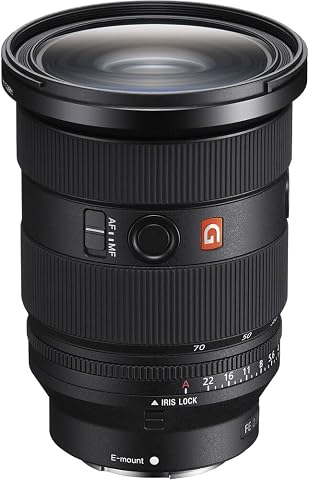 Sony FE 24-70mm F2.8 GM II Full-Frame Zoom LensView on Amazon →
- 3
 Canon RF200-800mm F6.3-9 IS USM LensView on Amazon →
- 4
 Canon RF 24-105mm f/4L IS USM LensView on Amazon →
- 5
 Canon RF 28-70mm f/2.8 IS STM Zoom LensView on Amazon →
- 6
 Nikon NIKKOR Z 28-400mm f/4-8 VR Mirrorless LensView on Amazon →
- 7
 Tamron 28-75mm F/2.8 Di III VXD G2 Zoom Lens for Sony E-MountView on Amazon →
- 8
 Tamron 17-70mm f/2.8 Di III-A VC RXD Zoom Lens for Sony E APS-C CamerasView on Amazon →
- 9
 Canon RF85mm F2 Macro IS STM LensView on Amazon →
- 10
 Canon EF 50mm f/1.8 STM Lens for Canon EOS DSLR CamerasView on Amazon →
Match the Lens to the Shoot
The comparison’s practical point is that lens choice involves tradeoffs rather than a universal winner. A constant f/2.8 zoom can cover changing framing and dimmer conditions, while a prime such as the Canon RF 85mm offers a fixed field of view and, according to the source, stronger background separation. A long-range zoom can reduce lens changes, but the source acknowledges an optical compromise.
For buyers, compatibility and carrying comfort matter alongside image quality. The source advises considering the camera’s mount system, the lens’s weight on that particular body, and whether stabilization is needed for handheld work. Those factors can affect everyday usefulness as much as a lens’s place in an editorial ranking.
Readers should treat the recommendations as a starting point, not verified product testing. Without the omitted models and substantiated comparative measurements, the source cannot support a complete claim about which lens performs best across the market.
Products Worth Considering

Bose Home Speaker 500 Smart Speaker with Alexa, Black

LG UltraGear 27-inch QHD OLED Gaming Monitor, 240Hz, 0.03ms, G-SYNC Compatible, FreeSync Premium Pro, HDR True Black 400

Apple AirPods Pro 3 Wireless Earbuds with Active Noise Cancellation
As an affiliate, we earn on qualifying purchases.
The Criteria Behind the Picks
The source organizes its advice around zoom versatility versus prime speed, aperture, mount compatibility, weight and stabilization. It characterizes f/2.8 as a useful balance for professional zooms, while noting that landscape photographers who often stop down may prefer a lighter f/4 lens. These are general buying considerations, not evidence of a new market shift in 2027.
It also argues that third-party lenses can compete with native options and that APS-C buyers may find stronger value in crop-sensor-specific designs. The source’s examples are the Tamron 28-75mm G2 and Tamron 17-70mm, respectively. Those assessments are attributed to the guide and are not accompanied here by independent tests.
Missing Models and Test Evidence
The headline prompt refers to AI tools in 2027, but the supplied source is about camera lenses and contains no AI-tool names, product announcements or 2027 reporting. The date of the lens guide is also absent, so its recommendations cannot be confirmed as current for 2027.
The excerpt names fewer than 10 distinct models and does not include full specifications, prices, measured autofocus results or a complete ranking. It is unclear which additional lenses the original guide may have included. No quoted spokesperson or manufacturer statement is provided, and the performance claims remain the source author’s evaluations.
Verify the Intended Story
A publishable article about 10 AI tools for 2027 would require source material identifying those tools, their makers, relevant capabilities and the date of any announcement or evaluation. The camera-lens excerpt cannot substantiate that subject.
If the intended topic is instead camera lenses, the complete list and dated testing or product information are needed before presenting a 10-item roundup. Until then, the defensible account is limited to the lenses and criteria explicitly named in the supplied text.
Key Questions
Does the source cover 10 AI tools for 2027?
No. It covers camera lenses and does not mention AI tools or a 2027 development.
Which lens does the source favor as an overall option?
The author recommends the Tamron 28-75mm F/2.8 Di III VXD G2 as the best overall choice, citing its balance of aperture, weight and price. That is an editorial assessment in the source, not an independently verified result here.
What does the source say about the Sony FE 24-70mm GM II?
It describes the Sony FE 24-70mm F2.8 GM II as preferable for photographers seeking maximum optical performance, while noting its higher cost and heavier weight.
Can the supplied material support a complete 10-lens ranking?
No. The excerpt names fewer than 10 distinct lenses and omits a complete ranking, detailed specifications and comparative test results.
Source: ThorstenMeyerAI.com