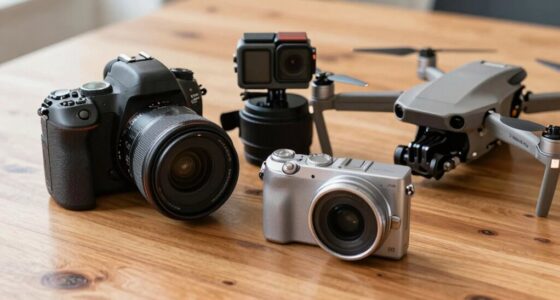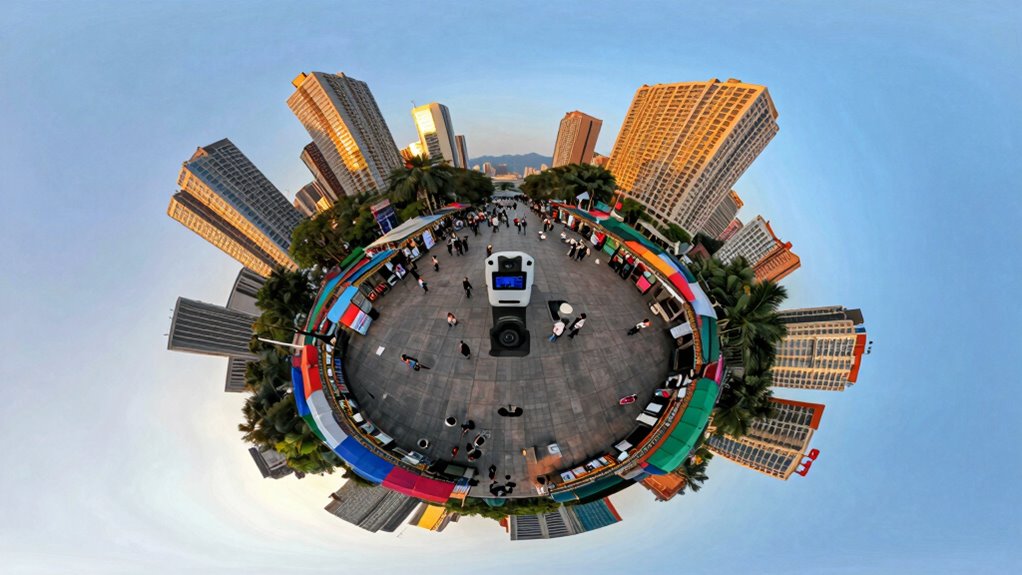

360 cameras capture immersive photos and videos that surround you, making storytelling and virtual experiences more engaging. With advancements in technology and increasing affordability, they’re becoming a popular tool for creators, marketers, and educators. Despite some limitations like stitching errors and lower night quality, the potential for interactive content grows. To explore whether this innovative tech is right for you, discover more about how 360 cameras are shaping the future.
Key Takeaways
- 360 cameras enable immersive, panoramic photos and videos, enhancing virtual experiences across various industries.
- Technological advancements are improving image quality, stabilization, and ease of use, making 360 content more accessible.
- Growing adoption in marketing, real estate, education, and entertainment suggests a promising future for 360 media.
- Challenges like stitching errors and low-light performance are being addressed through improved hardware and software.
- The integration with VR and AR platforms indicates that 360-degree content is poised to become a mainstream communication tool.
Top picks for "about camera degree"
Open Amazon search results for this keyword.
As an affiliate, we earn on qualifying purchases.
What Are 360 Cameras and How Do They Work?

Have you ever wondered how 360 cameras capture immersive images and videos? These devices use multiple lenses or specialized sensors to record the entire surroundings simultaneously, creating seamless panoramic photography. When you take a 360-degree photo or video, it feels like you’re standing right there, surrounded by the scene. This technology is essential for virtual reality experiences, allowing users to explore environments as if they’re actually there. The camera stitches together images from different angles, producing a spherical view that can be navigated interactively. This unique capability makes 360 cameras perfect for capturing landscapes, events, or any scene where context and environment matter. They’re transforming how we experience and share visual content, making everything more engaging and immersive. Additionally, the development of European cloud servers supports the processing and storage of the large data files generated by 360 cameras, enabling high-quality content sharing with increased security and sustainability. Furthermore, advancements in image stitching technology have improved the seamlessness and accuracy of 360-degree images, enhancing user experience and content quality. As technology continues to evolve, the integration of high-resolution sensors will further improve image clarity and detail in 360-degree captures.
Key Features and Specifications to Consider
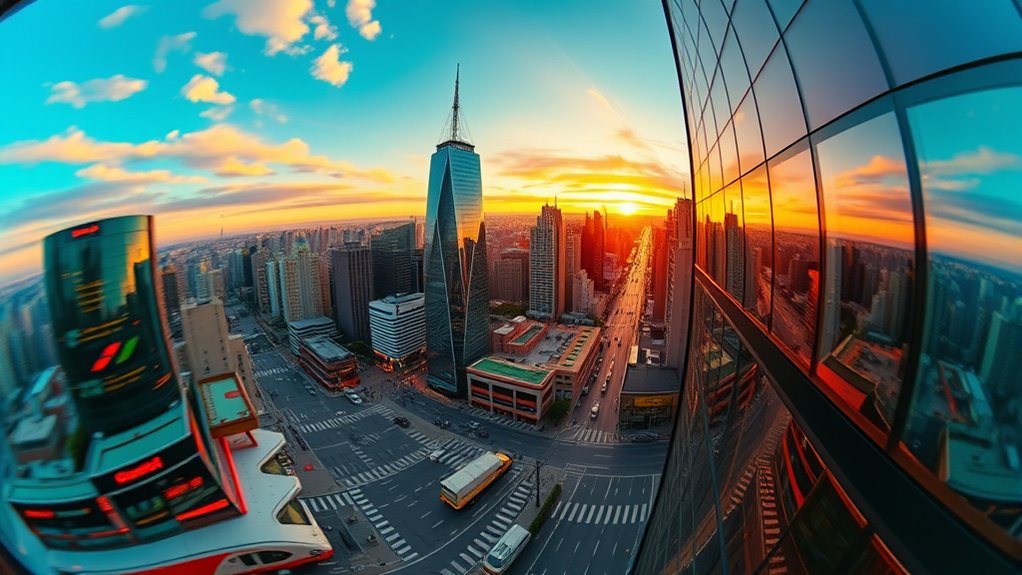
When choosing a 360 camera, you should pay close attention to resolution and image quality to guarantee your photos are sharp and immersive. Battery life and storage capacity are also vital, so you can record longer sessions without interruptions. Considering these key features helps you pick a device that meets your needs and delivers the best experience. Additionally, exploring eco-friendly materials used in some camera accessories can enhance your environmentally conscious approach to content creation. To further optimize your setup, selecting durable and lightweight gear can make a significant difference during extended shoots or travel.
Resolution and Image Quality
Resolution and image quality are crucial factors to contemplate when choosing a 360 camera, as they directly impact the clarity and detail of your footage. High sensor quality ensures each shot captures more light and nuance, resulting in sharper images. When evaluating image resolution, consider these aspects:
- The number of pixels, which determines how detailed your photos and videos appear.
- The sensor size, influencing how well your camera handles low-light situations.
- The stitching quality, affecting how seamlessly the images from multiple lenses blend together.
A camera with superior sensor quality and high image resolution produces crisp, vibrant footage that immerses viewers. Keep these features in mind to ensure your 360 content looks professional and engaging, without sacrificing clarity or realism. Additionally, understanding Free Floating technology can help you select cameras with more stable and fluid motion capture capabilities.
Battery Life and Storage
Battery life and storage capacity are essential considerations that can greatly influence your overall experience with a 360 camera. Good battery optimization guarantees you can capture longer sessions without frequent recharging, which is especially important for outdoor or extended shoots. Look for cameras with efficient power management features to maximize usage. Proper battery maintenance can also extend device longevity and ensure consistent performance over time. Additionally, choosing a camera with high-capacity batteries can provide more extended shooting times. Storage capacity determines how many photos and videos you can store before needing to offload files. Opt for models with ample built-in storage or support for high-capacity SD cards. This prevents interruptions during recording and allows for uninterrupted creativity. Balancing battery life and storage capacity helps you capture more immersive content without constant concern about running out of power or space. Furthermore, consider maintenance practices such as regular cleaning and filter replacements for your equipment to ensure optimal performance air purifier maintenance. Properly managing your device’s power consumption can also help conserve battery life during extended use. Prioritizing these features ensures smoother, more reliable 360-degree recording sessions. To extend device longevity, also pay attention to battery preservation techniques to maintain performance over time.
Popular Brands and Models on the Market

Several brands dominate the 360 camera market, offering a range of models to suit different needs and budgets. You might consider GoPro, Insta360, or Ricoh, each providing options for immersive experiences and virtual tours. Imagine holding a compact device that captures:
- High-resolution images with vivid detail, perfect for detailed virtual tours.
- Seamless videos that make viewers feel like they’re right there with you.
- Easy-to-use features that let you switch perspectives instantly.
Whether you’re a beginner or a professional, these brands deliver models that fit your needs. They’re designed to produce sharp, immersive content, making your virtual tours more engaging and realistic. With these popular options, you’ll find a 360 camera that elevates your creative projects effortlessly.
The Benefits of Using 360-Degree Devices
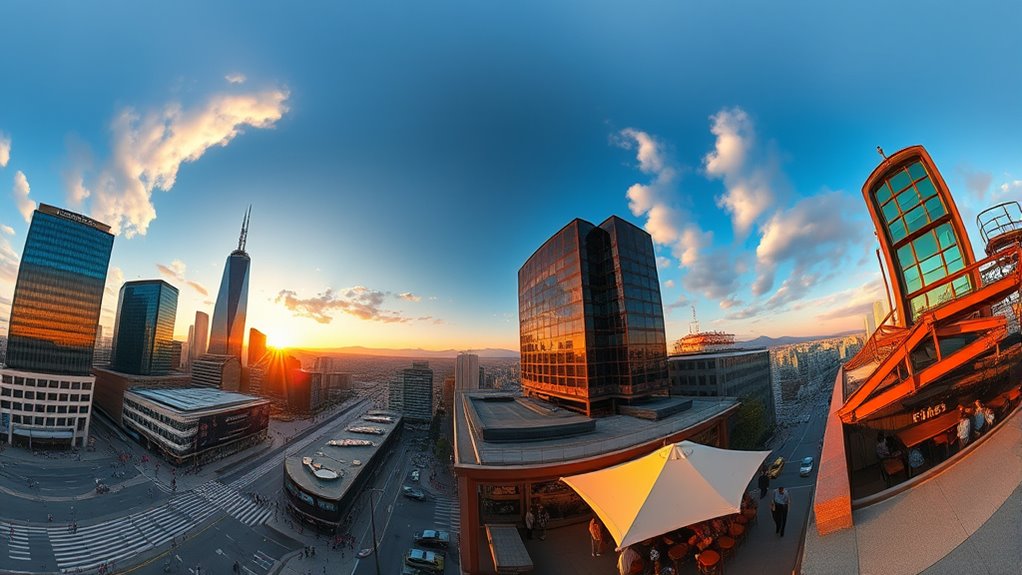
Using 360-degree devices instantly immerses your audience in your content, making virtual tours, videos, and images more engaging and authentic. These devices allow you to create immersive experiences that captivate viewers, giving them a sense of actually being there. With panoramic photography, you can capture entire scenes in a single shot, eliminating the need for multiple images or videos. This simplifies storytelling and enhances the visual appeal of your content. Additionally, 360-degree technology encourages interaction, as viewers can explore every angle at their own pace. Whether for real estate, travel, or events, using these devices elevates your content by providing a comprehensive perspective that traditional photos and videos can’t match. Ultimately, 360-degree devices make your storytelling more dynamic and memorable, especially as **panoramic photography** continues to grow in popularity and application.
Limitations and Challenges of 360 Photography and Videography
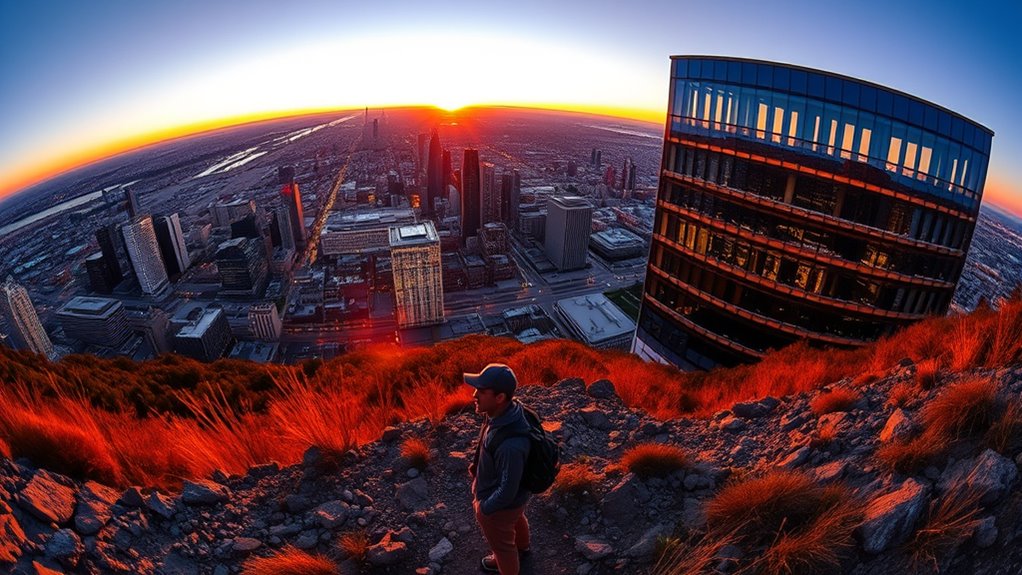
While 360 cameras offer impressive perspectives, they also come with some challenges. You might notice stitching errors or gaps in your images, especially in complex scenes. Additionally, low-light conditions can cause poor image quality, and the equipment can be expensive, with large storage needs. Being aware of these issues is important when considering the use of advanced technology and design in your photography endeavors.
Stitching Errors and Gaps
Stitching errors and gaps are common challenges you’ll encounter when working with 360 cameras, especially during the merging process of multiple images or videos. These issues can create visible seams, distortions, or empty spaces in your final shot. To visualize, imagine:
- A line where two images misalign, disrupting the scene’s flow.
- A ghostly ghosting effect from moving objects during stitching.
- An unwanted gap where the camera failed to capture data, leaving a void in the panorama.
Addressing these problems requires careful gap correction and precise stitching techniques. Often, software tools can help refine the alignment and blend the images seamlessly. Recognizing and troubleshooting these errors early guarantees your 360 content looks immersive, professional, and free of distracting flaws.
Limited Low-Light Performance
Limited low-light performance remains a significant challenge in 360 photography and videography because these cameras often struggle to capture clear, detailed images in dim environments. Night photography with 360 cameras can result in grainy, blurry photos that lack depth. Low light enhancement features help, but they can’t fully overcome the inherent limitations. You might find yourself missing out on capturing spontaneous moments in low-light settings. To evoke emotion, consider this table:
| Frustration | Hope | Possibility |
|---|---|---|
| Blurry night shots | Improved low light tech | Stunning low-light captures |
| Grainy videos | Better sensor design | Vibrant night scenes |
| Missed moments | Advanced processing | Rich, detailed night imagery |
While progress is ongoing, low-light performance remains a key hurdle for immersive night photography. Additionally, advancements in sensor technology continue to push the boundaries of what’s possible in low-light conditions.
High Cost and Storage
High costs and substantial storage requirements pose significant hurdles for 360 photography and videography. Your cost concerns include investing in expensive cameras, accessories, and editing software. As you capture more footage, your storage needs grow rapidly. Imagine: 1. A hefty price tag on high-end 360 cameras that stretch your budget. 2. Large video files filling up your drive, slowing down workflows. 3. The constant need for reliable storage solutions, like external drives or cloud services. These storage solutions can be costly and require ongoing management. Managing costs while ensuring ample space becomes a balancing act. You’ll need to weigh whether the investment in equipment and storage is justified for your goals. Addressing these challenges is essential to keep your 360 projects feasible and efficient. Additionally, safe backup systems should be implemented to protect your valuable footage from loss or corruption.
Creative Uses and Applications of 360 Content
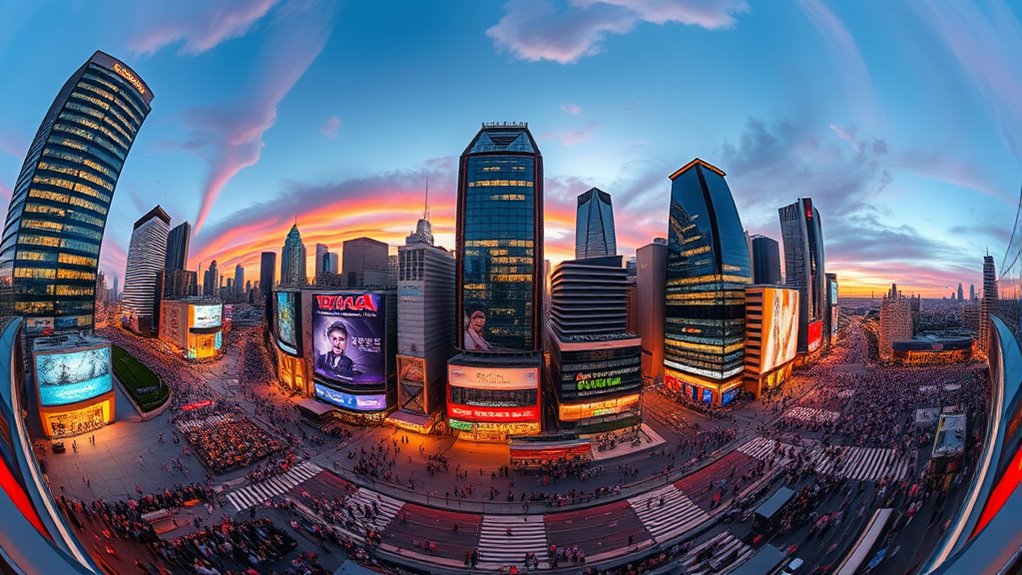
360 content opens up exciting possibilities for creativity and innovation across various fields. You can craft engaging virtual tours that transport viewers anywhere, from historic landmarks to real estate listings, creating a sense of presence. In immersive storytelling, 360 videos allow you to place your audience right in the middle of the action, making experiences more vivid and memorable. Artists use 360 content to develop interactive installations that invite exploration and participation. Marketing campaigns leverage this technology to build deeper connections with audiences by offering unique, behind-the-scenes views. Education benefits as well, with immersive lessons that enhance understanding and engagement. Additionally, the science‑backed knowledge behind 360 imaging ensures that these visuals are both impactful and reliable. The ability to capture and present comprehensive visual information makes 360 content a powerful tool for innovation and engagement. For example, incorporating biodiversity themes into 360 experiences can raise awareness about conservation efforts and the importance of protecting ecosystems. Moreover, understanding contributing factors such as lighting and camera placement can significantly improve the quality of the final product. Overall, 360 cameras expand your creative toolkit, enabling you to deliver more compelling and interactive content across multiple industries.
How to Capture and Edit 360 Photos and Videos

Ever wondered how to effectively capture and edit stunning 360 photos and videos? First, you need to follow these steps: 1. Use a compatible 360 camera to shoot from multiple angles, guaranteeing you get all-around coverage. 2. Transfer your footage to a computer or device with editing software. 3. Use editing software to perform panoramic stitching, seamlessly combining images into a smooth, immersive view. When editing, pay attention to lighting, color correction, and removing any stitching errors. Many editing tools offer automatic stitching features, simplifying the process. Proper panoramic stitching ensures your 360 content looks professional and immersive. With the right approach, capturing and editing 360 photos and videos becomes straightforward, letting you craft captivating virtual experiences effortlessly.
The Future Trends and Innovations in 360 Technology

As technology advances, the future of 360 imaging is set to become more immersive, accessible, and intelligent. Expect augmented reality to play a bigger role, blending virtual elements seamlessly into real-world scenes. This will enhance immersive experiences, making them more interactive and engaging. Future 360 cameras will likely feature improved sensors, higher resolution, and smarter processing capabilities, allowing you to capture stunning, lifelike visuals effortlessly. Real-time editing and AI-driven enhancements will simplify post-production, giving you more control and creativity. As these innovations evolve, you’ll find it easier to create compelling content for virtual tours, gaming, or social sharing. The fusion of augmented reality and 360 technology promises a future where immersive experiences are more integrated into everyday life than ever before.
Is Investing in a 360 Camera Worth It?

Investing in a 360 camera can be worthwhile if you want to create immersive content that stands out, but it’s important to contemplate how often you’ll use it and whether it fits your specific needs. If you’re aiming to craft engaging virtual tours, capture stunning landscapes, or boost your social media presence, a 360 camera can be powerful. Picture yourself:
- Steering through a vibrant, interactive virtual tour of a property.
- Sharing panoramic shots that instantly grab followers’ attention on social media.
- Creating engaging videos that make viewers feel like they’re right there with you.
Additionally, incorporating cutting-edge survival and camping technology can enhance your outdoor adventures and ensure you’re prepared for unexpected situations. When considering equipment, understanding electrical safety and proper wiring can help prevent hazards during setup or use. Moreover, choosing reliable accessories and proper device maintenance can extend your camera’s lifespan and ensure optimal performance. Exploring safe installation practices can further safeguard your investment and improve your shooting experience. However, consider how frequently you’ll produce such content. If your plans are occasional, renting or using a smartphone attachment may suffice. Otherwise, investing could pay off in the long run.
Frequently Asked Questions
How Do 360 Cameras Handle Low-Light or Challenging Lighting Conditions?
You’ll find that 360 cameras struggle with low light challenges, often resulting in grainy or blurry images. To improve results, use cameras with larger sensors or enhanced ISO capabilities. Image stabilization helps reduce shake in challenging lighting, but it can’t fully compensate for poor illumination. For better low-light shots, consider adding external lighting or shooting during brighter times to capture clearer, more vibrant 360-degree photos and videos.
Can 360-Degree Content Be Integrated Into Virtual Reality Platforms Seamlessly?
Imagine fitting a puzzle piece perfectly into a vast, intricate mosaic—that’s how seamless VR compatibility feels. You can integrate 360-degree content into virtual reality platforms smoothly by ensuring compatibility with VR headsets and optimizing user interfaces. When done right, your viewers experience immersive environments without disruptions, making interactions natural and engaging. This seamless integration elevates your content, providing an authentic, panoramic experience that feels just like stepping into another world.
What Are the Storage and Battery Life Considerations for Prolonged 360 Recording Sessions?
You should consider storage limitations and battery optimization for long 360 recording sessions. 360 cameras often have limited built-in storage, so carrying extra memory cards or using cloud storage helps. To extend battery life, enable power-saving modes, turn off unnecessary features, and carry spare batteries. Planning your recording sessions with these factors in mind guarantees you capture the full experience without interruptions or losing footage.
Are There Any Privacy Concerns Associated With Capturing 360-Degree Footage in Public?
Yes, capturing 360-degree footage in public raises privacy concerns and consent issues. You might unintentionally record people who haven’t agreed to be filmed, which can lead to ethical and legal problems. Always be mindful of your surroundings, seek permission when possible, and avoid capturing sensitive moments. Respecting others’ privacy helps you prevent potential conflicts and ensures you’re using 360 cameras responsibly.
How Does 360 Content Perform Across Different Social Media Platforms?
You’ll find 360 content boosts social media engagement because it offers immersive experiences that captivate viewers. Platforms like Facebook, Instagram, and TikTok support 360 videos and photos, making sharing easy. To maximize reach, use effective content sharing strategies like adding engaging captions and encouraging interaction. Keep in mind, the performance varies across platforms, so tailor your 360 content to fit each audience for the best results.
Conclusion
Imagine stepping into a world where every angle surrounds you, pulling you into immersive moments. 360 cameras make this possible, transforming ordinary photos and videos into mesmerizing experiences. As technology advances, these devices become more accessible and powerful, opening endless creative doors. Whether for travel, storytelling, or social sharing, investing in a 360 camera lets you capture life’s full panorama. Embrace the future, where your perspective knows no bounds.