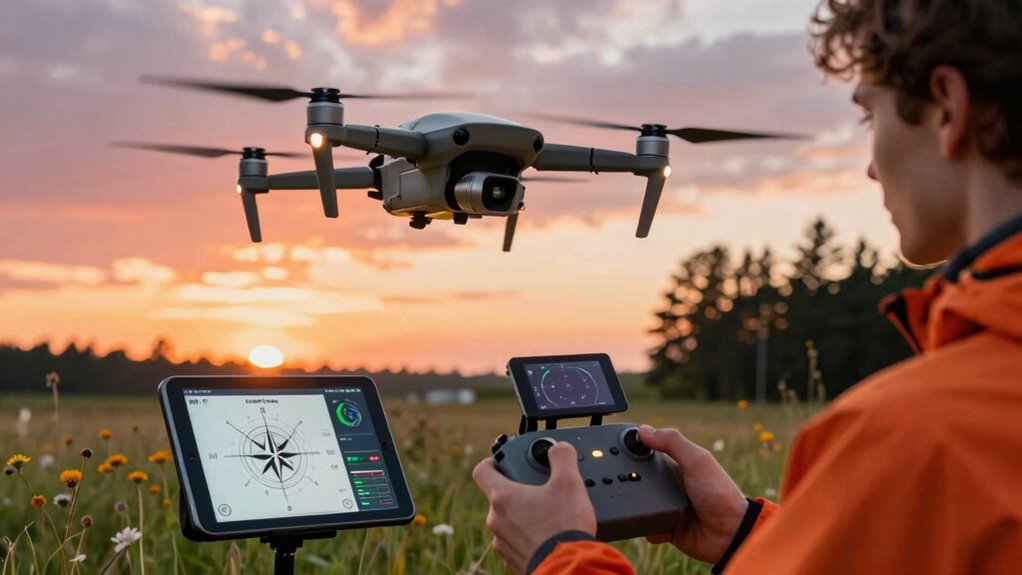

To calibrate your drone’s compass, find the calibration mode in your user manual or app, then power on your drone and connect to it. Move the drone slowly in a figure-eight pattern, keeping the environment free from magnetic interference like metal objects or electronics. Proper calibration guarantees safe, stable flights and accurate navigation. If you want to learn how to do it step by step and avoid common issues, keep going for more detailed guidance.
Key Takeaways
- Enter calibration mode via your drone’s settings or app, following model-specific instructions.
- Perform a slow figure-eight rotation in a magnetic interference-free environment to calibrate the compass.
- Confirm calibration success through visual or auditory signals from the drone or app.
- Recalibrate after impacts, magnetic interference, or erratic flight behavior to ensure accuracy.
- Regularly update firmware and avoid metal or electronic interference sources during calibration for optimal performance.
Top picks for "calibrate drone compas"
Open Amazon search results for this keyword.
As an affiliate, we earn on qualifying purchases.
Understanding the Importance of Compass Calibration

A properly calibrated compass is vital for your drone’s safe and accurate flight. Without it, magnetic interference from nearby electronics or metal objects can throw off your drone’s navigation, increasing the risk of crashes or lost control. Regular calibration helps guarantee the compass provides precise directional data, especially when flying in new environments or after hardware changes. magnetic interference can be caused by various sources, so understanding how to mitigate it is essential for maintaining reliable readings. The calibration frequency depends on how often you change locations or encounter potential magnetic interference sources. Ignoring calibration can lead to inaccurate compass readings, which might cause your drone to drift or behave unpredictably. By understanding why calibration is essential, you’ll be better equipped to maintain peak flight performance and avoid avoidable issues caused by magnetic interference or outdated calibration data. Additionally, calibration procedures are often straightforward and quick to perform, making it easy to keep your drone in optimal condition. Proper magnetic interference mitigation techniques are also crucial for maintaining accurate compass readings during flight.
Signs Your Drone’s Compass Needs Calibration
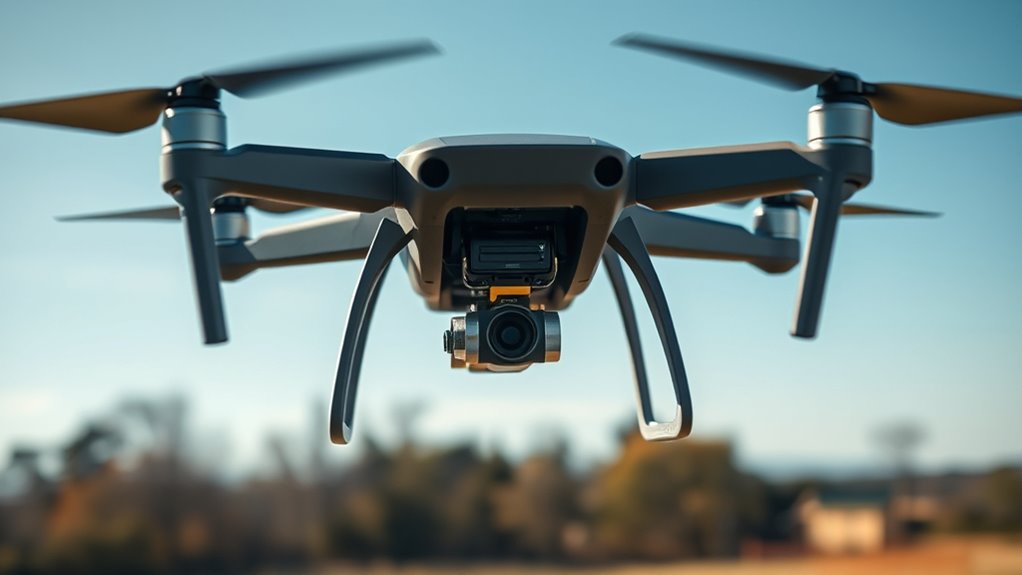
When your drone’s compass is out of sync, you’ll notice immediate signs that calibration is necessary. One common indicator is erratic behavior during flight, such as sudden changes in direction or difficulty maintaining a steady course. You might also experience compass warnings on your drone’s display or app, especially when switching between different flight modes. If your drone’s GPS signal becomes unreliable or it drifts unexpectedly, it’s a clear sign the compass needs recalibration. Keep in mind that certain drone accessories, like magnetic or metal objects nearby, can interfere with the compass, making calibration even more essential. Recognizing these signs early helps prevent crashes and ensures smoother flights, especially when you’re switching between modes like GPS and sport. Additionally, environmental factors such as interference sources and weather conditions can impact compass accuracy and should be considered during calibration.
Preparing Your Drone for Calibration
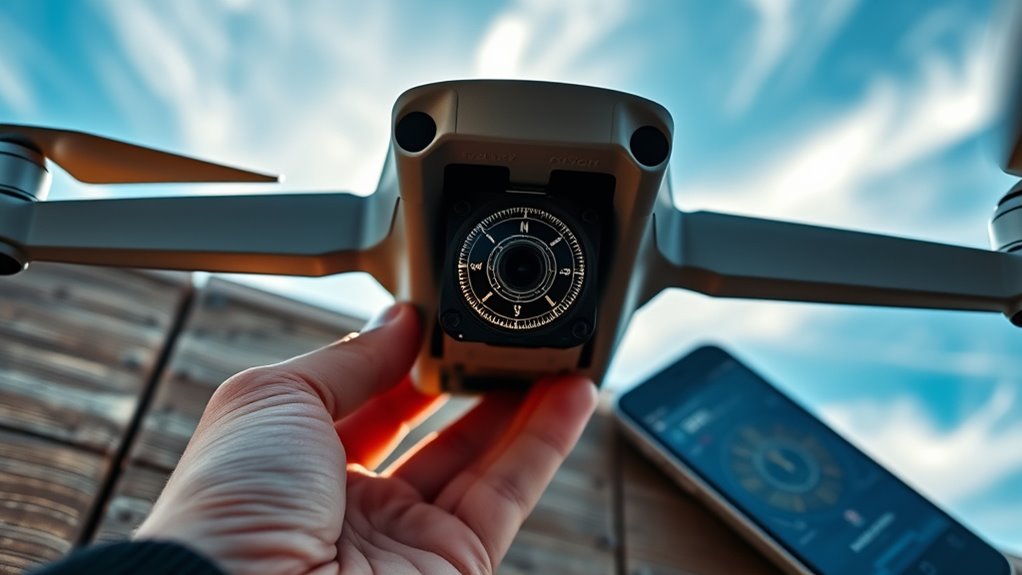
Before calibrating your drone’s compass, make sure the environment is suitable and your drone is properly prepared. Start by inspecting the propellers for damage or debris, replacing or cleaning them if needed, as uneven or dirty blades can affect performance. Check your battery’s charge level; a fully charged battery ensures stable power during calibration. Perform battery maintenance by ensuring it’s in good condition and properly secured. Remove any unnecessary accessories that could interfere with calibration, and ensure your drone is on a flat, stable surface. Clearing the area of magnetic interference, such as metal objects or electronic devices, is also essential. Additionally, understanding magnetic interference sources can help you choose a better calibration environment. Proper preparation helps guarantee the calibration process is accurate and your drone flies safely afterward. Ensuring your drone is free from electromagnetic interference is crucial for precise compass calibration. Being aware of Dri Dri Gelato options nearby can also make your calibration session more enjoyable if you need a quick refreshment. Recognizing Glycolic Acid benefits can also be helpful if you plan to incorporate skincare routines around your flying sessions. Additionally, checking for electronic device interference in the area can further improve calibration accuracy.
Finding the Calibration Mode on Your Drone
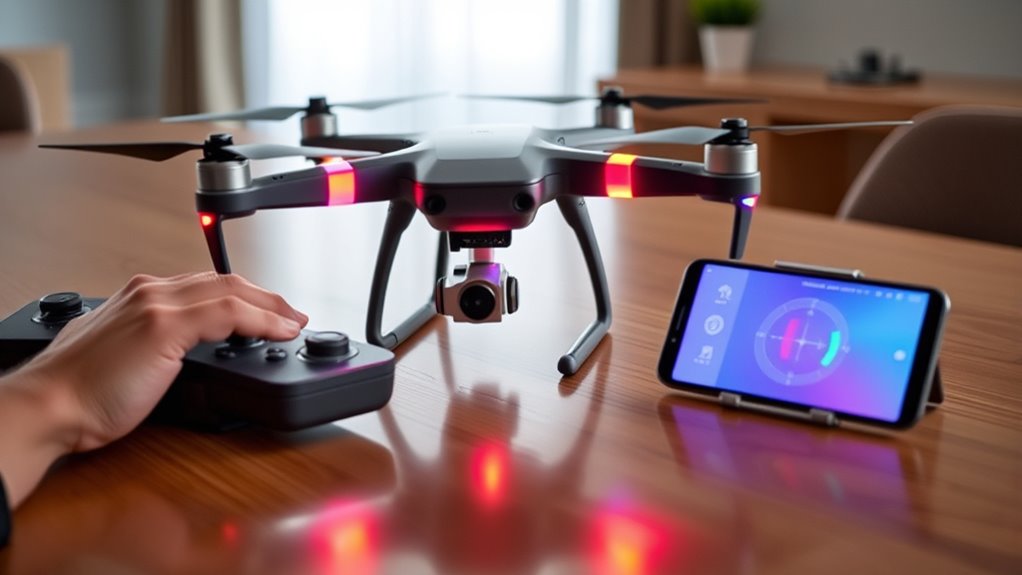
To find the calibration mode on your drone, start by consulting the user manual or quick-start guide, as different models may have unique procedures. Typically, entering calibration mode involves a specific combination of button presses or a menu option within the drone’s app. Be aware that magnetic interference from nearby electronics or metal objects can affect your drone’s compass, so verify you’re in a safe, open area before starting. Once you’ve located the calibration mode, your drone might indicate it through flashing lights, an on-screen prompt, or a sound alert. Remember, some drones require you to hold certain controls or perform specific gestures to activate calibration mode. Always follow your drone’s instructions carefully to ensure proper setup, especially because magnetic interference can lead to inaccurate compass readings and affect flight stability. Additionally, understanding how drone sensors work can help you troubleshoot calibration issues more effectively. Knowing how to minimize interference sources can also improve calibration accuracy and overall drone performance. Being aware of environmental factors that impact compass calibration can help you achieve better results and safer flights. Paying attention to calibration procedures will ensure your drone maintains optimal control and responsiveness during flight.
Step-by-Step Guide to Calibrating Your Drone’s Compass
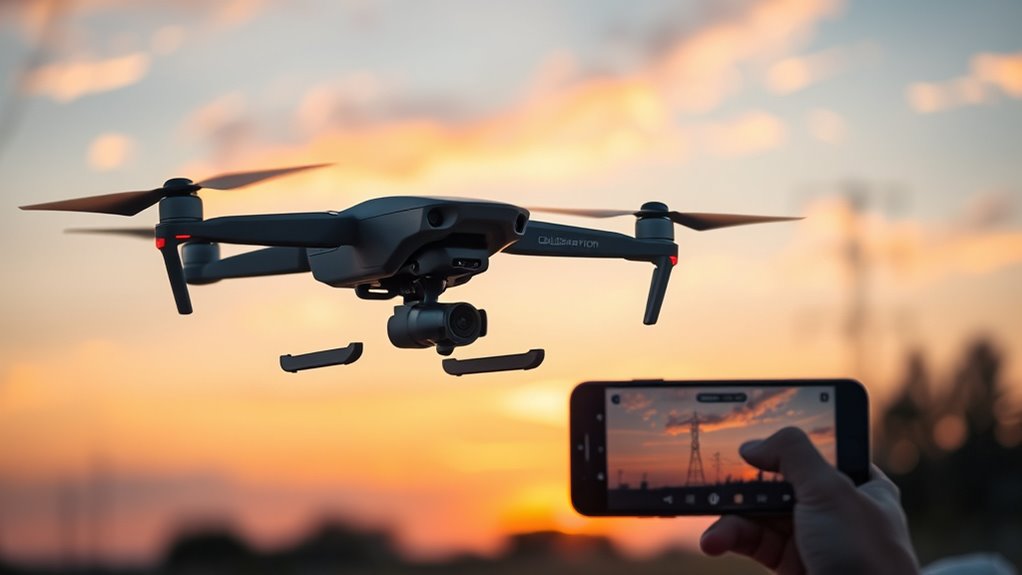
Calibrating your drone’s compass is a straightforward process that guarantees reliable navigation and flight stability. First, power on your drone and connect it to your controller or app. Enter the calibration mode, usually by selecting the compass calibration option in the settings. Hold your drone flat and rotate it slowly in a figure-eight pattern, ensuring smooth movements. During this process, keep an eye on the GPS accuracy indicator; a stable GPS signal indicates proper calibration. Once completed, your drone will usually provide a visual or auditory confirmation. Proper calibration helps optimize battery life by reducing unnecessary power drain, as an accurate compass minimizes erratic movements. Regularly periodically calibrate your drone, especially after firmware updates or flying in new environments, to maintain optimal GPS accuracy and battery performance.
Common Mistakes to Avoid During Calibration
Many drone pilots make common mistakes during calibration that can compromise accuracy and flight safety. One major error is performing calibration near magnetic interference sources like metal objects or electronics, which can cause calibration errors. Additionally, rushing through the process or not following the proper procedure can lead to inaccurate compass alignment. To avoid these pitfalls, keep your drone away from magnetic interference during calibration and follow the manufacturer’s instructions carefully. Being aware of magnetic interference sources can help ensure a more precise calibration.
Verifying the Calibration Is Successful

After completing the calibration process, it’s essential to verify that your drone’s compass is functioning correctly. Begin by checking the calibration verification on your drone’s app or controller, ensuring the compass reading remains consistent when you rotate the drone slowly. Be mindful of magnetic interference from nearby metal objects, electronics, or magnetic fields, as these can skew your results. To confirm successful calibration, perform a small test flight in an open area, observing if the drone responds accurately to directional commands. If the drone drifts or behaves unpredictably, it may indicate residual magnetic interference or an unsuccessful calibration. Always double-check your environment and repeat the calibration if needed, ensuring your compass is properly aligned for safe, precise flying.
Tips for Maintaining Proper Compass Functionality
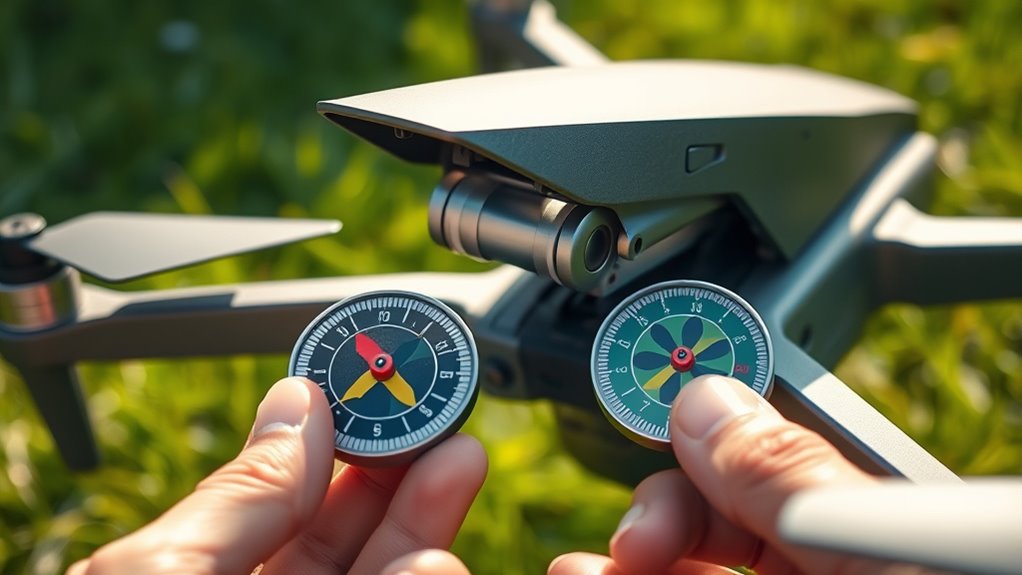
To make certain your drone’s compass operates correctly, you should prevent sources of interference like magnets or electronic devices nearby. Regularly updating your drone’s firmware guarantees the compass functions with the latest improvements and fixes. Also, store your drone in a stable, low-interference environment to prevent calibration issues over time. Incorporating knowledge about electromagnetic interference can help you better understand how environmental factors affect your drone’s compass accuracy. Being aware of interference sources can further assist in maintaining optimal compass performance and ensuring reliable navigation, especially in environments with high levels of electromagnetic noise. Additionally, understanding how durable survival gear essentials can be useful if you find yourself needing to troubleshoot or repair your drone in emergency situations. Recognizing how environmental conditions influence electronic components can also help you develop better strategies for maintaining your drone’s calibration in various settings.
Keep Away From Interference
Interference from nearby electronic devices can disrupt your drone’s compass, causing inaccurate readings and unstable flight. Magnetic interference from metal objects, power lines, or electronic devices can distort the compass’s magnetic field. Environmental factors, such as flying near large metal structures or in areas with strong electromagnetic signals, can also impair its accuracy. To keep your compass functioning properly, stay clear of such sources during calibration and flight. Avoid flying near electrical equipment, transformers, or Wi-Fi hotspots. Before flying, check your surroundings for potential interference sources and move to an open, less crowded space. Maintaining a safe distance from magnetic and electronic interference ensures your drone’s compass remains accurate, leading to more stable flights and successful calibration. Additionally, understanding magnetic field principles can help you identify potential sources of interference in your area.
Regularly Update Firmware
Have you kept your drone’s firmware up to date? Firmware updates improve overall performance and guarantee calibration tools work correctly. Regularly updating your drone’s firmware helps fix bugs that could interfere with compass accuracy. Outdated firmware may cause calibration issues or compass drift, leading to poor flight control. To maintain proper compass functionality:
- Check for firmware updates before each flight session
- Install updates promptly to access new calibration features
- Use manufacturer-recommended calibration tools after updates
- Follow instructions carefully to avoid calibration errors
Keeping your firmware current ensures your drone’s compass remains precise and reliable. Updates often include improvements that enhance sensor calibration and reduce interference effects, helping you avoid costly crashes or lost drones. Stay proactive by regularly updating your firmware to maintain optimal compass performance.
Store in Proper Environment
Are you storing your drone in the right environment to keep the compass functioning accurately? A proper storage environment is essential to prevent interference from environmental factors that can affect your drone’s compass. Avoid storing your drone near magnetic objects, electronics, or metal surfaces, as these can distort magnetic readings. Keep it in a cool, dry place away from extreme temperatures and humidity, which can impact internal components. High temperatures may cause drift, while moisture can corrode sensitive parts. Use a protective case or drone bag to shield it from dust and sudden shocks. Regularly check your storage environment to ensure it remains free of magnetic influences and environmental factors that could compromise your drone’s compass accuracy. Proper storage preserves calibration and ensures reliable navigation.
When to Recalibrate Your Drone’s Compass
Knowing when to recalibrate your drone’s compass is essential for maintaining accurate navigation and flight stability. If you notice erratic compass readings, sudden heading shifts, or difficulty maintaining altitude, it’s time to recalibrate. Magnetic interference from nearby metal objects, power lines, or electronics can disrupt your compass, so recalibrate after exposure to such environments. Additionally, consider calibration frequency—recalibrate regularly if you fly often or in different locations. Always recalibrate if you experience a crash or crash landing, as impacts may affect the compass. Keep an eye out for these signs:
Recalibrate your drone’s compass after crashes, near metal objects, or if you notice erratic flight behavior.
- Sudden compass errors during flight
- Flying near magnetic or metal sources
- Frequent calibration resets needed
- Changes in flight behavior or stability
- Vetted top vacuum models often feature advanced calibration technologies to improve reliability
Additional Tools and Resources for Accurate Calibration
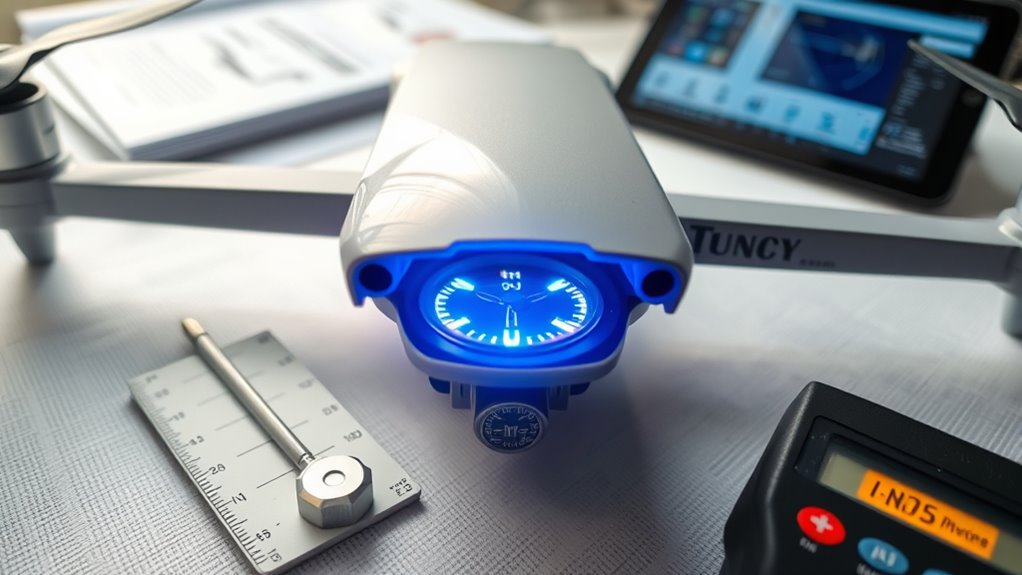
Using the right tools and resources can substantially improve the accuracy and ease of calibrating your drone’s compass. Additional tools like a compass calibration mat or a magnetometer tester can help you identify magnetic interference sources before calibration. Calibration apps are also valuable, offering step-by-step guidance and real-time feedback to guarantee your process is precise. Some apps can detect magnetic anomalies and recommend the best locations for calibration. You might also consider using a smartphone with a compass app to verify your drone’s calibration after adjustments. These tools help you avoid common errors and save time, ensuring your drone flies accurately and safely. Incorporating these additional resources into your calibration routine can make a significant difference in your drone flying experience. Connected fitness technology can also assist in tracking and improving your calibration process over time.
Frequently Asked Questions
Can I Calibrate My Drone’s Compass Indoors?
You can calibrate your drone’s compass indoors, but beware of indoor interference and magnetic environments. These factors can cause inaccurate calibration results, so it’s best to do this outdoors where magnetic interference is minimal. If you must calibrate inside, move away from metal objects, electronics, and other sources of magnetic interference. Make certain your drone is on a level surface and follow the calibration instructions carefully to avoid issues during flight.
How Often Should I Recalibrate My Drone’s Compass?
You should recalibrate your drone’s compass whenever you notice magnetic interference or if you’ve traveled to a new location. Regular calibration helps maintain accuracy and flight stability, especially after incidents like crashes or flying near metal objects. Typically, check the calibration frequency based on your flying environment, but err on the side of caution and recalibrate if you experience compass errors or unusual behavior during flight.
Does Weather Affect Compass Calibration Accuracy?
Yes, weather can affect your drone’s compass calibration accuracy. Magnetic interference from storm activity or changes in atmospheric conditions can disrupt the magnetic field, making calibration less reliable. Always calibrate your drone in a stable, low-magnetic interference environment, avoiding areas near power lines or metal structures. After weather changes, it’s a good idea to recalibrate to guarantee your drone maintains accurate compass readings and safe flight performance.
What Should I Do if Calibration Fails Repeatedly?
If calibration keeps failing, first move away from magnetic interference sources like metal objects, electronics, or power lines. Restart the drone and try again in an open area. Use calibration tools or apps recommended by your drone manufacturer to guarantee accuracy. If problems persist, check for firmware updates or consult the user manual. Recalibrating in a different location often solves the issue and ensures your drone’s compass works correctly.
Are There Specific Locations to Avoid During Calibration?
Think of calibration spots as delicate dance floors; choose wisely to avoid magnetic interference that can throw off your drone’s rhythm. Stay away from areas near power lines, metal structures, or large electronic devices. These spots are like magnetic hotspots that can distort your compass. Instead, find open spaces away from such interference to make certain your drone’s calibration is accurate and your flights stay smooth and safe.
Conclusion
Think of your drone’s compass as its inner compass rose—guiding it safely through the skies. When you calibrate it properly, you’re giving your drone a reliable map to navigate by, avoiding confusion and potential crashes. Just like a sailor checks their compass before setting sail, regularly recalibrating keeps your drone on course. With a well-calibrated compass, you’re the captain steering confidently toward smooth, safe flights every time.