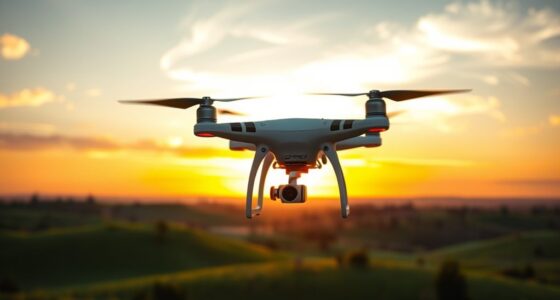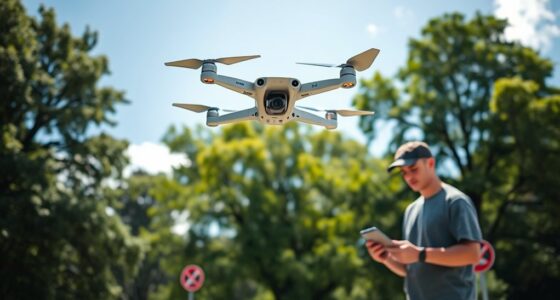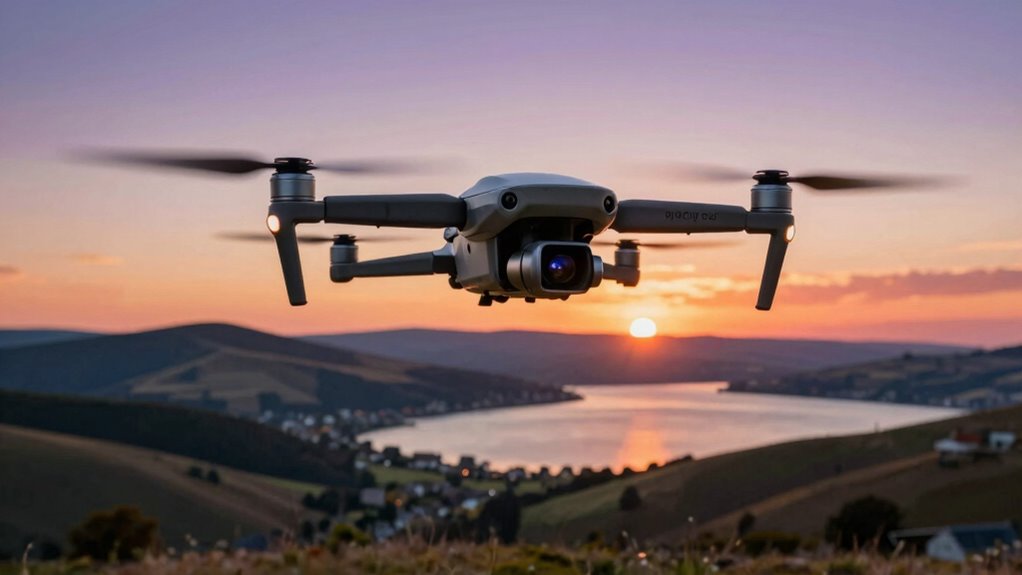

A four-thirds sensor in drones means you’ll get much better image quality thanks to larger sensor size, which captures more light and detail. This results in sharper, more vibrant photos and improves low-light performance, so you can shoot clear images even at dusk or dawn. It also helps preserve details in high contrast scenes, giving your shots a professional look. Keep exploring to discover how this technology can elevate your aerial photography experience.

Get the latest gadgets delivered free — and shop member deals
- Fast, free delivery on millions of items
- Access to Prime Big Deal Days deals on October 6–7
- Prime Video, Amazon Music and more included
Key Takeaways
- Four-Thirds sensors are larger than typical drone sensors, capturing more light and detail for sharper images.
- They excel in low light, reducing noise and improving clarity during dusk, dawn, or challenging conditions.
- These sensors handle high contrast scenes well, preserving shadow and highlight details for more dynamic photos.
- They enable cinematic effects like shallow depth of field and vibrant, true-to-life colors.
- Their compact size offers a balance of portability and high image quality for on-the-go photographers and videographers.
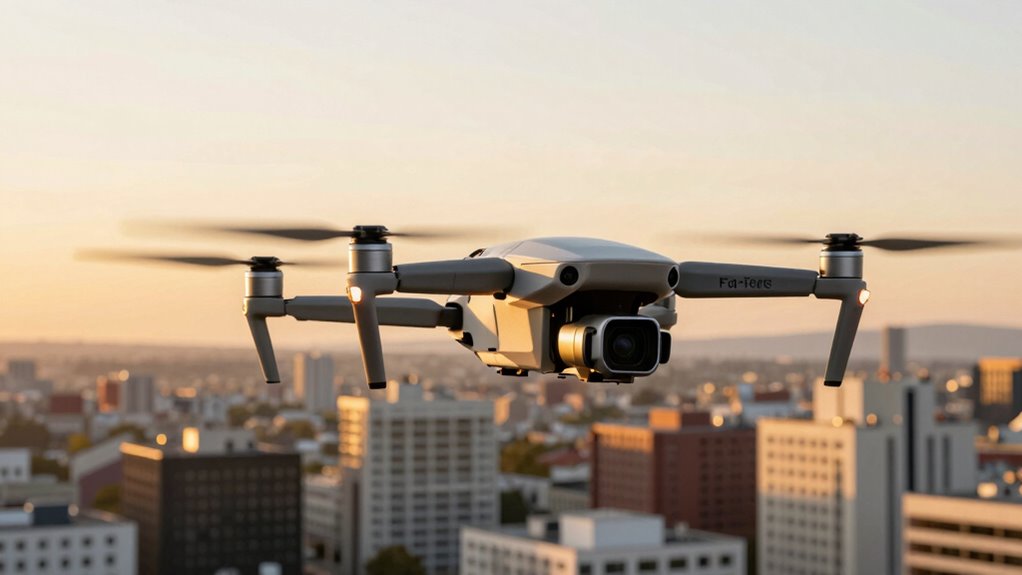
When it comes to drone photography, the size of the sensor plays a vital role in determining image quality, and four-thirds sensors are gaining popularity for their balance of performance and portability. These sensors are larger than typical sensors found in many consumer drones, which means they can capture more light and detail. This increased sensor size translates directly into sharper, more vibrant images, especially when you’re working in challenging conditions.
One of the key advantages of four-thirds sensors is their enhanced low light performance. When you’re shooting in dim environments or during dusk and dawn, these sensors excel at gathering light. They allow you to capture clearer images with less noise, even without using high ISO settings that can degrade image quality. This is a significant benefit if you’re a landscape photographer or filmmaker who often works in variable lighting. You won’t need to rely heavily on artificial lighting or post-processing to brighten your shots, saving you time and effort.
In terms of sensor size, four-thirds sensors strike an ideal balance. They’re larger than the sensors in many compact drones, which means more light hits each pixel, resulting in better image resolution and dynamic range. You notice this improvement especially in scenes with high contrast, where details in shadows and highlights are preserved more accurately. This means your photos will have more depth and richness, and your footage will look more professional. Additionally, the larger sensor size can contribute to better color fidelity, providing more true-to-life hues in your images.
Furthermore, the larger sensor size enhances your ability to achieve a shallow depth of field. This effect helps you isolate subjects from backgrounds, creating a cinematic look that’s hard to mimic with smaller sensors. The increased sensor size also improves color accuracy, giving your images more true-to-life hues. When you’re capturing vibrant landscapes or intricate architectural details, these benefits become especially noticeable.
Portability remains a strong point for four-thirds sensor drones. They’re built to be compact and lightweight, making them easy to carry around and quick to deploy. Despite their portability, they don’t compromise on image quality, making them an excellent choice for photographers and videographers who want high performance without the bulk.
As an affiliate, we earn on qualifying purchases.
Frequently Asked Questions
How Does Sensor Size Affect Drone Flight Stability?
Sensor size directly impacts drone flight stability because larger sensors typically require more sophisticated stabilization to maintain clear images. With a bigger sensor, your drone may need extra balancing and dampening, which can influence flight control. Smaller sensors tend to be lighter and easier to stabilize. So, when choosing a drone, consider how sensor size affects flight stability, especially if you’re aiming for steady shots during complex maneuvers.
Are Four-Thirds Sensors Compatible With Existing Drone Lenses?
Four-thirds sensors are generally compatible with existing drone lenses, but lens compatibility depends on the specific camera system. You should check the drone’s accessory compatibility to guarantee your lenses fit properly. While many lenses designed for Four-thirds sensors will work, some may require adapters. Always verify lens compatibility before purchasing or attaching new lenses to avoid issues with focus, stability, or image quality.
What Are the Cost Differences Between Four-Thirds and Smaller Sensors?
Think of sensor size as the heart of your drone’s camera—larger sensors like four-thirds cost more but deliver better image resolution. Smaller sensors are cheaper but often compromise on clarity. You’ll find that four-thirds sensors require pricier lenses and components, making the overall setup more expensive. If you prioritize high-quality images and detail, investing in a four-thirds drone makes sense, but if budget’s tight, smaller sensors might be more practical.
How Do Four-Thirds Sensors Perform in Low-Light Conditions?
Four-thirds sensors perform reasonably well in low-light conditions, but they can produce more image noise compared to larger sensors. The smaller sensor size limits light intake, which can affect image clarity in darker environments. You might notice graininess or reduced detail, especially in very low-light scenarios. To get better results, use lower ISO settings and optimize your drone’s camera settings for low-light shooting.
Can Four-Thirds Sensors Improve Video Recording Quality?
You can definitely improve your video recording quality with four-thirds sensors, but only if you pay attention to sensor compatibility and video stabilization. These sensors handle light well and work smoothly with advanced stabilization tech, resulting in clearer, smoother footage. Just remember, a chain is only as strong as its weakest link; so, make certain your drone’s other components support high-quality video for the best results.
As an affiliate, we earn on qualifying purchases.
Conclusion
In short, Four-Thirds sensor drones are like having a tiny, powerful lens in your pocket, elevating your image quality without the bulk. They strike a perfect balance between size and performance, giving you clearer, more vibrant shots. Think of them as your trusty sidekick—small but mighty—ready to turn your aerial photos into stunning works of art. Embrace the change, and watch your images soar to new heights!
As an affiliate, we earn on qualifying purchases.
cinematic drone with large sensor
As an affiliate, we earn on qualifying purchases.
As an affiliate, we earn on qualifying purchases.
Fall Picks
fall essentials
As an affiliate, we earn on qualifying purchases.