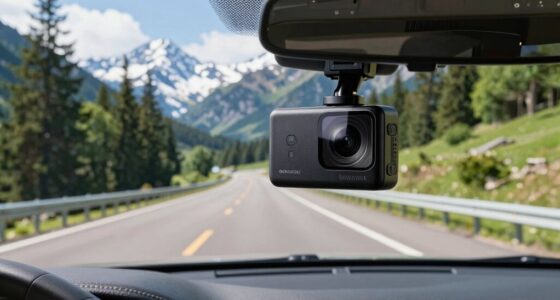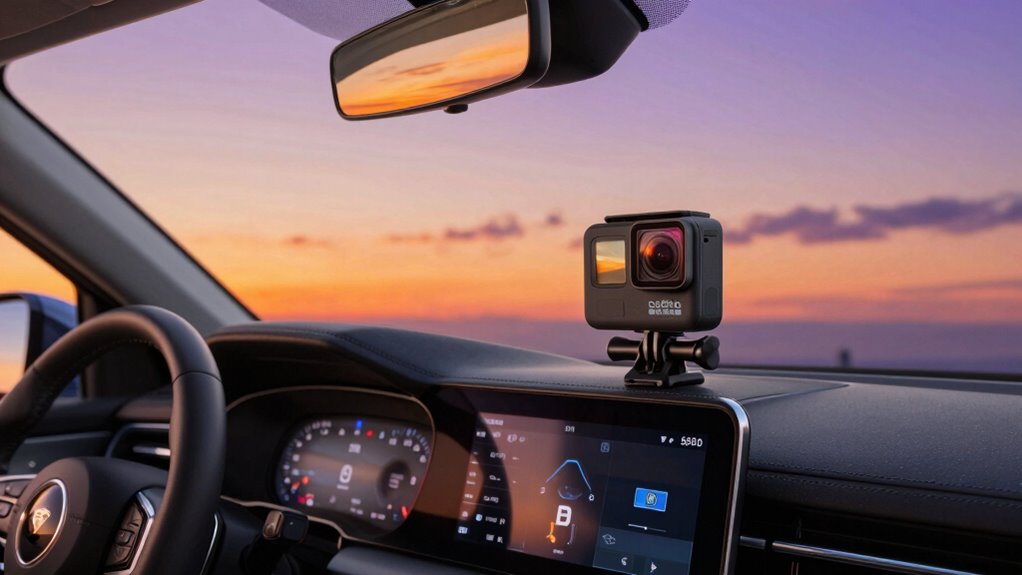

Using a GoPro as a dashcam is possible, but they’re designed differently. Dashcams focus on reliable, continuous recording with features like GPS, G-sensors, and parking mode, ideal for driving safety. Action cameras like GoPro are rugged, high-resolution, and versatile but lack specific incident-recording features. Understanding these differences helps you pick the right device for your needs. Keep exploring to discover how each option can best serve your recording habits.
Key Takeaways
- GoPro can function as a dashcam, but lacks dedicated driving safety features like G-sensors and parking mode.
- Dashcams prioritize continuous, reliable recording with features like loop recording, which GoPro may not fully support.
- Action cameras like GoPro are rugged and versatile but are not optimized for long-term vehicle use or legal documentation.
- Dashcams typically offer seamless integration with vehicle power sources and GPS, unlike standard GoPro models.
- Using a GoPro as a dashcam may require extra accessories and setup, and might not match dedicated dashcam reliability and safety features.
Top picks for "dashcam gopro action"
Open Amazon search results for this keyword.
As an affiliate, we earn on qualifying purchases.
Design and Build: Comparing Durability and Form Factor

When it comes to design and build, dashcams and action cameras serve different purposes, which influences their durability and form factor. Dashcams are typically built to withstand long-term use inside vehicles, so weather resistance is essential—they must endure heat, cold, and moisture without fail. Their aesthetic design tends to be straightforward, prioritizing functionality over style, often with a compact, low-profile shape. Action cameras, on the other hand, emphasize ruggedness and versatility, featuring robust construction that resists shocks, water, and dust. They often have a more aesthetic appeal, with sleek or sporty designs that appeal to adventurers. Both devices are engineered to endure tough conditions, but their form factors reflect their specific environments and user needs. Additionally, many action cameras offer expandability and accessories to enhance their versatility in various activities, and their customizable features allow users to adapt them to different scenarios effectively. Furthermore, the durability standards for these devices are often tested against rigorous environmental conditions to ensure reliability in diverse scenarios. Recognizing the importance of environmental resilience, manufacturers frequently subject these cameras to standardized testing to validate their robustness under extreme conditions.
Video Quality and Recording Capabilities
Video quality and recording capabilities are essential factors that distinguish dashcams from action cameras. Your choice impacts how clear and detailed your footage will be, especially in critical moments. Dashcams typically offer steady 1080p video resolution with straightforward recording formats like MP4, ensuring reliable playback. Action cameras, like GoPros, often deliver higher video resolution options such as 4K and beyond, capturing more detail. They also support multiple recording formats, giving you flexibility in editing and sharing. Imagine crisp, vibrant footage of a road trip or an adrenaline-filled adventure. You can expect:
Dashcams focus on reliable 1080p footage, while action cameras offer stunning 4K and versatile formats for detailed adventure videos.
- Sharp 4K footage with vibrant colors
- Smooth frame rates for fast-moving scenes
- Versatile recording formats for editing and sharing
- The contrast ratio of the camera sensor can affect the visibility of details in challenging lighting conditions. Additionally, many action cams incorporate advanced stabilization features that help produce smooth footage even during vigorous motion.
Storage Options and Power Supply Considerations

When choosing a camera, you’ll want to take into account how much storage capacity you need for your recordings and whether the device supports expandable options. It’s also important to check if the power supply works with your vehicle or activity setup, especially for long recordings. Additionally, look into continuous recording features to ensure your footage stays uninterrupted during extended use. For safety and reliability, consider backup power options to keep your device operational during power outages or when the vehicle’s power source is unavailable. Furthermore, selecting a device with reliable power management can help prevent data loss and ensure consistent operation in various conditions.
Storage Capacity Needs
Choosing the right storage capacity for your dashcam or action cam is essential to guarantee it can handle your recording needs without constantly running out of space. Adequate storage options ensure smooth data management, so you won’t miss important footage. Consider how much footage you plan to record daily or weekly to select the appropriate capacity. Larger storage allows for longer recordings without needing frequent transfers or deletions.
Additionally, selecting a camera with multi-surface capability can help you adapt to different environments, ensuring consistent recording quality whether you’re on the road or in outdoor settings. Imagine filling a microSD card with high-resolution videos during a road trip or capturing hours of action footage during outdoor adventures. The choice of storage capacity should align with your recording frequency and intended use to maximize your device’s effectiveness.
To optimize your storage, look for high-speed data transfer features, especially if you record in 4K or other high-resolution formats, to prevent buffering or delays during recording. Moreover, investing in expandable storage options can provide flexibility as your recording needs grow over time.
- A 32GB card for quick, short recordings
- 128GB or more for extended drives or adventures
- Fast data transfer speeds to keep up with high-quality footage
Power Source Compatibility
Selecting the right power source for your dashcam or action cam guarantees continuous recording without interruptions. Battery lifespan is a key factor; a longer-lasting battery means fewer recharge breaks and more reliable footage. Compatibility issues can arise if your device isn’t compatible with certain power sources, like specific USB chargers or external batteries. For example, some cameras only support particular voltage levels or connector types. Consider whether your device allows for direct power connections or if it relies solely on internal batteries. If you plan extended use, look for models with replaceable batteries or external power options. Ensuring your power source matches your device’s specifications minimizes risks of damage and maximizes recording time, keeping your footage secure and uninterrupted.
Continuous Recording Options
To guarantee your dashcam or action cam records continuously, you need to pay close attention to storage options and power supply considerations. Reliable storage, like high-capacity microSD cards, ensures you won’t miss footage during long drives or adventures. Consider devices with loop recording, which overwrites old footage seamlessly. Power options like external batteries or vehicle power adapters keep the camera running without interruption. Features like video stabilization help maintain clear footage even during bumpy rides, while waterproof design allows you to record in all weather conditions without worry.
- High-capacity microSD cards for extended recording
- External power sources to avoid battery drain
- Waterproof design for all-weather durability
Features and Functionality Specific to Driving Safety
Both dashcams and action cams come equipped with features designed to enhance driving safety, but their functionalities often differ to suit their primary uses. Dashcams often include loop recording, G-sensors, and parking mode to capture incidents without driver distraction, ensuring you stay focused on the road. Action cams may lack these specialized safety features but can still record high-quality footage that could be valuable in legal considerations if an incident occurs. However, using an action cam as a dashcam might raise concerns about driver distraction if you try to operate it while driving. Always check local laws, as some jurisdictions have regulations about camera use in vehicles. Properly set up and tested, both camera types can help you document your drives while prioritizing safety. Considering total‑cost clarity and maintenance schedules can help determine which device best fits your needs and ensures reliable performance over time.
Ease of Use and Mounting Options
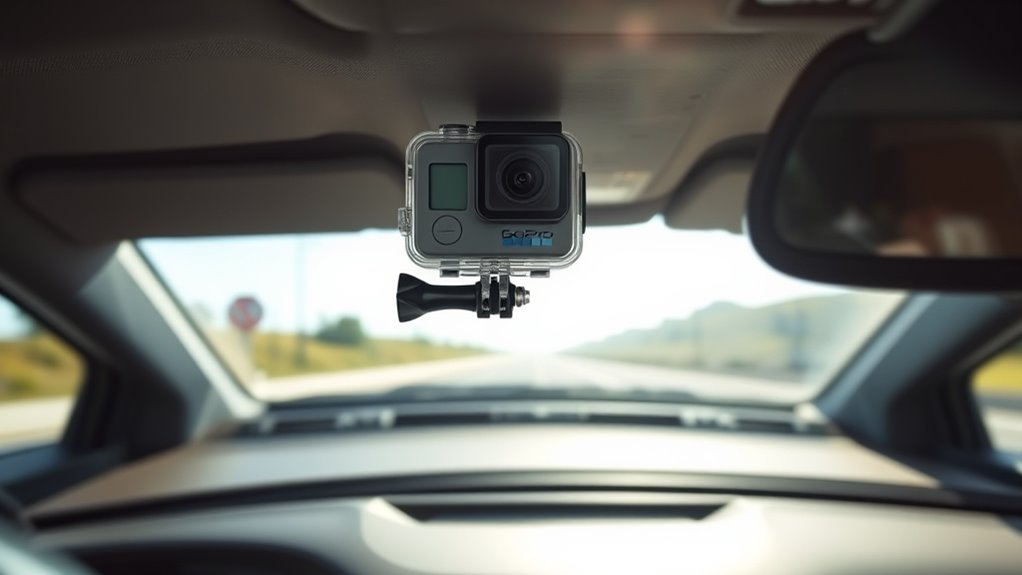
When choosing between a dashcam and an action cam, ease of use and mounting options are key. You’ll want mounting versatility that fits different situations, along with user-friendly controls that make operation simple. The setup process should be straightforward, so you can focus on capturing your experience without hassle.
Mounting Versatility
Mounting a dashcam or action cam can considerably impact how easily you can set up and use your device. The key is mounting versatility, which determines how seamlessly your camera fits into your setup. Action cams like GoPro offer a wide range of accessory compatibility, giving you options for mounting on helmets, handlebars, or dashboards. This flexibility makes it easier to find the perfect angle and ensure your camera stays secure during activities. Imagine:
- Clipping onto your helmet for a first-person perspective
- Attaching to your car’s windshield with a suction mount
- Securing with versatile straps to handlebars or backpacks
These options highlight the convenience of choosing a device with broad accessory compatibility, making your setup adaptable for various scenarios. The right Mounting versatility simplifies installation and enhances your overall experience. Additionally, high-quality mounts can help prevent vibrations that cause shaky footage, especially during high-speed or rough rides.
User-Friendly Controls
User-friendly controls are essential for making your camera easy to operate, especially when you’re on the move or in the middle of an activity. A simple, intuitive user interface allows you to access functions quickly without hassle. Control simplicity means fewer buttons and straightforward navigation, so you can start recording or adjusting settings with minimal effort. Whether you’re adjusting the angle or switching modes, clear labels and responsive controls help you stay focused on your activity instead of fumbling with your device. Many action cams and dashcams feature touchscreens or single-button operation, making them accessible for users of all skill levels. Overall, a well-designed control system enhances your experience by making the camera more reliable and easier to use in dynamic situations.
Setup Complexity
Setup complexity varies considerably between dashcams and action cams, impacting how easily you can get started. Dashcams often have straightforward installation challenges, designed to fit securely behind the windshield with minimal fuss. Action cams, however, come with a variety of mounting options that can be more complex, requiring compatibility checks and adjustments. You might encounter compatibility issues with different mounts or power sources, adding to the setup time. Additionally, sleep hygiene emphasizes the importance of understanding your equipment’s ease of setup to minimize stress and maximize usability. Being aware of installation requirements helps ensure your device is both secure and optimally positioned for recording.
Connectivity and Data Management
When it comes to connectivity and data management, choosing between a dashcam and an action cam hinges on how easily you can transfer and organize your footage. Dashcams often feature wired connections or basic wireless options, making quick transfers less convenient. In contrast, many action cams now offer wireless connectivity, allowing you to sync footage directly to your smartphone or tablet. Cloud storage is another key feature—some action cams support automatic uploads to the cloud, providing seamless backup and easy access from anywhere. This simplifies footage management, especially if you record regularly. Your choice depends on how much you value effortless data handling; if quick, wireless transfer and cloud options matter, an action cam may be the better fit. Additionally, connectivity options in modern devices can significantly enhance your overall user experience. As technology advances, the integration of wireless data transfer features continues to improve, making it even easier to manage and share your footage efficiently.
Cost and Value for Daily Use
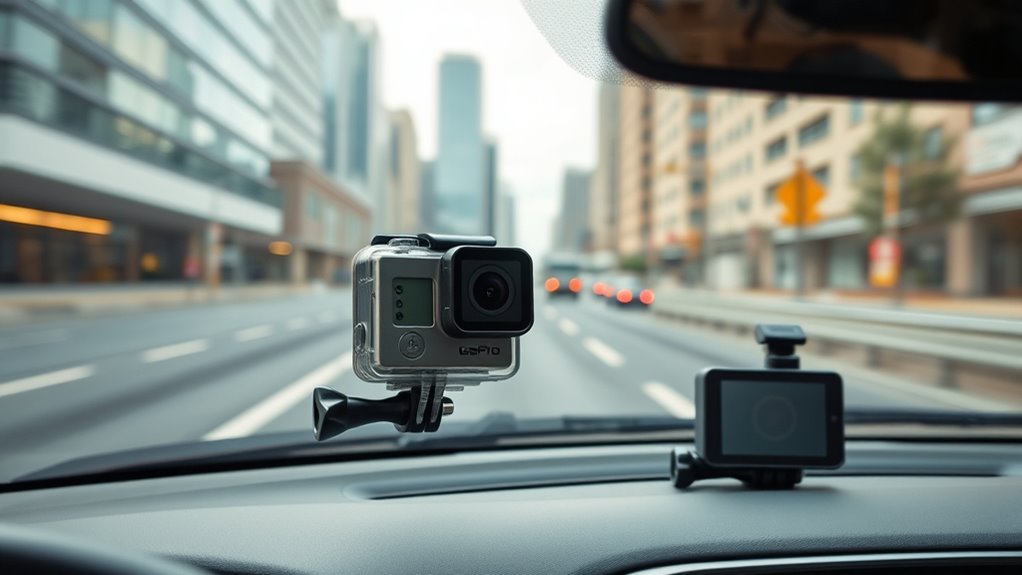
Considering the importance of seamless data management, your choice between a dashcam and an action cam also depends on how much you’re willing to spend and the overall value they provide for daily use. When doing a cost comparison, think about long-term benefits and initial investment. Dashcams are generally more affordable, offering straightforward functionality for continuous recording. Action cams like GoPro tend to be pricier but deliver versatile features and better image quality. Additionally, evaluating the durability and user-friendliness of each device can influence your decision, especially for everyday usage especially for those prioritizing accessibility and ease of operation. The durability of a device can be crucial, especially considering the environmental factors it may encounter during daily use. Incorporating AI-enhanced features can further improve the device’s performance and adaptability in various conditions. Modern dashcams often come equipped with advanced data storage options that facilitate seamless data management and retrieval, making them suitable for continuous daily use. Visualize balancing cost and performance to ensure you get the best value assessment for your daily routine.
Practical Recommendations for Choosing the Right Device
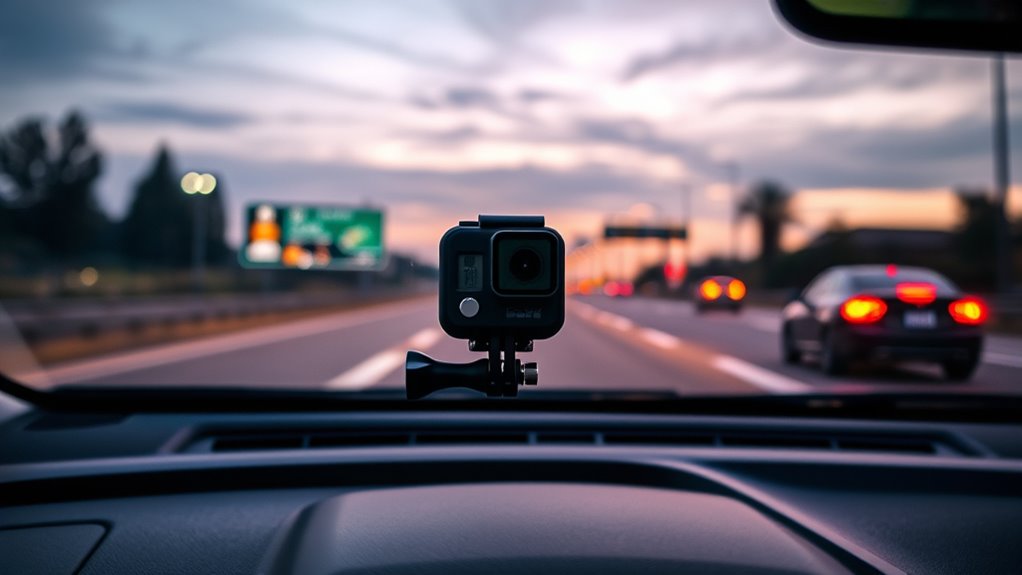
Choosing the right device depends on your specific needs and how you plan to use it daily. Think about your driver behavior and the weather conditions you’ll face. If you often drive in rain or snow, prioritize weather resistance. If you’re active and tend to bump or shake the camera, opt for a sturdy action cam. Think about whether you need discreet recording or high-quality footage. The table below highlights key factors to consider:
| Factor | Recommendation |
|---|---|
| Driver Behavior | Choose a stable device to prevent shaky footage |
| Weather Resistance | Select weatherproof models for outdoor use |
| Usage Environment | Urban vs. rural, extreme conditions |
| Storage Capacity | Larger storage for longer recordings |
| Ease of Use | User-friendly controls for quick setup |
Additionally, understanding the science behind stabilization can help you select a device that minimizes motion blur and ensures clear footage during bumpy rides. Recognizing the impact of camera placement can also improve your footage quality and overall recording experience. Considering camera durability is crucial if you plan to record in challenging environments to ensure longevity and consistent performance. Moreover, reviewing the power management features can help you avoid unexpected shutdowns during extended use.
Frequently Asked Questions
Can a Gopro Effectively Replace a Dedicated Dashcam?
Yes, a GoPro can effectively replace a dedicated dashcam. It offers excellent video stabilization, ensuring clear footage even on bumpy roads. Plus, with ample storage capacity, you can record longer drives without worries. Just keep in mind, you’ll need a good power source and a secure mounting system. Overall, a GoPro provides high-quality footage, making it a versatile choice for dashcam needs.
How Does GPS Functionality Differ Between Action Cams and Dashcams?
Imagine you’re recording your road trip with a GoPro; its GPS accuracy helps log your route, but it’s less precise than dedicated dashcams. Dashcams are optimized for data logging, providing real-time speed and location updates that are more reliable during sudden stops or accidents. Action cams often have basic GPS functions, so if detailed data logging is essential, a dedicated dashcam offers better precision and consistency for your driving records.
Are There Legal Considerations for Using Action Cameras as Dashcams?
You should be aware of legal restrictions and privacy concerns when using action cameras as dashcams. Laws vary by region, and recording others without consent may lead to legal issues. Always check local regulations before mounting your camera in your vehicle. Respect privacy rights, avoid intrusive recordings, and make sure your camera usage complies with applicable laws to prevent potential legal trouble and protect others’ privacy.
Which Device Offers Better Performance in Low-Light Driving Conditions?
Ever wondered which device performs better at night? You’ll find that action cameras with advanced night vision and excellent image stabilization generally handle low-light driving conditions better. Gopros and similar models often come with features like enhanced low-light modes and stabilization tech, helping you capture clearer footage in darkness. So, if night safety matters, an action cam with these features gives you a significant edge over standard dashcams.
How Do Maintenance and Durability Compare Under Daily Driving Use?
You’ll find that maintenance and durability vary based on weather resistance and battery life. A device with strong weather resistance withstands daily driving conditions, including rain and dust, requiring minimal upkeep. Regularly check and recharge the battery to guarantee continuous recording. Durable construction helps prevent damage from vibrations and impacts, but occasional cleaning and battery management are essential to keep your dashcam or action cam functioning reliably during daily use.
Conclusion
So, whether you opt for a rugged GoPro or a dedicated dashcam, remember that both promise peace of mind on the road—if you can just figure out which one’s actually meant for driving. Irony aside, choosing the right device depends more on your needs than brand names. After all, in the end, it’s your footage that truly captures the journey—and the moments you’d rather forget. Happy driving, or filming.