
To keep your camera gear safe and dry, assess your shooting environments and choose appropriate waterproof cases, bags, or rain covers for quick protection. Use DIY barriers like plastic bags or sheets for added defense, and always handle gear carefully after exposure to wet conditions. Regular maintenance, proper drying, and protective accessories help prolong your gear’s lifespan. For expert tips on staying prepared, explore more about safeguarding your equipment in any weather.
Key Takeaways
- Use waterproof cases, bags, and rain covers to protect gear from rain, snow, and splashes.
- Regularly dry and inspect equipment after exposure to moisture, employing silica gel packs and proper ventilation.
- Choose weatherproof accessories like filters, lens covers, and protective filters to prevent damage during shooting.
- Store gear in padded, moisture-absorbing containers in cool, dry environments when not in use.
- Prepare for sudden weather changes with DIY waterproof barriers and quick-deploy rain shields for instant protection.
Top picks for "ultimate keep camera"
Open Amazon search results for this keyword.
As an affiliate, we earn on qualifying purchases.
Assessing Your Camera Protection Needs
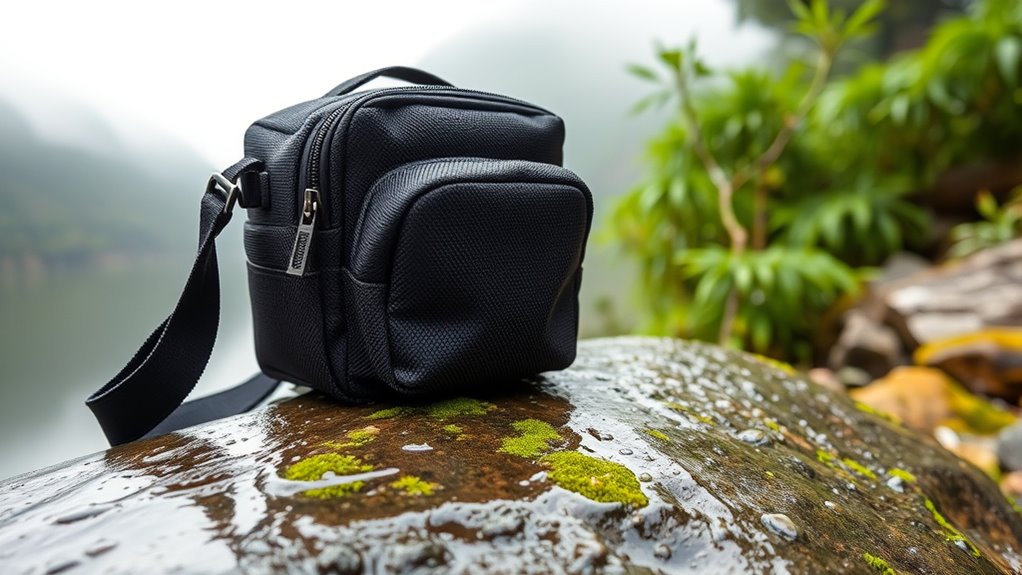
Before choosing the right protection for your camera, you need to carefully assess your specific needs. Start by considering how often and where you’ll be shooting. If you often shoot outdoors or in unpredictable weather, investing in camera insurance can provide peace of mind against accidents or damage. Check the weather forecast regularly before heading out, so you can prepare accordingly. If rain or snow is expected, a waterproof bag or cover becomes essential. Think about the environment—mountains, beaches, or urban settings—since each presents unique risks. Understanding these factors helps you select the appropriate protective gear, whether it’s extra padding, weatherproof cases, or insurance coverage. Being proactive guarantees your camera stays safe, no matter where your photography adventures take you. Additionally, using weatherproofing techniques can further enhance the protection of your gear in challenging conditions, especially when combined with reliable backup power to keep your equipment operational. Properly securing your gear during transport minimizes the risk of accidental damage. Recognizing potential hazards specific to your shooting environment allows you to choose the best protective accessories for your gear.
Essential Waterproof Camera Cases and Bags
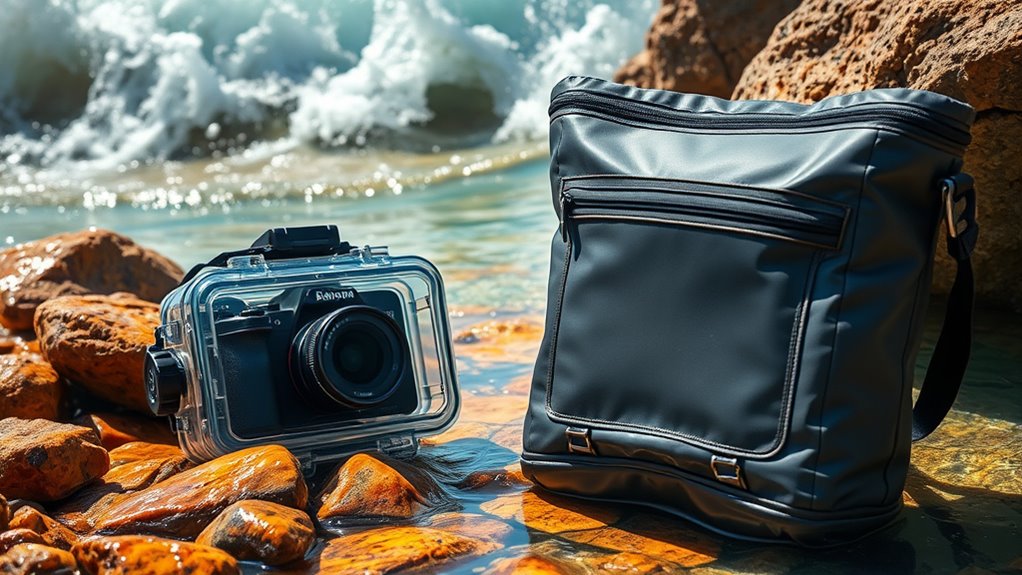
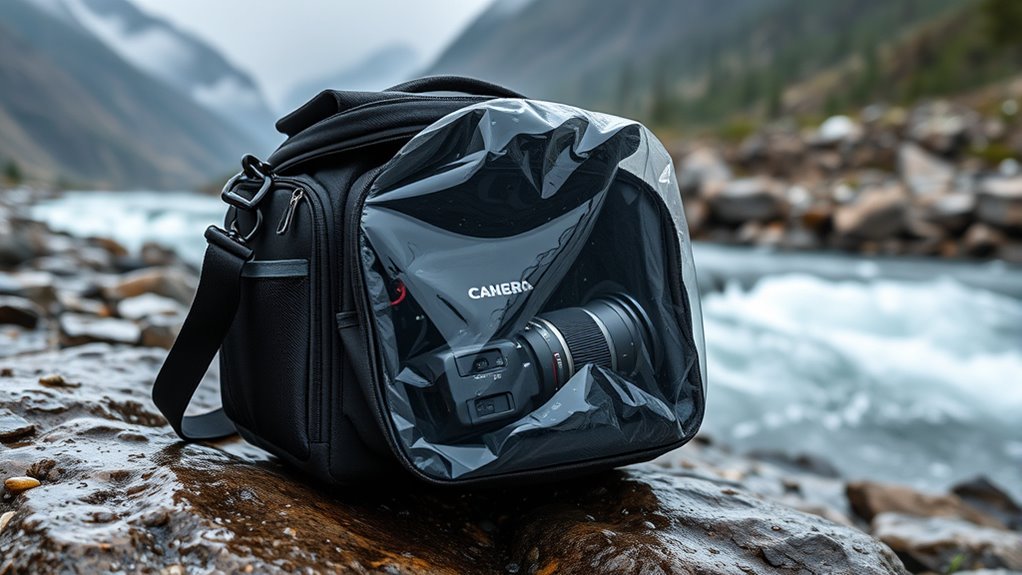
When shooting in wet or unpredictable conditions, having the right waterproof camera case or bag is essential to keep your gear dry and protected. These cases shield your camera, lens filters, and accessories from rain, splashes, and humidity. Look for options with secure closures, waterproof zippers, and durable materials. A good waterproof bag should also have padded compartments for lens filters and space for your camera straps. Consider the following options:
| Case Type | Features | Best Use |
|---|---|---|
| Hard Shell | Rigid, impact-resistant | Heavy rain, bumps |
| Soft Shell | Lightweight, flexible | Light rain, travel |
| Backpack | Multiple compartments | Extended shoots |
| Shoulder Bag | Easy access, compact | Quick access |
Choose a case that suits your shooting style and conditions to keep your gear safe and dry. To further ensure weatherproofing of your equipment, regularly inspect seals and closures for signs of wear. Additionally, some automated cleaning robots can help maintain your gear by removing dust and debris from external surfaces, ensuring optimal performance. Incorporating proper ventilation can also prevent excess humidity buildup inside your camera bags, preserving your gear over time. Regularly monitoring the seals and closures can prevent water ingress during unexpected weather changes. Additionally, ensuring proper ventilation inside your camera bag can help prevent moisture buildup that may cause internal fogging or mold growth.
Using Rain Covers for Quick Protection
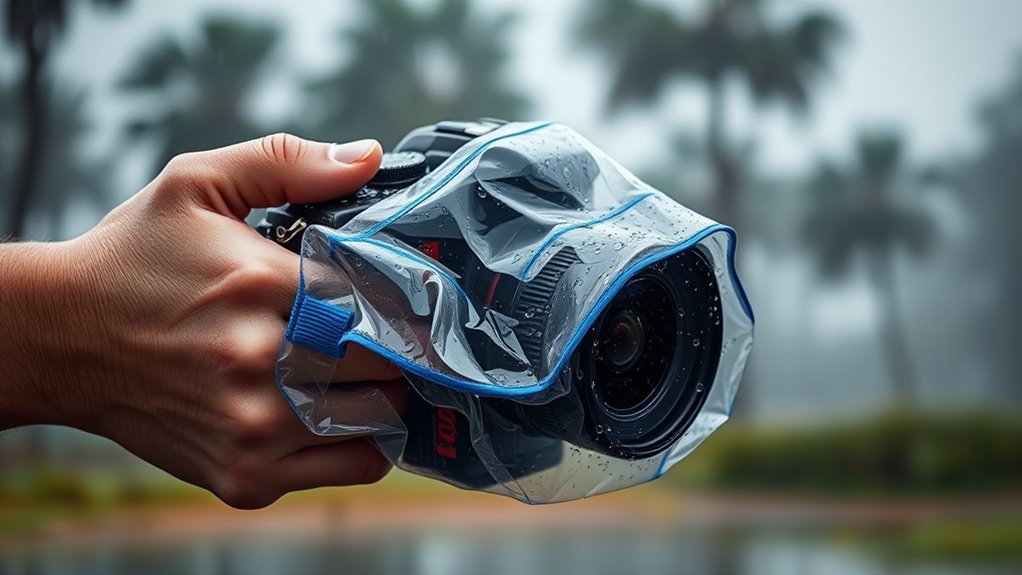
Rain covers are an essential tool for photographers who need quick protection against unexpected weather changes. Their benefits are clear: they allow you to shield your camera instantly without bulky setups or delays, making them ideal during sudden rain showers. Using a rain cover is one of the most effective quick protection methods, especially when you’re in the middle of a shoot or on the move. Simply slide the cover over your camera and lens, ensuring all sensitive parts are protected. Many rain covers are designed with adjustable fits and transparent windows, so you can operate your camera comfortably. They’re lightweight, compact, and easy to carry, which means you can always have one on hand. This makes them a reliable solution for safeguarding your gear in unpredictable weather. Properly using weather-resistant materials in your gear setup can further enhance protection against moisture and rain.
Creating DIY Waterproof Barriers
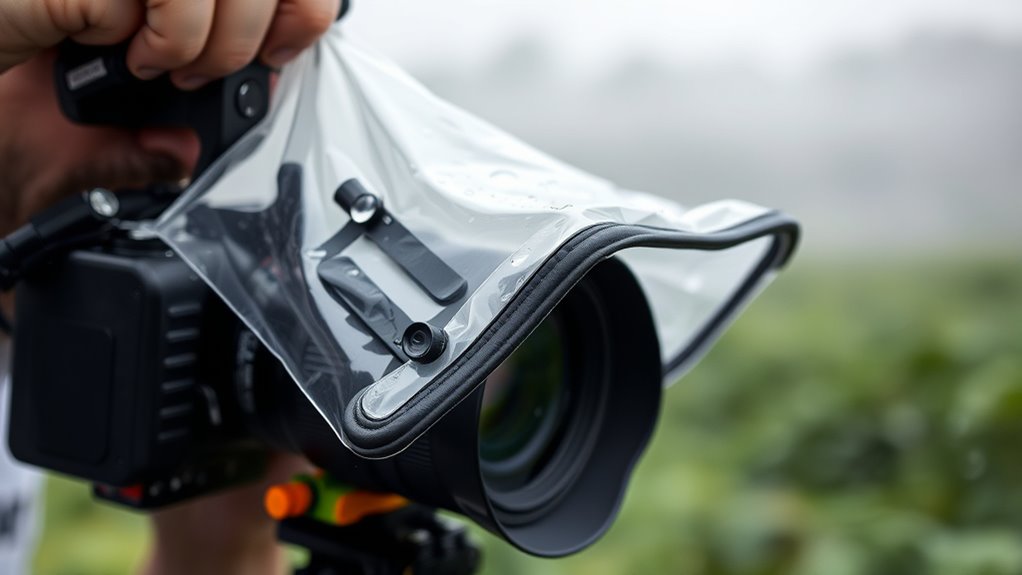
Ever wonder how you can protect your camera without relying solely on commercial gear? DIY solutions offer simple, effective waterproof barriers you can create yourself. Use plastic sandwich bags or zip-top bags to cover your camera, sealing around the lens with rubber bands or tape to prevent water entry. For more durability, repurpose a plastic container or a waterproof pouch, cutting a hole for your lens and sealing edges with waterproof tape. You can also craft a quick waterproof cover using a trash bag or heavy-duty plastic sheeting, secured with elastic bands or string. These DIY solutions are lightweight, portable, and customizable, giving you reliable protection when you’re caught in unexpected rain or splashes. Incorporating simple waterproofing techniques can significantly extend your gear’s lifespan and ensure your photography sessions aren’t disrupted by the weather. Using water-resistant materials can further enhance your homemade barriers, making them more effective against water penetration. Interestingly, understanding nanotechnology concepts can inspire the development of more advanced, durable waterproof coatings for your gear. Additionally, employing waterproof coatings can provide an extra layer of protection, especially for electronic components susceptible to moisture. Exploring modern materials can lead to even more effective DIY waterproofing solutions for your gear. With a little ingenuity, you can keep your gear safe from water damage in any situation.
Best Practices for Handling Wet Conditions
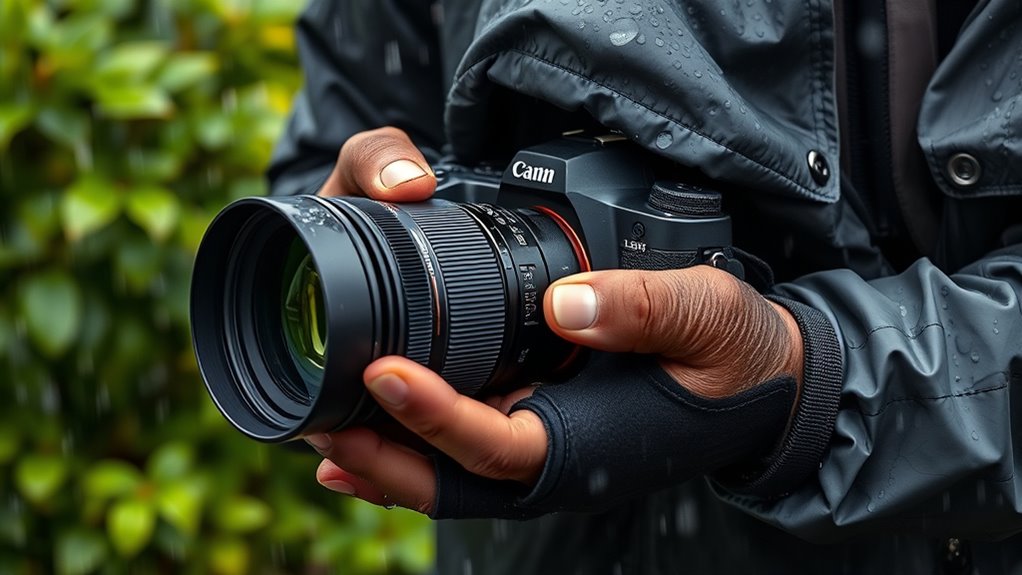
When weather gets wet, you should protect your equipment right away to prevent damage. Using waterproof accessories like covers or rain sleeves can make a big difference. Staying prepared helps keep your gear safe and ready for action in any wet condition. Additionally, employing water-resistant gear ensures your equipment remains protected even during unexpected rain. Paying attention to designer looks in your protective accessories can also enhance both style and functionality. To further safeguard your camera gear, consider investing in security zone info that offers comprehensive protection against environmental elements. Implementing waterproofing techniques can also extend the lifespan of your gear and prevent costly repairs.
Protect Equipment Immediately
Immediately safeguard your camera gear when it gets wet to prevent water damage. Acting quickly minimizes the risk of internal moisture and corrosion. First, remove your gear from the rain or wet environment. Keep it in a dry, protected place, ideally inside your camera bag for added security. Use silica gel packs to absorb excess moisture and prevent lens fog prevention issues. Check your camera bag security; ensure zippers are closed tightly to keep out more moisture. Avoid handling your equipment with wet hands to prevent smudges or further water intrusion. Always dry the exterior gently with a microfiber cloth, and consider removing batteries and memory cards to reduce damage risk. Quick action is essential to preserve your gear’s longevity and performance. Incorporating outdoor safety principles can help you develop a comprehensive approach to gear protection in wet conditions. Additionally, understanding waterproofing techniques can further enhance your gear’s defense against moisture. Being aware of water-resistant gear features can help you choose equipment better suited for wet environments. Proper maintenance routines are also crucial for long-term protection and ensuring your gear remains in optimal condition.
Use Waterproof Accessories
Using waterproof accessories is a practical way to protect your camera gear during wet conditions. Investing in items like a waterproof smartphone ensures you can capture moments without worry, even in heavy rain. Rainproof lens filters shield your lens from water droplets, maintaining image quality. Consider using rain covers or weather-sealed bags for overall protection. Here’s a quick comparison:
| Accessory Type | Benefit |
|---|---|
| Waterproof Smartphone | Stay connected and capture shots safely |
| Rainproof Lens Filters | Keep your lens dry and clear |
| Weather-Sealed Bag | Protects gear during transport |
| Rain Cover for Camera | Shields entire camera setup |
| Waterproof Tripod | Prevents rust and water damage |
With these accessories, you’ll handle wet conditions confidently and keep your gear safe.
Maintenance and Drying Techniques for Camera Gear
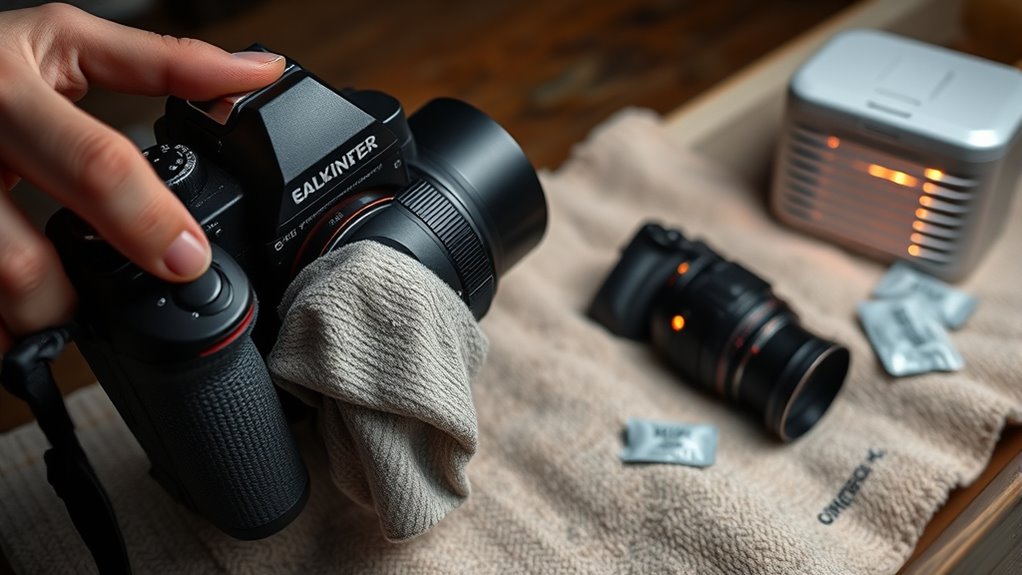
To keep your camera gear in top shape, you need to follow proper cleaning methods and drying strategies. Using the right techniques prevents damage and extends the lifespan of your equipment. Additionally, smart storage tips help protect your gear when it’s not in use.
Proper Cleaning Methods
Proper cleaning is essential to keep your camera gear functioning at its best, and doing it correctly can prevent damage and extend its lifespan. Focus on lens maintenance by using appropriate cleaning tools and techniques to avoid scratches or smudges. When cleaning the sensor, use specialized sensor-cleaning tools and follow manufacturer instructions carefully. Always keep your equipment free of dust, dirt, and fingerprints to guarantee ideal image quality.
Remember these key points:
- Use a blower to remove loose debris before wiping
- Avoid harsh chemicals or rough cloths
- Use lens cleaning solution and microfiber cloths
- Handle sensor cleaning with care and patience
- Store gear properly after cleaning to prevent dust buildup
Effective Drying Strategies
Effective drying is essential to prevent moisture damage and maintain your camera gear’s performance. After exposure to water or humid environments, use desiccant packs to absorb residual moisture inside camera bags or cases. These packs are highly effective and reusable; replace or recharge them as needed. Additionally, utilize proper ventilation methods—such as opening zippers or vents—to promote airflow around your gear. Good ventilation helps speed up the drying process and reduces the risk of mold or corrosion. Avoid using heat sources like hairdryers, which can damage sensitive components. Instead, allow your gear to air dry in a well-ventilated space, ensuring moisture evaporates completely. Combining desiccant packs with ventilation methods ensures thorough, safe drying, preserving your camera equipment’s longevity and peak performance.
Storage Tips and Tricks
Storing your camera gear correctly is essential for maintaining its condition and ensuring it performs at its best over time. Proper storage prevents dust, moisture, and damage, extending your gear’s lifespan. Focus on camera bag organization, keeping items neatly arranged and protected. Regularly follow lens cleaning routines to avoid dust and smudges that can affect image quality. When not in use, store your gear in a cool, dry place, preferably in a padded case. Use silica gel packs to absorb moisture and prevent condensation. Guarantee all accessories are stored separately to avoid scratches and damage. Consistently check your gear for dust and moisture, and clean or dry as needed before storage. Good organization and maintenance are key to preserving your equipment’s longevity.
Additional Accessories to Shield Your Equipment
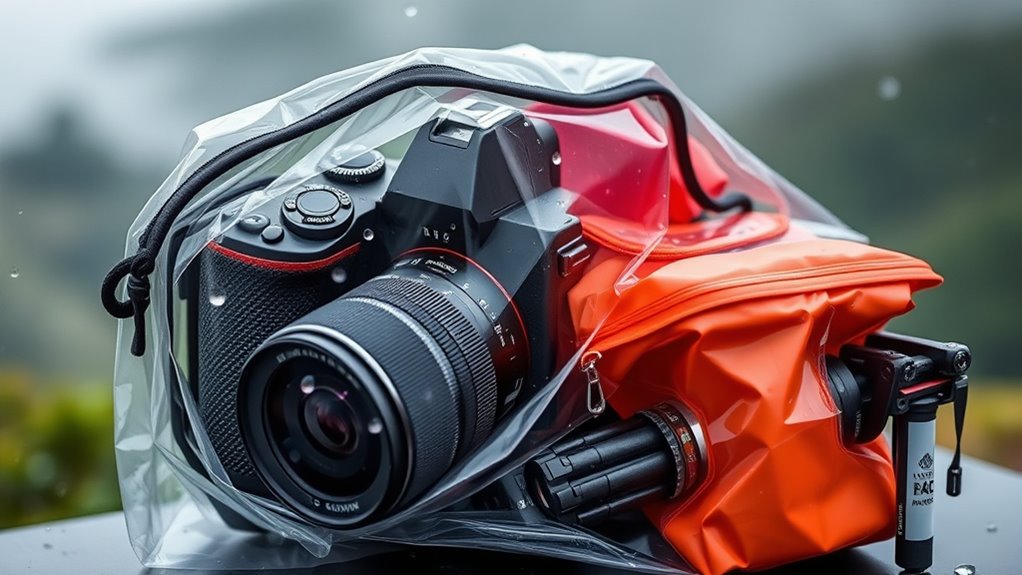
To keep your camera gear safe from unexpected damage, investing in additional accessories like lens covers, rain shields, and dust filters is essential. These items provide critical protection against elements that can harm your equipment. Using camera filters, such as UV or protective filters, adds an extra layer of defense for your lenses. Lens caps are also indispensable—they prevent dust and scratches when your camera isn’t in use. Here’s a quick comparison:
| Accessory | Purpose |
|---|---|
| Camera filters | Protect the lens glass from scratches |
| Lens caps | Shield the lens when not shooting |
| Rain shields | Keep moisture away from your gear |
| Dust filters | Minimize dust entering the lens |
| Protective covers | Guard against accidental drops |
These accessories help you maintain ideal performance and prolong your gear’s lifespan.
Tips for Traveling Safely With Camera Gear in Inclement Weather
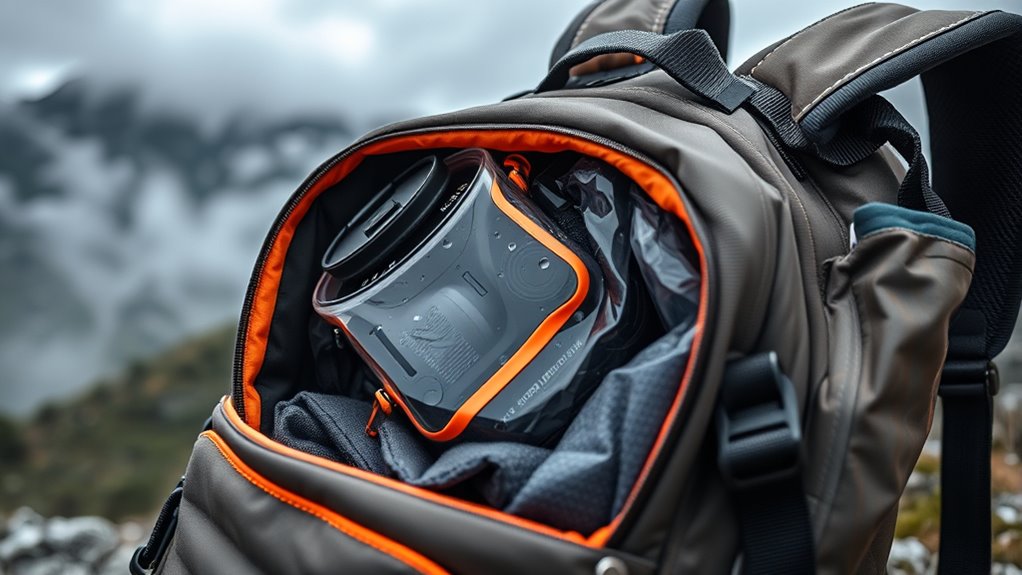
When you’re traveling with camera gear in unpredictable weather, protecting your equipment becomes a top priority. Rain, snow, or fog can damage your gear or compromise your shots. To stay safe, keep your lens filters on to guard against moisture and debris. Use a sturdy tripod with good stability to prevent wobbling on slippery surfaces. Always carry waterproof bags or rain covers to shield your camera from sudden downpours. Be mindful of your surroundings; avoid exposing gear to extreme cold or heat. Regularly check your gear’s condition and dry it promptly if exposed to moisture.
Protect your camera gear from moisture and extreme weather to ensure your shots stay safe and sharp.
- Use weather-sealed backpacks
- Keep silica gel packs nearby
- Avoid sudden temperature changes
- Secure all straps and closures
- Maintain tripod stability on uneven ground
Preventing Damage During Unexpected Weather Changes
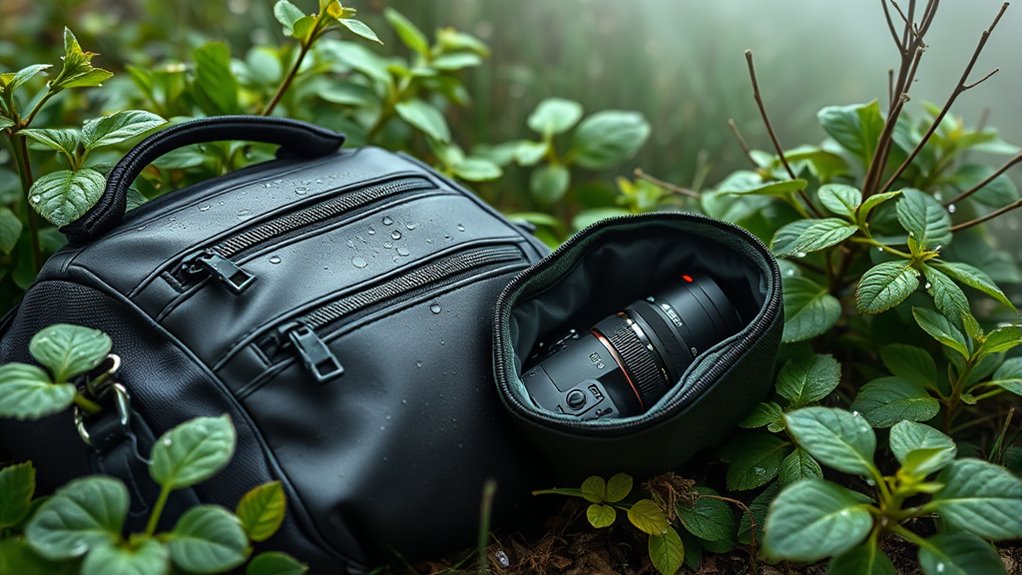
Unexpected weather changes can catch you off guard, but quick action can prevent damage to your camera gear. To stay prepared, use weatherproofing techniques like sealing lens and camera bodies with protective covers or bags. Carry an emergency repair kit that includes small tools, microfiber cloths, and spare batteries to address minor issues immediately. If rain starts suddenly, quickly shield your gear with a rain cover or plastic bag, keeping it dry until conditions improve. Avoid exposing your equipment to moisture or extreme temperatures, which can cause internal damage. Regularly check and maintain your weatherproofing methods to guarantee they’re effective. Acting swiftly with these precautions helps safeguard your gear from unpredictable weather changes and keeps you ready for any shooting opportunity.
Frequently Asked Questions
How Often Should I Inspect My Camera Gear for Water Damage?
You should inspect your camera gear for water damage regularly, especially after exposure to rain or humid conditions. Use waterproof cases whenever possible, and perform regular maintenance to check seals and waterproofing. Give your gear a thorough inspection at least once a month if you frequently shoot outdoors. This proactive approach helps catch issues early, preventing costly repairs and ensuring your equipment stays safe and dry during every shoot.
Can I Use Regular Plastic Bags as Waterproof Barriers?
Yes, you can use regular plastic bags as waterproof barriers, but they’re not ideal. Instead, consider plastic bag alternatives like specialized waterproof camera covers or rain covers designed for photography gear. These options provide better protection, fit more securely, and prevent moisture from seeping in. Make sure any cover you choose is breathable and allows easy access to your camera controls, keeping your gear safe and dry during wet conditions.
What Are Signs My Camera Has Been Exposed to Moisture?
You’ll notice moisture indicators like foggy lenses or condensation inside the viewfinder, which signal your camera has been exposed to moisture. Look for corrosion signs on metal parts or connectors, as rust or discoloration can develop quickly. If you see water spots or feel dampness around the battery compartment or lens mount, it’s a clear sign your camera needs immediate drying and inspection to prevent damage.
Is It Safe to Use Silica Gel Packs Inside Camera Bags?
Yes, it’s safe to use silica gel packs inside your camera bag. Silica gel absorbs moisture effectively, helping prevent humidity buildup that can damage your gear. Just place a few packs in different compartments and replace them when they become saturated. Remember, silica gel is non-toxic and reusable once dried out. Regular moisture absorption with silica gel packs keeps your camera equipment dry and reduces the risk of moisture-related issues.
How Do I Prevent Fogging Inside My Camera Lens?
Imagine you’re photographing in a humid rainforest, and your lens starts fogging. To prevent this, always use lens cleaning to remove moisture and consider lenses with anti fog coatings. Keep your camera in a sealed bag with silica gel packs when not in use. When you notice fogging, gently warm the lens with your hand or a lens warmer to reduce moisture buildup, ensuring clear shots every time.
Conclusion
Protect your prized camera gear with proactive precautions and purposeful protection. By evaluating your needs, employing effective equipment, and embracing quick-acting covers, you’ll safeguard your gear against sudden storms and splashes. Stay savvy with safe handling, diligent drying, and dependable accessories. Remember, preparedness prevents problems, so plan properly and practice prudence. Protect your passion and preserve your photography potential—because smart, swift steps keep your gear safe, sound, and ready for the next shot!