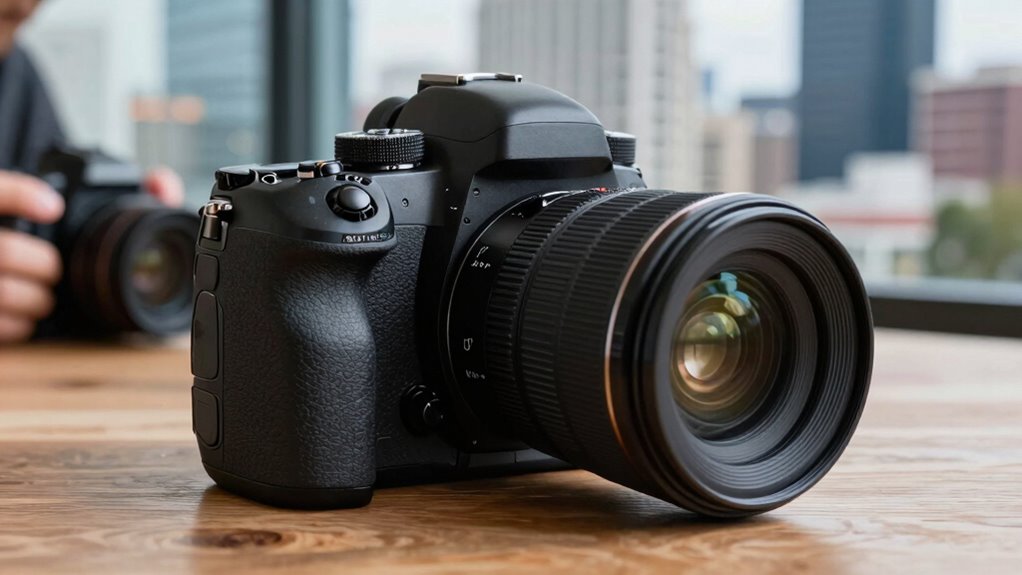

A professional camera today is defined by its superior sensor quality, which captures more light, detail, and vibrant colors, even in tough conditions. Fast, accurate autofocus helps you lock onto moving or challenging subjects quickly, ensuring sharp images every time. Durability is essential for challenging environments, so you can shoot confidently anywhere. These core features—sensor performance, autofocus, and toughness—are what set professional cameras apart. To discover more about what makes a camera truly professional, keep exploring the key details.

Get the latest gadgets delivered free with Prime
- Fast, free delivery on millions of items
- Prime Video, Amazon Music and more included
- Member-only deals all year
Key Takeaways
- Large sensors (full-frame or medium format) deliver superior light capture and image detail.
- High-quality autofocus systems ensure quick, accurate focus on moving or complex subjects.
- Robust durability and weather sealing allow reliable use in challenging environments.
- Advanced features like multiple focus points and eye detection enhance shooting versatility.
- Overall image quality, including color accuracy and dynamic range, defines professional-grade cameras.
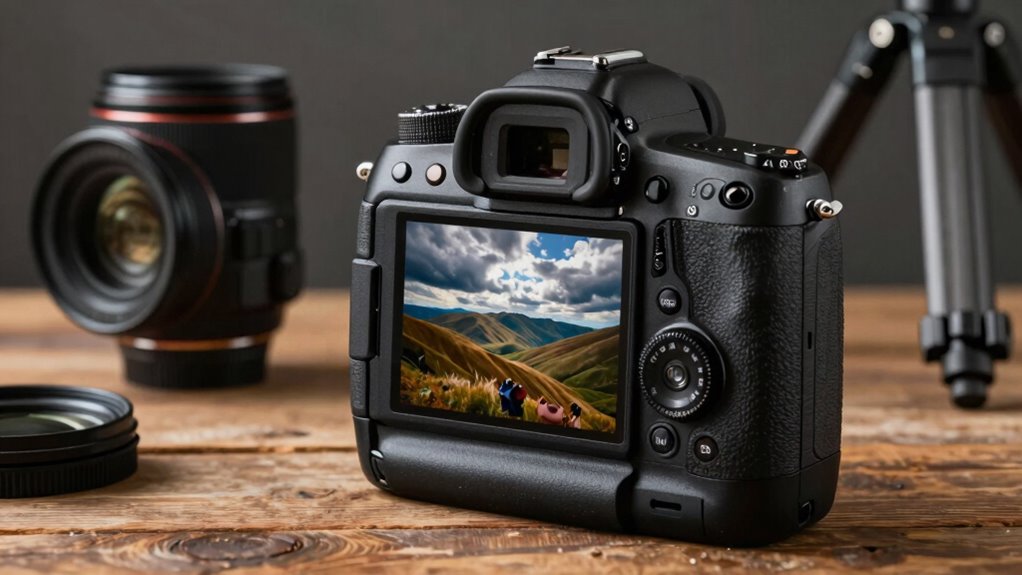
In today’s photography landscape, the line between amateur and professional cameras has blurred, but certain features still define what makes a camera “professional.” If you’re serious about your craft, you’ll want a device that offers not just high image quality but also advanced controls, durability, and versatility. Two crucial aspects that set professional cameras apart are sensor quality and autofocus performance. These elements directly influence the clarity, sharpness, and reliability of your images, especially in challenging conditions.
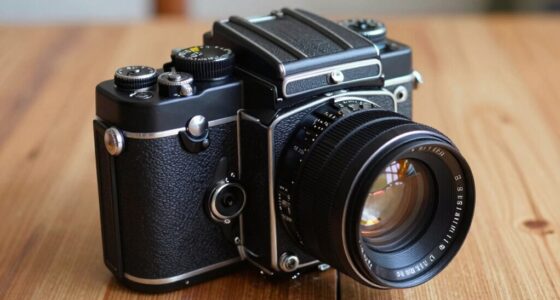
Sensor quality is the foundation of any high-end camera. A professional camera typically features a larger sensor—such as full-frame or medium format—that captures more light and detail. This results in images that are richer in color, with better dynamic range and less noise, even in low-light situations. When you’re shooting in unpredictable environments or working on demanding projects, a superior sensor ensures your images stay sharp, vibrant, and true to life. It’s not just about megapixels; it’s about how effectively the sensor processes light and detail. You’ll notice that professional cameras handle high-contrast scenes and subtle textures far better than their amateur counterparts, giving you more flexibility and confidence in your work.
A larger sensor captures more light, detail, and handles high-contrast scenes better for professional-quality images.
Autofocus performance is equally vital. A professional camera offers fast, precise autofocus that adapts to different subjects and conditions. Whether you’re capturing fleeting moments or working in fast-paced environments, reliable autofocus ensures your shots are sharp and in focus when it matters most. Advanced autofocus systems in professional models often include multiple focus points, eye detection, and tracking capabilities. These features allow you to lock focus quickly on your subject, even if it’s moving or partially obscured. This level of responsiveness is crucial for professional work, where missed focus can ruin an otherwise perfect shot. When combined with a high-quality sensor, excellent autofocus performance guarantees your images are not only detailed but also accurately focused, making your photos more compelling and polished.
In essence, the combination of exceptional sensor quality and autofocus performance elevates a camera from basic to professional. These features provide you with the tools to handle complex lighting, fast action, and intricate details with ease. If you’re investing in a camera that truly supports your growth and professionalism, look for models that prioritize these elements. They’re the backbone of high-quality photography and indispensable for capturing images that stand out.
As an affiliate, we earn on qualifying purchases.
Frequently Asked Questions
Do Professional Cameras Always Produce Higher-Quality Images?
No, professional cameras don’t always produce higher-quality images. Sensor technology and image processing play vital roles; high-end sensors capture more detail and handle low-light situations better, while advanced image processing enhances clarity and color accuracy. However, your skill and understanding of settings matter just as much. A top-tier camera won’t guarantee perfect images if you don’t know how to utilize its features effectively, so quality depends on both equipment and operator expertise.
Can Amateur Cameras Be Used for Professional Photography?
Absolutely, you can use amateur cameras for professional photography. Modern models often feature advanced image sensor technology and ergonomic designs that make shooting comfortable and efficient. While they might lack some high-end features, skillful use of these cameras can produce stunning results. Focus on understanding your camera’s capabilities, optimize image sensor performance, and prioritize ergonomics to deliver professional-quality images, regardless of the camera’s brand or price.
What Accessories Are Essential for a Professional Camera Setup?
Think of your camera setup as a well-equipped toolkit for capturing life’s moments. Essential accessories include a sturdy tripod for stability, extra batteries for extended shoots, and a high-quality memory card. Prioritize camera ergonomics with comfortable grips and intuitive controls, ensuring accessories are compatible with your gear. These elements work together, enhancing your efficiency and creativity, turning your camera into a professional-grade instrument ready for any shot.
How Much Should I Budget for a Professional Camera?
You should budget around $1,000 to $3,000 for a professional camera, depending on your needs. Focus on your investment strategies by balancing features and cost, ensuring you get quality gear that matches your skills and goals. Incorporate budget planning to cover accessories and future upgrades. Remember, a higher initial investment often leads to better image quality and durability, helping you grow as a professional photographer or videographer.
Are Mirrorless Cameras Considered Professional?
Yes, mirrorless cameras are considered professional. Think of them like sleek, modern starships replacing bulky ships in a sci-fi flick. They excel in sensor technology, offering high resolution and fast autofocus, perfect for professional work. Plus, their brand reputation—like Sony, Canon, or Nikon—cements their status. You get lightweight design without sacrificing image quality, making them a top choice for serious photographers seeking versatility and top-tier performance.
medium format camera with weather sealing
As an affiliate, we earn on qualifying purchases.
As an affiliate, we earn on qualifying purchases.
Conclusion
In today’s world, a professional camera is like a trusted partner, ready to capture your vision with precision and clarity. It’s not just about the brand or specs, but how it complements your skills and creativity. When you find a camera that feels intuitive and fuels your passion, you’ve found your magic wand. Remember, the true professionalism lies in your eye and intent, not just the gear you carry. Your perfect camera is waiting to tell your story.
autofocus camera for fast moving subjects
As an affiliate, we earn on qualifying purchases.
As an affiliate, we earn on qualifying purchases.
camera with eye detection autofocus
As an affiliate, we earn on qualifying purchases.
As an affiliate, we earn on qualifying purchases.
Halloween Picks
halloween
As an affiliate, we earn on qualifying purchases.