You’ll find that mirrorless cameras have taken over because they offer larger sensors for better image quality and low-light performance, all in a smaller, lighter body that’s easy to carry around. They also provide advanced features like in-body stabilization and silent shooting, making them versatile for any situation. Plus, flexible lens options and innovative tech make them appealing for beginners and pros alike. Want to discover the full story behind their rise? Keep exploring to see why they’re changing photography forever.

Get the latest gadgets delivered free with Prime
- Fast, free delivery on millions of items
- Prime Video, Amazon Music and more included
- Member-only deals all year
Key Takeaways
- Larger sensors in compact bodies improve image quality and low-light performance, attracting photographers.
- Open lens mounts and adapters offer greater compatibility and flexibility for users.
- Smaller, lightweight designs enhance portability and encourage more frequent shooting.
- Technological innovations like in-body stabilization and silent modes boost performance and usability.
- Industry focus on sensor quality, portability, and advanced features has driven market dominance.
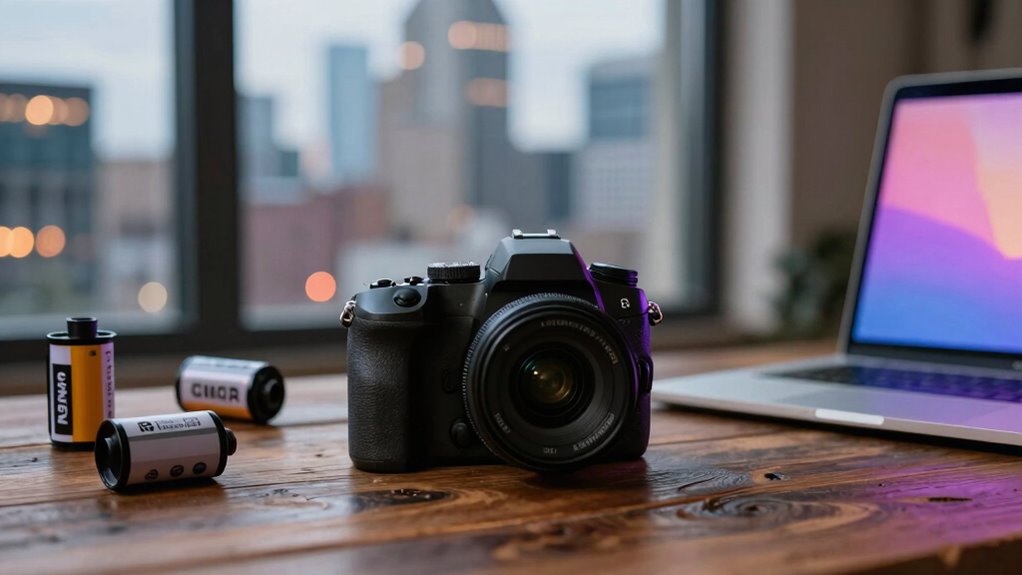
In recent years, mirrorless cameras have increasingly dominated the photography market as they offer a lighter, more versatile alternative to traditional DSLRs. One of the key reasons for this shift is the way these cameras handle sensor size and lens compatibility. Unlike bulky DSLRs, mirrorless models often feature larger sensors in a more compact body, improving image quality without sacrificing portability. Whether you’re capturing landscapes, portraits, or fast-moving subjects, a bigger sensor allows for better detail, dynamic range, and low-light performance. This means you get sharper, more vibrant images, even in challenging conditions.
Mirrorless cameras offer larger sensors and compact designs for superior image quality and portability.
Lens compatibility is another major advantage that draws you to mirrorless cameras. Many brands have adopted a more open approach, enabling you to use a wide range of lenses. While some mirrorless systems require an adapter to fit older lenses, manufacturers are increasingly designing their mounts to accommodate existing glass, giving you more flexibility. This compatibility means you don’t have to invest in an entirely new set of lenses if you already own high-quality glass from your previous camera. Instead, you can adapt your existing lenses or choose from an expanding lineup tailored specifically for mirrorless systems. The lens mount design also influences how seamlessly your lenses work with your camera, enhancing overall usability. Additionally, ongoing industry innovations continue to improve the performance and integration of lens systems, making mirrorless cameras even more appealing.
The smaller, lighter bodies of mirrorless cameras make them easier to carry around, which encourages you to shoot more often. You won’t feel weighed down on long hikes or while traveling, and their compact size makes them less intimidating in social settings. Despite their smaller size, these cameras don’t compromise on features. Many offer advanced autofocus systems, high-resolution electronic viewfinders, and fast shooting speeds, matching or surpassing traditional DSLRs. You get the benefit of high performance without the bulk.
Additionally, the technological innovations in mirrorless cameras, such as in-body image stabilization and silent shooting modes, give you more creative control and flexibility. These features are often integrated into the camera body itself, reducing the need for external accessories and making your workflow smoother. As brands continue to innovate, the gap between mirrorless and DSLR performance narrows, making mirrorless models a compelling choice for beginners and professionals alike. Moreover, the rise of mirrorless cameras is also influenced by the industry’s focus on sensor size and image quality, which has become a significant factor in professional photography. The trend toward compact design and portability also plays a crucial role in their growing popularity. This evolution is further supported by the increasing availability of advanced electronic viewfinders, which enhance the shooting experience. Ultimately, it’s the combination of improved sensor size, broad lens compatibility, and user-friendly portability that makes mirrorless cameras the preferred option today. They deliver high-quality images, faster handling, and greater adaptability—all packed into a smaller, more efficient package. This evolution in design and technology explains why they’ve taken over the market and why you’re likely to see more photographers making the switch.
mirrorless camera with in-body stabilization
As an affiliate, we earn on qualifying purchases.
As an affiliate, we earn on qualifying purchases.
Frequently Asked Questions
Are Mirrorless Cameras Suitable for Professional Photography?
Yes, mirrorless cameras are suitable for professional photography. You’ll appreciate their lens versatility, allowing you to switch between wide-angle and telephoto lenses easily. Plus, their autofocus speed rivals, or even surpasses, traditional DSLRs, ensuring sharp images in fast-paced situations. Their compact size makes them convenient for on-the-go shooting, while advanced features meet professional standards, making them a reliable choice for photographers seeking high performance and flexibility.
How Do Mirrorless Cameras Compare in Battery Life?
You’ll be amazed at how mirrorless cameras punch above their weight in battery endurance! Thanks to their advanced power efficiency, they often last longer than you’d expect, even during marathon shoots. While traditional DSLRs might still hold a slight edge, modern mirrorless models maximize power efficiency, making them perfect for long sessions without constant recharging. So, you can confidently capture every moment, knowing your camera’s got the stamina to keep up.
Can Mirrorless Cameras Replace DSLRS Entirely?
Yes, mirrorless cameras can replace DSLRs for many users. Their sensor sizes are comparable, providing excellent image quality, and autofocus speed has considerably improved, often surpassing traditional DSLRs. You’ll find that mirrorless models are more compact, lighter, and offer advanced features like electronic viewfinders. While some professionals still prefer DSLRs for certain tasks, for most enthusiasts and casual shooters, mirrorless cameras deliver the versatility and performance needed to replace DSLRs entirely.
Are Mirrorless Cameras More Expensive Than Traditional Cameras?
Mirrorless cameras are often more expensive than traditional DSLRs, primarily because of advanced features like lens compatibility and autofocus speed. You might find that newer models with cutting-edge autofocus and a broad lens selection come at a higher price. However, they also offer benefits like lighter weight and compact design. If you prioritize fast autofocus and versatile lens options, investing in a mirrorless camera could be worth the extra cost.
What Are the Main Challenges of Using Mirrorless Cameras?
You might find the main challenges of using mirrorless cameras include dealing with sensor size limitations and autofocus speed issues. Smaller sensors can affect image quality in low light, and while autofocus has improved, it can still lag behind traditional DSLRs in fast action shots. Additionally, battery life tends to be shorter because electronic viewfinders and continuous shooting drain power faster. Overcoming these challenges requires understanding your camera’s strengths and limitations.
compact mirrorless camera for travel
As an affiliate, we earn on qualifying purchases.
As an affiliate, we earn on qualifying purchases.
Conclusion
You might think DSLR cameras would hold on forever, but the rise of mirrorless models suggests otherwise. Their compact size, faster autofocus, and evolving technology make them the smarter choice for most photographers today. It’s almost as if the industry’s shift was inevitable, driven by innovation and changing needs. So, while some cling to tradition, the truth is mirrorless cameras have already taken over, shaping the future of photography with undeniable momentum.
lens adapters for mirrorless cameras
As an affiliate, we earn on qualifying purchases.
As an affiliate, we earn on qualifying purchases.
silent shooting mirrorless camera
As an affiliate, we earn on qualifying purchases.
As an affiliate, we earn on qualifying purchases.
Halloween Picks
halloween
As an affiliate, we earn on qualifying purchases.