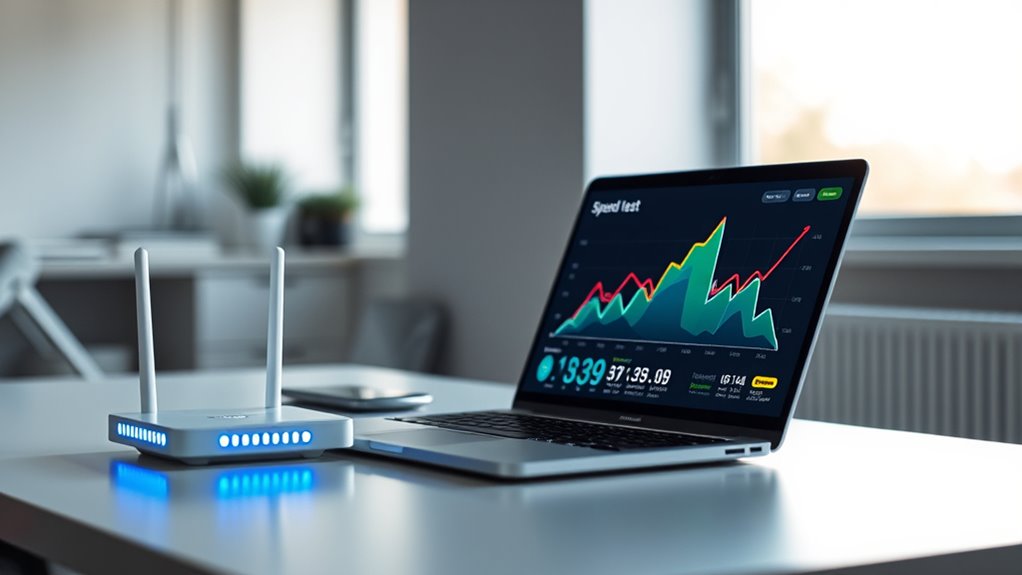

To keep your PC running smoothly online, you’ll need different speeds depending on your activities. Streaming 4K videos or gaming requires at least 50-100 Mbps for smooth performance, while casual browsing is fine with 25 Mbps. If you’re transferring large files or multiple devices are connected, higher speeds help prevent lag. Choosing the right plan guarantees a seamless experience, and there’s more to learn about optimizing your internet setup and technology choices.
Key Takeaways
- Basic browsing and email typically require speeds of around 25 Mbps.
- Streaming 4K videos needs at least 100 Mbps for smooth playback.
- Online gaming benefits from low latency, with speeds of 25-50 Mbps often sufficient.
- Large file transfers and cloud backups demand higher speeds, ideally over 100 Mbps.
- Multiple devices and household use require plans with higher bandwidth to prevent lag.

Understanding internet speeds can seem complicated, but grasping the basics helps you make smarter choices. When it comes to your PC, knowing what kind of speed you need depends on how you use the internet daily. One key factor influencing overall performance is the type of connection you have. Fiber optics, for example, uses thin strands of glass or plastic to transmit data as pulses of light, allowing for incredibly fast speeds and more reliable connections compared to traditional copper cables. If you’re streaming high-definition videos, playing online games, or doing large file transfers, fiber optics can markedly reduce latency issues—those frustrating delays between your command and the server’s response. This reduced latency is vital for activities like competitive gaming or real-time video conferencing, where even milliseconds matter.
Fiber optics deliver fast, reliable internet with low latency—perfect for gaming, streaming, and smooth online experiences.
Latency issues are often a hidden barrier to a smooth online experience, especially if you’re stuck with slower or outdated connections. High latency causes lag, buffering, and slow load times, which can make even high-speed internet seem sluggish. Upgrading to fiber optics can help minimize these problems because it provides more stable and consistent speeds. It’s not just about download and upload speeds; the quality of your connection’s responsiveness is equally important. If you’re someone who relies on cloud-based applications, video calls, or remote work, low latency guarantees that everything you do feels quick and seamless. Additionally, adopting European cloud solutions can enhance data security and sustainability for your online activities.
In terms of actual speeds, most casual users are fine with plans offering around 25 Mbps for streaming and browsing. But if you’re into 4K streaming, multiple devices streaming simultaneously, or heavy gaming, you’ll want at least 100 Mbps or more. For households with multiple users or smart devices, higher speeds prevent bottlenecks and keep everyone connected without lag. Keep in mind, though, that your internet plan’s advertised speeds aren’t always what you’ll get in practice. Factors like network congestion, your Wi-Fi hardware, and distance from the router can impact your experience.
Ultimately, understanding your internet needs means considering how much bandwidth your activities demand and the quality of your connection. Fiber optics can provide a future-proof solution that minimizes latency issues and delivers consistent speeds, making your online experience smoother and more dependable. By choosing the right plan and technology, you can guarantee your PC meets all your online demands without frustration or delays.
Top picks for "internet speed demystifi"
Open Amazon search results for this keyword.
As an affiliate, we earn on qualifying purchases.
Frequently Asked Questions
How Does Wi-Fi Interference Affect Internet Speed?
Wi-Fi interference slows down your internet speed by causing wireless congestion and signal decay. When many devices compete for the same bandwidth, your connection becomes sluggish. Signal decay occurs when obstacles like walls or distance weaken the Wi-Fi signal, reducing speed. To improve your Wi-Fi, minimize interference sources, keep your router close, and use less congested channels. This helps guarantee a faster, more stable internet experience.
Can a Slower Plan Still Support Streaming and Gaming?
Yes, a slower plan can still support streaming and gaming, but you’ll face limitations. Bandwidth throttling might reduce your speeds during peak times, causing buffering or lag. Additionally, data caps can restrict your usage, forcing you to pause or lower quality streams and game settings. To enjoy seamless streaming and gaming, consider plans with higher bandwidth and no data caps, ensuring a smoother experience without interruptions.
What’s the Impact of Multiple Devices on Overall Speed?
Like a busy highway at rush hour, multiple devices cause device congestion, slowing your internet. Bandwidth sharing among devices reduces the speed available for each, leading to buffering and lag. If several gadgets stream, game, or download simultaneously, your overall speed drops. To keep things smooth, prioritize essential devices or upgrade your plan to handle increased bandwidth sharing, ensuring everyone gets a fair share of the network’s power.
How Often Should I Upgrade My Internet Plan?
You should upgrade your internet plan when you notice slow speeds, frequent data cap limits, or increased device use. Keep your router secure to prevent unauthorized access, which can slow your connection. Regularly assess your usage, especially if you stream, game, or work from home more often. Upgrading guarantees you get reliable speed, avoids data cap issues, and maintains a secure network that supports your growing online needs.
Do Fiber and Cable Internet Speeds Differ Significantly?
You might be surprised, but fiber internet typically offers markedly faster speeds than cable in an internet speed comparison. Fiber provides symmetrical upload and download speeds, ideal for streaming, gaming, and large file transfers. Cable internet can be slower and more prone to congestion during peak times. So, if speed and reliability matter, fiber is usually the better choice, especially if your activities demand high bandwidth and minimal latency.
Conclusion
So, next time you wonder if your internet speed is enough, remember—it’s not just about the numbers. Think of your connection as the highway to your digital life; the faster the lane, the smoother the ride. Don’t settle for less, because in today’s world, a sluggish connection isn’t just an inconvenience—it’s a barrier to everything you want to do online. Choose wisely, and keep your digital journey running seamlessly.