🔍 Read the full analysis: Leading The Pack: 9 Desktop Processors For AI In 2026 on ThorstenMeyerAI.com

Get the latest gadgets delivered free — and shop member deals
- Fast, free delivery on millions of items
- Access to Prime Big Deal Days deals on October 6–7
- Prime Video, Amazon Music and more included
TL;DR
In 2026, nine desktop processors stand out for AI workloads, balancing performance, value, and compatibility. AMD and Intel lead with models optimized for AI tasks and multitasking.
As of 2026, nine desktop processors are leading the market for artificial intelligence (AI) workloads, offering a mix of raw power, efficiency, and future-proofing. These processors are crucial for professionals, developers, and enthusiasts seeking optimal AI performance on personal computers. The selection is based on recent benchmarks, architectural advancements, and industry evaluations, making these models the top contenders for AI tasks this year. For a detailed overview, see the original analysis.
The top processors include AMD’s Ryzen 9 9950X3D and Ryzen 7 7800X3D, known for their high core counts and significant cache sizes, which are beneficial for AI and multitasking. Intel’s Core i7-14700K and i9-14900K also feature prominently, offering a balanced mix of single-core performance and multi-threaded capabilities suited for AI development and deployment. These processors support the latest standards like DDR5 memory and PCIe 5.0, ensuring compatibility with upcoming hardware and software advancements. Learn more about the best desktop processors in this detailed guide.
Among the contenders, AMD’s Ryzen 9 9950X3D is noted for its exceptional multi-threaded performance, making it ideal for AI training and large-scale data processing. Intel’s flagship i9 models excel in single-core speed, which benefits AI inference tasks. Budget-friendly options like AMD Ryzen 5 5600X, while less powerful for intensive AI workloads, still provide reliable performance for general productivity and light AI applications. For more insights into AI hardware options, see Leading The Pack: 9 Mobile Workstations With AI Features In 2026.
The 9 picks
- 1
 AMD Ryzen 9 9950X3D 16-Core ProcessorView on Amazon →
 - 2
 AMD Ryzen 7 9800X3D 8-Core, 16-Thread Desktop ProcessorView on Amazon →
 - 3
 Intel Core i7-14700K Desktop Processor with 20 Cores and Integrated GraphicsView on Amazon →
 - 4
 AMD Ryzen 7 5800X3D 8-core, 16-Thread Desktop Processor with AMD 3D V-Cache T…View on Amazon →
 - 5
 AMD Ryzen 7 7800X3D 8-Core, 16-Thread Desktop ProcessorView on Amazon →
 - 6
 Intel Core i5-14400F Desktop Processor (14th Gen), 10 cores, up to 4.7 GHzView on Amazon →
 - 7
 AMD Ryzen 5 9600X 6-Core, 12-Thread Unlocked Desktop ProcessorView on Amazon →
 - 8
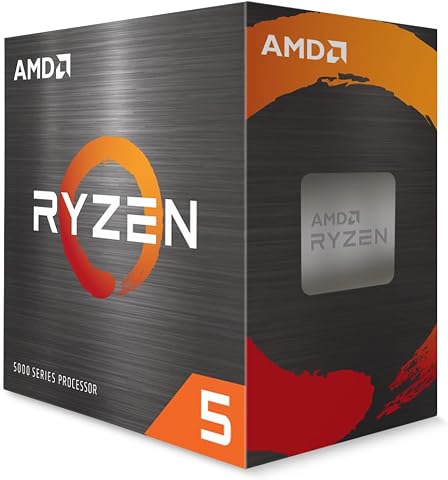 AMD Ryzen 5 5600 6-Core 12-Thread Unlocked Desktop Processor with Wraith Stea…View on Amazon →
 - 9AMD Ryzen 5 5500 6-Core, 12-Thread Unlocked Desktop Processor with Wraith Ste…View on Amazon →
Impact of Leading AI Desktop Processors in 2026
The selection of these processors influences the capabilities of AI development on personal computers, affecting researchers, developers, and hobbyists. High-performance CPUs enable faster training times, more complex models, and smoother multitasking, which accelerates AI innovation and productivity. As AI workloads grow more demanding, choosing the right hardware becomes essential for staying competitive and future-proofing investments. These processors also set the stage for advancements in AI software, as hardware improvements often drive new features and efficiencies.
2026 Processor Market and AI Hardware Trends
Over the past few years, both AMD and Intel have introduced architectures optimized for AI workloads, emphasizing increased core counts, larger caches, and support for high-speed memory standards. The industry has seen a shift toward specialized AI accelerators, but high-end CPUs remain vital for versatile AI tasks that require broad compatibility and multitasking. Recent launches of AMD’s Ryzen 7000 series and Intel’s 13th and 14th Gen processors reflect ongoing efforts to enhance AI performance. Compatibility with the latest standards like DDR5 RAM and PCIe 5.0 is now a baseline requirement for top-tier AI desktops, ensuring these systems can handle future software updates and hardware expansions.
Limitations and Unknowns in 2026 AI Processor Landscape
While these processors are leading the market, specific performance benchmarks for AI workloads across different use cases are still emerging. The impact of upcoming architectural updates, software optimizations, and new standards like DDR6 or PCIe 6.0 remains uncertain. Additionally, the role of dedicated AI accelerators versus high-end CPUs is evolving, and it is not yet clear how these trends will influence overall hardware choices for AI in the near future.
Upcoming Developments and Next-Generation AI Hardware
Manufacturers are expected to release new processors with further improvements in core counts, cache sizes, and integrated AI-specific features. Future platforms may incorporate more advanced AI accelerators directly on the CPU or motherboard. Software optimizations and AI frameworks are also advancing, which could shift hardware requirements and performance benchmarks. Users and developers should monitor upcoming launches from AMD, Intel, and emerging players to stay ahead in AI hardware capabilities.
Key Questions
Which processor is best for AI training in 2026?
The AMD Ryzen 9 9950X3D is considered one of the top choices for AI training due to its high core count and large cache, which are beneficial for processing large datasets efficiently.
Are Intel’s latest CPUs better than AMD for AI workloads?
Both Intel and AMD offer strong options, with Intel’s latest i9 models excelling in single-core performance and AMD’s Ryzen 9 9950X3D leading in multi-core, multi-threaded tasks. The best choice depends on specific AI use cases.
What future hardware standards will influence AI desktops in 2026?
Standards like DDR6 RAM and PCIe 6.0 are expected to become more prevalent, offering higher bandwidth and improved performance for AI workloads. Compatibility with these standards will be key for future-proofing.
How do I choose the right processor for my AI needs?
Consider your primary AI tasks—training, inference, or multitasking—and match your workload to a processor with appropriate core count, cache size, and supported standards. Compatibility with your existing or planned hardware is also crucial.
Source: ThorstenMeyerAI.com
Fall Picks
fall essentials
As an affiliate, we earn on qualifying purchases.