Faster storage like SSDs transforms your computing experience by delivering rapid data access, shorter boot times, and smoother multitasking. They are more durable, consume less power, and produce less heat, making your system more reliable and efficient. Although SSDs cost more per gigabyte, their performance benefits are clear. If you’re looking to upgrade or optimize your setup, understanding how SSDs and HDDs differ can help you make smarter choices—there’s more to discover.
Key Takeaways
- SSDs offer significantly faster data transfer rates and system responsiveness compared to HDDs.
- Faster storage with SSDs reduces boot times and application load times, enhancing productivity.
- SSDs improve multitasking and workflow efficiency due to quick read/write capabilities.
- Enhanced durability and reliability of SSDs minimize data loss and hardware failures over time.
- The speed advantage of SSDs transforms user experience, enabling seamless performance in demanding tasks.
Top picks for "faster storage chang"
Open Amazon search results for this keyword.
As an affiliate, we earn on qualifying purchases.
How SSDs and HDDs Differ in Design and Technology
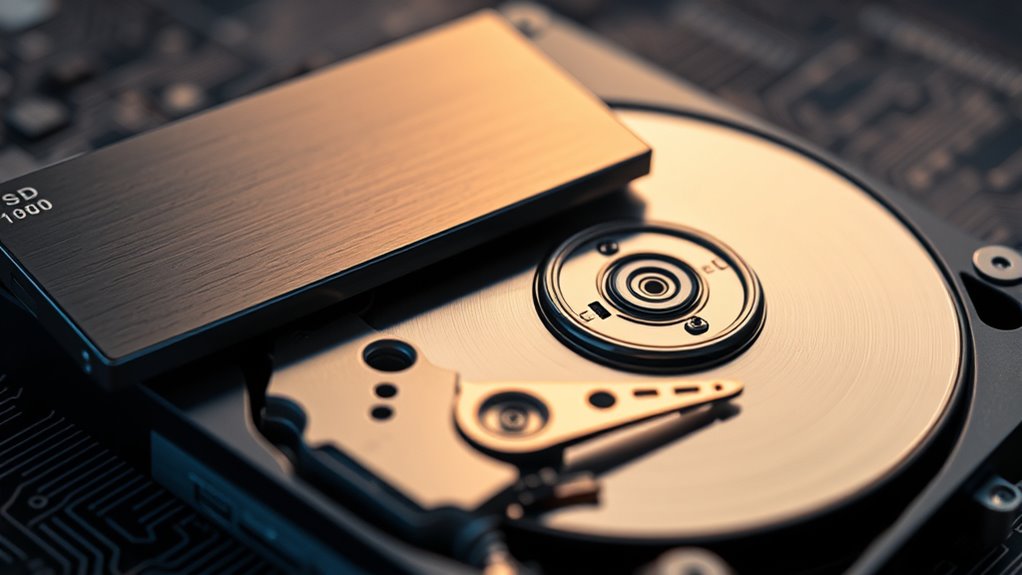
SSDs and HDDs differ fundamentally in their design and technology, which impacts their performance and reliability. SSDs use a chip architecture based on NAND flash memory, with no moving parts, allowing for quick, direct data access. Their data transfer methods involve electronic signals traveling through circuits, enabling rapid read and write speeds. In contrast, HDDs rely on spinning magnetic disks and mechanical arms to read and write data, which limits their speed. The chip architecture of SSDs makes them more durable and less prone to physical damage, while HDDs are more susceptible due to their moving components. This fundamental difference means SSDs can deliver faster data transfer rates and greater reliability, especially under physical stress, making them a popular choice for high-performance storage needs. Additionally, the contrast ratio in their design plays a crucial role in overall performance, affecting how quickly and accurately data can be accessed and rendered.
Performance: Speed and Responsiveness
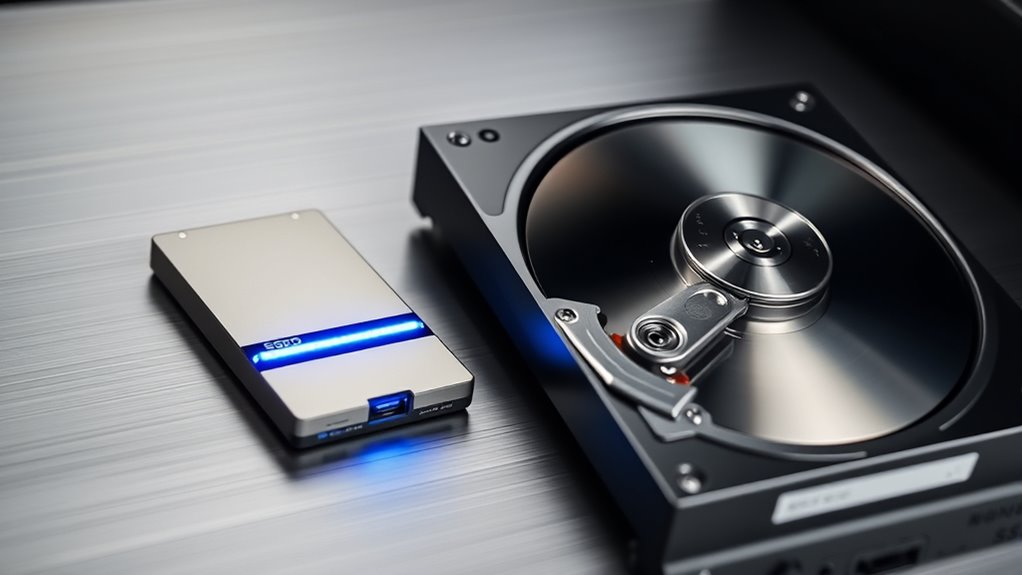
Are you wondering which storage type offers faster performance? SSDs excel here thanks to their rapid data transfer rates, markedly outpacing HDDs. With no moving parts, SSDs access data instantly, providing near-instant responsiveness. Cache management plays a vital role; SSDs efficiently handle cache to speed up repeated data retrieval, reducing delays. This connected cooking approach in modern kitchens emphasizes the importance of fast, reliable storage for seamless data handling. Additionally, SSDs often incorporate performance cookies to optimize data processing and improve user experience. This means your applications open faster, files load instantly, and multitasking feels seamless. Furthermore, the integration of European cloud infrastructure enhances the security and sustainability of data storage, ensuring compliance with regional regulations. As part of the evolving connected home ecosystem, faster storage devices contribute to a more integrated and responsive digital environment. Modern SSDs also benefit from advanced controller technology, which manages data flow more efficiently, further boosting performance. HDDs, constrained by spinning disks and mechanical arms, have slower data transfer rates and longer seek times, leading to lag and sluggish performance. If speed and responsiveness are priorities, SSDs deliver a clear advantage. They minimize wait times, boost productivity, and create a smoother computing experience overall.
Impact on Daily Computing and Productivity
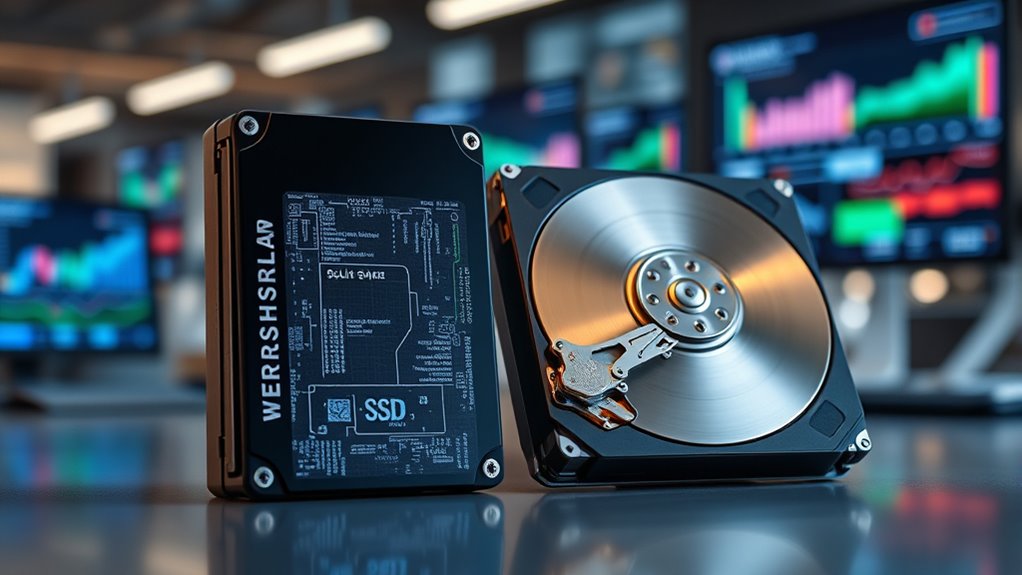
With an SSD, your computer boots up faster, so you spend less time waiting and more time getting things done. Applications launch quickly, letting you switch between tasks smoothly without delays. Plus, multitasking becomes more efficient, helping you stay productive even with multiple programs open. Additionally, smart storage solutions can optimize your system’s data management, further enhancing overall performance. Implementing advanced data management techniques can help maximize the benefits of faster storage devices. As seen in biographical stories, innovative approaches and improved tools can lead to significant positive changes in how we work and create. Moreover, employing efficient data utilization strategies can further capitalize on the speed advantages provided by SSDs. Incorporating reliable storage practices ensures data integrity and reduces the risk of loss, making your system more resilient.
Faster Boot Times
Because SSDs can drastically cut down boot times, your daily computing becomes more seamless and efficient. With faster system startup speed, you spend less time waiting for your computer to be ready and more time being productive. The boot time reduction means turning on your device feels instant, saving you minutes each day. Faster boot times also contribute to a more responsive overall system, enhancing your experience during multitasking or intensive applications. This quick startup benefits tasks like checking emails, launching apps, or starting work projects. To visualize:
| Boot Time (seconds) | Traditional HDD | SSD |
|---|---|---|
| Average | 30-60 | 5-10 |
| Fastboot | 20 | 3 |
| Instant-On | 0-2 | 0-1 |
Enhanced safety features in SSDs also contribute to more reliable performance over time, ensuring your work remains uninterrupted. Additionally, the reliability of SSDs means fewer data errors and less risk of failure, which is crucial for maintaining productivity.
Quicker Application Launches
Faster boot times mean you spend less time waiting for your system to start, allowing you to jump straight into your tasks. With an SSD, application startup becomes notably quicker, so programs launch almost instantly. This reduces delays when opening software, meaning you can access your files and tools faster. Instead of waiting for lengthy software loading times, your applications become ready to use in seconds. This seamless speed boost enhances your productivity by minimizing downtime and keeping your workflow smooth. Whether you’re launching a web browser, editing software, or a complex data tool, an SSD ensures you spend less time waiting and more time working. Reducing distractions from slow load times helps you maintain focus and cultivate a more mindful, efficient computing experience. Faster application launches make your daily computing experience more efficient and less frustrating, especially with the storage performance benefits that SSDs provide. Additionally, these improvements help you maximize efficiency, making your overall digital experience more responsive and enjoyable. Improved storage technology not only speeds up startup times but also enhances the overall reliability of your system. Incorporating faster data access from SSDs can also extend the lifespan of your hardware by reducing wear on traditional spinning disks.
Improved Multitasking Efficiency
When you upgrade to an SSD, multitasking becomes noticeably smoother, allowing you to switch between applications seamlessly without delays. Faster data transfer protocols enable quick access to cache, reducing wait times and keeping your workflow fluid. Imagine:
- Moving effortlessly from a video call to editing documents without lag.
- Running multiple browser tabs while streaming music without slowdown.
- Copying large files in the background while working on spreadsheets.
- Launching several programs simultaneously with instant responsiveness.
This is possible because SSDs optimize cache management, minimizing bottlenecks. The improved data transfer protocols ensure rapid read/write speeds, keeping multiple tasks active without compromise. As a result, your daily computing becomes more efficient, boosting productivity and reducing frustration during intensive multitasking. Additionally, calm and organized homes are easier to maintain when your devices operate reliably and swiftly, helping you stay focused on your daily routines.
Durability and Reliability Over Time
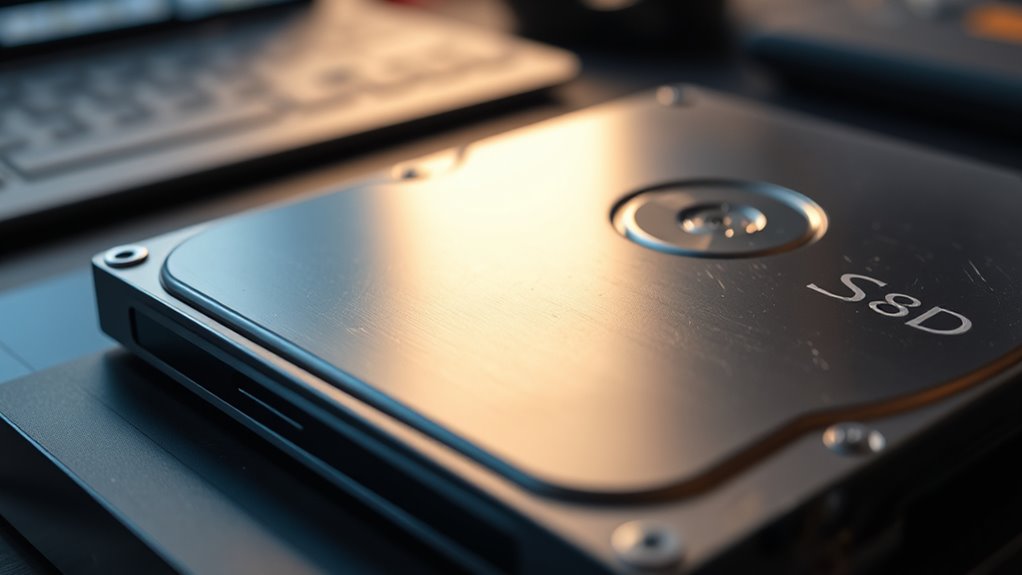
While both SSDs and HDDs are designed to last for years, SSDs generally have a longer lifespan due to their lack of moving parts, making them less susceptible to physical damage over time. This means they maintain better long-term stability, especially against wear and tear. HDDs rely on spinning disks and mechanical arms that can degrade with extensive use, increasing failure risk. SSDs, however, handle continuous read/write cycles more efficiently, offering consistent performance over time. The durability of SSDs translates into fewer data loss incidents due to physical shocks or mechanical failures. Here’s a comparison: wear and tear. Additionally, SSDs often feature advanced error correction mechanisms that enhance their reliability during prolonged use. Moreover, their vetted design improves resistance to environmental factors such as temperature fluctuations and vibrations, further extending their lifespan. The absence of moving components also reduces the likelihood of mechanical failure, further boosting longevity. Furthermore, SSDs typically have built-in wear leveling algorithms that distribute write and erase cycles evenly across the drive, prolonging its usable life.
Power Consumption and Heat Generation

You’ll notice that SSDs consume less power than HDDs, making them more energy-efficient overall. This reduced energy use also means they generate less heat, which helps with heat dissipation. However, managing heat remains a challenge, especially in systems with multiple drives running simultaneously.
Energy Efficiency Benefits
Solid State Drives (SSDs) are more energy-efficient than Hard Disk Drives (HDDs) because they consume less power during operation and generate less heat. This translates to significant energy savings, making them an eco-friendly technology choice. When you switch to SSDs, you’ll notice:
- Reduced electricity bills, as they draw less power.
- Less heat production, lowering cooling needs and extending hardware lifespan.
- Smaller carbon footprint, contributing to a greener environment.
- Enhanced battery life in laptops, supporting longer portable use.
These benefits help you minimize energy consumption while supporting eco-friendly initiatives. By choosing SSDs, you’re not just upgrading speed but also embracing a more sustainable and energy-conscious approach to storage solutions.
Heat Dissipation Challenges
Although SSDs generate less heat overall compared to traditional HDDs, their power consumption still contributes to heat dissipation challenges. As you pack more SSDs into compact systems, effective thermal management becomes essential to prevent overheating. Proper heat sink design plays a key role in dissipating residual heat generated during sustained operations. You need to guarantee airflow is optimized and heat sinks are appropriately sized to maintain stable performance. Without efficient thermal solutions, high temperatures can reduce SSD lifespan and cause performance throttling. Keep in mind that even though SSDs are more energy-efficient, managing heat remains critical in modern systems to assure reliability and longevity. Balancing power consumption with effective heat sink design is indispensable for maintaining peak operation.
Cost Considerations and Storage Capacity

When comparing SSDs and HDDs, cost and storage capacity are key factors to weigh. Your choice impacts your budget and how much data you can store. Here’s what to consider:
Choosing between SSDs and HDDs involves balancing cost, capacity, and long-term value for your storage needs.
- Price comparison: SSDs tend to be more expensive per gigabyte than HDDs, making large storage options less affordable.
- Storage capacity: HDDs often offer higher capacity at lower costs, ideal for archiving large files.
- Initial investment: With SSDs, expect a higher upfront cost, but benefits in speed may justify the expense.
- Long-term value: SSDs’ durability and performance can offset their higher price over time, especially if speed matters.
Balancing these factors helps you determine the best storage solution for your needs and budget.
Compatibility and Future-Proofing Your System

Choosing between SSDs and HDDs isn’t just about cost and capacity; compatibility with your system plays a significant role. Before upgrading, check your hardware for compatibility with newer storage technologies, such as NVMe or SATA interfaces. SSDs often require specific connectors or M.2 slots, while HDDs typically use standard SATA ports. Ensuring your motherboard supports these interfaces helps future-proof your system, making hardware upgrades smoother. Additionally, consider software compatibility—some older systems or operating systems may need updates to fully utilize SSD features like TRIM. Staying aware of these factors guarantees your upgrade is seamless and avoids potential bottlenecks. Ultimately, understanding your system’s compatibility guarantees that your investment in faster storage remains effective long-term.
Making the Right Choice for Your Needs
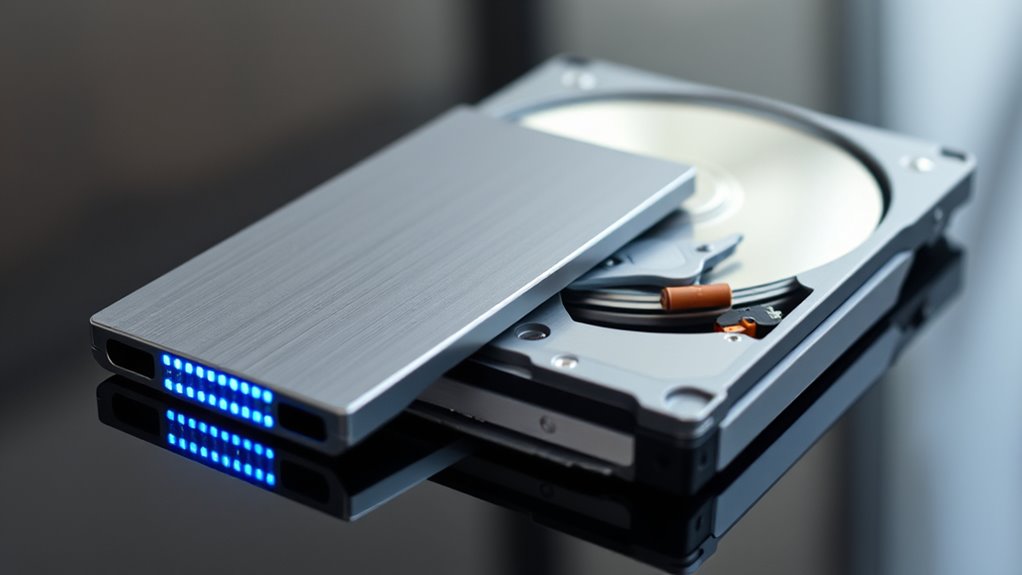
To select the right storage solution for your needs, you should consider how you use your computer and what priorities matter most to you. Think about these factors:
- If you store large files or games, prioritize higher storage capacity.
- If speed is essential, an SSD will markedly reduce load times and boost performance.
- If you plan to upgrade later, choose a drive with an easy upgrade process.
- If your budget is tight, HDDs offer more storage at a lower cost, but upgrading might be more complex.
Your choice depends on balancing capacity, speed, and ease of upgrade. An SSD offers faster performance but may require more planning for future upgrades. An HDD provides more space but may slow you down. Consider your specific needs carefully.
Frequently Asked Questions
How Do SSDS and HDDS Affect Gaming Performance?
You notice that SSDs considerably boost gaming performance by reducing load times and decreasing stuttering, allowing smoother gameplay. HDDs, with larger storage capacity, can hold more games but may cause longer load times and occasional lag. SSDs also consume less power, making them more power-efficient. Switching to an SSD enhances your gaming experience with faster data access, while HDDs remain suitable for extensive storage needs.
What Are the Environmental Impacts of SSD Versus HDD Production?
Think of manufacturing emissions and resource scarcity like a leaky faucet—you don’t see the full impact immediately. SSD production usually requires fewer materials and consumes less energy, making it slightly greener than HDDs. However, both contribute to environmental concerns, especially with resource extraction. By choosing SSDs, you help reduce manufacturing emissions and resource scarcity, but it’s also crucial to recycle old drives and support sustainable manufacturing practices.
Can SSDS Improve Virtual Machine and Server Workloads?
Yes, SSDs can considerably improve virtual machine and server workloads. They boost storage scalability and enhance virtualization efficiency by providing faster data access and reduced latency. With SSDs, you’ll notice quicker boot times, smoother data transfers, and improved overall performance, making your virtual environments more responsive and capable of handling higher workloads. This upgrade ultimately leads to better resource utilization and a more efficient, scalable server infrastructure.
How Do Data Recovery Processes Differ Between SSDS and HDDS?
When recovering data from SSDs versus HDDs, you’ll find that SSD data recovery is generally more complex due to their different architecture. SSDs use NAND flash memory, making repair procedures more delicate and specialized, often requiring advanced tools. HDDs, with their spinning disks, allow for more straightforward recovery processes. Overall, SSD recovery demands more expertise, but both types can sometimes be recovered with professional help.
Are There Specific Brands Known for More Reliable SSD or HDD Models?
Think of trusted brands as sturdy ships sailing smoothly through digital seas. For SSDs, Samsung and Western Digital stand out, offering top-tier reliability and generous warranty coverage. When it comes to HDDs, Seagate and Toshiba are known for their durability and solid reputation. Choosing these brands means you’re investing in peace of mind, knowing your data’s safe. Always check warranty coverage to guarantee your storage device stays afloat during rough waters.
Conclusion
Choosing between SSDs and HDDs is like picking between a trusty horse and a sleek sports car. If you want speed, reliability, and a future-ready setup, an SSD is your best bet—no need to wait for the dawn of the digital age. While HDDs are still useful for budget storage, embracing faster tech means you’ll stay ahead in this fast-paced modern world. Don’t be left behind—upgrade now and experience the difference firsthand.