
TL;DR

Get the latest gadgets delivered free — and shop member deals
- Fast, free delivery on millions of items
- Access to Prime Big Deal Days deals on October 6–7
- Prime Video, Amazon Music and more included
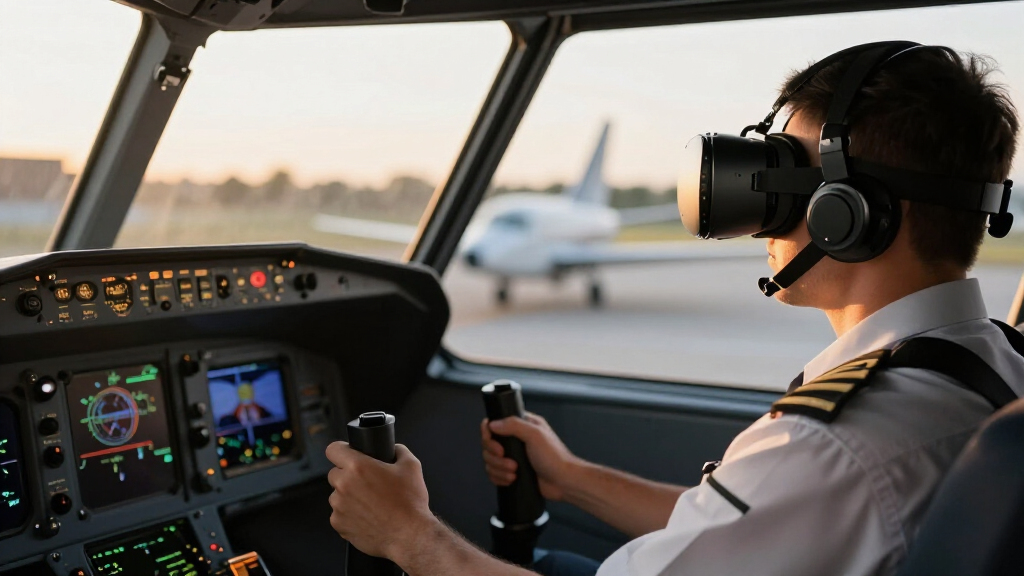
Extended reality (XR) is being integrated into virtual reality pilot training, offering more immersive and realistic simulations. This shift aims to improve pilot preparedness and safety. The development is confirmed through recent industry reports, with ongoing exploration of its full potential.
Extended reality (XR) is increasingly being incorporated into virtual reality pilot training programs, offering more immersive and realistic simulations. This development is confirmed by recent industry reports and pilot training initiatives, signaling a potential shift in how pilots are prepared for flight.
Recent advancements in extended reality technology—which combines virtual reality, augmented reality, and mixed reality—are being integrated into pilot training curricula. Several aviation training providers have begun deploying XR systems to simulate complex flight scenarios, emergency procedures, and cockpit environments with high fidelity. These systems aim to enhance the realism of training experiences, reduce costs associated with traditional flight hours, and improve safety outcomes.
According to industry sources, major aerospace firms and flight training academies are investing in XR platforms, citing positive initial results in pilot engagement and skill retention. While the technology is still being tested and refined, early feedback suggests that XR can replicate the sensory and cognitive demands of actual flight more effectively than conventional simulators alone. The adoption of XR in pilot training is considered a strategic move to prepare pilots for increasingly complex aircraft systems and operational challenges.
How XR Enhances Pilot Training Effectiveness
This development matters because extended reality has the potential to significantly improve pilot training outcomes by providing more realistic, engaging, and adaptable simulation environments. It could lead to faster skill acquisition, better decision-making under stress, and improved safety in actual flight operations. For the aviation industry, this represents a step toward more cost-effective and scalable training methods that can be deployed globally, especially in regions with limited access to traditional flight simulators.
As an affiliate, we earn on qualifying purchases.
Background of XR Use in Aviation Training
Over the past decade, virtual reality has been gradually integrated into pilot training, primarily through dedicated flight simulators. Recent technological advances have expanded these capabilities to include extended reality, which merges virtual and augmented elements for enhanced realism. Industry leaders have been exploring XR as a supplement or alternative to conventional simulators, with pilot programs launched by several airlines and training institutions. These initiatives aim to address limitations of traditional methods, such as high costs and limited scenario diversity.
Previous efforts focused on VR-only systems, but the addition of XR offers a more nuanced and sensory-rich experience. Early pilot studies and pilot programs indicate promising results, though widespread adoption remains in progress. Regulatory bodies are closely monitoring these developments to establish standards and safety protocols for XR-based training.
“Our investment in XR-based training reflects our commitment to innovative safety solutions and preparing pilots for the complexities of modern aircraft.”
— a representative from a leading aerospace firm
extended reality pilot training equipment
As an affiliate, we earn on qualifying purchases.
As an affiliate, we earn on qualifying purchases.
Uncertainties Surrounding XR Adoption in Aviation
While initial results are promising, it is still unclear how quickly XR will be adopted across the broader aviation industry. Regulatory approval processes, standardization of training protocols, and long-term effectiveness data are still pending. Additionally, questions remain about the cost, scalability, and technological limitations of XR systems in diverse training environments.
As an affiliate, we earn on qualifying purchases.
Next Steps for XR Pilot Training Development
Industry stakeholders plan to expand pilot programs, conduct comprehensive efficacy studies, and collaborate with regulators to develop standards for XR-based training. Further technological improvements are expected to enhance realism and reduce costs. Regulatory agencies may also begin formal evaluations to approve XR as a recognized training method, potentially leading to wider adoption within the next few years.
As an affiliate, we earn on qualifying purchases.
Key Questions
How does XR improve pilot training compared to traditional simulators?
XR offers a more immersive experience by combining virtual and augmented reality, which can replicate real cockpit environments and complex scenarios more accurately, leading to better skill transfer and decision-making.
Are XR-based training programs officially approved for pilot certification?
Currently, most XR training programs are in experimental or pilot phases. Regulatory approval processes are ongoing, and it is not yet clear when XR will be officially recognized for certification purposes.
What are the main challenges facing XR adoption in pilot training?
Challenges include technological limitations, high initial costs, lack of standardized protocols, and regulatory hurdles. Ensuring long-term effectiveness and safety is also a key concern.
When can we expect XR to become mainstream in aviation training?
If current pilot programs continue to show positive results, wider adoption could occur within the next 3-5 years, depending on regulatory approvals and technological advancements.
Source: rss
Fall Picks
fall essentials
As an affiliate, we earn on qualifying purchases.