
🔍 Read the full analysis: How AI Turns A Film’s Credits Into An Exhibition In “After Action” on ThorstenMeyerAI.com

Get the latest gadgets delivered free with Prime
- Fast, free delivery on millions of items
- Prime Video, Amazon Music and more included
- Member-only deals all year
TL;DR
After Action is a fictional, AI-built web exhibition that presents 24 Wing V web experiences as productions in a continuous, interactive film-credit roll. Its creator brief describes CSS-built sand-table scenes, accessibility options and locally stored visual assets; the project is not a real company or a record of military activity.
After Action, an AI-built web exhibition, turns the credits for 24 fictional Wing V web experiences into a continuous, navigable film roll, interrupted by small sand-table scenes. The project’s description, detailed in the original analysis, frames it as a fictional theater and a design showcase—not a real company or an account of military activity—and makes the exhibition format itself the main event: visitors browse a sequence of credits rather than a conventional gallery of cards.
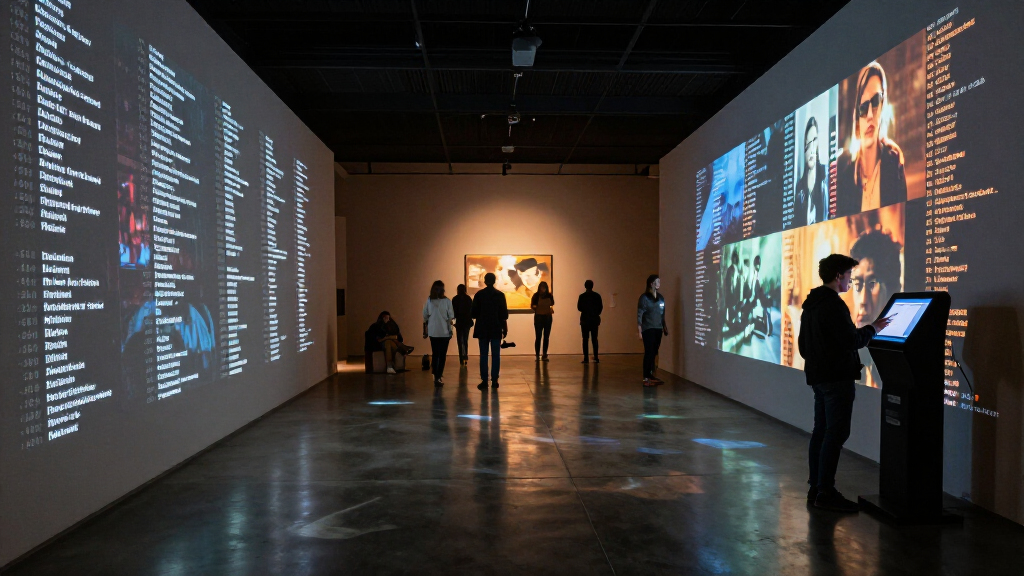
The imagined venue is a nearly empty cinema titled “After Action — Wing V Debrief Theater.” Its central feature is a moving roll that names the collection’s productions, with department headings and links to individual project pages. The source describes 24 entries, including Ghost Division, Flightdeck, Vipers, Silent Running and Titanworks. A plain-text register after the animated presentation offers a stationary route through the same material.
Every eight productions, the credit sequence gives way to a CSS-built diorama. The brief cites miniature scenes suggesting a shield formation, a catapult’s arc and two keys approaching a shared lock. Terrain, contour effects and raised markers are assembled through code, rather than provided as a separate image for each vignette. The design uses cinema black, beam-white, sand amber and credit gold, with compressed display lettering for names and monospace text for labels and controls.
The implementation description says JavaScript tracks elapsed time to move one continuous credit track. Chapter stops coordinate a timer, locator line, labels and jump controls. The animation pauses when the theater is not visible or the browser tab is hidden; visitors who prefer reduced motion can use manual scrolling. Optional synthetic projector audio is off by default and stops when disabled. The described build uses a local still image for its theater scene because the intended ambient video was unavailable, with visual effects layered over the still.
A browser exhibition · Room 125 of 175
How AI Turns a Film’s Credits Into an Exhibition in “After Action”
After Action presents 24 fictional Wing V web experiences as one continuous, navigable film-credit roll, interrupted by miniature sand-table scenes. Its exhibition format makes browsing itself the main event.
“Browse the credits as a moving sequence, then step into the projects they name.”
Wing V is not presented as a real company or as an account of military activity.
A different way to browse web work
Rather than a grid of cards, After Action stages the collection as a shared closing-credit sequence. Pacing, chapter stops, interludes, and project links connect separate websites into one presentation.
One imagined venue
The room is titled “After Action — Wing V Debrief Theater,” with a nearly empty cinema as its setting.
Projects become productions
Department headings organize linked entries. Named examples include Ghost Division, Flightdeck, Vipers, Silent Running, and Titanworks.
A stationary register
A plain-text index gives visitors a still, direct way to browse the same collection and reach individual project pages.
Enter the room
Meet the cinema setting and the collection.
Follow the roll
Read credits, departments, and linked projects.
Pause at scenes
Encounter small terrain dioramas between chapters.
Choose a project
Use a credit link or the text register.
Art direction translated into interaction
The supplied brief describes a single-page site made with HTML, CSS, and JavaScript, without frameworks, build tools, CDNs, or external requests. It specifies content, navigation, motion behavior, breakpoints, and access options.
| Brief element | Described treatment | What the source establishes |
|---|---|---|
| Credit sequence | One continuous track with chapter stops, locator line, labels, and jump controls | Project description |
| Miniature scenes | CSS-built terrain and raised markers; examples suggest a shield, catapult arc, and paired keys | Described as code-generated |
| Reduced motion | Manual-scroll alternative; animation pauses when the theater is out of view or the tab is hidden | Stated behavior; no audit supplied |
| Projector sound | Optional synthetic audio, off by default, with a disable control | Described feature |
| Theater backdrop | Local still image used where ambient video was intended; effects layered over it | Asset mismatch remains unexplained |
Credits, terrain, and cinematic pacing
The art direction pairs cinema black and beam-white with sand amber and credit gold. Compressed display lettering sets project names apart; monospace text marks labels and controls.
“The dioramas, frames, and atmospheric layers are code-generated, while the hero uses a locally stored image.”
The miniature scenes break the roll at regular intervals. The supplied description says the terrain, contour effects, and raised markers are assembled in code, while the theater scene uses a still image. The brief’s statement that no image assets were required does not match that implementation description.
Read the brief as a plan, not an audit
The source describes an intended experience and gives a live project address, but it does not include independent inspection, dated launch information, device screenshots, or usage measurements.
Design and controls
Twenty-four links, a credit roll, intercut scenes, a final title card, a text index, and motion preferences are part of the brief or project description.
Quality targets
Accessibility, responsive behavior, and smooth performance are goals or descriptions in the supplied material—not outcomes supported by test results.
Assets and production
The source does not explain when the still image replaced video, whether other assets are present, or how much of the final build was AI-generated.
Claude Fable 5 · FABLE/175 pipeline
The description names Claude Fable 5 as the original art director and says the work was executed by the FABLE/175 pipeline. These are source claims; the material does not independently document the production process.
Quick answers for visitors
What is After Action?
A fictional, AI-built web exhibition presenting 24 Wing V web experiences as productions in a cinematic credit roll.
Is Wing V a real company or military operation?
No. The supplied description calls the theater fictional and says it is not a real company or an account of military activity.
How can visitors browse?
Follow the continuous credit roll and its chapter controls, or use the stationary text register. Links lead to individual projects.
What about reduced motion?
The project description says visitors can use manual scrolling. It also says animation pauses when the tab is hidden or the theater is not visible.
Are every visual and scene code-generated?
No. Dioramas and atmospheric layers are described as code-generated, while the theater uses a locally stored still image. No independent asset audit is provided.
What is known about its release?
The source points to a Netlify address but gives no dated launch, update schedule, or future milestone. It does not say whether the wider collection is still in development.
A Different Way to Browse Web Work
After Action makes the act of browsing part of the work’s subject. Instead of asking visitors to select from a grid, it stages a shared closing-credit sequence, using pacing, chapter stops and interludes to connect projects into one presentation. That approach offers a distinct way to display a collection of websites, while the linked credits still lead visitors to each project individually.
The project also illustrates how an AI coding brief can specify more than a visual theme. Its instructions define the room’s content, navigation, animation behavior, breakpoints and accessibility requirements. The described result combines those constraints into an experience whose signature visual elements—the moving roll and miniature terrain—are largely produced with web code. The source does not provide independent testing or performance measurements, so claims about quality targets should be understood as goals in the brief, not verified outcomes.
As an affiliate, we earn on qualifying purchases.
From Art Direction to Browser Room
The supplied source identifies After Action as room 125 of 175 in a larger collection and labels its theme “aftermath.” It says the room lives at a Netlify address and presents the original art-direction brief that produced it. That brief calls for a single-page site built with HTML, CSS and JavaScript, without frameworks, build tools, CDNs or external requests.
The brief names Claude Fable 5 as the original art director and says the work was executed by the FABLE/175 pipeline. It asks for 24 named project links, a credit sequence, intercut scenes, a final title card and a text index. These are details of the supplied project description; the source does not independently document the production process or establish how much of the final implementation was generated by AI.
“The dioramas, frames, and atmospheric layers are code-generated, while the hero uses a locally stored image.”
— After Action project description
As an affiliate, we earn on qualifying purchases.
What the Brief Does Not Verify
The source describes intended features and a live project address, but it does not provide an independent inspection, dated launch information, screenshots from the requested screen sizes or evidence that every specification was met. In particular, its statements about accessibility, smooth performance and responsive behavior are implementation goals or descriptions, not results backed by an audit in the material provided.
The brief also contains a mismatch in its asset requirements: it says every visual should be made with code and that no image assets are required, while the project description says the theater uses a locally stored still image because the intended video was unavailable. The account does not specify when that change was made, whether any other assets are present, or how visitors’ use of the exhibition has been measured.
interactive film credit roll display
As an affiliate, we earn on qualifying purchases.
As an affiliate, we earn on qualifying purchases.
The Exhibition’s Closing Sequence
The project description directs readers to open the room at its Netlify address, where they can follow the credit roll or use the stationary register to reach the linked projects. The supplied material does not announce a future release, update schedule or further production milestone, so it is unclear whether the exhibition will change or whether the collection of 175 rooms is still being developed.
For now, the next step for visitors is to explore the published presentation and compare its described features with the live experience. Any claims about how well the site performs across devices, or whether its accessibility requirements work as intended, would need confirmation from direct testing or a published audit.
JavaScript timeline animation software
As an affiliate, we earn on qualifying purchases.
As an affiliate, we earn on qualifying purchases.
Key Questions
What is After Action?
After Action is a fictional, AI-built web exhibition that presents 24 Wing V web experiences as productions in a cinematic credit roll.
Is Wing V a real company or military operation?
No. The supplied project description explicitly says the theater is fictional and is not a real company or an account of real military activity.
How does the exhibition present its projects?
Visitors can follow a continuous credit roll with chapter controls and links to the projects. A plain-text register provides a stationary alternative, while code-built miniature scenes interrupt the roll at intervals.
What happens for visitors who prefer reduced motion?
The project description says reduced-motion users receive a manual-scroll alternative. It also says animation pauses when the browser tab is hidden or the theater is not visible.
Are all of the exhibition’s visuals generated with code?
No. The dioramas and atmospheric layers are described as code-generated, but the theater uses a locally stored still image in place of the intended ambient video. The source does not provide an independent asset audit.
Source: ThorstenMeyerAI.com
Halloween Picks
halloween
As an affiliate, we earn on qualifying purchases.