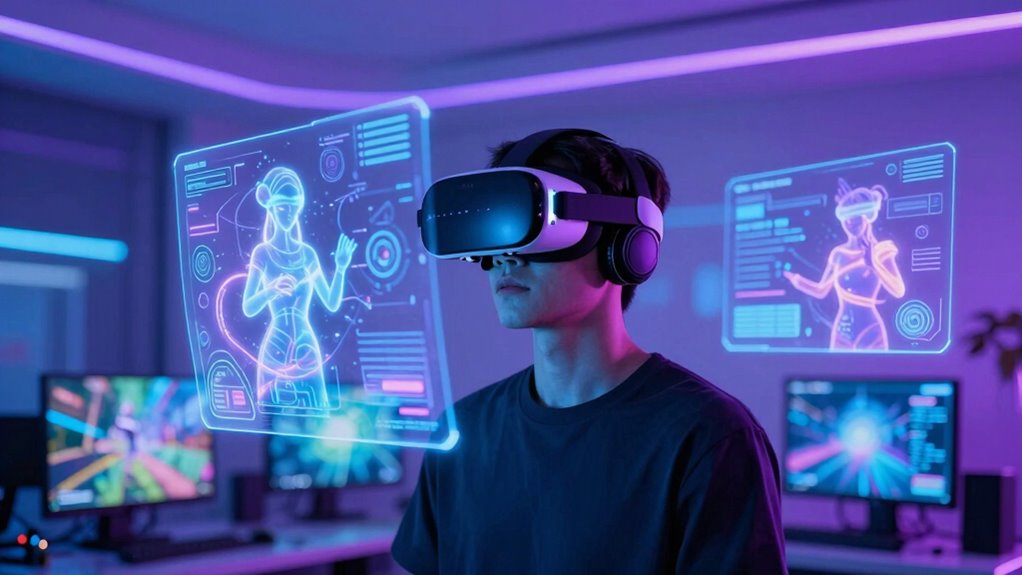

The metaverse is a shared, immersive digital space where you can socialize, work, play, and shop using avatars that represent your online identity. It blends augmented reality, blockchain, and digital infrastructure to create realistic, secure, and interconnected virtual environments. While it offers exciting economic and social opportunities, challenges like privacy, security, and digital divide exist. If you keep exploring, you’ll discover how this evolving technology could shape the future of gaming and everyday life.

Get the latest gadgets delivered free — and shop member deals
- Fast, free delivery on millions of items
- Access to Prime Big Deal Days deals on October 6–7
- Prime Video, Amazon Music and more included
Key Takeaways
- The metaverse offers immersive digital spaces for socializing, gaming, working, and shopping, blurring the line between real and virtual life.
- Advanced technologies like AR, blockchain, and digital infrastructure underpin the realistic and secure experiences of the metaverse.
- While the virtual economy is expanding and shaping digital interactions, full digital lifestyles are still emerging.
- Privacy, data security, and digital identity management pose significant challenges that need ongoing solutions.
- The metaverse’s future impact depends on technological evolution and user adoption, making it a promising yet still developing frontier.
As an affiliate, we earn on qualifying purchases.
Defining the Metaverse: What Is It Exactly?

What exactly is the metaverse? It’s a shared, immersive digital space where your digital identity comes to life. In this virtual environment, you can socialize, work, play, and even shop within a thriving virtual economy. The metaverse isn’t just a game or a social platform; it’s a persistent world that blurs the lines between real and digital life. Your avatar represents your digital identity, allowing you to interact seamlessly with others. As this virtual economy grows, people buy and sell goods, services, and experiences, creating real value. The metaverse offers endless possibilities for connection and commerce, making it more than just a concept—it’s a new frontier for how we live, work, and communicate online. Leveraging innovative cloud servers, developers can build more immersive and secure experiences for users.
Additionally, advancements in digital infrastructure are critical to supporting the scalability and reliability of these virtual environments.
As an affiliate, we earn on qualifying purchases.
The Technology Behind Virtual Worlds

At the core of virtual worlds lies a complex mix of cutting-edge technologies that bring these digital spaces to life. Augmented reality enhances immersion by blending the physical and digital worlds, allowing you to interact seamlessly with virtual objects in real environments. Meanwhile, blockchain integration provides secure ownership and transaction capabilities, enabling you to buy, sell, and trade virtual assets like skins, property, or collectibles with confidence. These technologies work together to create more realistic and decentralized experiences, giving you greater control over your digital identity and assets. Digital ownership is a fundamental aspect that ensures users can truly own and manage their virtual possessions. As the backbone of the metaverse, they make certain that virtual worlds are not just visually impressive but also functional, secure, and interconnected, laying the foundation for future innovations in gaming and social interactions.
As an affiliate, we earn on qualifying purchases.
Potential Benefits and Challenges of the Metaverse
The advanced technologies powering virtual worlds open up exciting possibilities, but they also bring notable challenges that can’t be overlooked. One major benefit is enhanced interaction, allowing you to connect across distances and explore new ways to socialize and work. However, managing your digital identity becomes complex, as your online persona is constantly evolving. Privacy concerns are significant; your data can be vulnerable to breaches or misuse. Consider this table:
| Benefit | Challenge | Solution |
|---|---|---|
| Immersive social experiences | Data security and privacy risks | Strong encryption and policies |
| New economic opportunities | Digital identity theft | Verification protocols |
| Access to innovative tools | Digital divide | Infrastructure investments |
Balancing these benefits and challenges is essential as the metaverse develops.
As an affiliate, we earn on qualifying purchases.
How Close Are We to Living Fully in the Digital Realm?
Are we truly close to living fully in the digital domain? While advancements in digital identity are making it easier to represent yourself online, complete immersion remains a work in progress. Virtual economies are growing rapidly, allowing you to buy, sell, and trade digital goods and services seamlessly. However, turning this into a fully integrated lifestyle requires more sophisticated technology, such as better VR hardware and more realistic interactions. Currently, you can participate in digital communities and manage virtual assets, but full-time digital living still feels distant. The progression depends on innovations that bridge the gap between real and digital worlds. For now, you’re part of a digital ecosystem, but living entirely in it is still an emerging reality.
Is the Metaverse a Game Changer or Just Hype?
Many people wonder whether the excitement surrounding the Metaverse is justified or just hype. The truth is, it’s more than a passing trend. The virtual economy is growing rapidly, allowing you to buy, sell, and trade digital assets, making it a real financial space. Your digital identity becomes your avatar, shaping how others see you and interact within these worlds. This isn’t just entertainment; it’s a shifting landscape for social interactions, work, and commerce. While some dismiss it as hype, the integration of immersive technology suggests it could revolutionize how you connect and operate online. Whether it’s a game changer or just hype depends on how these virtual economies and digital identities evolve and become part of everyday life.
Frequently Asked Questions
What Are the Privacy Concerns Associated With the Metaverse?
You should be aware that privacy concerns in the metaverse include risks like virtual stalking and data security breaches. As you explore virtual spaces, your personal information could be exposed or misused, making you vulnerable to harassment or identity theft. It’s essential to stay vigilant about who accesses your data and to use strong security measures to protect your virtual presence and maintain your privacy.
How Will the Metaverse Impact Real-World Economies?
Imagine the metaverse as a bustling digital city, transforming your economy. You’ll see virtual marketplaces thrive, fueling trade with digital currencies like Bitcoin and Ethereum. This shifts real-world money flows, creating new job opportunities and investment avenues. As you engage in virtual commerce, you influence local economies, turning pixels into profits. The metaverse becomes a powerful engine, connecting your actions in the digital world to tangible economic impacts.
What Are the Ethical Implications of Virtual Identities?
You should consider that virtual identities raise ethical questions about digital identity and avatar authenticity. When you create an avatar, it reflects who you are online, but it can also be manipulated or misrepresented, leading to trust issues. You might face dilemmas about honesty, privacy, and accountability, especially if your virtual persona influences real-world perceptions or decisions. Ensuring transparency and respect helps maintain ethical standards in digital interactions.
Can the Metaverse Replace Physical Social Interactions?
You might wonder if the metaverse can replace physical social interactions. While 70% of users report feeling virtual intimacy, it can’t fully replace physical presence, which offers sensory experiences and emotional connections that virtual spaces lack. Virtual intimacy can complement real-life interactions, but it’s unlikely to fully substitute the depth and authenticity of face-to-face connections. So, the metaverse enhances social life but doesn’t replace it entirely.
How Accessible Will the Metaverse Be for All Users?
The metaverse’s virtual accessibility depends on addressing digital divides, ensuring everyone can join regardless of their tech resources. While developers aim to make platforms user-friendly and affordable, disparities in internet access and devices may still limit some users. You might find it easier to access the metaverse if you have reliable internet and modern equipment, but ongoing efforts are essential to make it inclusive for all, bridging digital gaps everywhere.
Conclusion
So, are we on the brink of a new digital era or just chasing an illusion? The metaverse promises immersive social and gaming experiences, but it’s still evolving. As you imagine stepping into these virtual worlds, ask yourself: will this be the future you live in or just a fleeting trend? The answer depends on how we shape this technology—whether it becomes a genuine extension of our lives or remains hype.
Fall Picks
fall essentials
As an affiliate, we earn on qualifying purchases.