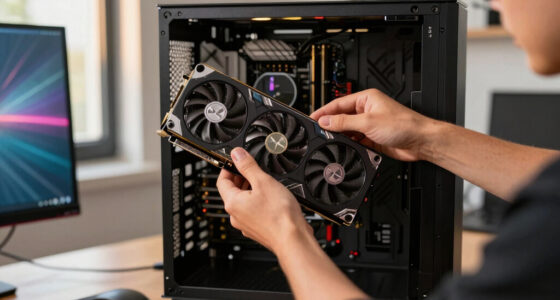
🔍 Read the full analysis: 2026'S Leading Graphics Cards For AI Innovation on ThorstenMeyerAI.com

Get the latest gadgets delivered free with Prime
- Fast, free delivery on millions of items
- Prime Video, Amazon Music and more included
- Member-only deals all year
TL;DR
In 2026, NVIDIA’s RTX 5080 series and AMD’s RX 9070 XT lead the market for AI innovation, offering advanced features, high VRAM, and improved performance. Their adoption will shape AI development and high-performance computing.
NVIDIA’s RTX 5080 series and AMD’s RX 9070 XT have been officially launched as the leading graphics cards for AI innovation in 2026, offering significant performance improvements and new AI-focused features. This development marks a pivotal moment for AI research, high-performance computing, and advanced machine learning applications, as these cards are designed to support the most demanding workloads. For an overview of top-performing graphics cards, see the original analysis.
The NVIDIA RTX 5080 series features a new architecture with enhanced ray tracing, AI acceleration, and 16GB of VRAM, making it ideal for AI training, inference, and creative workloads. NVIDIA has emphasized its improved tensor cores, which accelerate AI model training and deployment, and support for PCIe 5.0 to maximize data throughput.
Meanwhile, AMD’s RX 9070 XT offers comparable high-end performance with a focus on value, supporting 16GB of VRAM, advanced cooling solutions, and compatibility with upcoming DDR7 memory and PCIe 5.0. For more details on high-end graphics cards, visit our internal guide. AMD’s focus on open AI standards like FSR and competitive pricing make it a strong alternative for budget-conscious enterprises and researchers.
Both cards are available now, with benchmarks indicating that the RTX 5080 series outperforms previous generations in AI-specific tasks, while AMD’s RX 9070 XT delivers strong performance at a slightly lower price point. Industry insiders suggest these cards will be central to AI development pipelines for the foreseeable future. Learn more about the best graphics cards for AI applications in our comprehensive review.
The 8 picks
- 1
 MSI Gaming RTX 5080 16G SUPRIM SOC Graphics Card (16GB GDDR7, 256-bit, Extrem…View on Amazon →
 - 2
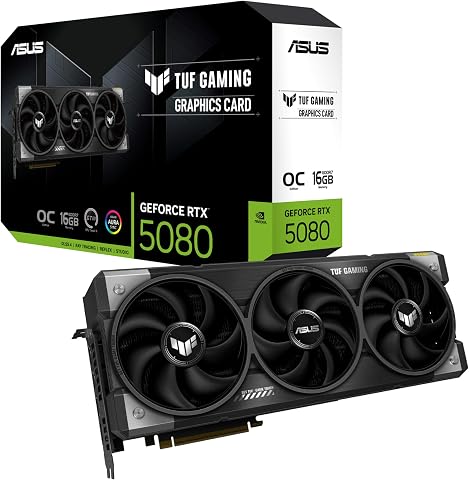 ASUS TUF Gaming GeForce RTX 5080 16GB GDDR7 OC Edition Graphics CardView on Amazon →
 - 3
 GIGABYTE GeForce RTX 5080 Gaming OC 16G Graphics CardView on Amazon →
 - 4
 ASUS Prime NVIDIA GeForce RTX 5070 OC Edition Graphics Card (PCIe 5.0, 12GB G…View on Amazon →
 - 5
 ASUS Prime Radeon RX 9070 XT 16GB GDDR6 OC Edition Gaming Graphics CardView on Amazon →
 - 6
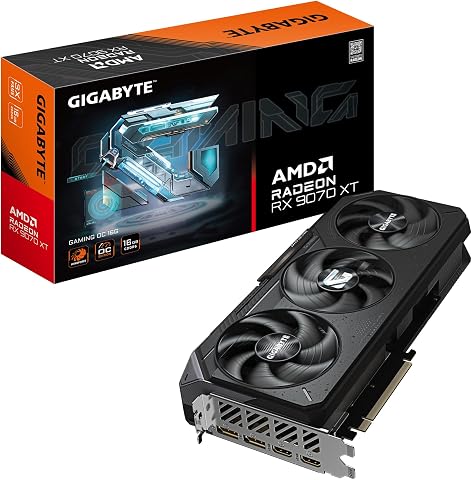 GIGABYTE Radeon RX 9070 XT Gaming OC 16G Graphics CardView on Amazon →
 - 7
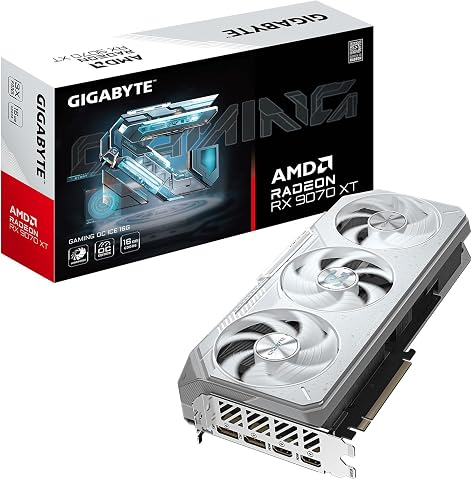 GIGABYTE Radeon RX 9070 XT Gaming OC ICE 16G Graphics CardView on Amazon →
 - 8
 ASRock Radeon RX 9070 Challenger 16GB OC Graphics Card, RDNA 4, 2520MHz Boost…View on Amazon →
Impact on AI Development and High-Performance Computing
The introduction of the RTX 5080 series and RX 9070 XT in 2026 signifies a major leap forward in AI hardware capabilities. Their enhanced tensor cores, larger VRAM, and support for future standards will enable faster training of complex models, more efficient inference, and broader deployment of AI across industries. This hardware evolution is expected to accelerate breakthroughs in areas like autonomous systems, natural language processing, and scientific simulations, impacting both academia and industry.
Furthermore, the increased adoption of these high-performance cards will influence market dynamics, with software developers optimizing frameworks for these architectures, and cloud providers expanding their AI infrastructure to leverage their capabilities. The cards’ support for upcoming memory and connectivity standards also indicates a focus on future-proofing, ensuring that AI workloads can scale efficiently over the next several years.
2026 Graphics Card Market and AI Hardware Trends
The 2026 graphics card market has been characterized by rapid innovation driven by AI and machine learning demands. NVIDIA’s RTX 5080 series and AMD’s RX 9070 XT are successors to earlier high-end models that prioritized gaming and creative content but have now shifted focus toward AI acceleration.
Industry analysts note that both companies have integrated their latest architectures with AI-specific hardware enhancements, such as NVIDIA’s tensor cores and AMD’s open standards like FSR. The move toward PCIe 5.0 and DDR7 memory support reflects a broader industry trend toward future-proofing high-performance computing hardware, aimed at supporting increasingly complex AI models and data-intensive workloads.
Prior to these launches, the market saw a gradual increase in VRAM sizes, advanced cooling solutions, and connectivity options, setting the stage for these flagship models. The AI computing community is watching closely, as these cards are expected to set new benchmarks for performance and efficiency in AI tasks.
Remaining Questions About 2026 AI-Optimized Graphics Cards
While specifications and initial benchmarks are promising, it is not yet clear how these cards will perform under long-term, real-world AI workloads. Details about their energy efficiency at scale, thermal performance during extended use, and compatibility with future AI frameworks are still emerging. Additionally, the availability and pricing may fluctuate as supply chains stabilize and demand evolves.
Next Steps for AI Developers and Hardware Buyers
AI researchers and enterprise users should monitor upcoming software optimizations tailored for these new architectures. Hardware reviews and third-party benchmarks are expected to provide deeper insights into performance and reliability. Buyers should also prepare their infrastructure—ensuring compatibility with PCIe 5.0 and adequate power supplies—to maximize the benefits of these new cards. Industry events and manufacturer announcements scheduled for mid-2026 will likely further clarify long-term performance and availability.
Key Questions
Are the NVIDIA RTX 5080 and AMD RX 9070 XT suitable for AI training?
Yes, both cards are designed with high VRAM, tensor cores, and AI acceleration features, making them suitable for AI training and inference tasks.
What makes these cards more future-proof than previous models?
Support for PCIe 5.0, DDR7 memory compatibility, and advanced cooling solutions contribute to their future-proofing, enabling scaling for larger models and data loads.
Will these cards improve AI performance in gaming or creative work?
While primarily optimized for AI workloads, their enhanced ray tracing and processing power also benefit high-end gaming and content creation, though AI-specific features are the main focus.
How do these cards compare in terms of price and value?
The RTX 5080 series generally commands a premium due to its cutting-edge AI features, while the RX 9070 XT offers competitive performance at a lower price point, providing options for different budgets.
Source: ThorstenMeyerAI.com
Fall Picks
fall essentials
As an affiliate, we earn on qualifying purchases.