
TL;DR

Get the latest gadgets delivered free with Prime
- Fast, free delivery on millions of items
- Prime Video, Amazon Music and more included
- Member-only deals all year
A newly launched VR experience provides an interactive, educational journey into ancient pyramid construction. It aims to enhance understanding of historical engineering techniques and cultural significance.
A new educational virtual reality (VR) experience has been launched, offering users an immersive journey into the methods and techniques used by ancient pyramid builders. Developed with input from archaeologists and historians, the experience aims to provide a detailed, interactive understanding of how these monumental structures were constructed, making it accessible to students, educators, and history enthusiasts alike.
The VR experience, titled “Secrets of the Pyramid Builders,” was officially released in March 2024 by a collaborative team of educational technology developers and historical consultants. It allows users to explore a reconstructed ancient Egyptian construction site, interact with virtual tools, and witness the construction process from quarrying stone to assembly of the pyramid. The experience emphasizes educational accuracy, integrating archaeological findings and traditional construction techniques.
According to the developers, the platform features detailed 3D reconstructions of the pyramid, the workers’ environment, and the tools used. It also includes narrated explanations and interactive challenges designed to demonstrate the engineering principles involved. The project was funded by an educational grant aimed at promoting STEM learning through immersive technology. Experts involved in the development have confirmed that the experience is based on current archaeological research, although some specific construction methods remain subject to ongoing scholarly debate.
Discover the Educational VR Experience Behind the Secrets of Pyramid Builders
A newly launched virtual reality experience offers an interactive, educational journey into ancient pyramid construction — enhancing understanding of historical engineering techniques and cultural significance for students, educators, and history enthusiasts.
Inside the Experience
“Secrets of the Pyramid Builders” lets users explore a reconstructed ancient Egyptian construction site, interact with virtual tools, and witness the full construction process — developed with input from archaeologists and historians.
Detailed 3D Worlds
Precise 3D reconstructions of the pyramid, the workers’ environment, and the tools used — all grounded in current archaeological findings.
Virtual Tools & Challenges
Users handle virtual tools and complete interactive challenges that demonstrate the engineering principles behind monumental construction.
Guided Explanations
Narrated explanations from historical consultants walk learners through traditional construction techniques and cultural context.
The Construction Journey
The VR experience traces the complete build sequence, from raw stone in the quarry to the finished monument — with each stage explorable in immersive detail.
Quarrying Stone
Extract massive limestone and granite blocks using period-accurate techniques.
Transport
Move blocks across the desert with sledges, ramps, and organized labor crews.
Lifting & Positioning
Explore plausible reconstructions of how massive stones were raised into place.
Assembly
Witness the pyramid take shape — capped and finished as a monument to engineering.
Educational Impact of Immersive History Learning
The platform bridges the gap between textbook learning and tangible experience — illustrating where VR strengthens engagement with historical engineering, cultural heritage, and ancient civilizations.
Key Questions
The essentials, answered — from development provenance to classroom readiness and technical requirements.
| Question | Answer |
|---|---|
| How accurate is the depiction of construction? | Based on the latest archaeological research; presents a ✓ plausible reconstruction, though ~ some techniques remain under scholarly debate and are simplified for education. |
| Who developed the experience? | ✓ A collaborative team of educational technology developers and historical consultants, funded by an educational grant for immersive learning. |
| Can it be used in classrooms? | ✓ Yes — designed for classroom use with compatible VR hardware, with expanded educational integration planned. |
| Are more features planned? | ✓ Yes — future modules on Egyptian civilization, plus refinements from user feedback and ongoing discoveries. |
| What are the technical requirements? | Compatible VR hardware — Oculus Quest, HTC Vive, or other PC-based VR systems — plus software installation. |
Future Updates & Broader Integration
As VR hardware becomes more widespread, developers plan to expand the platform’s reach across schools and museums — and deepen its coverage of ancient Egyptian civilization.
New Civilization Content
Additional modules covering daily life, religious practices, and political structures of ancient Egypt.
Expert Feedback Loop
Ongoing input from educators and scholars will refine the accuracy of the construction techniques depicted.
Classroom Integration
Deeper alignment with classroom curricula and virtual field trips to enhance educational reach.
Schools & Museums
Broader adoption is anticipated as VR hardware becomes more accessible and affordable.
Educational Impact of Immersive History Learning
This VR experience represents a significant step forward in how history and archaeology are taught, especially for younger audiences. By providing a visceral, interactive understanding of ancient construction techniques, it helps bridge the gap between textbook learning and tangible experience. Educators can incorporate the platform into classrooms to foster engagement with historical engineering, cultural heritage, and ancient civilizations. Additionally, it demonstrates the potential of VR as a tool for experiential learning, potentially transforming educational methods across disciplines.
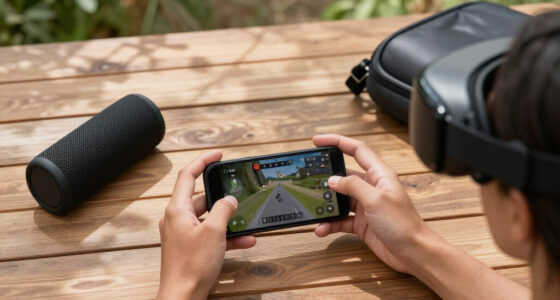
VR headset for educational experiences
As an affiliate, we earn on qualifying purchases.
As an affiliate, we earn on qualifying purchases.
Advances in VR for History Education
Immersive technology has increasingly been used to enhance history education, with previous projects focusing on battlefield reenactments, museum tours, and archaeological site reconstructions. However, the “Secrets of the Pyramid Builders” experience is notable for its focus on engineering and construction processes, offering a detailed look at one of the most iconic ancient monuments. The development aligns with broader trends in edtech to make learning more engaging and interactive, especially as VR hardware becomes more accessible and affordable.
Historically, understanding how the pyramids were built has relied heavily on archaeological excavation and textual analysis. Recent discoveries and research have shed light on construction techniques, but visual and experiential learning tools like VR are now providing new ways to explore these ancient methods firsthand. The project builds on this momentum, aiming to make complex engineering concepts accessible and memorable through immersive storytelling.
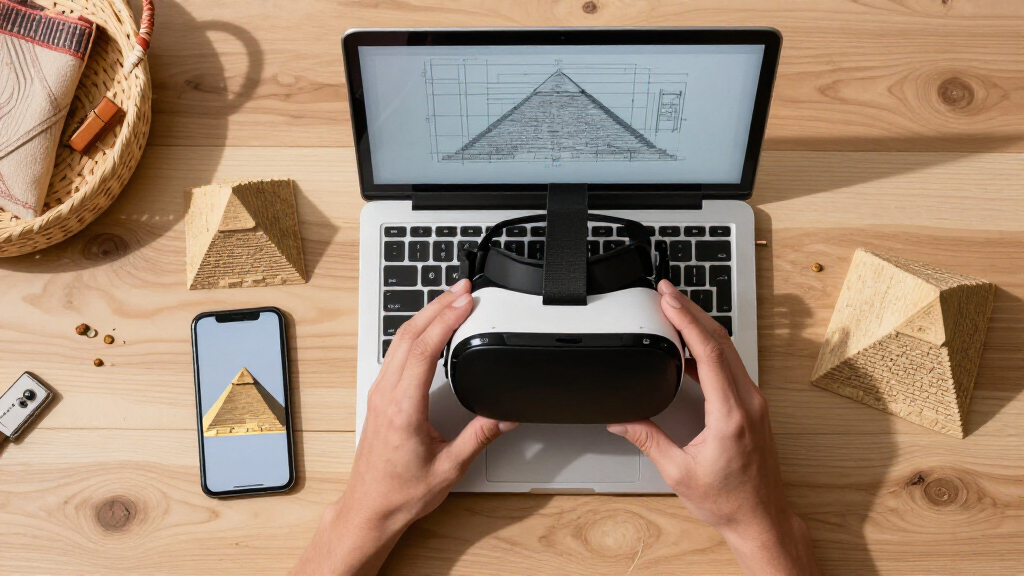
ancient Egyptian pyramid construction model
As an affiliate, we earn on qualifying purchases.
As an affiliate, we earn on qualifying purchases.
Remaining Questions About Construction Techniques
While the VR experience is based on current archaeological research, some specific construction methods depicted remain subject to scholarly debate. For example, the exact techniques used for lifting and positioning massive stones are still being studied, and the experience presents a plausible but not definitive reconstruction of these processes. Additionally, the extent of labor organization and logistical planning involved is simplified for educational purposes, and some details are still under investigation by Egyptologists.
As an affiliate, we earn on qualifying purchases.
Future Updates and Broader Educational Integration
Developers plan to expand the platform with additional modules covering other aspects of ancient Egyptian civilization, such as daily life, religious practices, and political structures. They also intend to incorporate feedback from educators and scholars to refine the accuracy of the construction techniques depicted. Further integration with classroom curricula and virtual field trips is expected to enhance its educational reach. As VR hardware becomes more widespread, broader adoption in schools and museums is anticipated.
As an affiliate, we earn on qualifying purchases.
Key Questions
How accurate is the VR experience in depicting pyramid construction?
The experience is based on the latest archaeological research and aims to provide a plausible reconstruction, but some specific techniques remain under scholarly debate and are simplified for educational purposes.
Who developed the “Secrets of the Pyramid Builders” VR experience?
It was created by a team of educational technology developers and historical consultants, with funding from an educational grant focused on immersive learning tools.
Can this VR experience be used in classrooms?
Yes, the developers plan to expand its integration into educational settings, and it is designed to be accessible for classroom use with compatible VR hardware.
Are there plans to add more features or content?
Future updates include additional modules on Egyptian civilization, as well as enhancements based on user feedback and ongoing archaeological discoveries.
What are the technical requirements for using this VR experience?
The experience requires compatible VR hardware such as Oculus Quest, HTC Vive, or other PC-based VR systems, along with the necessary software installation.
Source: UploadVR
Halloween Picks
halloween
As an affiliate, we earn on qualifying purchases.