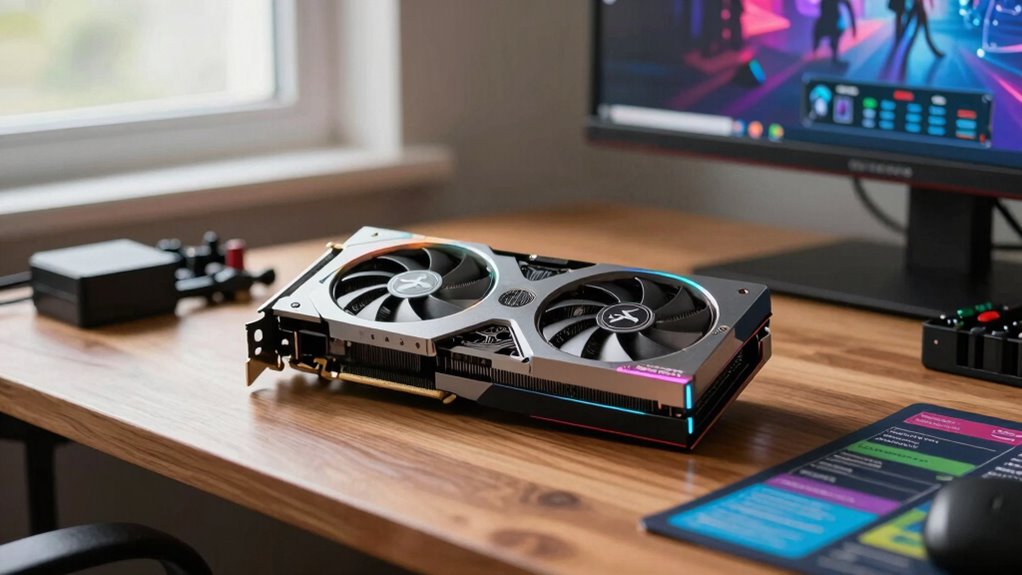

Choosing the right graphics card doesn’t have to be complicated. Consider what you’ll use it for—whether gaming at high resolutions or casual play—and match that with the power and features like VRAM and speed. Make sure it fits your system, especially the power supply and motherboard. Budget options can still offer great performance, but future-proofing and compatibility matter too. Keep things simple now, and you’ll find it easier to upgrade later on when you understand the basics.
Key Takeaways
- Match your gaming resolution and settings to the GPU’s power to ensure smooth performance without overspending.
- Check your system’s power supply, motherboard, and case compatibility before choosing a graphics card.
- Focus on key specs like VRAM, clock speed, and brand reputation for better performance and durability.
- Consider cooling options and airflow to keep your GPU running efficiently and prevent overheating.
- Balance your budget with performance needs by comparing benchmark scores and selecting the best value for your gaming style.
Understanding the Basics of Graphics Cards

Have you ever wondered what makes a graphics card essential for gaming? It’s the core component responsible for rendering visuals smoothly and vividly. To keep your GPU running ideally, regular driver updates are crucial—they improve performance, fix bugs, and add new features. When choosing a graphics card, consider manufacturer brands like NVIDIA, AMD, or Intel, as their reputation and support can influence your experience. These brands produce different models tailored for various needs, but all rely on drivers to communicate with your system. Understanding that your GPU processes graphics data and outputs it to your monitor helps clarify its role. Additionally, knowing about graphics card specifications can help you select the best card for your gaming setup. Recognizing the importance of European cloud innovation can also inspire you to seek providers that prioritize sustainability and security. A solid grasp of these basics ensures you make smarter choices, keeping your gaming experience seamless and visually stunning.
Matching Your Gaming Needs With GPU Power

Your gaming resolution and settings directly impact the GPU power you need. If you play fast-paced shooters or enjoy high-detail visuals, you’ll want a more powerful card. Matching your game type with the right GPU guarantees smooth performance and an ideal gaming experience. Additionally, understanding modern kitchen technology can inspire innovative ways to optimize your gaming setup, much like how smart appliances enhance the kitchen environment. Recognizing how hardware specifications influence gaming performance can help you make more informed choices when selecting a GPU. For example, the net worth of celebrities involved in the gaming or tech industry can sometimes provide insights into the latest high-end hardware trends. Being aware of performance benchmarks can further assist in evaluating which GPU best fits your needs.
Gaming Resolution & Settings
Choosing the right gaming resolution and settings is essential to guarantee smooth performance and visual quality without overloading your GPU. Higher resolutions like 4K demand more GPU power, which can cause lag if your card isn’t up to the task. Additionally, your monitor’s refresh rate impacts gameplay; a 60Hz monitor shows fewer frames per second than a 144Hz model, affecting input lag and responsiveness. Adjusting settings like shadows, textures, and anti-aliasing can help balance visuals and performance. Use the table below to match your gaming needs with suitable resolutions and refresh rates:
| Resolution | Refresh Rate | Ideal for |
|---|---|---|
| 1080p | 60Hz–144Hz | Fast-paced games |
| 1440p | 60Hz–144Hz | Slightly enhanced visuals |
| 4K | 60Hz | Cinematic quality |
Game Type Optimization
Matching your game type to your GPU power guarantees smooth gameplay and ideal visuals. If you love immersive experiences with ray tracing, choose a GPU that handles real-time lighting and reflections smoothly, even at higher settings. For fast-paced shooters or esports titles, prioritize GPUs with high frame rates and low latency, which overclocking can boost further. If you’re into casual or indie games, you might not need top-tier specs, saving money. Consider how demanding your preferred game genres are and select a GPU that balances performance with visual quality. Overclocking can squeeze extra performance from your card, but avoid pushing it too hard to prevent overheating. Incorporating connected fitness technology into your gaming setup can enhance your experience by providing real-time performance metrics and personalized training tips, paralleling how smart home gym equipment supports overall wellbeing. Additionally, understanding GPU architecture helps you make informed decisions about compatibility and future-proofing your investment. Matching your game style with the right GPU ensures a satisfying gaming experience without unnecessary investment.
Key Features to Look For in a Graphics Card

When choosing a graphics card, you need to take into account its performance metrics to make certain it can handle your favorite games smoothly. VRAM capacity is vital for high-resolution textures and multitasking, so pick a model that fits your gaming setup. Additionally, check the cooling solutions and power requirements to keep your GPU running efficiently without overheating or overloading your system. Understanding proper maintenance practices can help you make more informed decisions about the best components for your needs. Regularly inspecting and replacing filtration and pump protection components can also prevent damage and ensure consistent performance over time. Incorporating smart home monitoring techniques can also aid in maintaining optimal operating conditions for your hardware, extending its lifespan. Being aware of your system’s electrical load can further help prevent potential overloads and improve overall stability.
GPU Performance Metrics
Ever wonder what makes a graphics card truly perform well? It all comes down to GPU performance metrics. Benchmark scores are a reliable way to compare how different cards handle demanding games and applications. They provide a standardized measure of overall power and efficiency. FPS metrics, or frames per second, show how smoothly your games run, giving you a real-world sense of performance. Higher FPS means a smoother experience, especially during fast-paced gameplay. When choosing a GPU, look for high benchmark scores and solid FPS metrics across popular titles. These indicators help you gauge whether a card can deliver the gaming performance you want without lag or stuttering. Focusing on these metrics guarantees you pick a GPU that meets your gaming needs.
VRAM Capacity Importance
VRAM capacity is a critical feature to contemplate because it directly affects your GPU’s ability to handle high-resolution textures and complex scenes. If you overlook VRAM importance, you might experience lag, stuttering, or lower frame rates, especially at higher gaming resolutions. More VRAM allows smoother gameplay and better visual quality. For 1080p gaming, 4GB usually suffices, but for 1440p or 4K, 8GB or more ensures future-proofing. Consider this table:
| Gaming Resolution | Recommended VRAM |
|---|---|
| 1080p | 4GB |
| 1440p | 6-8GB |
| 4K | 8GB+ |
| Virtual Reality | 8GB+ |
Choosing the right VRAM makes a noticeable difference in your gaming experience. Additionally, VRAM capacity plays a vital role in maintaining consistent performance during demanding gameplay.
Cooling and Power Needs
Cooling and power needs are essential factors to contemplate because they directly impact your GPU’s stability and longevity. Without proper cooling solutions, your graphics card could overheat, causing crashes or damage. Making sure your power supply can handle the GPU’s requirements prevents stability issues and potential failures. Here are key points to consider: 1. Invest in a GPU with efficient cooling solutions to keep temperatures low. 2. Check that your power supply has enough wattage and the right connectors. 3. Look for models with advanced cooling features like multiple fans or liquid cooling. 4. Ensure your case provides good airflow to support the cooling system. Additionally, choosing a vetted cooling system can help optimize performance and durability. For optimal thermal management, selecting a cooling setup that matches your GPU’s needs is crucial for long-term reliability. Proper thermal design can also reduce noise levels and improve overall system efficiency, especially when considering heat dissipation strategies. Incorporating effective airflow techniques within your case can further enhance cooling performance and help maintain ideal operating temperatures.
How to Read and Compare GPU Specs

Understanding how to read and compare GPU specs is essential when choosing the right graphics card for your gaming needs. Focus on core specs like VRAM, which affects how well your games handle high-resolution textures, and clock speeds, indicating performance potential. Check the overclocking potential if you want to push your GPU further, but remember that higher overclocking can impact stability and lifespan. Comparing different brands helps you gauge brand reputation, which often reflects build quality and customer support. Look at the number of CUDA cores or stream processors—more usually means better performance. Also, consider the architecture, as newer designs typically deliver improved efficiency and power. By understanding these specs, you can make smarter choices aligned with your gaming goals. Additionally, paying attention to the architecture of the GPU can reveal improvements in energy efficiency and overall performance. Understanding the warranty considerations is also important, as some warranties may be voided if the GPU is overclocked or reconditioned, impacting your long-term investment. Recognizing the importance of power requirements can help ensure compatibility with your system’s power supply and prevent potential issues. Moreover, staying informed about the latest technological advancements can help you select a GPU that remains relevant longer and offers better value. Being aware of future-proofing features can also help you choose a GPU that stays competitive as games and technology evolve.
Budget-Friendly Options for Different Gamers

Finding a budget-friendly GPU that meets your gaming needs doesn’t mean sacrificing performance. You can find solid options that deliver great value without breaking the bank. Here are four budget options to contemplate:
- Entry-Level Gem – Perfect for casual gamers, offering reliable performance at a low cost.
- Mid-Range Marvel – Balances price and power, ideal for most gamers who want smooth gameplay.
- Brand Comparisons – Check options from AMD and Nvidia; some brands offer better warranties or cooling features.
- Upgrade Path – Think about future upgrades; a slightly higher budget might save you money long-term.
Tips for Ensuring Compatibility and Future-Proofing

To make certain your GPU remains compatible with your system and stays relevant for future gaming needs, it’s essential to pay attention to key specifications and build considerations. Verify your power supply can handle the GPU’s requirements and check your motherboard’s PCIe slot. Also, consider the GPU’s driver updates, which keep performance optimized and secure. hardware compatibility can prevent costly mistakes and ensure a smoother upgrade process. For future-proofing, pick a card with good overclocking potential, allowing you to boost performance when needed. Additionally, understanding system requirements and how they relate to your hardware can help you plan upgrades more effectively. Here’s a quick comparison:
| Specification | Importance |
|---|---|
| Power supply capacity | Prevents underpowering issues |
| PCIe slot compatibility | Ensures physical fit and performance |
| Overclocking potential | Extends lifespan and boosts performance |
Focusing on these factors helps your system adapt and remain gaming-ready longer.
Frequently Asked Questions
How Do I Know if a GPU Will Fit in My PC Case?
To know if a GPU will fit in your PC case, check the GPU dimensions listed in the product specs. Measure your case’s available space, especially the length, width, and height, to guarantee it’s case compatible. Compare the GPU dimensions with your case’s maximum supported size. If the GPU is smaller or matches your case’s specifications, it will fit comfortably. Always leave enough room for airflow and other components.
What’s the Best Way to Upgrade My Existing Graphics Card?
To upgrade your existing graphics card, start by checking compatibility considerations like your case size, power supply, and motherboard slots. Then, explore upgrade options that fit your budget and performance needs. Remove your current GPU carefully, install the new card securely, and make sure your drivers are up to date. This straightforward process maximizes performance without hassle, giving you a smoother gaming experience.
Are There Specific Brands or Models Recommended for Beginners?
Looking for beginner-friendly brands? Why not consider ASUS, MSI, or Gigabyte? They’re known for solid brand reputation and reliable warranty services, making your first GPU purchase less stressful. Are you worried about support if something goes wrong? These brands offer excellent customer service and warranty coverage, giving you peace of mind. Stick with these trusted names, and you’ll get good performance without the jargon or hassle.
How Important Is VRAM for Different Gaming Resolutions?
VRAM capacity is essential for different gaming resolutions because it directly affects how well your GPU handles textures and detail levels. At higher resolutions like 1440p or 4K, you’ll need more VRAM to prevent lag and stuttering. The resolution impact means that with 4K gaming, aim for at least 8GB of VRAM, while 1080p gaming can perform well with 4GB to 6GB, depending on your game settings.
Can I Use Multiple GPUS for Better Gaming Performance?
Yes, you can use multiple GPUs to boost gaming performance, but it depends on your setup and games. Multi-GPU configurations, like SLI or CrossFire, can improve frame rates and visual quality if supported. However, not all games benefit equally, and you might face issues like micro-stuttering or limited compatibility. Before investing, check if your motherboard and power supply support multi-GPU setups and weigh the potential gains.
Conclusion
Now that you understand the basics, match your gaming needs with the right GPU, look for key features that matter, and compare specs confidently. Consider your budget and future-proof your setup to enjoy smooth gameplay today and tomorrow. By balancing power, compatibility, and affordability, you’ll choose a graphics card that elevates your gaming experience. Stay informed, stay confident, and game on with the perfect GPU tailored just for you.