
📊 Full opportunity report: A Simple Photo Routine For Tracking Eczema And Psoriasis on IdeaNavigator AI — validation score, market gap, and execution plan.

Get the latest gadgets delivered free with Prime
- Fast, free delivery on millions of items
- Prime Video, Amazon Music and more included
- Member-only deals all year
TL;DR
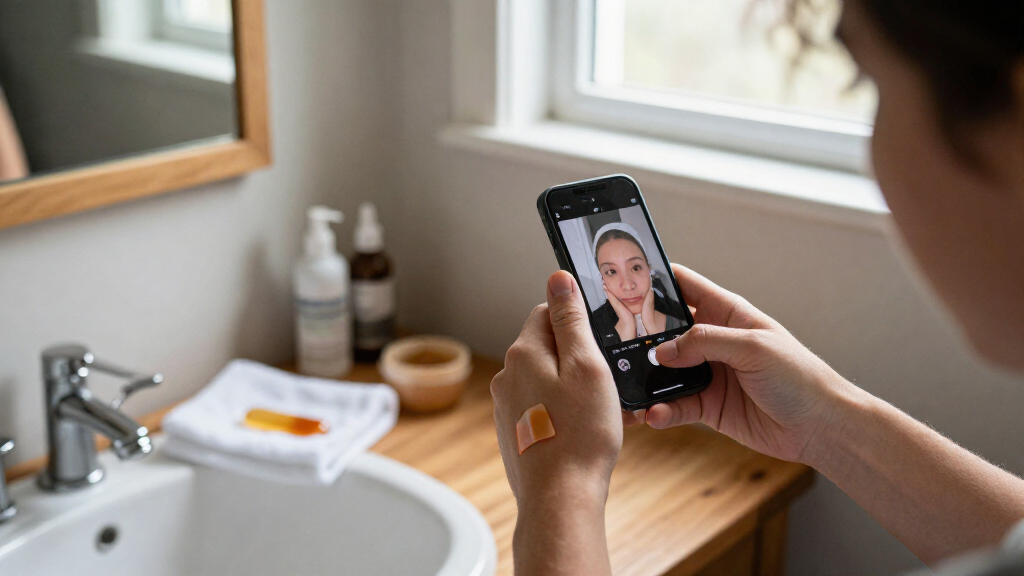
IdeaNavigator AI proposes a photo journal that would guide adults with eczema or psoriasis to take weekly, consistently framed skin photos and record possible triggers. The concept has not been clinically tested; IdeaNavigator AI suggests a one-month pilot with 15 eczema patients to assess whether dermatologists find the timeline useful and whether patients would pay for it.
IdeaNavigator AI has proposed a weekly photo journal for adults with eczema or psoriasis to record skin changes between dermatology visits, using dated, consistently framed images and brief notes about possible triggers. The concept is a product idea, not a tested medical tool; IdeaNavigator AI suggests a small pilot as a next step to find out whether the records affect appointments and whether patients would pay for the service.
In its proposal, IdeaNavigator AI describes a routine that would prompt users to take a photo once a week, with guidance on framing and lighting intended to make images easier to compare over time. Each entry would include a date and a note about a possible trigger. The app would organize the entries into a side-by-side flare timeline, potentially giving patients and clinicians a clearer record than recollection alone.
IdeaNavigator AI says the concept addresses a specific challenge: people may have difficulty remembering when a flare began, what may have preceded it, and whether treatment appears to be helping by the time they see a dermatologist. The proposal suggests offering unlimited photo history, exports and a visit-preparation summary PDF through a subscription. It reports no pricing, app release, clinical evaluation or evidence of patient demand.
To test the concept, IdeaNavigator AI suggests recruiting 15 people with eczema to record photos weekly for one month. The proposed pilot would then ask their dermatologists whether the timeline changed the visit and measure participants’ willingness to pay. The proposal does not describe a corresponding psoriasis pilot or report that either study has begun.
A More Dated Record for Visits
If the routine proves practical, a consistent timeline could help patients bring dated observations to appointments instead of relying only on memory. That may give clinicians another way to discuss the course of a flare and a patient’s experience of treatment. The proposal does not establish that photos would improve diagnosis, treatment decisions or health outcomes; those are questions a pilot would need to examine rather than assume.
The approach also reflects a practical tension in self-tracking: phone cameras make taking pictures easy, but consistency and useful context are harder. A photo taken from a different distance or under different lighting can make comparisons difficult, while an image alone may not explain symptoms or treatment changes. Prompts and short notes could add structure, though their usefulness has not been evaluated.
For patients, the proposal could offer a low-effort way to prepare for a visit, but the suggested subscription raises a separate question: whether the service adds enough value beyond a phone’s existing camera and storage tools to justify payment. The proposed pilot is intended to test that interest, not to show that a market already exists.
As an affiliate, we earn on qualifying purchases.
The Proposed Weekly Routine
IdeaNavigator AI presents the concept for adults tracking chronic skin conditions between dermatology appointments. It is framed as a narrow first product workflow rather than a broad skin-care platform: take a guided weekly image, add a possible-trigger note and build a dated record for later review.
The proposal points to phone cameras, cloud storage and teledermatology as reasons the idea may be timely, saying remote appointments increasingly ask patients to bring progress images. These are rationales offered by IdeaNavigator AI for the concept, not independently documented findings in the proposal. It gives no figures on teledermatology use, patient photo habits or the prevalence of difficulty recalling flare details.
IdeaNavigator AI’s suggested validation plan focuses first on eczema: 15 participants, weekly entries over four weeks, dermatologist feedback and a willingness-to-pay measure. That would be an early feasibility and demand check, not evidence of clinical effectiveness. The plan does not specify how participants would be recruited, how clinicians’ responses would be assessed or whether the results would be published.
As an affiliate, we earn on qualifying purchases.
Pilot Results Are Not Available
IdeaNavigator AI reports no completed study or product launch. It remains unknown whether participants would take photos every week, whether fixed framing and lighting would produce comparisons clinicians consider useful, or whether the timeline would change the content or decisions of a dermatology visit.
The suggested pilot also leaves open how the tool would handle privacy and image storage, what safeguards would apply to sensitive skin photos, and whether users could share records securely with clinicians. The proposal gives no subscription price or evidence of willingness to pay. Its proposed test mentions eczema patients, so its findings—if carried out—would not automatically establish usefulness for psoriasis.
Photos can document visible changes but do not, by themselves, establish a trigger or determine whether a treatment is working. IdeaNavigator AI provides no clinical guidance for interpreting images and no evidence that the workflow should replace medical advice or follow-up. Those limits would need to be clear to users.
dermatology photo documentation kit
As an affiliate, we earn on qualifying purchases.
As an affiliate, we earn on qualifying purchases.
A Small Eczema Pilot Is Proposed
IdeaNavigator AI describes a one-month pilot involving 15 people with eczema as the next step. Participants would log weekly photos, after which dermatologists would be asked whether the timeline changed the appointment. The proposal also calls for measuring whether participants would pay for features such as unlimited history, exports and a visit-preparation PDF.
IdeaNavigator AI provides no recruitment date, participating clinics, study protocol or results. Until those details emerge, the photo journal remains a concept to test. A useful assessment would need to report whether users completed entries, how clinicians judged the records, what privacy arrangements were used and whether participants found the service worth paying for.
Source: IdeaNavigator AI
As an affiliate, we earn on qualifying purchases.
Key Questions
What would the photo journal do?
According to the IdeaNavigator AI proposal, it would prompt users to take a weekly skin photo with consistent framing and lighting, add a date and possible-trigger note, and arrange entries in a timeline.
Has the app been tested or launched?
The IdeaNavigator AI proposal reports no launch or completed test. It recommends a small pilot but gives no start date or results.
Would photos show whether a treatment is working?
That has not been established. The proposal suggests photos may help document changes, but images alone cannot confirm treatment effectiveness or identify a flare’s cause.
Who would take part in the proposed pilot?
IdeaNavigator AI suggests a first test recruiting 15 people with eczema to log photos weekly for one month. No psoriasis-specific pilot is described.
Would users have to pay?
IdeaNavigator AI proposes a subscription for features including unlimited history, exports and a visit-preparation PDF. No price or evidence of willingness to pay is provided; measuring that interest is part of the suggested pilot.
Source: IdeaNavigator AI
Fall Picks
fall essentials
As an affiliate, we earn on qualifying purchases.