
🔍 Read the full analysis: What MentalHealthBench Can Offer AI Research In Mental Health on ThorstenMeyerAI.com

Get the latest gadgets delivered free with Prime
- Fast, free delivery on millions of items
- Prime Video, Amazon Music and more included
- Member-only deals all year
TL;DR
OpenAI has announced MentalHealthBench, a benchmark intended to assess how language models respond to mental health conversations and recognize conditions that may underlie what users describe. The announcement presents it as a way to make model evaluation in this sensitive area more measurable, but independent researchers have not yet assessed its methods or results.
OpenAI has announced MentalHealthBench, a benchmark designed to evaluate how large language models handle mental health-related conversations, including the quality of their responses and their ability to recognize conditions that may underlie a user’s description. The release introduces a named evaluation for a high-stakes area of chatbot use, but the benchmark’s methods and results have not yet been independently reviewed.
OpenAI says MentalHealthBench covers conversational scenarios involving mental health concerns. The company describes it as testing both how appropriately and accurately models respond and whether they can identify conditions that may be relevant to what a person describes. The announcement frames the benchmark as an effort to make model behavior in this domain subject to more formal evaluation.
The supplied announcement summary says the technical details—including the benchmark’s construction, dataset size, scoring rubric and evaluated models—are set out in OpenAI’s announcement. Those details are not reproduced in the source material available for this article, so the benchmark’s scale, specific measures and reported findings cannot be assessed here. No independent evaluation or third-party assessment is included in that material.
A benchmark typically gives models prompts or dialogues and assesses their outputs against criteria chosen by its designers. In this case, OpenAI’s stated aim is to cover mental health-related conversations and recognition of possible underlying conditions. How the scenarios are selected, who sets the scoring standards and how performance is reported will shape what conclusions readers can draw from any future scores.
A Measure for High-Stakes Conversations
People already raise topics such as distress, anxiety and grief with consumer AI chatbots. Some may do so before contacting a professional, or instead of seeking professional support. In those exchanges, an inaccurate or dismissive reply—or a failure to recognize signs of acute distress—could affect how a user understands their situation or whether they pursue additional help. The source material identifies these as concerns around model failures; it does not provide a new study measuring their frequency or effects.
A shared evaluation could make comparisons between model versions easier to track. If OpenAI reports results consistently, changes in scores might give observers one way to see whether models improve or regress on the benchmark’s tasks. Other research groups could also use or adapt the evaluation, if its design and access permit. That could bring mental health performance into broader discussions of model evaluation.
A benchmark score would still describe performance on the benchmark, rather than establish how a system will behave in every live conversation. OpenAI created the tool and, as described in the source material, has presented its intended purpose. Independent scrutiny would help determine whether the scenarios and scoring reflect sound clinical judgments and whether the evaluation is useful beyond the company’s own testing.
Products Worth Considering

LG UltraGear 32-Inch QHD 180Hz Curved Gaming Monitor

Jackery Solar Generator 1000 v2 with Two 100W Solar Panels, 1024Wh LiFePO4 Battery
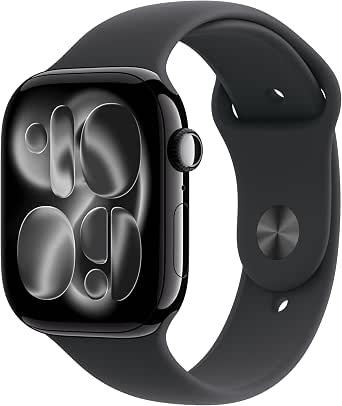
Apple Watch Series 11 GPS + Cellular, 46mm Jet Black Aluminum Case with Black Sport Band (M/L)
As an affiliate, we earn on qualifying purchases.
Why Mental Health Testing Is Difficult
Language models can produce fluent answers in conversations involving personal concerns, but fluency alone does not show that a response is appropriate or safe. Mental health conversations vary widely, and a person’s words may not provide enough information to identify a condition. A useful evaluation must account for both the limits of what a model can infer and the way it responds when a user may need support.
The announcement places MentalHealthBench within OpenAI’s broader effort to formalize evaluation of AI behavior and make aspects of safety and capability assessment more transparent. The source material does not provide details of the benchmark’s development history or establish how it relates to particular earlier evaluations. Its immediate significance is the creation of a specific assessment focused on mental health conversations.
Company-developed benchmarks can provide a consistent point of comparison, but they also put the benchmark designer in charge of defining the tasks and reporting results. For MentalHealthBench, that makes outside examination of its methodology and any published scores relevant to judging how much the results show.
Questions About Design and Validation
Independent validation remains absent from the supplied material. It does not establish whether clinicians helped design the scenarios or scoring criteria, how representative the test conversations are, or whether the benchmark captures a wide range of mental health situations. The announcement summary says technical information is available in OpenAI’s announcement, but does not provide enough detail here to verify those points.
It is also unclear whether OpenAI will publish scores for each major model release, whether other developers will evaluate their systems with the benchmark, or whether outside researchers will have access to the material needed to reproduce results. Even a carefully designed test may not predict how a model responds to unpredictable, extended conversations. The relationship between benchmark scores and real-world safety remains an open question.
Independent Reviews and Future Scores
The next useful evidence would include close examination of the benchmark’s methodology, independent evaluations and feedback from mental health professionals on whether its scenarios and scoring are clinically grounded. Researchers could also test whether different models receive meaningfully comparable scores and whether the evaluation has gaps in its coverage.
Readers can watch for publication of detailed methods, the first third-party assessments and any results OpenAI reports for later model releases. Evidence about how benchmark performance relates to real-world behavior would help clarify what the scores can—and cannot—say. Until those assessments appear, MentalHealthBench is a newly announced evaluation with a stated purpose, while its rigor and practical reach remain undetermined.
Key Questions
What is MentalHealthBench?
MentalHealthBench is an OpenAI-announced benchmark intended to evaluate how language models respond to mental health-related conversations and recognize conditions that may underlie a user’s description.
What does OpenAI say the benchmark measures?
OpenAI says it assesses the quality and appropriateness of model responses as well as a model’s ability to recognize possible underlying conditions. The source material does not provide the specific scoring rubric.
Has MentalHealthBench been independently validated?
No independent assessment is included in the available source material. The benchmark’s design, clinical grounding and usefulness have not yet been verified there by outside researchers.
Would a high score prove a chatbot is safe for mental health conversations?
No. A score would reflect performance on the benchmark’s scenarios and criteria. How well that performance predicts behavior in real conversations remains unclear.
What should readers watch for next?
Look for published methodology, independent replications and feedback from mental health professionals, along with any scores OpenAI reports for future model releases.
Primary source: OpenAI · via ThorstenMeyerAI.com