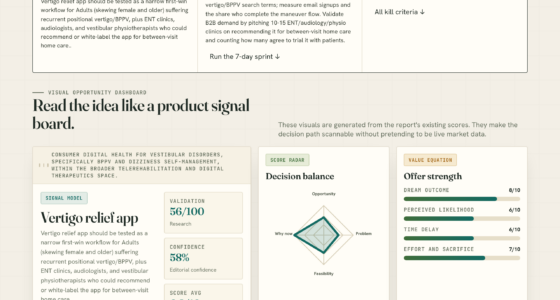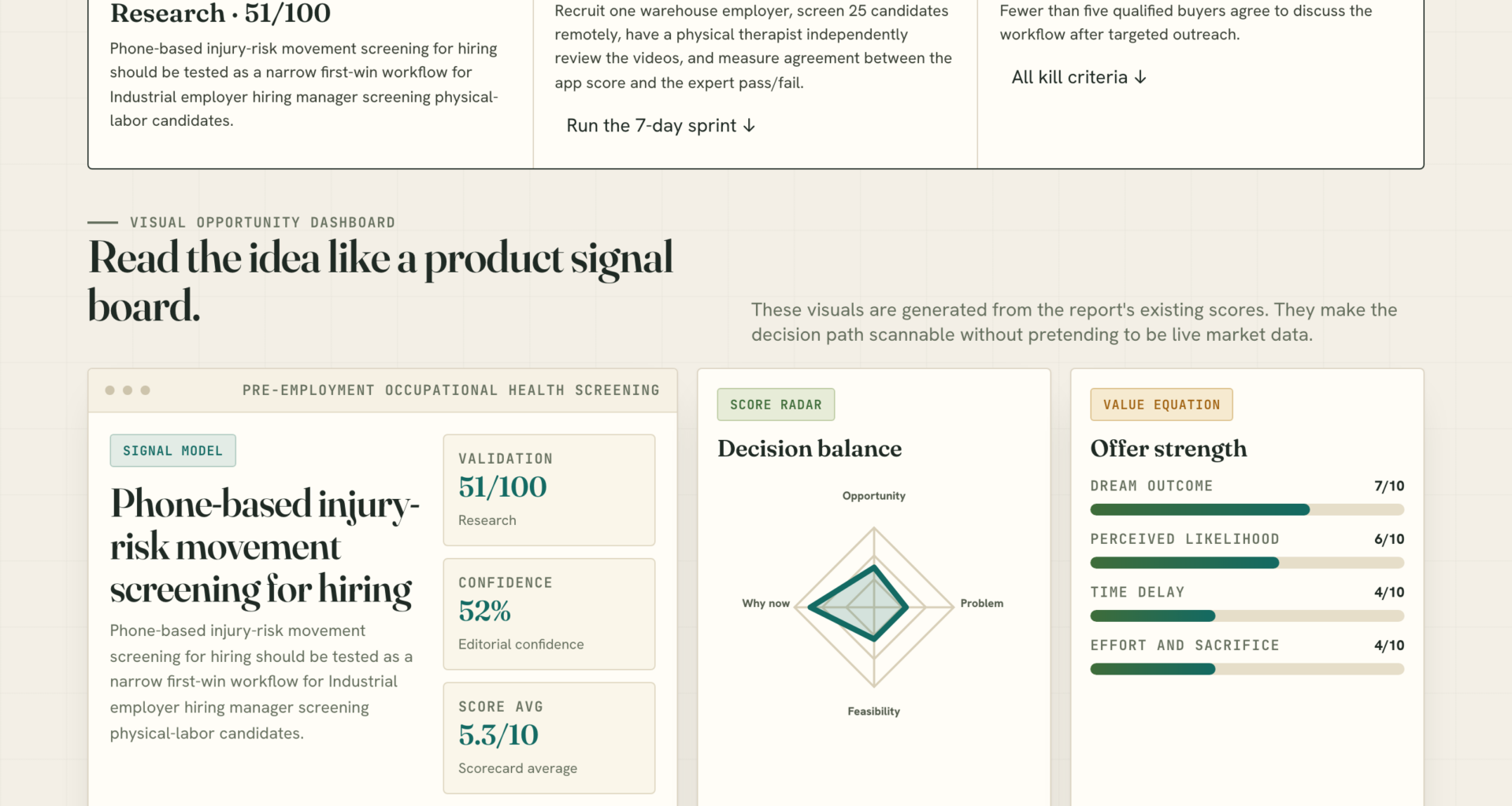

📊 Full opportunity report: Phone-based injury-risk movement screening for hiring on IdeaNavigator AI — validation score, market gap, and execution plan.

Get the latest gadgets delivered free with Prime
- Fast, free delivery on millions of items
- Prime Video, Amazon Music and more included
- Member-only deals all year
TL;DR
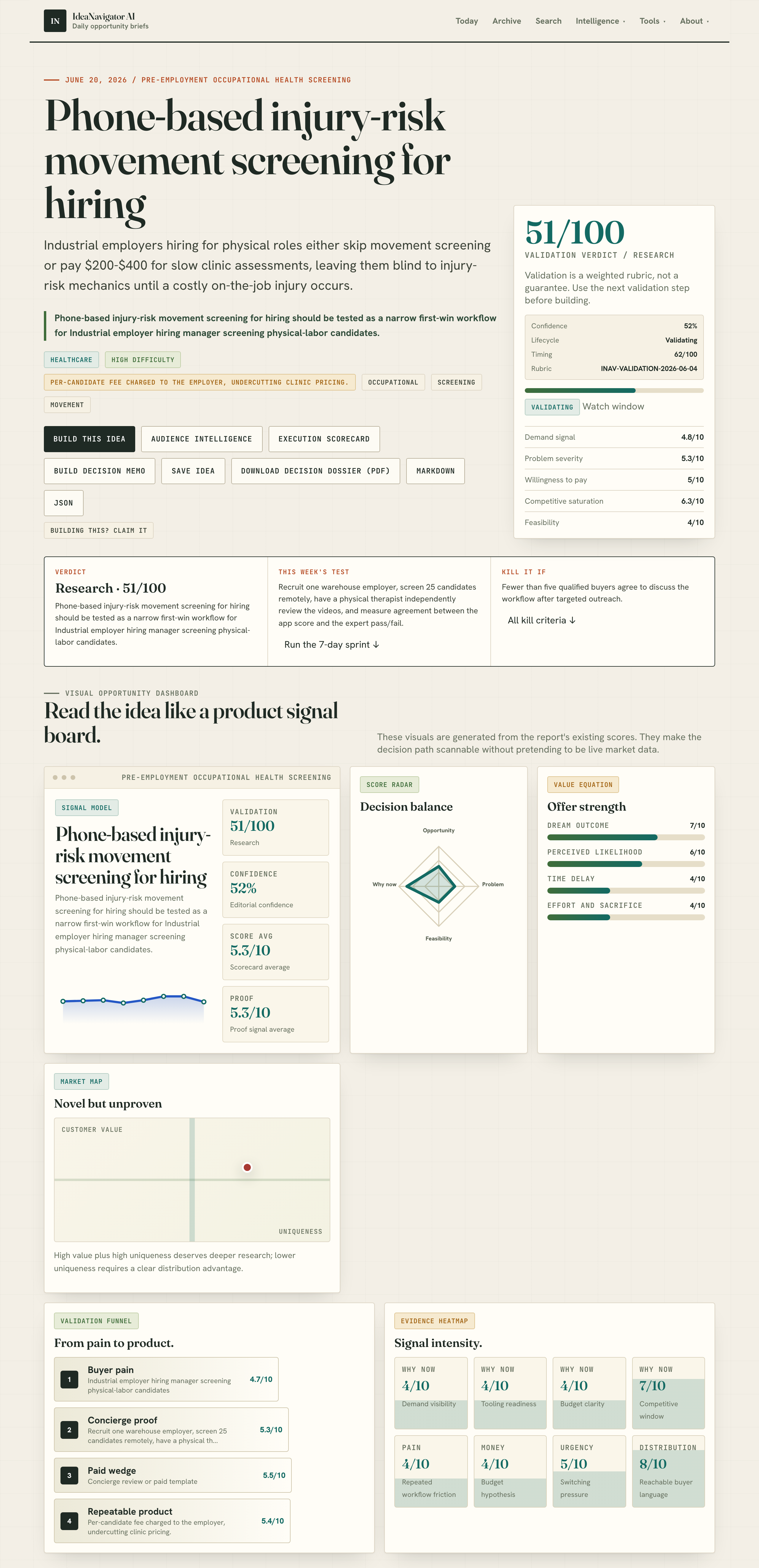
A new phone-based movement screening tool is being tested for industrial hiring, enabling remote assessment of injury risk. It could lower costs and prevent on-the-job injuries.
A pilot program is testing a phone-based movement screening system designed for remote pre-employment injury risk assessment of physical-labor candidates in industrial workplaces.
The system utilizes smartphone cameras and pose estimation technology to guide candidates through 5-7 specific movements, such as squats and lifts, which are then scored against occupational benchmarks. This approach aims to deliver a pass/fail risk assessment within 24 hours at a cost of approximately $30-50 per candidate, significantly lower than traditional clinic assessments costing $200-$400.
According to sources involved in the project, the screening is intended to help employers identify injury-prone mechanics early in the hiring process, potentially reducing costly on-the-job injuries and associated workers’ compensation claims. The pilot involves screening 25 candidates for a warehouse employer, with independent review by a physical therapist to validate the app’s scoring accuracy.
Potential Impact on Industrial Hiring and Injury Prevention
If successful, this remote movement screening could transform how industrial employers evaluate physical readiness, reducing reliance on slow, costly clinic assessments. Early injury risk detection could lower workplace injuries, improve worker safety, and decrease insurance costs. The approach also offers scalability, enabling screening of large candidate pools efficiently.
As an affiliate, we earn on qualifying purchases.
Growing Need for Pre-Employment Injury Screening in Industry
Industrial employers face rising workers’ compensation costs and increased safety regulations, prompting interest in early injury risk detection. Traditional assessments are often expensive and time-consuming, leading many companies to skip or delay screening. Advances in smartphone camera technology and pose estimation algorithms now make remote, video-based assessments feasible, opening new opportunities for scalable pre-employment screening.
Previous efforts focused on in-person evaluations or expensive clinic assessments. The current development aims to leverage existing mobile devices to provide quick, affordable, and reliable injury risk scores, aligning with industry needs for efficient onboarding processes.
“This phone-based screening has the potential to significantly reduce injury risk and associated costs if validated properly.”
— an anonymous researcher
movement screening for injury risk
As an affiliate, we earn on qualifying purchases.
As an affiliate, we earn on qualifying purchases.
Validation and Reliability of Phone-Based Movement Screening
It is not yet confirmed how accurately the app’s risk scores will align with expert assessments or predict actual injuries. The ongoing pilot will provide initial validation data, but broader adoption depends on demonstrating consistent reliability across diverse candidates and settings.
As an affiliate, we earn on qualifying purchases.
Next Steps in Pilot Testing and Validation Process
The pilot will continue with screening 25 candidates, with independent physical therapist review to assess agreement. If results are promising, the developers plan to expand testing to more employers and refine the algorithm. Further validation studies will be necessary before wider industry adoption.
industrial worker injury screening
As an affiliate, we earn on qualifying purchases.
As an affiliate, we earn on qualifying purchases.
Key Questions
How does the phone-based screening work?
Candidates perform a series of movements guided by the app on their smartphone, which uses the camera and pose estimation technology to analyze mechanics and generate a risk score.
What are the benefits over traditional assessments?
The system offers faster, cheaper, and remote evaluation, reducing the need for in-person clinic visits and lowering overall screening costs.
Can this screening accurately predict injury risk?
Validation results are still pending; the pilot aims to determine how well the app’s scores correlate with expert assessments and actual injury outcomes.
Will this replace in-person screening entirely?
It is too early to say; initially, it may serve as a supplement or preliminary screening tool, with further validation needed for full replacement.
Who can use this system?
Primarily designed for industrial employers hiring for physically demanding roles, but potential exists for broader occupational health applications.
Source: IdeaNavigator AI
Columbus Day / Indigenous Peoples' Day Picks
long weekend sales
As an affiliate, we earn on qualifying purchases.