
TL;DR

Get the latest gadgets delivered free with Prime
- Fast, free delivery on millions of items
- Prime Video, Amazon Music and more included
- Member-only deals all year
Virtual reality is being explored as a tool to reduce anxiety during MRI scans. While initial reports are promising, scientific evidence is still limited and unproven. The development could impact patient comfort but requires further validation.
Recent pilot studies and anecdotal reports indicate that virtual reality may help reduce anxiety experienced by patients during MRI scans. However, there is currently no conclusive scientific evidence confirming its effectiveness, and research is still in early stages. This development is of interest because if proven effective, VR could improve patient comfort and reduce the need for sedation during MRI procedures.
Multiple small-scale studies and pilot programs have tested the use of virtual reality headsets to distract or calm patients during MRI scans. These efforts are based on the premise that immersive VR experiences can divert attention from the confined, noisy environment of MRI machines, potentially lowering anxiety levels. Some initial reports suggest that patients using VR report feeling less anxious and more relaxed, with anecdotal feedback indicating a positive experience.
Despite these promising reports, no large-scale, peer-reviewed clinical trials have yet confirmed the efficacy of VR in this context. Most existing data come from small sample sizes, pilot studies, or subjective patient feedback, which are not sufficient to establish clinical standards. Experts caution that these early results need to be validated through rigorous research before VR can be recommended as a standard anxiety-reduction tool during MRI procedures.
Manufacturers and healthcare providers are increasingly exploring VR solutions, with some institutions beginning to integrate VR headsets into their MRI protocols on a trial basis. However, the technology’s safety, long-term effectiveness, and cost-benefit ratio remain to be fully assessed, and regulatory approval processes are still underway.
Virtual Reality for MRI Anxiety: Promising but Unproven
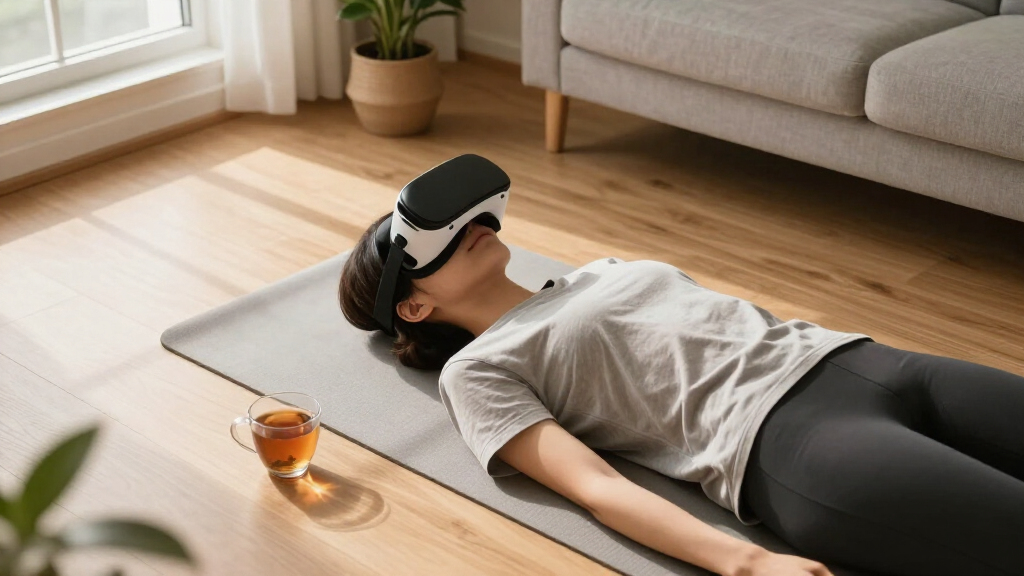
Immersive VR headsets are being tested as a distraction tool to calm patients inside the confined, noisy bore of an MRI scanner. Early reports are encouraging — but no large-scale, peer-reviewed clinical trial has yet confirmed that virtual reality reliably reduces MRI-related anxiety.
If Proven, VR Could Reshape the MRI Patient Experience
Reduced Anxiety & Claustrophobia
Immersive environments divert attention away from the scanner’s confined, noisy setting — particularly valuable for pediatric patients and those needing frequent scans.
Less Sedation & Anesthesia
Historically, MRI anxiety has been managed with sedatives, which carry risks and logistical burdens. A non-pharmacological alternative could be safer and more accessible.
Fewer Cancellations, Smoother Scans
Calmer patients mean fewer aborted scans, fewer rebookings, and more efficient imaging workflows — but only if robust evidence emerges to justify wide adoption.
What We Know vs. What Remains Unproven
Conclusive Efficacy
No large, controlled trials have confirmed a statistically significant reduction in MRI anxiety across diverse patient populations. Most data come from small samples and subjective feedback.
Safety & Regulation
Long-term effectiveness, headset comfort, motion sickness, MRI equipment interference, and cost-benefit ratios remain unassessed. Regulatory approval processes are still underway.
Pilot Signals
Small pilot programs and anecdotal reports suggest patients feel less anxious and more relaxed with VR. Tech companies and medical centers are collaborating on clinical testing.
VR vs. Conventional Anxiety Management for MRI
| Criterion | Sedation / Anesthesia | Music & Relaxation | Virtual Reality |
|---|---|---|---|
| Immersiveness of distraction | ✗ n/a (pharmacological) | ~ Moderate | ✓ High — fully immersive environments |
| Risk of side effects | ✗ Significant — sedation risks | ✓ Minimal | ~ Possible — motion sickness, discomfort |
| Equipment compatibility with MRI | ✓ Established | ✓ Established | ~ Under assessment |
| Scientific evidence base | ✓ Robust | ~ Growing | ✗ Preliminary only |
| Suitable for all patients | ~ Case-by-case | ✓ Broadly | ✗ Exclusions — epilepsy, severe motion sickness |
Next Steps From Pilot Programs to Clinical Standard
Continued Pilots
Clinics keep trialing MR-compatible headsets; developers refine hardware and software for medical use.
Randomized Trials
Researchers plan larger RCTs to systematically evaluate efficacy, safety, and cost-effectiveness.
Peer Review
Peer-reviewed publications are expected in the coming months, clarifying VR’s actual role.
Regulatory Review
Agencies may issue guidelines or approvals in the coming years, based on accumulated data.
Possible Adoption
If validated, VR could enter standard MRI anxiety protocols as a non-drug alternative.
What Clinicians and Patients Are Asking
Can VR replace sedation for MRI scans?
Not yet. There is no conclusive evidence supporting VR as a sedation replacement; most studies are preliminary, and more research is needed before it can be recommended.
What are the potential risks of VR during MRI?
Possible risks include motion sickness, headset discomfort, or interference with MRI equipment. Safety assessments are ongoing, and mitigation protocols are in development.
How soon might VR become a standard option?
Uncertain. Wide adoption depends on rigorous trial outcomes, regulatory approval, and demonstrated cost-effectiveness — a process that could take several years.
Is VR suitable for all MRI patients?
Not necessarily. Patients with severe motion sickness or epilepsy may not be suitable candidates. Further research will clarify which groups benefit most.
How does VR compare to music therapy or relaxation techniques?
VR offers a more immersive distraction than conventional non-pharmacological methods, but its relative effectiveness must still be established through comparative studies.
Why isn’t VR recommended today?
Because current data rest on small samples and subjective feedback — insufficient to set clinical standards. Experts urge rigorous validation before routine use.
Potential Impact of VR on MRI Patient Experience
If proven effective, virtual reality could significantly improve the patient experience during MRI scans by reducing anxiety and claustrophobia. This could lead to fewer cancellations, less need for sedation or anesthesia, and overall smoother imaging procedures. Such benefits would be particularly valuable for pediatric patients, individuals with severe anxiety, or those requiring frequent scans. However, without robust evidence, the clinical community remains cautious about adopting VR widely, emphasizing the need for further research to validate initial findings.
As an affiliate, we earn on qualifying purchases.
Early Research and Growing Interest in VR for Medical Anxiety
The use of virtual reality in healthcare has expanded from training and therapy to patient comfort measures. In the context of MRI scans, the concept of using VR as a distraction or calming tool has gained traction over the past few years, driven by advances in immersive technology and a desire to improve patient-centered care. Several small studies and pilot projects have reported positive subjective feedback, but the evidence remains limited in scope and scale.
Historically, managing MRI anxiety has relied on sedatives, which carry risks and logistical challenges. VR offers a non-pharmacological alternative that could be safer and more accessible if proven effective. Nonetheless, the scientific community has yet to reach consensus, and regulatory agencies have not endorsed VR as a standard intervention for this purpose.
Recent developments include collaborations between tech companies and medical centers to test VR headsets in clinical settings, but comprehensive data and peer-reviewed publications are still pending. The current landscape reflects cautious optimism but underscores the need for more rigorous research.
As an affiliate, we earn on qualifying purchases.
Unproven Effectiveness and Need for Rigorous Trials
It is not yet confirmed whether virtual reality provides a statistically significant reduction in MRI anxiety across diverse patient populations. The current evidence is limited to small-scale, preliminary studies, and large, controlled trials are still needed to establish efficacy, safety, and cost-effectiveness. Regulatory approval processes are also pending, and long-term impacts are unknown.
As an affiliate, we earn on qualifying purchases.
Next Steps for Validation and Adoption of VR in MRI Settings
Researchers are planning larger, randomized controlled trials to evaluate VR’s effectiveness systematically. Meanwhile, some clinics will continue pilot programs, and technology developers are working to refine VR hardware and software for medical use. Regulatory agencies are expected to review existing data and may issue guidelines or approvals in the coming years. The coming months will likely see increased publication of peer-reviewed studies that clarify VR’s role in managing MRI anxiety.
medical VR headsets for anxiety reduction
As an affiliate, we earn on qualifying purchases.
As an affiliate, we earn on qualifying purchases.
Key Questions
Can virtual reality replace sedation for MRI scans?
Currently, there is no conclusive evidence to support VR as a replacement for sedation. Most studies are preliminary, and more research is needed before VR can be recommended as an alternative.
What are the potential risks of using VR during MRI?
Possible risks include motion sickness, discomfort from wearing headsets, or interference with MRI equipment. Safety assessments are ongoing, and protocols are being developed to mitigate these risks.
How soon might VR become a standard option for MRI anxiety management?
It is uncertain. Widespread adoption depends on the outcomes of upcoming rigorous trials, regulatory approval, and demonstration of cost-effectiveness, which could take several years.
Is VR suitable for all patients undergoing MRI?
Not necessarily. Patients with certain conditions, such as severe motion sickness or epilepsy, may not be suitable candidates. Further research will clarify which patient groups benefit most.
How does VR compare to other non-pharmacological anxiety interventions?
Compared to methods like music therapy or relaxation techniques, VR offers a more immersive distraction. However, its relative effectiveness remains to be established through comparative studies.
Source: rss
Halloween Picks
halloween
As an affiliate, we earn on qualifying purchases.