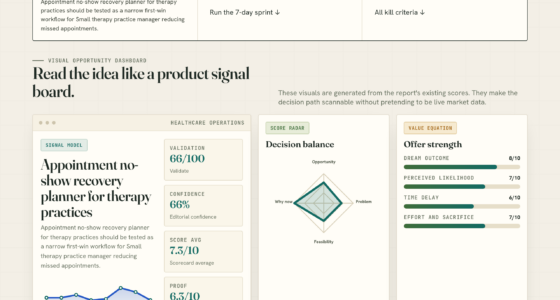

📊 Full opportunity report: Making Hospital Chaplaincy Operations More Efficient And Effective on IdeaNavigator AI — validation score, market gap, and execution plan.

Get the latest gadgets delivered free with Prime
- Fast, free delivery on millions of items
- Prime Video, Amazon Music and more included
- Member-only deals all year
TL;DR
Hospital chaplaincy departments are trialing new software to digitize scheduling and visit logging. This aims to reduce administrative workload and enhance documentation, responding to healthcare’s digital shift.
A new operations software for hospital chaplaincy teams is being tested at a mid-sized hospital to improve scheduling and documentation workflows, addressing longstanding reliance on manual and paper-based processes.
The software pilot targets two core workflows: automated rotation scheduling with real-time alerts for coverage gaps, and structured visit logging that captures details such as spiritual distress levels, family decision-makers, and follow-up needs. The goal is to replace manual methods like handwritten notebooks and group texts, which currently dominate chaplaincy operations.
Developed as a minimal viable product (MVP), the initial version aims to prove reliability in scheduling and visit recording before adding features like religious matching and accreditation reporting. The project is being led by a chaplaincy director at a mid-sized hospital, with plans to recruit two more hospitals for validation through a free workflow audit and pilot testing. The estimated annual SaaS license fee ranges from $8,000 to $15,000 per hospital, with additional integration costs.
Potential Impact on Hospital Spiritual Care Operations
This initiative could modernize hospital chaplaincy departments, significantly reducing administrative hours spent on manual scheduling and record-keeping. By digitizing these workflows, hospitals can ensure more accurate documentation needed for accreditation and compliance, while freeing chaplaincy staff to focus more on patient care. The project reflects a broader trend of healthcare digitization, with chaplaincy remaining one of the last clinical teams to operate largely on paper and informal communication methods.
hospital chaplaincy scheduling software
As an affiliate, we earn on qualifying purchases.
As an affiliate, we earn on qualifying purchases.
Current Challenges in Hospital Chaplaincy Management
Hospital chaplaincy departments traditionally rely on on-call rotations managed via group texts, handwritten visit notes, and manual report compilation for accreditation purposes. Despite the increasing digitization of healthcare, spiritual care teams have lagged behind, often resulting in inefficient workflows and inconsistent documentation.
Healthcare accreditation bodies now require documented spiritual care, adding pressure for chaplaincy teams to adopt more systematic record-keeping. The pilot project aims to address these gaps by introducing specialized operations software tailored to their unique workflows, which have not been significantly modernized in recent years.
“Digitizing chaplaincy workflows can reduce administrative burdens and improve compliance with accreditation standards.”
— an anonymous researcher
digital visit logging system for hospitals
As an affiliate, we earn on qualifying purchases.
As an affiliate, we earn on qualifying purchases.
Uncertainties About Implementation and Adoption
It is not yet clear how quickly chaplaincy departments will adopt the new software at scale, or whether the pilot will demonstrate enough efficiency gains to justify wider deployment. Additionally, integration with existing health record systems and staff training requirements remain to be fully assessed. Further results from the pilot are needed to confirm these benefits and address potential technical or operational challenges.
healthcare staff workflow management tools
As an affiliate, we earn on qualifying purchases.
As an affiliate, we earn on qualifying purchases.
Next Steps for Validation and Broader Deployment
The participating hospitals will complete pilot testing over the coming months, measuring reductions in administrative hours and improvements in visit-log accuracy. Success metrics will include same-day visit documentation rates and user feedback. If results are positive, the developers plan to refine the platform and prepare for broader rollout across more hospital systems, alongside efforts to integrate with electronic health records (EHR) platforms.
hospital spiritual care documentation software
As an affiliate, we earn on qualifying purchases.
As an affiliate, we earn on qualifying purchases.
Key Questions
How will the software improve chaplaincy workflows?
The software automates rotation scheduling with real-time alerts and provides structured visit logging, replacing manual, paper-based methods with digital records that are easier to access and audit.
What are the costs associated with adopting this software?
The estimated annual SaaS license fee ranges from $8,000 to $15,000 per hospital, with additional charges for integration with existing health record systems.
When will broader adoption of the software occur?
Following successful pilot results, developers plan to expand deployment over the next year, with ongoing refinement based on user feedback and technical assessments.
Will this software replace existing manual processes entirely?
The initial goal is to supplement and gradually replace manual workflows, focusing on automation and structured data entry to improve efficiency and compliance.
What challenges might hospitals face in implementing this software?
Potential challenges include integrating with existing electronic health records, staff training, and ensuring user adoption across different shifts and teams.
Source: IdeaNavigator AI
Halloween Picks
halloween
As an affiliate, we earn on qualifying purchases.