
📊 Full opportunity report: Where GLP-1 Supply And Cash-Pay Price Data Come Together on IdeaNavigator AI — validation score, market gap, and execution plan.

Get the latest gadgets delivered free with Prime
- Fast, free delivery on millions of items
- Prime Video, Amazon Music and more included
- Member-only deals all year
TL;DR
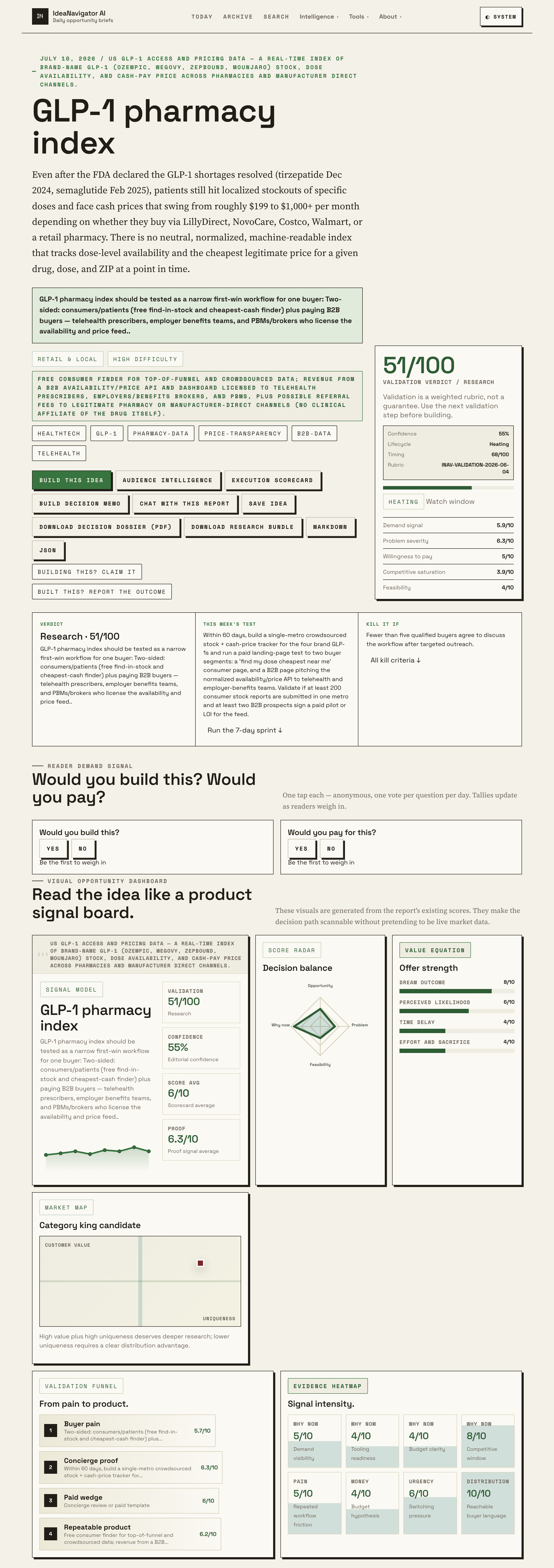
A proposed GLP-1 pharmacy index would bring dose-level stock reports and cash prices from multiple channels into one searchable tool. The concept remains a business proposal; no launch, buyer commitments or measured demand are confirmed.
IdeaNavigator AI has proposed a pharmacy index that would let consumers search for brand-name GLP-1 doses in stock and cash prices by ZIP code, while licensing the same data to telehealth providers, employers and pharmacy-benefit intermediaries. The proposal addresses fragmented supply and pricing after major GLP-1 drugs came off federal shortage lists, but there is no confirmation that the index has launched or that buyers have signed on.
The planned consumer tool would cover four brands: Ozempic, Wegovy, Zepbound and Mounjaro. A user would select a drug, dose and location to compare reported availability and prices across manufacturer-direct channels, selected retailers and retail pharmacies. IdeaNavigator AI’s proposal cites cash prices ranging from roughly $199 to more than $1,000 per month, depending on product and purchase channel. It presents that range as an approximate market observation, not a live or independently verified price comparison.
For an initial version, IdeaNavigator AI proposes combining crowdsourced stock reports with normalized public pricing from LillyDirect, NovoCare, Costco, Walmart and a GoodRx-style price layer. The proposal says dose-level alerts would notify users when availability changes. It also suggests offering the data through an API or dashboard to telehealth prescribers, employer-benefits teams, brokers and pharmacy benefit managers.
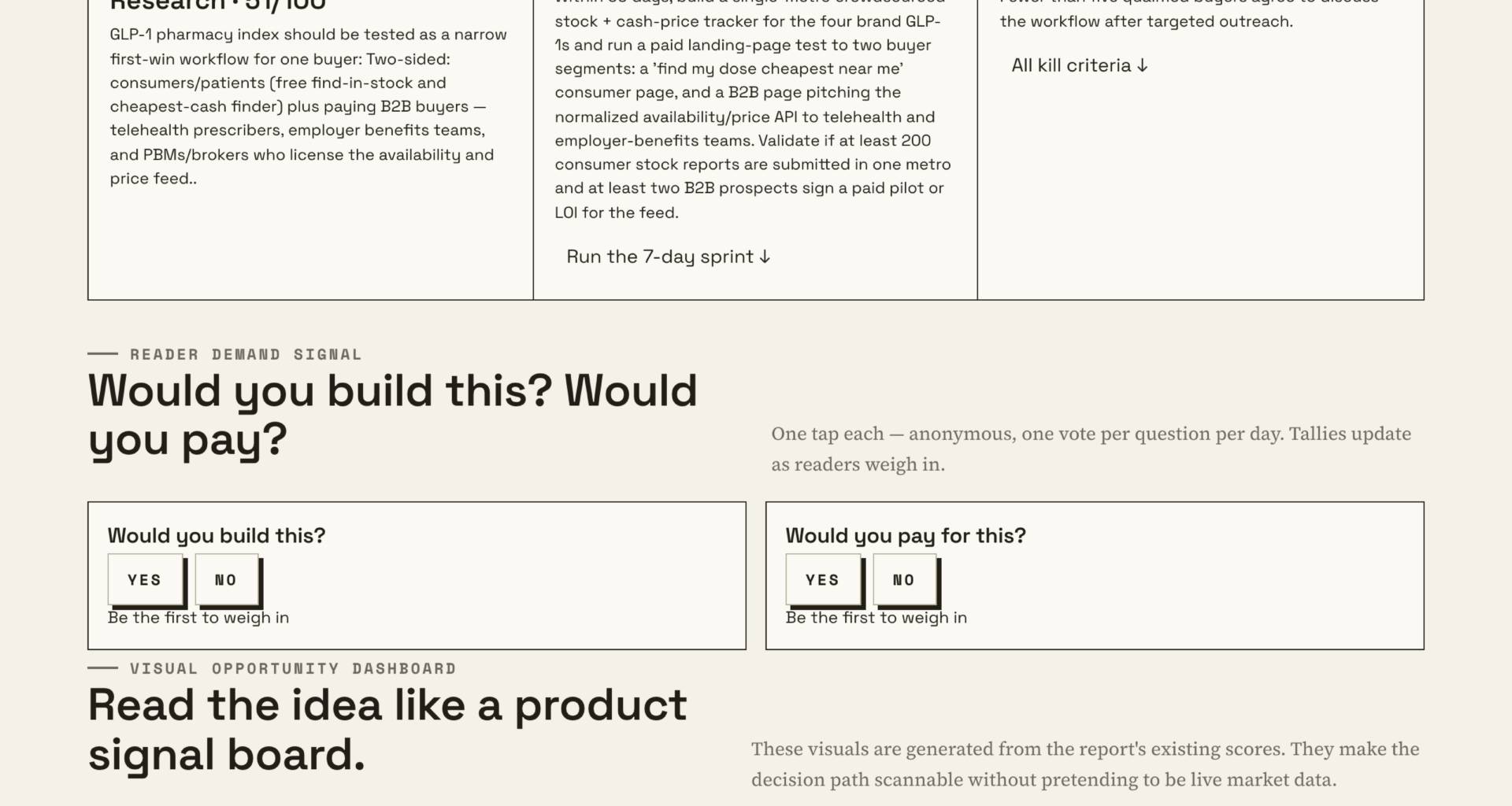
The proposal sets out a 60-day validation test in one metro area, with targets of at least 200 consumer stock reports and at least two paid pilots or letters of intent from business prospects. These are proposed success thresholds; IdeaNavigator AI does not report that the test has begun, reached those thresholds or produced paying customers.
The Shift From Shortages to Fragmented Access
A searchable index could address a practical gap for patients: a drug may no longer be listed as nationally scarce while a specific dose remains difficult to find locally. A consolidated view could reduce the need to check several pharmacy and manufacturer websites separately, while making it easier to compare cash prices for the same drug and dose.
The business case depends on whether the data can be kept accurate and useful. IdeaNavigator AI’s proposal says employers report GLP-1 drugs account for about 20% of pharmacy spending, but it provides no survey, date range or methodology for that figure. If accurate for a given employer group, price and availability data could help benefits teams and prescribing services understand access options and costs. The index itself would not set prices or guarantee that a listed dose is available when a patient arrives.
For consumers, the distinction between an observed price and an eligible price would matter. Cash programs may have product, dose, location or other conditions. A comparison tool would need to display those terms and update listings often enough that its results do not mislead people making time-sensitive decisions.
How GLP-1 Access Channels Expanded
IdeaNavigator AI’s proposal describes a market change following federal shortage-list decisions: the FDA declared tirzepatide shortages resolved in December 2024 and semaglutide shortages resolved in February 2025. Those decisions did not establish that every pharmacy had every dose available. Local stock reports can differ by location and change over time.
The proposal says consumers encountered multiple routes to cash-pay access, including manufacturer-direct programs and retail options. It also points to the launch of the TrumpRx portal in February 2026. Together, these channels create a comparison problem: prices may be published in different formats, while availability may be specific to a product, dose and location.
IdeaNavigator AI frames the index as a narrow initial workflow rather than a general health platform: a free consumer finder would attract users and stock reports, while B2B licensing would be tested with one or two design partners. The plan names possible customer categories, but reports no agreement with any specific provider, employer, broker or pharmacy benefit manager.
Accuracy and Demand Remain Untested
No operating service or validation results are confirmed. IdeaNavigator AI’s proposal does not identify a launch date, a participating metro, a data collection partner or a buyer that has agreed to a pilot. It also does not specify how frequently pharmacy stock would be checked, how reports would be verified, or how outdated or conflicting submissions would be handled.
The proposal’s approximate $199-to-$1,000-plus price range does not specify the products, doses, eligibility conditions or time period behind each price. It is not clear whether the proposed index could capture all fees and restrictions or compare offers on a consistent basis. The proposal does not describe how it would address privacy, data-use permissions or referral relationships if it earns fees from listed channels.
A Metro Pilot Would Test the Model
IdeaNavigator AI describes a single-metro, 60-day test combining consumer stock reports with public cash-price data for the four named brands. The plan would also test separate landing pages: one aimed at consumers searching for a low-cost dose nearby, and another offering the availability and price feed to telehealth and employer-benefits buyers.
The proposal sets targets of 200 consumer reports and two paid pilots or letters of intent. Whether those targets are met, whether the information proves current enough to support decisions, and whether business buyers will pay for the feed remain open questions.
Source: IdeaNavigator AI
Key Questions
Has the GLP-1 pharmacy index launched?
No launch is confirmed. IdeaNavigator AI describes a proposed product and a plan to test it in one metro area.
What would the index show?
It would aim to show cash prices and reported dose availability by drug and ZIP code for Ozempic, Wegovy, Zepbound and Mounjaro across selected pharmacy and manufacturer-direct channels.
Would a listing guarantee a dose is in stock?
No. The proposal describes public pricing and crowdsourced stock reports. It does not say listings would guarantee availability at the time a patient contacts or visits a pharmacy.
Who might pay for the data?
Potential customers named in the proposal include telehealth prescribers, employers, benefits brokers and pharmacy benefit managers. No signed customer or paid pilot is confirmed.
Source: IdeaNavigator AI
Fall Picks
fall essentials
As an affiliate, we earn on qualifying purchases.