
📊 Full opportunity report: How To Handle Paperwork With Scanning In A Small Organization on IdeaNavigator AI — validation score, market gap, and execution plan.
TL;DR
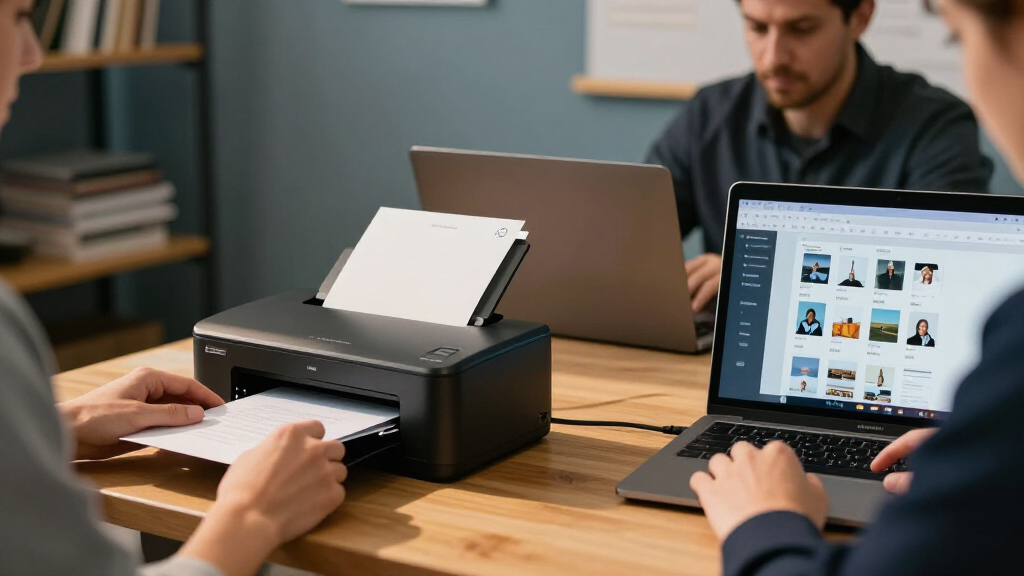
IdeaNavigator AI has outlined a proposed scanning workflow for small nonprofits, clinics and law offices: photograph paper documents, use OCR to classify and name them, then save searchable PDFs in a shared folder. The proposal recommends a one-week pilot with five offices, but no pilot results or product performance data are provided.
IdeaNavigator AI has proposed testing an automated scanning and filing workflow for small nonprofits, clinics and law offices, with the aim of turning photographed paperwork into classified, searchable PDFs. The proposal describes a potential product and a pilot plan, not a launched service or a demonstrated result.
According to IdeaNavigator AI’s proposal, the suggested workflow would let a staff member photograph a stack of documents with a phone. Optical character recognition (OCR) would read the pages, while software would suggest a document category and filename—for example, an invoice labeled with its date and vendor—and save the resulting PDF in a shared folder. The proposal targets offices that handle records such as intake forms, invoices and client or patient paperwork.
IdeaNavigator AI describes the problem as a combination of accumulated paper files and scanner apps that produce images without useful names or organization. Its proposed approach uses on-device or API-based OCR and layout-aware models to identify document types and fields. The proposal provides no accuracy figures, testing results, or evidence that a particular system already performs these tasks reliably for the intended offices.
For validation, IdeaNavigator AI recommends a one-week pilot across five small offices, with each office scanning a real backlog of 200 documents. The proposal suggests measuring the rate of correct automatic classifications and whether offices would pay a per-seat monthly subscription. It also describes pricing with a page-volume cap and charges for extra pages, but specifies no price, pilot participants or schedule.
Reducing Manual Filing Work
If a system can classify and name documents accurately, it could make older records easier to locate and reduce the time staff spend on repetitive filing. That may matter especially in small organizations, where paperwork can be handled by office managers without dedicated IT staff. The proposal’s practical test is not simply whether pages can be scanned, but whether the files are correctly labeled and searchable enough to fit existing work.
There are trade-offs alongside that potential benefit. Incorrect classification or extracted details could send a document to the wrong folder or create a misleading filename, leaving staff to check and correct results. Organizations handling sensitive records would also need to understand how images and extracted text are stored, who can access them, and whether processing occurs on a device or through an external service. IdeaNavigator AI’s proposal does not answer those operational and privacy questions.
document scanner with OCR for small offices
As an affiliate, we earn on qualifying purchases.
As an affiliate, we earn on qualifying purchases.
From Paper Stacks to Searchable Files
IdeaNavigator AI’s proposal targets a defined administrative problem: small offices may keep paper records in filing cabinets, while basic scanning tools often preserve a document as an image without organizing its contents. The proposed product combines familiar steps—phone photography and PDF storage—with OCR and automated classification to reduce the work between scanning and retrieval.
The proposal cites lower-cost OCR and layout-aware models as reasons to test the workflow now. That is the rationale it gives for exploring the product, not confirmation of its accuracy or affordability in practice. Its suggested pilot is intended to gather evidence from actual document backlogs before deciding whether the approach is useful enough to sell as a subscription.
As an affiliate, we earn on qualifying purchases.
Accuracy, Privacy and Adoption
IdeaNavigator AI reports no pilot outcomes, so the classification rate, time saved and willingness to pay remain unknown. Its proposal does not explain how errors would be reviewed, how well the system handles varied or handwritten forms, or what happens when it cannot identify a document confidently.
The proposal also does not specify security and privacy safeguards, including retention periods, access controls and handling of sensitive nonprofit, medical or legal records. It identifies no product name, launch date, subscription price, technical provider or participating offices. The suggested five-office test is a plan, not evidence that a pilot has started or been completed.
document classification software for small organizations
As an affiliate, we earn on qualifying purchases.
As an affiliate, we earn on qualifying purchases.
Evidence From a Five-Office Pilot
IdeaNavigator AI proposes recruiting five small offices and having each scan 200 documents during a one-week trial. A useful report would disclose how many documents were classified correctly, how often staff had to rename or move files, and whether searchable PDFs could be found and used within the offices’ existing processes.
The proposed test would also ask office managers about payment interest and document the suggested per-seat cost, page limits and overage charges. Until those details and results are available, the concept remains an unvalidated product opportunity rather than a proven way to manage small-office records.
Source: IdeaNavigator AI proposal
office document management scanner
As an affiliate, we earn on qualifying purchases.
As an affiliate, we earn on qualifying purchases.
Key Questions
Is this scanning product available now?
The IdeaNavigator AI proposal describes a product workflow and validation plan. It does not identify a launched product or provide availability details.
How would the proposed workflow handle documents?
According to IdeaNavigator AI’s proposal, a user would photograph documents with a phone. OCR and classification software would suggest a document type and filename, then save searchable PDFs in a shared folder.
Has the system’s accuracy been tested?
IdeaNavigator AI provides no test results. Its proposal recommends a one-week pilot in five offices, with 200 documents scanned at each office, to measure correct classification and willingness to pay.
What would the subscription cost?
IdeaNavigator AI states no price. Its suggested model is a monthly per-seat subscription with a page limit and additional charges for pages above that cap.
What should offices check before using automated filing?
They would need to assess classification errors, review procedures, data storage, access controls and the handling of sensitive records. IdeaNavigator AI’s proposal does not specify safeguards or technical terms.
Source: IdeaNavigator AI