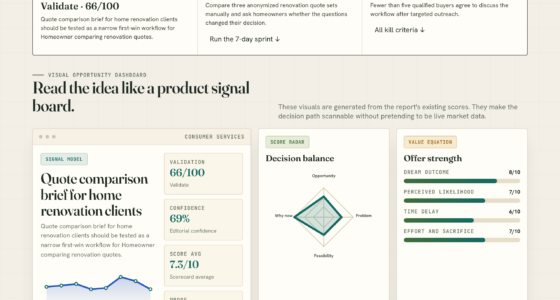
📊 Full opportunity report: What Every Buyer Should Know About Pre-Demo Condition For Old Homes on IdeaNavigator AI — validation score, market gap, and execution plan.

Get the latest gadgets delivered free — and shop member deals
- Fast, free delivery on millions of items
- Access to Prime Big Deal Days deals on October 6–7
- Prime Video, Amazon Music and more included
TL;DR
A new service offering pre-demo condition verdicts aims to help DIY homebuyers assess risks before demolition. It uses guided phone scans and mail-in kits to predict hidden issues, reducing unexpected costs. This approach is gaining interest amid aging housing stock and rising renovation risks.
A new service offering pre-demo condition assessments for pre-1980 homes is now being tested to help DIY buyers identify potential hidden hazards before demolition. This development responds to the rising risks associated with aging housing stock and aims to provide more accurate, remote evaluations that can prevent costly surprises during renovation projects. The approach combines guided phone scans and mail-in testing kits to deliver wall-by-wall predictions of hidden materials and associated costs.
The core offering involves a fixed-fee verdict for each house, based on remote assessments of key areas such as the electrical panel, crawlspace, and supply lines. Buyers can also send in samples from suspect materials like insulation or pipes for laboratory analysis. The results aim to predict the presence of hazards such as asbestos, cloth-wrapped wiring, or galvanized pipes, which often surface only after walls are opened. The goal is to give buyers a clear understanding of potential costs and delays before they commit to demolition.
This service is targeted at the growing segment of DIY millennial buyers who are renovating older homes on weekends and limited budgets. It seeks to reduce the uncertainty that often leads to unexpected expenses, which can escalate to tens of thousands of dollars once hazards are uncovered during demo. By providing early, wall-by-wall insights, the service hopes to empower buyers to make more informed buy-or-walk decisions and avoid costly overruns.
Market validation involves selling around twenty verdicts to early customers and comparing the predictions against actual conditions exposed during demolition. Success will be measured by the accuracy of predictions and the willingness of buyers to recommend the service. The model also includes an upsell to contractor-matched remediation quotes, creating a revenue stream beyond the initial assessment fee.
Potential Impact on Home Renovation Risk Management
This development could significantly reduce the financial and logistical risks faced by DIY homebuyers of pre-1980 homes. Accurate pre-demo assessments can prevent unexpected hazards like asbestos, lead pipes, or faulty wiring from causing delays and cost overruns. For many buyers, especially those with limited renovation experience, this insight provides peace of mind and more control over their projects. Additionally, the service could reshape how risk assessments are integrated into the home buying and renovation process, especially as older housing stock continues to dominate affordable markets.
asbestos testing kit for home renovation
As an affiliate, we earn on qualifying purchases.
As an affiliate, we earn on qualifying purchases.
Aging Housing Stock and Rising Renovation Challenges
The majority of affordable starter homes in many markets now predate 1980, making hazards like asbestos, galvanized pipes, and cloth-wrapped wiring common issues during renovation. Traditionally, these hazards are only discovered after walls are opened, often leading to costly delays and health risks. Home inspections can identify some issues, but they are limited in scope and cannot reliably predict hidden hazards behind walls. As a result, many buyers face uncertainty and financial overruns once demolition begins.
Recent advances in remote assessment technology, including guided phone scans and mail-in testing kits, aim to address these gaps. These tools allow buyers to evaluate potential hazards without costly, invasive inspections upfront. The concept of pre-demo condition verdicts builds on this trend, offering a more precise, wall-by-wall prediction of what lies beneath the surface before demolition starts.
As an affiliate, we earn on qualifying purchases.
Unanswered Questions About Accuracy and Adoption
It remains unclear how accurate these remote assessments will be compared to traditional invasive inspections, especially for complex hazards like asbestos or lead pipes. The initial pilot involves only a small number of verdicts, and validation results are not yet available. Additionally, questions about the willingness of DIY buyers to pay for these assessments and their trust in remote predictions are still being evaluated. The long-term adoption of this approach depends on its proven reliability and cost-effectiveness.
As an affiliate, we earn on qualifying purchases.
Next Steps for Validation and Market Expansion
The pilot program plans to sell around twenty pre-demo verdicts and compare the predictions with actual conditions exposed during demolition. Results from this comparison will determine the accuracy and reliability of the service. If successful, the company intends to expand the offering to a broader market, potentially integrating more advanced remote testing technologies and partnering with contractors for remediation estimates. Further research will focus on refining the assessment process and demonstrating cost savings for DIY buyers.
home renovation hazard assessment service
As an affiliate, we earn on qualifying purchases.
As an affiliate, we earn on qualifying purchases.
Key Questions
How reliable are remote pre-demo assessments compared to traditional inspections?
Reliability is still being tested through pilot programs. Early results will inform how well remote assessments predict hazards compared to invasive inspections, but definitive conclusions are not yet available.
What hazards can these assessments detect?
They aim to identify hazards like asbestos, galvanized pipes, cloth-wrapped wiring, and suspect materials through guided phone scans and mail-in testing kits.
How much does the service cost?
The assessment is offered at a fixed fee per house, with additional charges for lab testing of samples. Exact pricing details are still being finalized during the pilot phase.
Will this service replace traditional home inspections?
It is designed to complement existing inspections by providing early insights, particularly for hazards hidden behind walls, but it may not fully replace comprehensive invasive inspections for complex or high-value properties.
When will the service be available to the general public?
Following successful pilot validation and refinement, the service plans to expand to broader markets, potentially within the next year, though exact timelines depend on pilot outcomes.
Source: IdeaNavigator AI
Fall Picks
fall essentials
As an affiliate, we earn on qualifying purchases.