🔍 Read the full analysis: Can A Mobile Workstation Handle Your AI Work? 10 Laptops To Explore on ThorstenMeyerAI.com

Get the latest gadgets delivered free with Prime
- Fast, free delivery on millions of items
- Prime Video, Amazon Music and more included
- Member-only deals all year
TL;DR
A buyer’s guide from ThorstenMeyerAI.com compares 10 mobile workstations for AI and other professional workloads, emphasizing that sustained performance, cooling, graphics support and portability matter more than peak specifications alone. The source names three models but does not provide the other seven model names or comparative test results, so its rankings and performance claims cannot be independently verified from the material provided.
ThorstenMeyerAI.com has published a guide to 10 mobile workstations for AI and professional workloads, arguing that buyers should weigh sustained performance, cooling and software compatibility alongside portability. The material names the Lenovo ThinkPad P1 Gen 7, ThinkPad P14s Gen 7 and Dell Precision 7680, but does not identify the other seven laptops or provide test data for the full list.
The guide identifies the ThinkPad P1 Gen 7 as its overall pick for professionals seeking a relatively slim system with dedicated NVIDIA RTX graphics, a topic also covered in AI-powered mobile workstation coverage. It describes the ThinkPad P14s Gen 7 as a compact 14-inch option built around AMD Ryzen AI performance, and the Dell Precision 7680 as a thicker machine aimed at demanding engineering work. These are the source’s recommendations, not independently verified rankings.
Its central buying point is that long-run performance can differ from brief peak speeds. The guide says thinner laptops may reduce performance sooner under sustained load, while roomier chassis can provide more thermal headroom. It recommends looking for extended workload testing rather than relying only on short benchmark runs. No benchmark scores, test conditions or measured throttling figures are included in the supplied material.
The source also highlights professional graphics drivers, displays and connectivity, including features discussed in this guide to OLED touchscreen laptops. It says NVIDIA’s professional RTX graphics and drivers may suit certified CAD and simulation workflows, while OLED panels can improve contrast for creative work but use more power than standard IPS displays. It flags that some thin premium laptops may lack ports such as HDMI or Ethernet, making docks necessary. The guide does not state the configurations, prices or availability of each model.
The 10 picks
- 1
 Dell Precision 7680 16-Inch Workstation Laptop, Intel Core i7-13850HX, NVIDIA…View on Amazon →
- 2
 Dell Precision 7680 Laptop, NVIDIA RTX 2000 Ada 8GB, Intel i7-13850HX, 32GB DDR5View on Amazon →
- 3
 Lenovo ThinkPad P1 Gen 7, w/ Ultra 7, NVIDIA RTX 3000, 16" 2.8K, 32GB RAMView on Amazon →
- 4
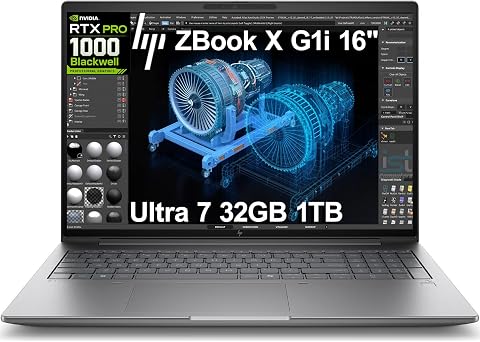 HP ZBook X G1i 16-inch Laptop, Intel Core Ultra 7 265H, NVIDIA RTX PRO 1000 B…View on Amazon →
- 5
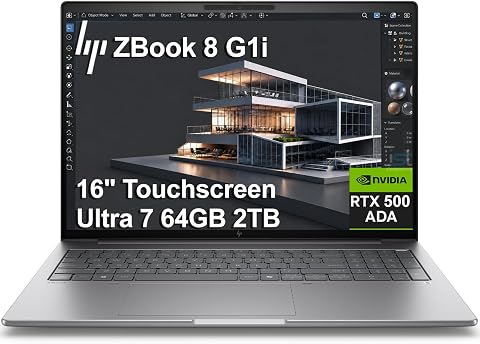 HP ZBook 8 G1i AI Mobile Workstation Laptop (16" FHD+ Touchscreen, Intel Ultr…View on Amazon →
- 6
 HP ZBook 8 G1i AI Mobile Workstation Laptop (16" 4K 120Hz, Intel Ultra 7 265H…View on Amazon →
- 7
 Lenovo ThinkPad P16s Gen 4 16-inch OLED Touchscreen Mobile WorkstationView on Amazon →
- 8
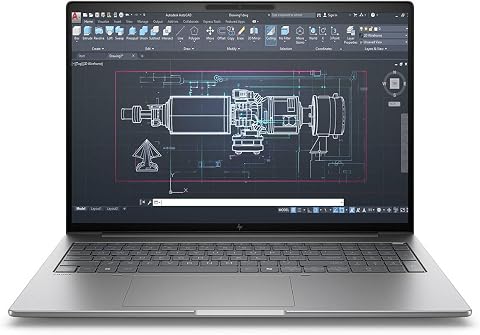 HP ZBook 8 G1i 16" Mobile Workstation – WUXGA – 60 Hz – Intel Core Ultra 7 25…View on Amazon →
- 9
 Lenovo ThinkPad P16s Gen 4 16-Inch Business LaptopView on Amazon →
- 10
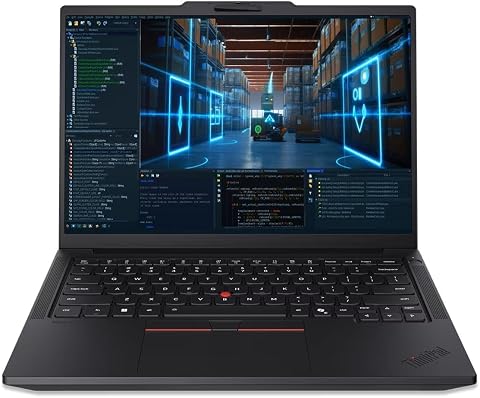 Lenovo ThinkPad P14s Gen 7 Mobile Workstation (2026) – 14" Touch, AMD Ryzen A…View on Amazon →
Choosing for Sustained AI Work
For readers running local AI workloads, the distinction between a laptop that performs well briefly and one that holds performance during a long job can affect project time and usability. The source’s emphasis on cooling, power limits and workload duration is relevant to model inference, data processing and other sustained computing tasks. However, it supplies no AI-specific benchmarks, so it does not establish which listed system is fastest for training or running particular models.
The guide also shows why “AI laptop” is not a single specification category. Buyers may need a professional GPU for certified applications, more memory or graphics capacity for local workloads, or a lighter system for travel. Battery life, thermal performance and portability can conflict; the best fit depends on the software and the amount of work done away from a desk. Readers should check exact configurations and application requirements before treating a general recommendation as a buying decision.
Products Worth Considering

Logitech MX Keys S Combo Wireless Keyboard and Mouse, Graphite

Apple AirPods Pro (2nd Generation) Wireless Earbuds with USB‑C Charging, Up to 2X More Active Noise Cancelling, Transparency Mode, Adaptive

Bose QuietComfort Headphones (2nd Gen), Wireless Over-Ear Noise-Cancelling Headphones, Black
As an affiliate, we earn on qualifying purchases.
The Guide’s Three Named Models
The source frames its recommendations around changes in mobile processors, saying Intel Core Ultra and AMD Ryzen AI chips can improve battery efficiency but may not match the peak multi-core performance of older HX-series processors in heavy rendering. It gives no comparative measurements or details about which processor configurations were tested. Its broader point is that processor generation alone does not establish sustained workload performance.
For its selection method, ThorstenMeyerAI.com says it prioritized extended-load behavior, build quality, serviceability and software compatibility, alongside keyboards, trackpads and webcams. It advises checking whether professional software has certified a laptop’s graphics setup. The supplied article text does not include a complete set of 10 model names, a ranked comparison table, or citations to underlying tests, limiting what can be confirmed about the promised list.
“The Lenovo ThinkPad P1 Gen 7 stands out as the best overall pick for professionals who need a sleek chassis without sacrificing the reliability of dedicated NVIDIA RTX graphics.”
— ThorstenMeyerAI.com guide
Missing Models and Test Evidence
The supplied source material does not name seven of the 10 promised laptops. It also provides no prices, complete hardware configurations, benchmark results, battery-life measurements or details about the testing period. The models’ availability and specifications may vary by market and configuration, but the source does not clarify which versions its recommendations refer to.
Several claims remain editorial assessments rather than demonstrated results in the material provided. That includes the guide’s ranking of the P1 Gen 7, its characterization of the Precision 7680’s thermal advantage, and its statements about professional drivers and newer processor families. It is also unclear how well any of the named laptops handle specific AI tasks, because the article text contains no model-training, inference or memory-capacity comparisons.
Verify Configurations Before Buying
Readers considering a purchase should compare the exact processor, GPU, memory, display and port configuration available to them, then check requirements for their intended AI or professional software. For sustained workloads, seek reviews that report results after extended use and include temperature, power and performance measurements, not just short benchmark scores. Check current prices and availability with manufacturers or retailers, as these details are absent from the source.
A fuller comparison would need to identify all 10 laptops and show how they perform under the same workload and test conditions. Until that information is available, the guide is best treated as a set of three named recommendations and general buying criteria, not a complete, independently substantiated ranking.
Key Questions
Which mobile workstation does the source rank as its best overall pick?
The guide names the Lenovo ThinkPad P1 Gen 7 as its overall pick. That is the source’s assessment; no supporting benchmark data is included in the supplied material.
Which model does the guide suggest for compact use?
It points to the Lenovo ThinkPad P14s Gen 7, describing it as a 14-inch option with AMD Ryzen AI performance. The source does not provide test results for that configuration.
Which named laptop is aimed at demanding engineering work?
The guide recommends the Dell Precision 7680 for heavy engineering workloads that benefit from additional thermal headroom. It gives no measured comparison to other models.
Does the source show that these laptops are fast at AI workloads?
No. The material discusses AI work and processor families but gives no AI-specific benchmarks for training, inference or other tasks. Buyers should check tests that match their intended software and workload.
Why does cooling matter when choosing a workstation laptop?
Cooling can affect how well a laptop maintains performance during long, demanding jobs. The guide says thinner systems may face tighter thermal limits, but it includes no measured results to quantify the difference among its recommendations.
Source: ThorstenMeyerAI.com