You’ll definitely notice a difference with a 120Hz display, especially during fast-paced scrolling, gaming, or animations. It feels smoother and more responsive compared to 60Hz, making everyday use more enjoyable. However, during casual tasks like browsing or texting, the impact is less obvious. If you want a device that performs more fluidly during intense activities, the upgrade is worth it. Keep going to discover more about how these refresh rates really compare.

Get the latest gadgets delivered free with Prime
- Fast, free delivery on millions of items
- Prime Video, Amazon Music and more included
- Member-only deals all year
Key Takeaways
- Higher refresh rates like 120Hz provide smoother animations and transitions, especially noticeable during fast-paced activities.
- The difference between 60Hz and 120Hz is subtle during casual browsing but more apparent in gaming and scrolling.
- Hardware and software optimization influence how well the higher refresh rate benefits your device experience.
- 120Hz consumes more battery power, potentially reducing overall device usage time compared to 60Hz.
- Whether you can tell the difference depends on your usage habits and sensitivity to display smoothness.

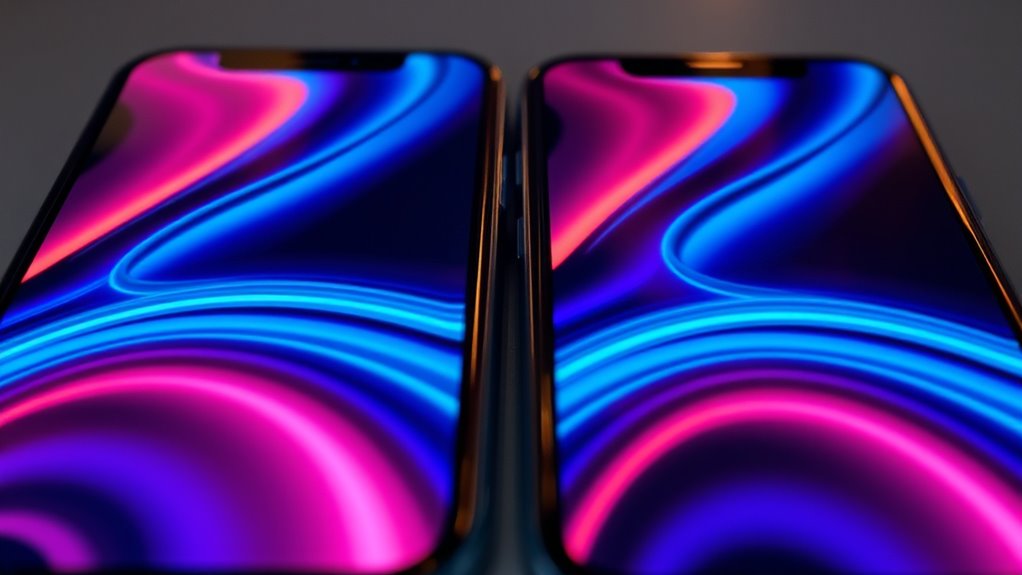
When choosing a smartphone display, you might notice the refresh rate options of 60Hz and 120Hz, but understanding the difference can help you make a better decision. Refresh rate differences directly impact how smooth your screen feels during everyday use and gaming. At 60Hz, the display refreshes 60 times per second, which has been the standard for many years. In contrast, a 120Hz screen refreshes twice as often, offering a noticeably smoother experience. This increased refresh rate makes animations, scrolling, and transitions look more fluid, reducing the choppiness that can occur at lower rates.
Higher refresh rates like 120Hz make screens look smoother and more responsive during daily tasks and gaming.
For general tasks like browsing, texting, or watching videos, the difference between 60Hz and 120Hz might seem subtle. However, when you start gaming or engaging with fast-paced content, the benefits of a higher refresh rate become more apparent. Gaming performance, in particular, benefits from 120Hz displays because they can keep up with the rapid movements and quick reactions required in many modern games. A higher refresh rate reduces motion blur and input lag, providing a more responsive feel, which can give you an edge in competitive scenarios. You’ll notice that actions feel smoother, and the gameplay appears more lifelike.
That said, it’s not just about looks. The hardware inside your phone must support higher refresh rates effectively. If your device’s processor and graphics chip aren’t optimized for 120Hz, you might not see a notably difference in performance. Additionally, some apps and games may not be designed to take full advantage of higher refresh rates, meaning you won’t always experience the smoothness promised by a 120Hz display.
Battery life is another consideration. A higher refresh rate requires more power because the screen updates more frequently. This means your phone might drain its battery faster when using a 120Hz screen compared to a 60Hz one. If battery longevity matters to you, weigh this factor against the benefits of a smoother display.
Ultimately, whether you can truly tell the difference depends on your usage habits. If you’re a gamer or someone who values fluid animations, a 120Hz display can considerably enhance your experience. For casual users, the difference may be less noticeable and might not justify the potential impact on battery life. Knowing how refresh rate differences influence gaming performance and overall usability helps you choose a device that aligns with your priorities. Additionally, understanding the refresh rate technology behind screens can help you make more informed choices when selecting a device.
Frequently Asked Questions
Do Higher Refresh Rates Drain Phone Batteries Faster?
Yes, higher refresh rates can drain your phone’s battery faster because they increase power consumption. When you use a 120Hz display, your device works harder to update the screen more frequently, which uses more energy. However, many phones optimize power consumption with adaptive refresh rates that lower the refresh rate when you’re not actively scrolling or gaming. So, while higher refresh rates impact battery life, smart tech can help mitigate the effect.
Are There Gaming Benefits With 120HZ Displays?
Yes, a 120Hz display boosts your gaming performance by providing enhanced visual smoothness, making gameplay feel more responsive and fluid. You’ll notice quicker reactions and fewer motion artifacts, which can give you an edge in fast-paced games. The higher refresh rate reduces lag, helping you react faster and enjoy a more immersive experience. If you prioritize gaming, a 120Hz screen offers clear benefits over standard 60Hz displays.
Can Older Eyes Perceive 120HZ More Comfortably?
Surprisingly, older eyes might find 120Hz displays more comfortable, thanks to smoother motion reducing eye strain. You’d think the extra clarity would confuse them, but in reality, the increased refresh rate helps lessen flicker and visual discomfort. So, if you’re seeking better visual comfort, especially if your eyes tire easily, upgrading to a higher refresh rate could make a noticeable difference, even if you’re beyond the youthful years.
Is 120HZ Noticeable During Everyday Tasks?
Yes, you’ll notice 120Hz during everyday tasks. The increased refresh rate enhances visual clarity and makes motion look smoother, especially when scrolling through feeds, playing games, or watching videos. You might not catch every detail at first, but the overall experience feels more seamless and responsive. Once you get used to it, 120Hz can markedly improve your daily interactions with your device, making everything feel quicker and more fluid.
Do All Apps Support 120HZ Refresh Rates?
Not all apps support 120Hz refresh rates. You might notice some apps don’t fully utilize the higher display settings due to app compatibility issues. To get the most out of your device, check your display settings regularly, as some apps may default to lower refresh rates. Keep in mind that developers need to optimize their apps for 120Hz to ensure smooth performance across all your favorite applications.
Conclusion
In the end, whether you notice the difference between 120Hz and 60Hz screens depends on your usage. If you’re a gamer or scroll enthusiast, the smoother motion is like flipping a switch to a new level of clarity. But for everyday tasks, it might feel like chasing shadows—nice to have, but not essential. Think of it as upgrading from a bicycle to a sports car; the thrill is real, but not everyone needs it to get by.
Fall Picks
fall essentials
As an affiliate, we earn on qualifying purchases.