
TL;DR

Get the latest gadgets delivered free with Prime
- Fast, free delivery on millions of items
- Prime Video, Amazon Music and more included
- Member-only deals all year
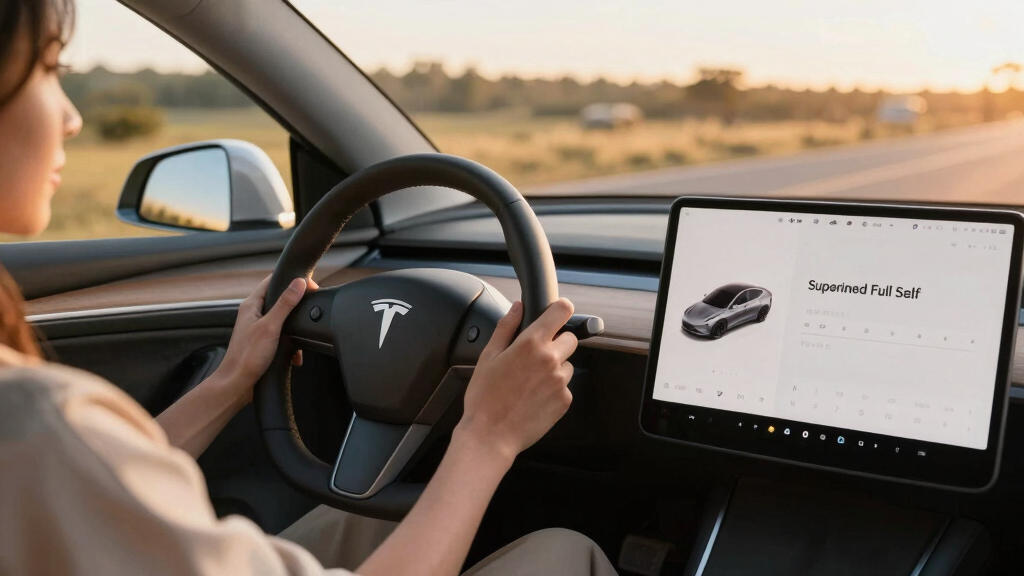
Belgium has approved Tesla’s Level 2++ Supervised Full Self-Driving system for deployment. This follows approvals in several European countries, signaling progress in autonomous vehicle regulation. The system still requires additional testing before full rollout.
Belgium has officially approved Tesla’s Level 2++ Supervised Full Self-Driving (FSD) system for deployment, marking a key regulatory milestone for Tesla’s driver-assist technology in Europe. The approval was signed by the transport minister of Flanders on Wednesday, enabling the system to be tested and eventually offered to consumers in Belgium, pending additional testing.
Following approvals in the Netherlands, Lithuania, Estonia, and Denmark, Belgium becomes the latest European country to authorize Tesla’s FSD (Supervised) system. The approval process involved some remaining tests, but officials indicated that these are unlikely to pose significant hurdles for deployment. Tesla’s FSD (Supervised) is classified as Level 2++, a driver-assist system that requires human oversight at all times, but offers advanced automation features.
The Belgian approval was announced via X (formerly Twitter) by the regional transport minister of Flanders, who confirmed that the system can now be tested on public roads. Tesla still needs to complete specific testing requirements before full consumer rollout, but industry experts consider this a procedural step rather than a technical obstacle. Tesla’s approach involves a supervised system that assists drivers but does not yet qualify as fully autonomous.
Implications for Tesla and European Autonomous Vehicle Regulations
This approval signifies a notable regulatory acceptance of Tesla’s advanced driver-assist system in Europe, potentially paving the way for broader deployment across the continent. It demonstrates that Tesla’s Supervised FSD is progressing through regulatory channels, which could influence future legislation and approval processes for similar technologies. For consumers, this means increased access to semi-autonomous driving features, although full autonomy remains a distant goal. The move also underscores Tesla’s ongoing efforts to refine and expand its autonomous driving capabilities in diverse regulatory environments, which is critical for its global strategy.
Tesla Level 2++ Full Self-Driving system
As an affiliate, we earn on qualifying purchases.
As an affiliate, we earn on qualifying purchases.
European Regulatory Progress and Tesla’s FSD Development
Over the past year, Tesla has gained approval for its FSD (Supervised) system in several European countries, including the Netherlands, Lithuania, Estonia, and Denmark. These approvals follow a pattern of incremental regulatory acceptance, reflecting both Tesla’s technological advancements and the evolving legal landscape for autonomous vehicles in Europe. Tesla’s approach involves a Level 2++ system that requires driver supervision, aligning with current European safety standards. Industry analysts note that Tesla’s data collection and ongoing testing are key factors in meeting regulatory requirements, but widespread deployment still depends on further testing and legislation.
Recent discussions among experts highlight that Tesla’s FSD system, while advanced, is still considered a Level 2++ system that cannot operate fully autonomously without human oversight. There is ongoing debate about whether Tesla’s technology is close to achieving Level 4 autonomy, with some analysts suggesting it is effective in certain conditions but still not fully autonomous in complex environments. Tesla’s data-driven approach and fleet testing are seen as critical to future progress, but regulatory approval remains a cautious process.
“We are committed to working with regulators across Europe to ensure our systems meet safety standards and provide valuable driver assistance.”
— a Tesla spokesperson
Tesla supervised driver-assist features
As an affiliate, we earn on qualifying purchases.
As an affiliate, we earn on qualifying purchases.
Remaining Testing and Deployment Challenges in Belgium
It is not yet clear how long it will take for Tesla to complete all remaining testing requirements in Belgium before full deployment. Details on specific testing protocols and timelines are still emerging, and regulatory approval for commercial use might face additional hurdles. Moreover, the extent of driver supervision required in practice and how the system performs in diverse real-world conditions remain to be seen.
European approved Tesla FSD accessories
As an affiliate, we earn on qualifying purchases.
As an affiliate, we earn on qualifying purchases.
Next Steps for Tesla’s FSD in Belgium and Europe
Tesla is expected to conduct further testing in Belgium to meet all regulatory conditions. Once completed, the company will likely begin limited pilot programs or beta testing with select customers before a wider rollout. Monitoring of real-world performance and safety data will be critical, and Tesla may seek additional approvals in other European countries. Industry observers will also watch for updates on how Tesla’s FSD system performs in varied driving environments and weather conditions.
Tesla autonomous driving safety kit
As an affiliate, we earn on qualifying purchases.
As an affiliate, we earn on qualifying purchases.
Key Questions
What does Level 2++ supervision mean for Tesla drivers in Belgium?
It indicates that Tesla’s FSD system offers advanced driver assistance but still requires the human driver to remain alert and ready to take control at any moment. The system is not fully autonomous.
When can Tesla owners in Belgium expect to use FSD (Supervised) fully?
Full deployment depends on completing remaining tests and regulatory approvals. It is expected within months, but exact timing is uncertain.
Will Tesla’s FSD system be available in other European countries soon?
Tesla is likely to seek approval in additional countries following Belgium’s lead, but each jurisdiction has its own regulatory process and timeline.
How does Tesla’s supervised FSD compare to full autonomy?
It is classified as Level 2++, requiring driver supervision at all times, and is not yet capable of fully autonomous operation without human oversight.
While Tesla claims safety improvements, critics argue that the system still requires human oversight, and incidents involving driver inattention or system limitations continue to be monitored.
Source: CleanTechnica
Halloween Picks
halloween
As an affiliate, we earn on qualifying purchases.