🔍 Read the full analysis: Powering AI In 2026: 9 Portable Stations You Should Know on ThorstenMeyerAI.com

Get the latest gadgets delivered free with Prime
- Fast, free delivery on millions of items
- Prime Video, Amazon Music and more included
- Member-only deals all year
TL;DR
In 2026, nine portable power stations stand out for powering AI and devices in various scenarios. This report covers their features, uses, and what makes them essential for users needing reliable, mobile power sources.
In 2026, nine portable power stations have emerged as essential tools for powering AI systems, devices, and equipment across diverse environments. These stations are vital for AI developers, researchers, and field operators who require reliable, mobile energy sources. Their significance is driven by increasing AI deployment in remote, off-grid, or emergency scenarios, where traditional power infrastructure is unavailable or unreliable.
The nine stations include models like the Jackery Explorer 1000, the Jackery Explorer 300, and the Anker SOLIX S2000. These units vary in capacity from 300Wh to over 2000Wh, with wattage ratings capable of supporting multiple devices simultaneously. The Anker SOLIX S2000, for example, offers high wattage output suitable for powering AI hardware, servers, and high-demand equipment, while the Jackery Explorer 300 provides a compact, budget-friendly option for smaller devices.
Most models feature multiple charging options, including AC outlets, car chargers, and solar panel compatibility, enabling off-grid recharging. Battery chemistry is a key consideration; LiFePO4 batteries are common among high-end units for their longer lifespan and safety. Portability varies significantly, with lighter models favoring fieldwork and larger units suited for stationary or vehicle-based applications. Additional features like fast charging, multiple ports, and display screens enhance usability, tailored to different user needs.
The 9 picks
- 1
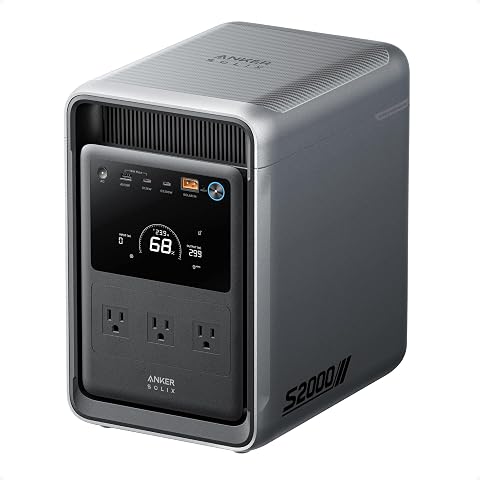 Anker SOLIX S2000 Portable Power Station, 2010Wh, 3000W PeakView on Amazon →
 - 2
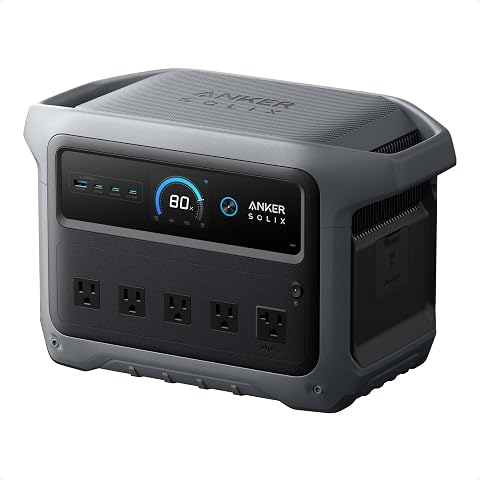 Anker SOLIX C1000 Gen 2 Portable Power Station, 1024Wh, 2000WView on Amazon →
 - 3
 Jackery Explorer 1000 v2 Portable Power Station, 1070Wh, 1500WView on Amazon →
 - 4
 BLUETTI Elite 100 V2 Portable Power Station for Camping 1024Wh 1800WView on Amazon →
 - 5
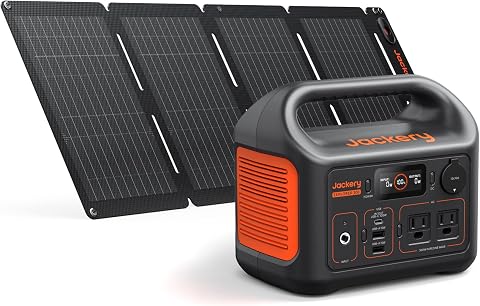 Jackery Solar Generator 300 and 40W Solar PanelView on Amazon →
 - 6
 Jackery Explorer 300 Portable Power Station, 292WhView on Amazon →
 - 7
 VTOMAN Jump 600X Portable Power Station, 600W, 268.8Wh LiFePO4 BatteryView on Amazon →
 - 8
 Portable Solar Generator 300W with 60W Solar PanelView on Amazon →
 - 9
 ALLWEI Portable Power Station 300W, 256Wh Solar Generator LiFePO4 BatteryView on Amazon →
Why Portable Power Matters for AI Deployment in 2026
The availability of reliable, portable power stations in 2026 is critical for expanding AI deployment beyond traditional settings. They enable AI applications in remote research, disaster response, military operations, and outdoor projects where grid power is unavailable. This flexibility accelerates AI innovation, enhances field data collection, and supports emergency resilience. As AI hardware becomes more energy-intensive, the importance of high-capacity, durable power sources grows, making these stations essential tools for professionals and enthusiasts alike.
Growth of Portable Power Solutions for AI in 2026
Over recent years, portable power stations have evolved from simple backup devices to sophisticated tools capable of supporting complex AI workloads. Major brands like Jackery and Anker have expanded their offerings, emphasizing capacity, portability, and solar compatibility. The trend aligns with broader shifts toward off-grid AI applications, environmental sustainability, and the need for rapid deployment in emergency scenarios. The 2026 landscape reflects a mature market with a focus on safety, longevity, and multi-device support.
“The latest portable stations in 2026 are game-changers for AI deployment, offering unprecedented flexibility and power capacity in compact forms.”
— Thorsten Meyer, AI Power Expert
Remaining Questions About 2026 Portable Power Stations
While the top models are well-documented, it remains unclear how they perform under extreme conditions or long-term usage. The durability of newer battery chemistries like LiFePO4 in harsh environments, and the true efficiency of solar recharging in varied climates, are still under evaluation. Additionally, the impact of rapid technological updates on model longevity and compatibility is an ongoing concern for users relying on these stations for critical AI operations.
Upcoming Developments in Portable Power for AI in 2026
Manufacturers are expected to release next-generation models with higher capacities, faster recharging, and improved durability. Innovations in solar integration and battery chemistry will likely enhance off-grid autonomy. Industry standards may evolve to better support AI-specific power needs, and user feedback will drive further refinements. Monitoring these developments will be essential for users relying on portable power for AI deployment in dynamic environments.
Key Questions
Which portable power station is best for supporting AI hardware?
The Anker SOLIX S2000 offers high wattage and capacity suitable for powering AI hardware, servers, and high-demand equipment. However, the best choice depends on specific power needs and portability requirements.
Can these stations run AI systems off-grid?
Yes, many of these stations support solar recharging and multiple device outputs, making them suitable for off-grid AI applications, research, and fieldwork.
How long can a portable station power AI devices?
The runtime depends on the station’s capacity and the power draw of connected devices. For example, a 300Wh station can power small AI gadgets for several hours, while larger units over 2000Wh can support longer or more intensive tasks.
Are solar-compatible stations more expensive?
Generally, solar-compatible stations tend to have higher upfront costs due to additional features and panels, but they offer greater off-grid independence and sustainability.
What are the main factors to consider when choosing a portable power station for AI?
Key factors include capacity (Wh), wattage, portability, battery chemistry, recharging options, and additional features like multiple ports and solar compatibility.
Source: ThorstenMeyerAI.com
Halloween Picks
halloween
As an affiliate, we earn on qualifying purchases.