🔍 Read the full analysis: A Guide To Timing Thanksgiving Dishes With AI-Powered Kitchen Timers on ThorstenMeyerAI.com

Get the latest gadgets delivered free with Prime
- Fast, free delivery on millions of items
- Prime Video, Amazon Music and more included
- Member-only deals all year
TL;DR
AI-powered kitchen timers can interpret spoken requests, label multiple timers and, in some products, suggest alerts from recipe steps. They may help coordinate a busy Thanksgiving meal, but cooks should confirm durations, check how timers work offline and use a food thermometer rather than a timer to judge whether food is safely cooked.
The original guide to AI-powered kitchen timers describes how AI-powered kitchen timers can help cooks coordinate several Thanksgiving dishes by interpreting spoken requests, labeling alerts and, in some products, suggesting timers from recipe steps. The guide cautions that speech and recipe errors can still occur, and that a timer cannot confirm food is safely cooked.
The term AI-powered kitchen timer covers a range of tools, from voice assistants that interpret timer commands to recipe services that suggest a schedule. The ThorstenMeyerAI.com guide notes that a connected device is not necessarily using AI: some smart functions rely on fixed commands, standard voice recognition or preset automations. It recommends checking a product’s current feature list rather than relying on the label.
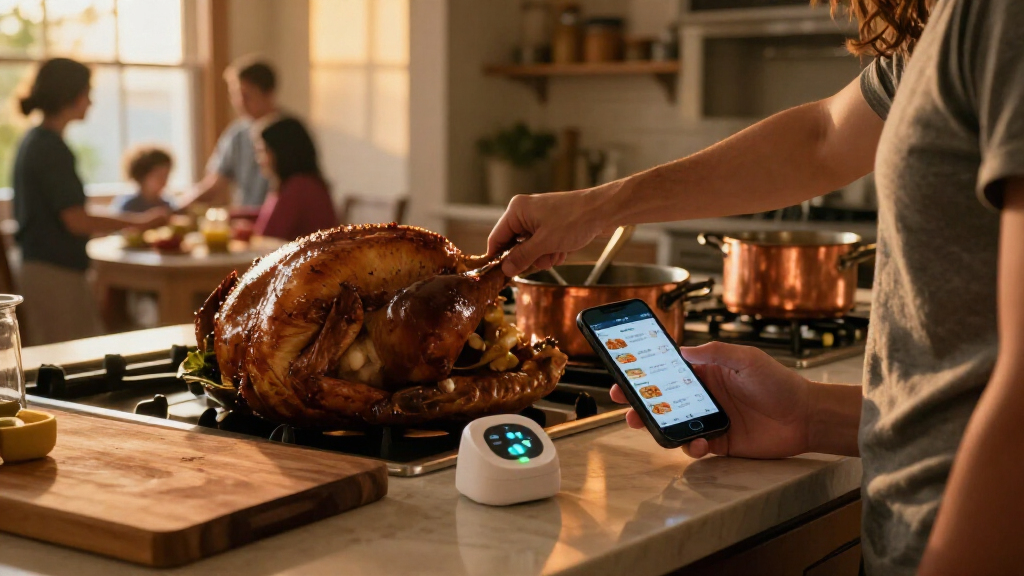
For a Thanksgiving meal, a cook might set separate timers for a turkey-side dish, vegetables and rolls, then give each alert a clear name. The guide says this may reduce the need to touch a phone with messy hands and help distinguish alerts that sound close together. Before leaving the timers to run, the cook should check the displayed or spoken duration and confirm that any adjustment applies to the intended dish.
The guide says recipe-linked tools may turn instructions such as simmering or warming into suggested alerts. Those suggestions are a starting point, not a guaranteed cooking plan: recipes differ, and kitchen equipment and food quantities affect timing. It advises reviewing suggested steps before starting and keeping a basic timer available in case of a connection failure or missed alert. The guide also recommends checking alert reliability, offline behavior, privacy and cost before choosing a product.
Check what a product actually does: voice control and Wi-Fi alone do not prove it uses AI.
Use clear timer names, review spoken commands, and confirm recipe-generated alerts before cooking.
Compare alert options, timer adjustments, offline use, privacy controls, and total cost.
Treat recipe timers as reminders to check; use a food thermometer when safe temperature matters.
Keeping Thanksgiving Timers Straight
Thanksgiving often requires several dishes to be prepared or finished at once. The ThorstenMeyerAI.com guide suggests that a timer able to accept natural requests and attach names to alerts may help a cook keep track of separate tasks without repeatedly handling a phone. The practical benefit depends on whether the device can distinguish requests and make it easy to identify, pause or change the right timer.
The guide does not report testing results or establish that these products improve cooking outcomes. Rather, it describes a potential convenience and its limits: a misheard duration, vague alert or unavailable network can add confusion at a busy moment. Clear confirmations and reliable alerts may matter more to a household than a broad AI label or an impressive demonstration.
The guide also stresses that timers measure elapsed time; they do not inspect a dish or verify food safety. Cooks should use appropriate food-safety checks, including a food thermometer where needed, rather than treating a countdown as proof that a roast or other dish is ready. That distinction is especially relevant when meal timing has to change because of oven space or a delayed side dish.
Products Worth Considering

Logitech MX Keys S Combo Wireless Keyboard and Mouse, Graphite

Samsung Odyssey G55C 32-Inch QHD 1000R Curved Gaming Monitor

Anker SOLIX C1000 Gen 2 Portable Power Station with 100W Solar Panel
As an affiliate, we earn on qualifying purchases.
From Voice Commands to Recipes
The ThorstenMeyerAI.com guide describes a spectrum of kitchen tools. At one end, a voice assistant responds to a direct request such as setting a nine-minute pasta timer. Other systems may recognize multiple tasks in one request, label timers, or connect recipe instructions to suggested alerts. The guide notes that available features can vary by product, software version, region, compatible devices and subscription.
According to the guide, the broader trend through mid-2024 was the addition of conversational and generative AI features to existing assistants, recipe services and smart displays. The source presents this as a general trend, not a current product-by-product survey. Readers should check manufacturers’ latest documentation, particularly where a feature relies on an online service or paid tier.
For home cooks, the guide’s basic operating principle is simple: use a timer to manage a task, then verify what the device heard. Naming alerts after foods or actions, such as “check the sauce,” can make several simultaneous countdowns easier to follow. A conventional timer or phone timer can serve as a backup if a smart device loses its connection or fails to register a command.
Features and Reliability Vary
The ThorstenMeyerAI.com guide does not identify specific products, provide independent performance tests or compare brands. It therefore does not establish how accurately any particular timer recognizes speech, handles overlapping requests or converts recipe steps into alerts. Those capabilities may also change with software updates, location, subscription terms or compatible hardware.
The guide does not specify how each product handles a lost internet connection, whether it stores voice or cooking data, or how its alerts behave if a user’s device is muted or out of range. It notes that background noise, accents and ambiguous wording can affect speech recognition. Cooks should check the timer list or confirmation when a duration matters, and consult current product documentation for privacy and offline details.
Most importantly, the guide provides no basis for treating a timer as a food-safety sensor. An alert indicates that a set amount of time has passed; it does not confirm the internal temperature or condition of food.
Check Settings Before Cooking
Before using an AI timer for a holiday meal, the ThorstenMeyerAI.com guide recommends testing it with a low-stakes request, checking that the timer appears with the correct name and duration, and practicing how to change or dismiss one countdown without affecting others. Cooks can also find out whether basic timers continue working without Wi-Fi and whether alerts remain audible in the kitchen.
For recipe-based scheduling, review suggested steps before starting and adjust them to the recipe and equipment being used. The guide advises keeping a backup timer available and using a suitable food thermometer for safety checks. Product capabilities and service terms may change, so anyone considering a purchase should compare current manufacturer information on controls, alerts, offline use, privacy and cost.
Key Questions
What does an AI-powered kitchen timer do?
It uses software to interpret cooking requests and create, label or suggest one or more timers. Some products also connect timer suggestions to recipe steps, but features vary.
Can a kitchen timer tell me when Thanksgiving food is safe to eat?
No. A timer tracks elapsed time; it does not measure a dish’s internal temperature or confirm food safety. Use appropriate food-safety checks, including a thermometer where needed.
What should I check before relying on voice timers?
Confirm the displayed or spoken duration, check that each timer has the right label, and test how to pause or change one countdown. Also check alert volume and offline behavior.
Do all smart kitchen timers use AI?
No. Some connected or voice-controlled features use fixed commands, standard voice recognition or preset automations. Check a product’s current feature description to see what it actually does.
Can recipe-based timer suggestions replace a recipe’s instructions?
No. Treat suggested alerts as a draft and review them before cooking. Recipes, quantities and kitchen equipment vary, and a countdown does not establish that a dish is done.
Source: ThorstenMeyerAI.com