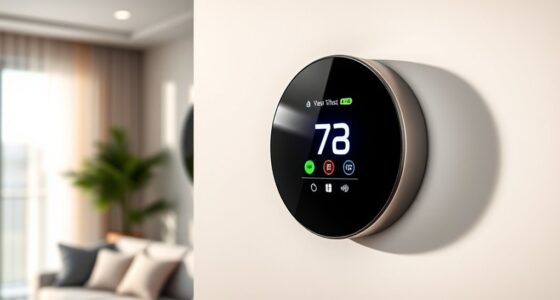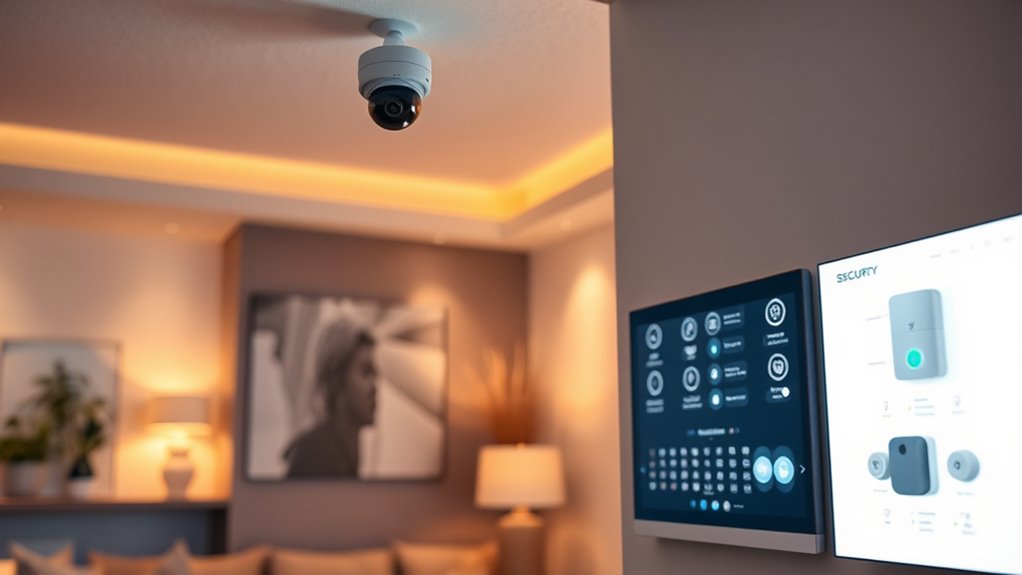

DIY home security systems are affordable and easy to install, making them attractive options for hands-on homeowners. However, they often lack the advanced security, reliability, and professional monitoring features of traditional systems. While some smart devices include encryption and updates, they can still be vulnerable to hacking or misconfiguration. To fully understand if DIY tech suits your safety needs versus professional setups, continue exploring the key differences.
Get ready for Prime Big Deal Days — try Prime free
Exclusive member deals on October 6–7, plus fast free delivery. Cancel anytime.
As an affiliate, we earn on qualifying purchases.
Key Takeaways
- DIY systems are cost-effective and easy to install but may lack the robustness and continuous monitoring of professional setups.
- Professional systems undergo rigorous testing, offering higher reliability, advanced security features, and dedicated support.
- DIY devices can be vulnerable to hacking due to weaker security protocols and inconsistent software updates.
- Cloud storage and encryption enhance DIY data security, but professional systems often provide stronger, enterprise-grade protection.
- The trustworthiness of DIY security depends on user knowledge, proper configuration, and security practices, whereas professionals ensure system integrity.
Understanding the Core Differences Between DIY and Professional Security Solutions
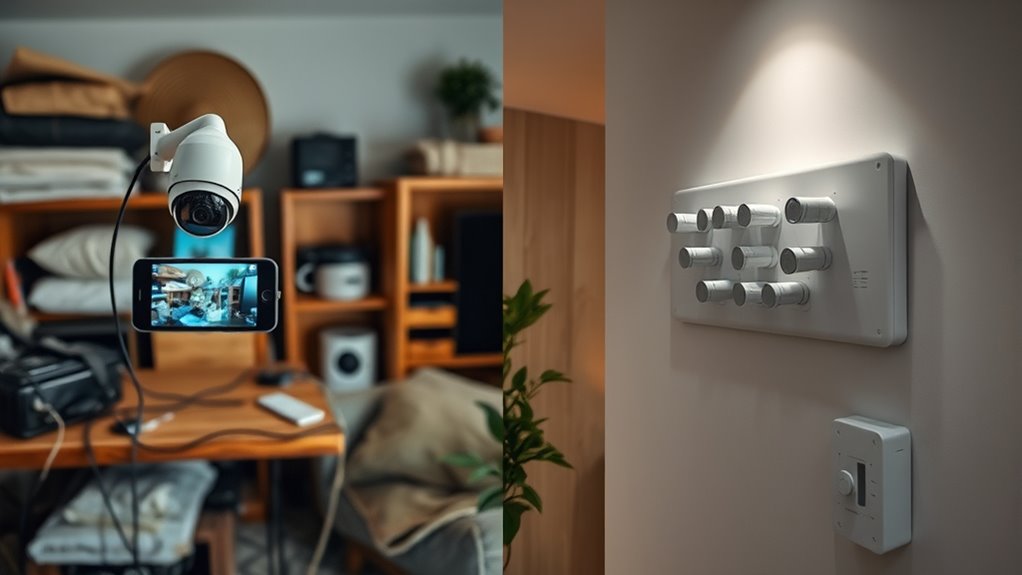
While DIY home security solutions have become increasingly popular, they differ markedly from professional systems in several key ways. One major difference is the technology involved; for example, DIY setups often include smart doorbells and wireless sensors that you can install yourself. These devices connect to your Wi-Fi and send alerts directly to your phone, giving you quick access to who’s at your door or any movement around your property. Additionally, European cloud infrastructure can enhance the security and reliability of these systems by providing robust data management and protection. The integration of cloud-based data storage allows for easier access and management of security footage and alerts. Modern security systems also leverage AI-driven detection to reduce false alarms and increase accuracy. Furthermore, the use of encryption protocols in these systems helps safeguard your data from cyber threats. While DIY options offer convenience and customization, professional systems provide more extensive coverage and support, which can be vital for larger or more complex security needs. Implementing vetting processes for service providers can further ensure the reliability and trustworthiness of your security solutions.
Cost Considerations: Is DIY Home Security More Economical?

When comparing DIY home security to professional systems, cost is a key factor to contemplate. You’ll find that equipment prices can vary widely, and installation usually costs less or is free when you set it up yourself. However, it’s important to weigh these savings against potential expenses down the line. Additionally, considering reliable backup power, such as standby generators, can be crucial for maintaining security during outages and avoiding costly disruptions. Incorporating continuous power solutions can help ensure your security system remains operational during power failures, providing peace of mind and protecting your home effectively. Moreover, integrating smart home technology can enhance system reliability and enable remote monitoring, adding an extra layer of security and convenience. Investing in backup power options can significantly improve your system’s resilience against unforeseen issues, especially when combined with system redundancy strategies to prevent system failure.
Affordability of Equipment
DIY home security systems often cost less upfront than professional installations, making them an attractive option for budget-conscious homeowners. Many DIY kits include smart doorbells, which are affordable and easy to install, saving you money on professional setup. These devices typically come with features like HD video, motion alerts, and two-way audio, offering security without high costs. Battery life is also a key consideration—many smart doorbells use rechargeable or replaceable batteries, reducing ongoing expenses. While the initial investment is lower, you can choose equipment based on your budget and needs, avoiding unnecessary features. Additionally, understanding the Free Floating nature of some DIY systems can help you make informed decisions about compatibility and scalability. Considering connectivity options can also influence your system’s reliability and ease of use. Moreover, evaluating security protocols and encryption methods can ensure your system’s data remains protected. Another important aspect is understanding the navigation and mapping capabilities of certain systems, which can enhance overall security coverage. Incorporating user-friendly interfaces can make managing your system more straightforward, especially for those new to home security technology. Overall, DIY security equipment provides a cost-effective way to enhance your home’s safety without breaking the bank.
Installation Expense Differences
Installing a DIY home security system generally costs less upfront than hiring professionals, making it a budget-friendly choice. With DIY setups, you avoid hefty installation costs and technician fees that come with professional systems. You’ll save money by handling the installation yourself, which eliminates labor charges and reduces overall expenses. While professional systems often include expert installation, their technician fees can considerably increase the total cost. However, keep in mind that some complex setups may require professional help, which could add to your expenses. Overall, DIY installation tends to be more affordable, especially if you’re comfortable setting up the equipment yourself. This cost difference often makes DIY systems appealing for those looking to maximize savings without sacrificing basic security features. Additionally, understanding the privacy policies associated with DIY and professional systems can help you make an informed decision. It’s also important to consider the encryption and security measures used to protect your data in either option. Moreover, some DIY systems now incorporate advanced security features, which can help bridge the gap in reliability and protection compared to professional setups. When selecting a DIY system, it’s beneficial to evaluate the compatibility of devices to ensure seamless integration and ongoing reliability. Incorporating user-friendly interfaces can further enhance your ability to manage your security system effectively.
Installation Ease and Technical Requirements for DIY Systems
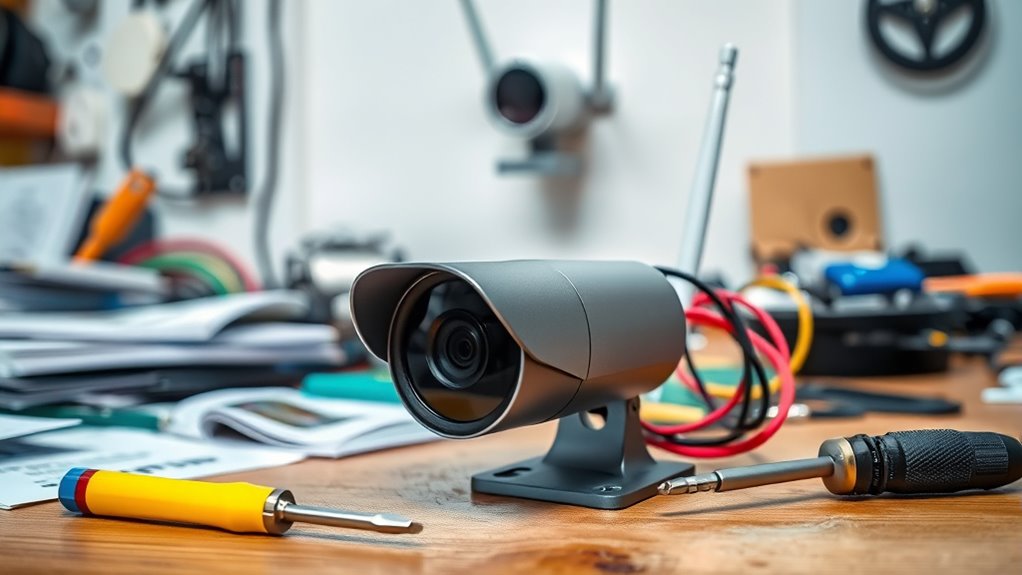
Many home security systems designed for DIY installation prioritize user-friendliness, making setup accessible even if you have limited technical expertise. These systems often feature wireless connectivity, reducing the need for complex wiring and enabling quick placement of sensors and cameras. Most kits include step-by-step instructions or companion apps that guide you through each stage, simplifying the process. You won’t need specialized tools or extensive knowledge to complete installation successfully. While some systems may require basic understanding of app setup or network configuration, they’re generally straightforward. This ease of installation allows you to save money and time, giving you control over your security setup without the need to hire professionals. Additionally, many systems support Support Resources options, ensuring you have resources available if you encounter any issues. For example, clear troubleshooting guides or customer support channels can help resolve common setup questions. Overall, DIY systems aim to make security setup intuitive and manageable for most homeowners, especially with the availability of step-by-step guidance to assist beginners. Moreover, understanding market trends and insights can help you choose the right system suited to your needs, as advancements in wireless technology continue to enhance ease of installation and performance.
Reliability and Performance: Do DIY Devices Match Professional Setups?
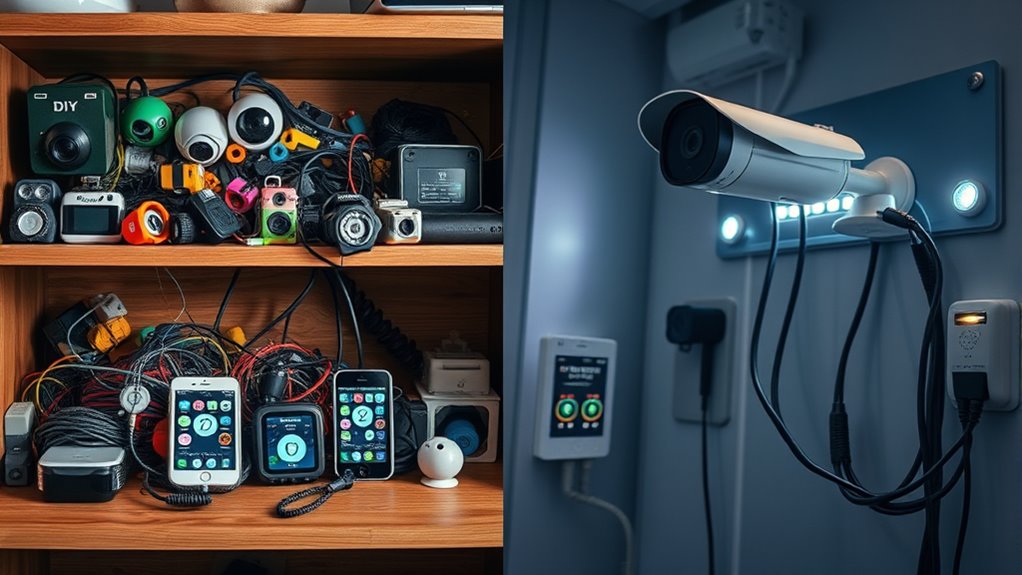
While DIY home security devices have improved considerably, questions often arise about whether they can match the reliability and performance of professional systems. Video surveillance cameras in DIY setups can offer clear footage and real-time alerts, but they may lack the robustness and fail-safe features of commercial-grade security. Smart locks, while convenient, might be less secure if not properly configured or if they use cheaper components. Professional systems are typically tested rigorously, providing continuous monitoring and backup options that DIY devices might lack. Overall, DIY devices can work well for basic security, but for critical safety and consistent performance, professional setups tend to be more dependable, especially for larger or more complex homes.
Monitoring and Support: Who Ensures Your Home’s Safety?

When it comes to home security, reliable monitoring and support are crucial to guarantee your safety around the clock. With DIY systems, you typically choose from various monitoring options, such as self-monitoring through your smartphone or subscribing to a professional monitoring service. Self-monitoring gives you immediate alerts but leaves you responsible for responding. Professional monitoring offers 24/7 vigilance, with customer support ready to act if an alarm is triggered. This support ensures someone is always watching, which can be reassuring if you’re often away or uncertain about handling security issues yourself. Ultimately, the level of monitoring and support you get can determine how safe your home truly is. Consider your needs carefully to find the right balance between independence and professional backing.
Customization and Scalability of Security Systems

Your security system should grow with your needs, so look for options that allow flexible expansion. You can add cameras, sensors, or smart devices whenever necessary without difficulty. Customizing features guarantees your system stays effective and tailored to your lifestyle.
Flexible System Expansion
Flexible system expansion allows you to tailor your home security setup as your needs change, making it easy to add or upgrade components without overhauling the entire system. With wireless connectivity, you can seamlessly integrate new sensors, cameras, or alarms without complex wiring. This flexibility lets you scale your security as your home or budget evolves. A user interface that’s intuitive makes managing expanded features straightforward, so you can monitor and control all devices effortlessly. You won’t be limited by a rigid setup; instead, you can customize your system on the fly. Whether you want to add a smart doorbell or extra motion detectors, expansion is simple, ensuring your home stays protected as your security requirements grow.
Tailored Security Features
Customizing your home security system allows you to prioritize the features that matter most to you, ensuring your setup fits your lifestyle and specific needs. With tailored security features, you can choose sensors, cameras, and alarms that suit your home’s unique layout. Plus, smart home integration lets you control everything from your phone, adding convenience and peace of mind. As your needs evolve, you can easily scale your system without starting over. Imagine a system that adapts to your changing life, providing reassurance and confidence. Here’s how personalized options can evoke emotion and security:
| Peace of Mind | Convenience | Flexibility |
|---|---|---|
| Feel safe always | Control remotely | Expand easily |
| Custom alerts | Seamless integration | Future-proofed |
| Confidence in setup | One app control | Adaptable design |
Security Risks and Vulnerabilities in DIY Solutions
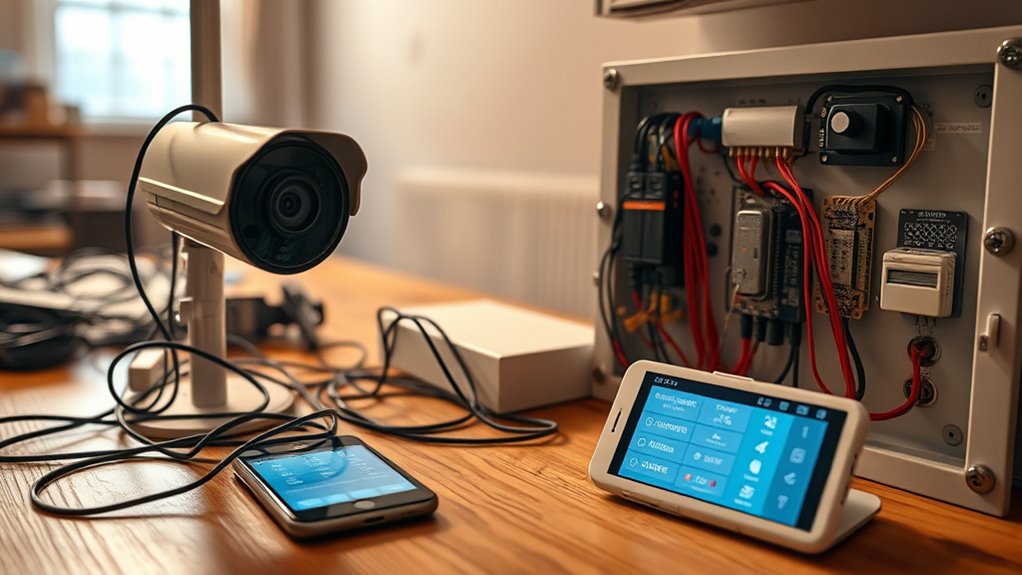
While DIY home security solutions can be cost-effective and convenient, they often come with significant vulnerabilities that can compromise your safety. These solutions are more susceptible to security breaches and hacking vulnerabilities, putting your home at risk. Because DIY systems typically lack advanced encryption, hackers can exploit weak points to gain access. You might also leave default passwords unchanged, making it easier for intruders to bypass security. Additionally, inconsistent software updates can create gaps in protection, leaving your system vulnerable.
- Weak passwords and default settings
- Lack of professional monitoring and oversight
- Limited security updates and patches
Being aware of these risks helps you take better precautions, but remember, DIY solutions can still fall short against determined cyber threats.
Making the Right Choice: Factors to Consider for Your Home Security Needs

Choosing the right home security system involves evaluating your specific needs and understanding the options available. Consider your privacy concerns, especially with DIY solutions that often rely on cloud storage or app access, which could expose sensitive data. Think about user friendliness—can you easily install and operate the system without frustration? If you prefer a straightforward setup with minimal technical skills, a professional system might be better. On the other hand, if you value customization and control, DIY options could suit you. Also, assess whether the system provides reliable alerts and monitoring. Ultimately, balancing your privacy, ease of use, and security requirements will help you make an informed choice that fits your lifestyle and peace of mind.
Frequently Asked Questions
How Often Do DIY Security Systems Need Firmware or Software Updates?
You should check your DIY security system’s firmware or software regularly, ideally once a month, to guarantee it stays secure and functional. The firmware frequency varies, but most systems have an update schedule that prompts you when new updates are available. Keeping your system current helps protect against vulnerabilities and improves performance. Don’t ignore update notifications; staying proactive is key to maintaining your security system’s reliability and peace of mind.
Are DIY Systems Compatible With Existing Smart Home Devices?
Yes, DIY security systems often offer smart home compatibility, making device integration straightforward. You can usually connect cameras, doorbells, and sensors to your existing smart home setup easily through compatible apps or hubs. Just confirm the system you choose supports your current smart devices and protocols, like Zigbee or Z-Wave. This way, you create a seamless security network, giving you better control and automation within your smart home.
What Legal or Privacy Concerns Are Associated With DIY Security Cameras?
You should be aware of privacy concerns and legal restrictions when using DIY security cameras. Recording in public spaces can breach privacy laws, and capturing footage of neighbors without consent may lead to legal issues. Always check local regulations and respect others’ privacy rights. By staying informed, you guarantee your DIY security system remains compliant, reducing the risk of legal trouble and protecting everyone’s privacy.
How Do DIY Systems Handle Power Outages or Internet Disruptions?
When power outages or internet disruptions hit, your DIY security system can stumble like a runner hitting a wall. To keep it running smoothly, you’ll want backup power sources like batteries or UPS, acting as a safety net. Additionally, internet redundancy—using cellular backup or dual connections—ensures your cameras stay vigilant, even when the digital highway crashes. This way, your home’s security remains unwavering, no matter the chaos outside.
Can DIY Security Setups Be Integrated With Professional Emergency Response Services?
Yes, DIY security setups can be integrated with professional emergency response services. You can enable emergency response integration through compatible systems or third-party platforms, allowing alerts to be sent directly to professional monitoring options. This setup guarantees rapid response during emergencies, giving you peace of mind. Just make sure your DIY system supports such integrations and connect it with a reliable monitoring service for seamless, professional-level protection.
Conclusion
When choosing between DIY and professional home security, remember that about 60% of homeowners prefer professional systems for peace of mind. While DIY options offer affordability and easy setup, they might lack the reliability and support of professional setups. Consider your tech skills, budget, and security needs carefully. Ultimately, a balanced approach can give you the right protection—so weigh your options wisely to keep your home safe and secure.
NFL season / tailgating Picks
team gear
As an affiliate, we earn on qualifying purchases.