In just one weekend, you can set up a smart hub to centralize control of your devices, enabling voice commands and routines for added convenience. You can also install smart lighting to create the perfect ambiance with customizable colors and automation for energy savings. Finally, adding Wi-Fi extenders will enhance coverage and guarantee your smart devices stay connected. Keep exploring to discover more simple projects that can transform your home quickly and easily.
Key Takeaways
- Install a smart hub to centralize device control, automate routines, and enhance security within a weekend.
- Set up smart lighting with voice control and color options for mood enhancement and energy efficiency.
- Add Wi-Fi extenders to improve connectivity coverage, ensuring reliable operation of smart devices.
- Integrate security cameras and sensors into your smart hub for easy monitoring and increased home safety.
- Expand your system gradually by adding compatible smart gadgets, creating a cohesive and customizable home automation setup.
Top picks for "smart home project"
Open Amazon search results for this keyword.
As an affiliate, we earn on qualifying purchases.
Installing a Smart Hub for Centralized Control
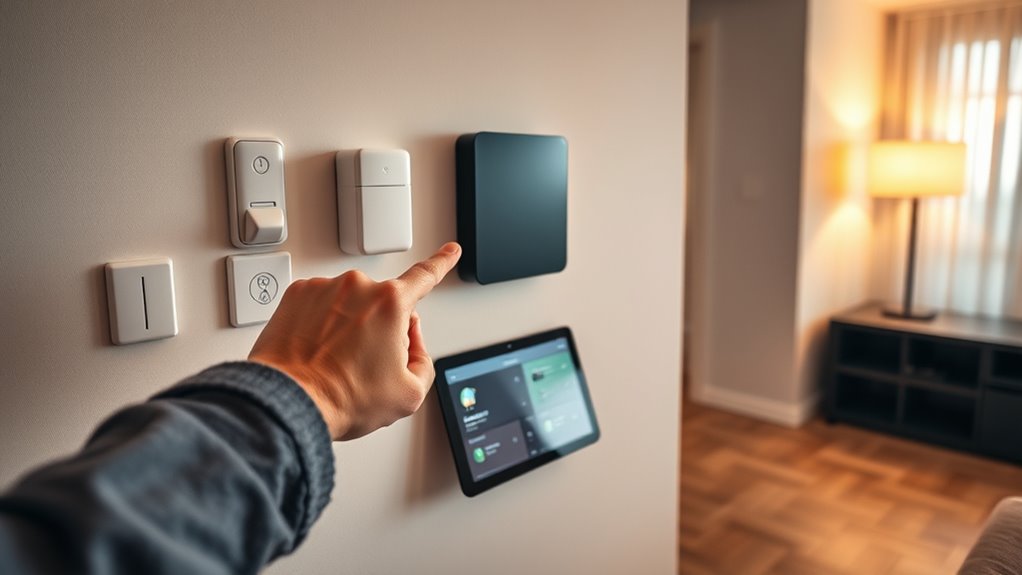
Installing a smart hub is a crucial step in creating a centralized control system for your home. It acts as the brain of your smart setup, allowing you to manage multiple devices seamlessly. With voice recognition capabilities, you can control everything hands-free, making daily routines easier and more efficient. Plus, a smart hub integrates security systems, enabling you to monitor cameras, alarms, and sensors from one interface. This setup not only enhances convenience but also boosts your home’s safety. When choosing a hub, guarantee it supports your preferred voice assistants and security integrations. Installing it is straightforward—you simply connect it to your Wi-Fi, follow the setup instructions, and sync your devices. Home automation can be expanded further by integrating other smart devices, creating a unified system that adapts to your lifestyle. Additionally, many smart hubs support device compatibility, ensuring you can add new gadgets easily as your smart home evolves. Proper setup of a smart hub also involves understanding system security, so your connected devices remain protected from potential threats. Being aware of electrical safety practices helps prevent common risks during installation. Incorporating knowledge of projector technology can help you optimize your home entertainment experience as part of your smart home system. Within a short time, you’ll have a robust control center that simplifies managing your smart home.
Setting Up Smart Lighting for Ambience and Efficiency
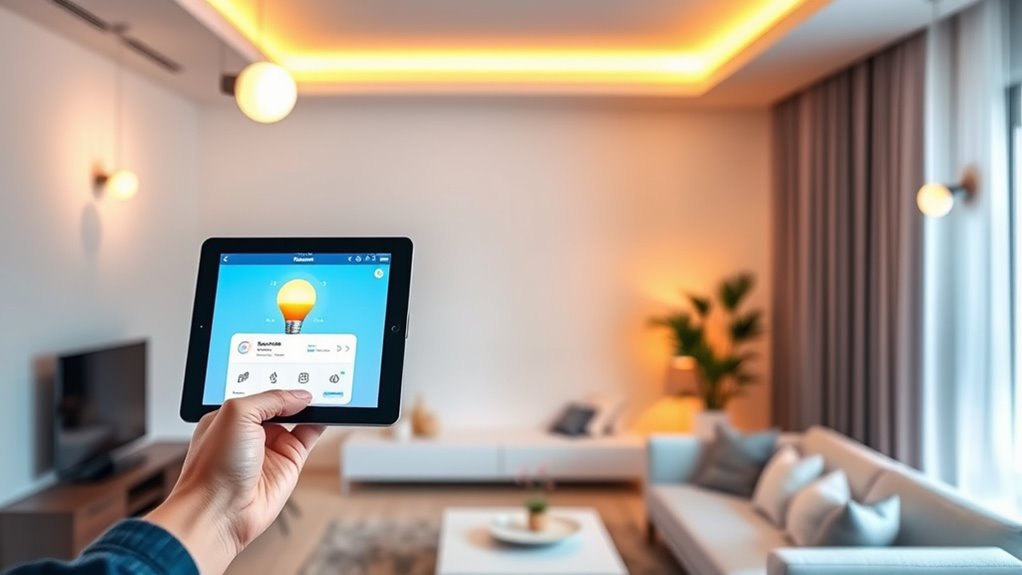
After setting up your smart hub, you can start enhancing your home’s atmosphere and efficiency with smart lighting. Voice control makes it easy to turn lights on or off, adjust brightness, and switch scenes without leaving your seat. With color customization, you can set the perfect mood for any occasion, whether it’s a relaxing evening or a lively gathering. Many smart bulbs let you choose from millions of colors and even sync with music or movies for dynamic effects. Custom routines can automatically adjust lighting based on time of day or activity, saving energy and improving comfort. Smart home technology can also provide additional safety features, making your home more secure and responsive for all users. Incorporating vintage-inspired design elements into your smart lighting setup can enhance the nostalgic feel of your space while maintaining modern convenience. Additionally, selecting energy-efficient bulbs aligns with the goal of creating sustainable and cost-effective European cloud solutions that promote eco-friendly living. To optimize energy use, consider integrating smart sensors that automatically turn off lights when rooms are unoccupied. Using connected lighting systems can further streamline control and integration with other smart devices in your home.
Adding Wi-Fi Extenders to Boost Connectivity

If your Wi-Fi signal struggles to reach certain areas of your home, adding a Wi-Fi extender can substantially improve connectivity. With better coverage, your security cameras stay connected, and voice assistants respond instantly. Place the extender halfway between your router and the dead zone for ideal results. Guarantee it supports your devices, like smart security cameras and voice assistants, to avoid lag or disconnections. Here’s a quick overview:
| Step | Action | Tip |
|---|---|---|
| 1 | Find dead zones | Use your phone to test Wi-Fi strength |
| 2 | Choose a quality extender | Look for dual-band support |
| 3 | Position strategically | Avoid interference from thick walls |
Improving Wi-Fi coverage creates a smarter, more reliable home environment. 1023 Jack
Frequently Asked Questions
What Are the Best Budget-Friendly Smart Home Devices for Beginners?
You should start with affordable gadgets like smart plugs, bulbs, and security cameras that are easy to install. Look for DIY kits that guide you step-by-step, making setup simple and budget-friendly. These devices often work with your existing Wi-Fi and require no professional help. With these affordable gadgets, you can quickly create a smarter home without breaking the bank, perfect for beginners looking to dip their toes into home automation.
How Do I Ensure My Smart Home Devices Are Secure From Hacking?
To keep your smart home devices safe, don’t put all your eggs in one basket. Use strong encryption protocols and enable device authentication on each device. Regularly update software to patch vulnerabilities, and change default passwords right away. You also want to set up a separate Wi-Fi network for your smart devices. These steps help prevent hackers from getting in and securing your smart home’s peace of mind.
Can I Integrate Third-Party Smart Devices With Existing Systems Easily?
Yes, you can usually integrate third-party smart devices with your existing systems, but beware of device integration challenges. Check for third-party compatibility before purchasing, and guarantee your hub or platform supports those devices. You might need to update firmware or use specific apps. Taking these steps helps you avoid compatibility issues, making the integration process smoother and more manageable.
What Should I Consider When Choosing a Smart Home Hub?
Choosing a smart home hub is like selecting a universal remote—your goal is seamless control. Consider security, ensuring the hub encrypts data and supports updates, protecting your privacy. Compatibility is key; verify it works with your existing devices and preferred platforms. For instance, I found that hubs supporting Zigbee and Z-Wave offered the best flexibility. Prioritize user reviews and manufacturer support to avoid future frustrations.
How Do I Troubleshoot Connectivity Issues With Smart Home Devices?
When troubleshooting connectivity issues, start by checking your network troubleshooting steps, like restarting your router and ensuring your Wi-Fi signal is strong. Verify device compatibility with your smart home hub, as incompatible devices often cause problems. Move devices closer to your router if needed, update firmware, and reset the devices. These steps help restore proper connectivity, ensuring your smart home functions smoothly.
Conclusion
With just a weekend, you can transform your home into a smart sanctuary that’s more efficient, cozy, and connected than you ever imagined. These DIY projects are so simple, you’ll wonder why you didn’t do them sooner. Imagine having your lights, devices, and Wi-Fi working seamlessly together—it’s like turning your house into a tech masterpiece! Get started now, and soon you’ll be living in a smarter, smoother home that feels almost magical.