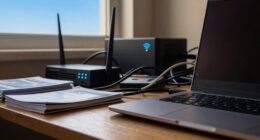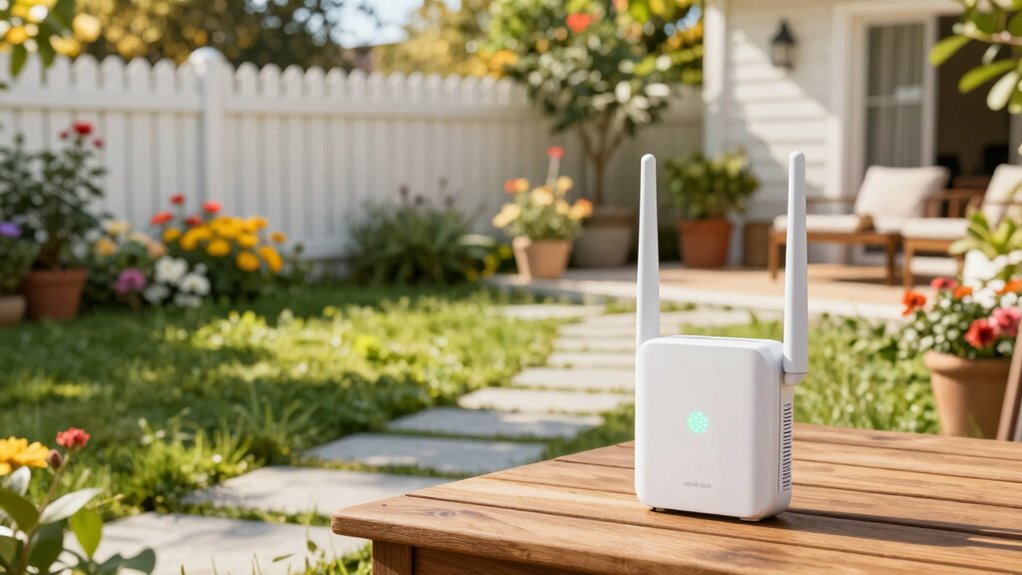

To extend your Wi-Fi to your backyard, start by evaluating your current coverage using signal testing apps to find weak spots or dead zones. Place your router in a central, elevated spot away from obstructions, and consider adding Wi-Fi extenders or a mesh system near outdoor areas. Use weatherproof access points for reliable outdoor coverage, and optimize your settings by switching to less congested channels. For more tips on maintaining strong outdoor Wi-Fi, keep exploring the options below.
Key Takeaways
- Place your router centrally indoors, elevated, and away from obstacles to maximize initial signal strength toward the backyard.
- Use outdoor-rated Wi-Fi extenders or access points mounted on poles or eaves for weatherproof outdoor coverage.
- Opt for mesh Wi-Fi systems with multiple nodes to create a seamless, strong signal network covering your backyard.
- Adjust router channels and switch to 5 GHz frequencies to reduce interference and improve outdoor connection quality.
- Regularly test signal strength outside and reposition extenders or access points for optimal outdoor Wi-Fi coverage.
weatherproof outdoor Wi-Fi extender
As an affiliate, we earn on qualifying purchases.
As an affiliate, we earn on qualifying purchases.
Assessing Your Current Wi-Fi Coverage and Signal Strength
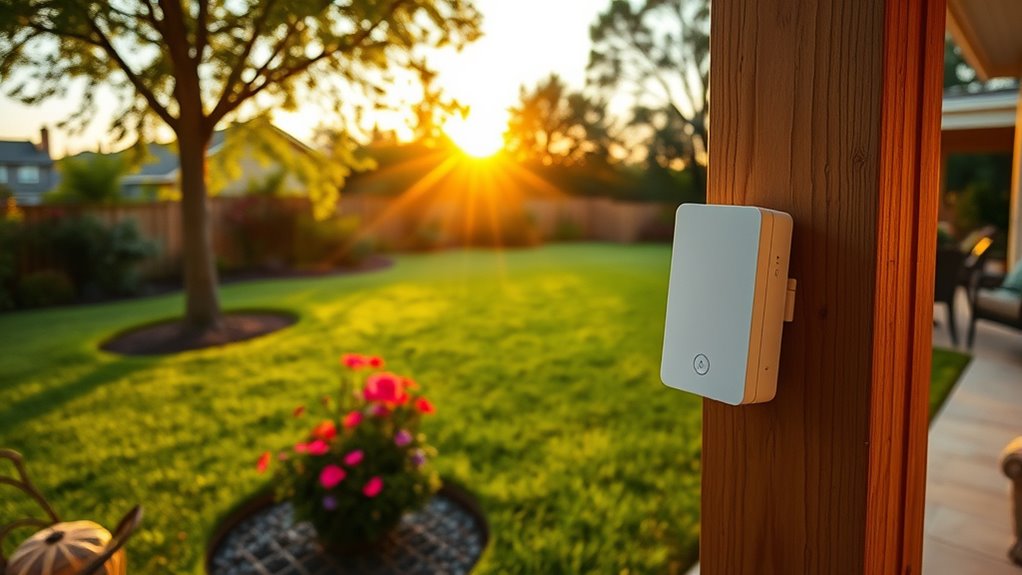
How can you determine if your Wi-Fi signal is strong enough in different areas of your home? Start by conducting signal mapping, which involves testing your Wi-Fi strength in various rooms using a speed test app or Wi-Fi analyzer. This helps you visualize dead zones and weak spots. Be aware of interference sources like cordless phones, microwaves, or neighboring Wi-Fi networks, which can weaken your signal and cause disruptions. Move around with your device to identify where the signal drops or becomes inconsistent. Note these areas and consider adjusting your router’s placement or adding extenders later. Regularly evaluating your coverage ensures you have a clear picture of your network’s strengths and weaknesses, making it easier to improve your Wi-Fi in problem zones. Additionally, understanding the performance factors of home network equipment can help you optimize your setup effectively. Upgrading to modern, energy-efficient routers can enhance coverage and sustainability, aligning with European cloud innovation initiatives. To further improve your connection, exploring advanced networking technologies can provide additional benefits.
mesh Wi-Fi system with outdoor nodes
As an affiliate, we earn on qualifying purchases.
As an affiliate, we earn on qualifying purchases.
Choosing the Right Location for Your Router and Extenders
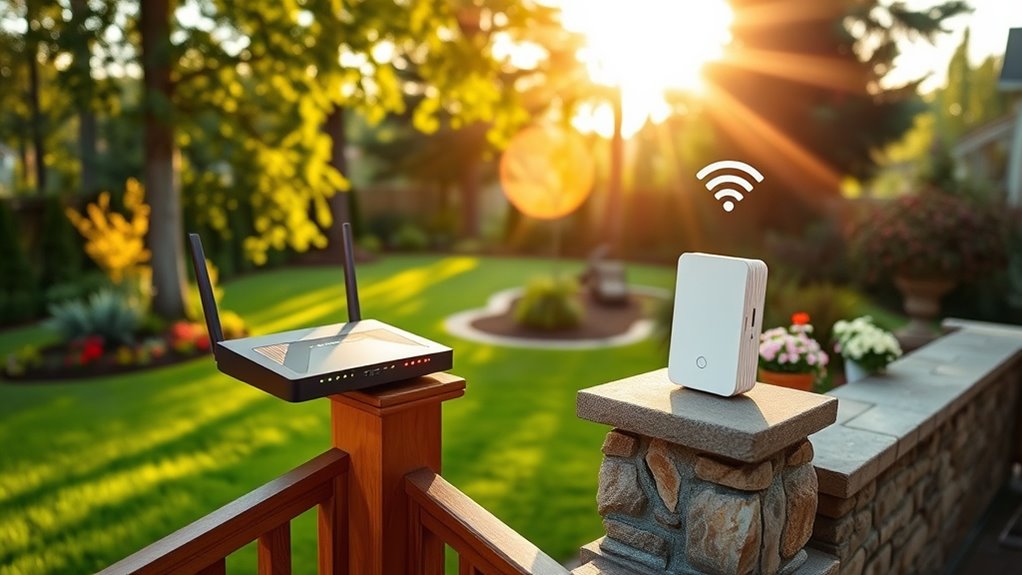
Selecting the most suitable location for your router and extenders is crucial to maximizing your Wi-Fi coverage. Proper router placement ensures signals reach your backyard effectively, so position your router centrally, away from thick walls and large metal objects. Avoid outdoor obstacles like trees, fences, or dense shrubbery that can block or weaken the signal. Keep your router elevated on a shelf or mounted high on a wall to reduce interference and improve range. When choosing locations for extenders, place them halfway between your router and the outdoor area, avoiding physical barriers. This strategic placement minimizes signal loss and creates a seamless Wi-Fi experience outside. Remember, the clearer the line of sight and fewer obstacles, the better your outdoor Wi-Fi coverage will be. Additionally, understanding your Wi-Fi signal strength can help you identify the optimal placement for maximum coverage. Conducting a site survey can assist in identifying potential interference sources and optimal locations to enhance your network’s effectiveness. Ensuring your network’s coverage area is optimized will provide a more reliable and consistent connection outdoors. To further enhance your setup, consider using Wi-Fi extenders that support the latest standards for better performance and coverage. Regularly checking your signal quality can also help maintain optimal outdoor connectivity.
outdoor Wi-Fi access point
As an affiliate, we earn on qualifying purchases.
As an affiliate, we earn on qualifying purchases.
Using Wi-Fi Range Extenders to Broaden Coverage
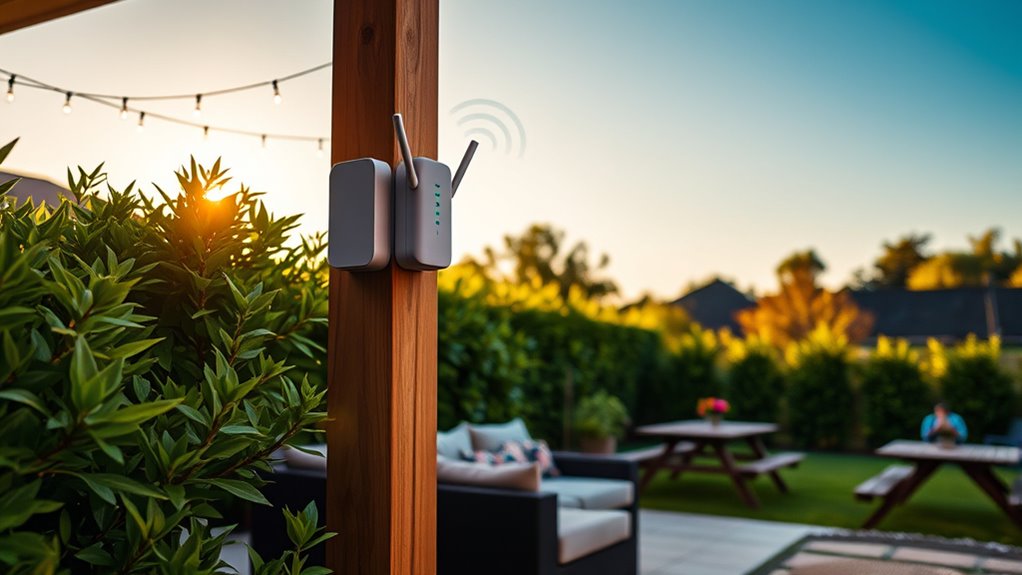
To effectively extend your Wi-Fi, you need to place your range extender in the right spot—close enough to your router for a strong signal but far enough to cover dead zones. Choosing the right model is vital; look for one that matches your speed needs and supports your devices. Once you set it up, configuring it properly will guarantee you get the best signal and seamless coverage throughout your home. Additionally, understanding wireless coverage and how to optimize placement can significantly enhance your outdoor Wi-Fi experience. Incorporating local automation features can help adjust your network dynamically based on usage patterns, improving overall performance. Being aware of interference sources in your environment can also help you position your extender more effectively for consistent connectivity, especially when considering factors like signal interference that can disrupt wireless signals. Properly assessing environmental factors can further optimize your setup for outdoor reliability.
Optimal Extender Placement
Finding the right spot for your Wi-Fi extender is essential to maximizing its effectiveness. Place it about halfway between your router and your backyard, where it can receive strong signal strength without being too close to walls or other devices that cause interference. Avoid areas with thick walls, metal objects, or electronic devices that could increase interference and weaken the signal. A good location minimizes interference reduction and ensures your extender rebroadcasts a clear, strong signal. Keep it elevated, such as on a shelf or mounted on a wall, to improve coverage. Regularly test the signal strength at different spots to confirm you’re getting ideal coverage. Proper placement helps your extender do its job—broadening coverage without losing speed or connection quality. Additionally, understanding the principles of Free Floating can help you optimize your outdoor Wi-Fi setup by ensuring your signal remains stable in open spaces. Considering antenna orientation can further enhance signal distribution and coverage area.
Choosing the Right Model
Choosing the right Wi-Fi range extender is key to effectively expanding your network coverage. You need a model that supports the latest wireless standards, like dual-band AC or AX, to guarantee high speeds and better performance. Look for signal boosters that can handle your internet plan’s bandwidth and provide sufficient coverage for your backyard. Consider the extender’s compatibility with your existing router to prevent connectivity issues. Some models are better suited for outdoor use, with weatherproof designs and stronger antennas. Avoid cheaper options with outdated standards, as they can slow down your network. Investing in a quality extender tailored to your needs will give you reliable coverage outside, so you never have to worry about losing signal or slow speeds when relaxing outdoors.
Configuring for Best Signal
Wondering how to guarantee your Wi-Fi range extender delivers the strongest signal? First, position it halfway between your router and outdoor area, avoiding obstructions. Access the extender’s settings and ensure security settings are optimized—use WPA3 or WPA2 for strong encryption, preventing unauthorized access. Regularly check for firmware updates, as they improve performance and fix security vulnerabilities. Update your extender’s firmware through the manufacturer’s website or app, keeping it current. Adjust the placement if the signal weakens, and test the connection from your backyard. By configuring security settings properly and maintaining firmware updates, you maximize the extender’s efficiency and security, ensuring a reliable, high-quality Wi-Fi signal outside. Proper setup guarantees your outdoor coverage stays strong and secure. Additionally, understanding home‑care techniques can help you troubleshoot and optimize your network setup for better coverage.
Wi-Fi signal booster for backyard
As an affiliate, we earn on qualifying purchases.
As an affiliate, we earn on qualifying purchases.
Implementing Mesh Wi-Fi Systems for Seamless Connectivity
Implementing a mesh Wi-Fi system simplifies your network setup by eliminating dead zones and creating a unified network. It provides enhanced signal coverage throughout your home, ensuring all areas stay connected. Plus, devices automatically switch to the strongest signal, offering seamless shift as you move around.
Simplified Network Setup
To achieve seamless Wi-Fi coverage throughout your home or office, setting up a mesh Wi-Fi system is a straightforward and effective solution. Mesh systems simplify network setup by integrating multiple nodes that communicate automatically, eliminating the need for complex configurations. This guarantees consistent signal strength and eliminates dead zones, especially outdoors. During setup, focus on securing your network with strong Wi-Fi encryption to protect your data. A simple app guides you through installation, making it easy to connect each node without technical expertise. Plus, mesh systems often include built-in security features, enhancing your network security. Incorporating thermal behavior considerations can also help optimize your outdoor Wi-Fi performance by reducing interference from heat or sunlight. Overall, this approach provides reliable, secure, and user-friendly Wi-Fi coverage, so you can enjoy a strong signal both inside and outside your home without hassle.
Enhanced Signal Coverage
Achieving seamless connectivity across your entire home or office becomes much easier when you deploy a mesh Wi-Fi system. It extends your wireless security and boosts internet speed by creating a unified network. Visualize this setup as:
- Multiple nodes placed strategically around your space, forming a web of strong signals.
- A central hub that communicates effortlessly with satellites, avoiding dead zones.
- Rapid data transfer between nodes, maintaining high internet speeds even outside.
- Continuous coverage, so your devices stay connected without interruptions, whether inside or outside.
- Proper placement of nodes ensures optimal coverage and performance throughout your property. Additionally, understanding wireless signal propagation can help you position nodes more effectively, ensuring comprehensive coverage. Being aware of signal interference factors can further enhance your network’s efficiency and stability.
Seamless Device Transition
Seamless device handoff is essential for maintaining uninterrupted internet access as you move around your home or office. A mesh Wi-Fi system ensures this by allowing devices to switch smoothly between nodes without losing connection. To achieve this, check device compatibility; most modern smartphones, tablets,, and laptops support seamless transition features. Additionally, the system should use strong signal encryption to protect your data during these handoffs, keeping your network secure. When set up correctly, your devices will automatically connect to the strongest signal as you move, providing continuous coverage both indoors and outside. This setup eliminates dead zones and buffering interruptions, giving you a reliable internet experience whether you’re browsing in the backyard or streaming inside. Mesh Wi-Fi systems are designed to optimize connectivity and reduce latency, ensuring smooth operation for your smart home gym equipment and other connected devices.
Installing Outdoor Wi-Fi Access Points
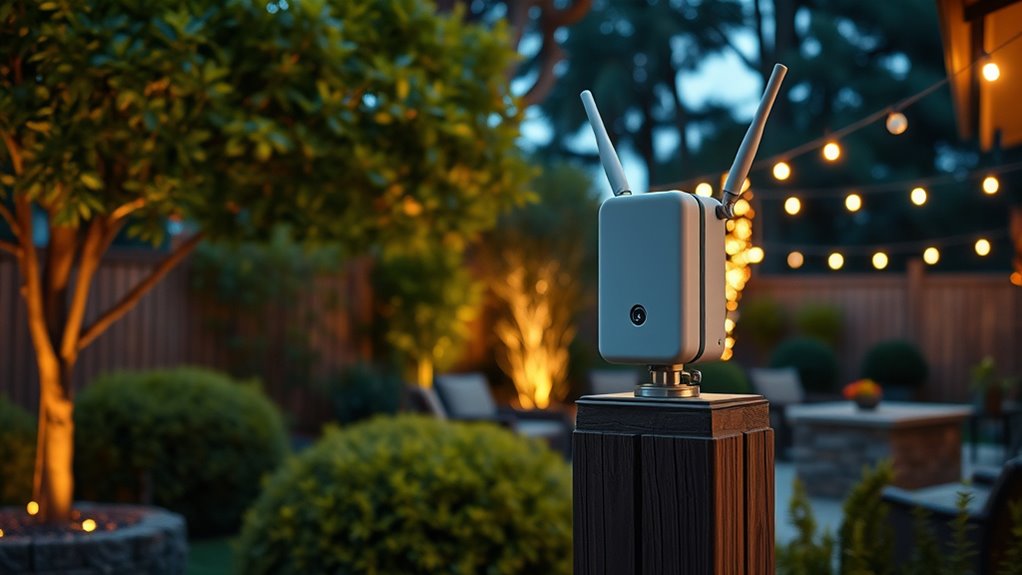
Installing outdoor Wi-Fi access points is a practical way to extend your network coverage beyond the confines of your home. Picture mounting a weatherproof device on a sturdy pole or under your eaves, guaranteeing it’s protected from the elements. To set up, consider these steps:
- Choose a central, elevated location for better coverage.
- Ensure the access point has a secure wireless security setup to protect your network.
- Connect it to a reliable power supply, either via PoE (Power over Ethernet) or outdoor-rated power adapters.
- Mount the device securely, avoiding obstructions like thick foliage or walls that could weaken signals.
- Proper sizing and load‑planning help you select the right equipment for consistent performance to prevent outages.
- Using professional installation techniques can optimize signal strength and reliability, especially in challenging environments. Additionally, selecting equipment with robust weatherproofing ensures durability over time. Being aware of network capacity needs helps prevent congestion and maintain optimal performance. Considering signal interference sources in your planning can also significantly improve connection stability outdoors.
Optimizing Your Network Settings for Better Outdoor Performance
To get the most out of your outdoor Wi-Fi, you need to fine-tune your network settings for ideal performance. Start by securing your network with strong Wi-Fi security, like WPA3 encryption, to prevent unauthorized access. Adjust your router’s channels and frequency bands to minimize congestion and interference. Enable Quality of Service (QoS) settings to prioritize outdoor devices, ensuring smooth streaming and browsing. Manage bandwidth effectively by limiting background applications and device usage during outdoor activities. Regularly update your firmware to enhance stability and security. Additionally, understanding your network configuration can help identify and resolve connectivity issues more efficiently. These adjustments help maximize signal strength, reduce lag, and keep your network secure. Properly optimizing your network settings guarantees reliable outdoor connectivity, so you can enjoy your backyard without interruptions.
Reducing Interference and Enhancing Signal Quality
Interference from neighboring networks and electronic devices can substantially weaken your Wi-Fi signal, causing slow speeds and dropped connections. To combat this, identify common interference sources like cordless phones, microwaves, baby monitors, and neighboring Wi-Fi networks. These sources contribute to signal degradation, reducing your outdoor coverage. To improve signal quality, take these steps:
- Switch your router to a less congested channel to avoid overlapping with nearby networks.
- Place your router away from interference sources such as cordless phones and microwave ovens.
- Use dual-band routers to operate on less crowded 5 GHz frequencies.
- Elevate your router, positioning it higher to minimize obstacles and maximize signal clarity.
Addressing interference sources will help ensure your outdoor Wi-Fi remains strong and reliable.
Maintaining and Troubleshooting Your Outdoor Wi-Fi Network
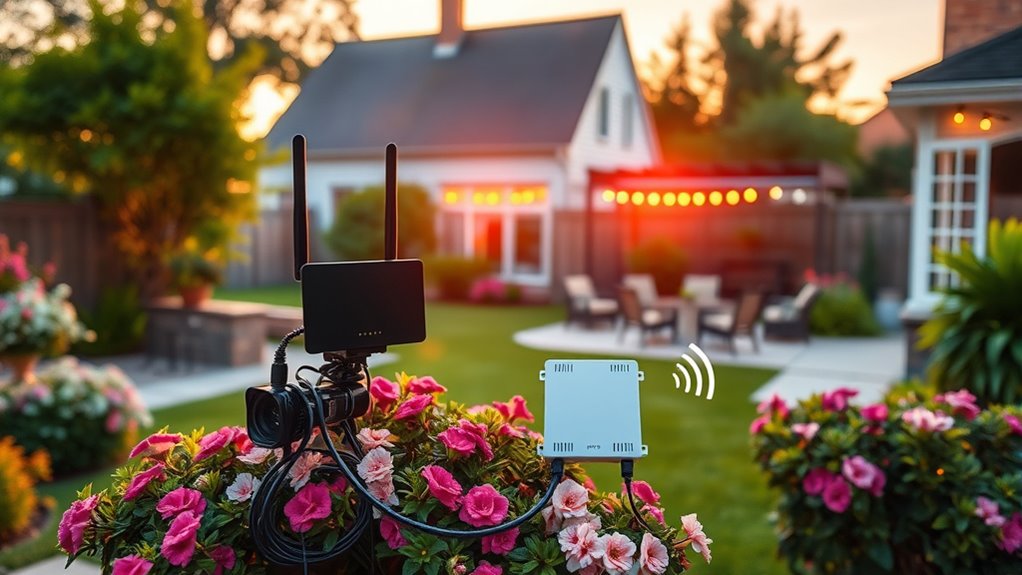
Once you’ve optimized your Wi-Fi setup to reduce interference, keeping your outdoor network running smoothly requires regular maintenance and quick troubleshooting. Start by checking your security protocols to ensure your network is protected from unauthorized access. Use strong passwords and enable WPA3 encryption if available. Regular firmware updates are essential; they fix bugs, improve performance, and patch security vulnerabilities. Keep your router’s firmware current by visiting the manufacturer’s website or using the device’s admin panel. If you experience connectivity issues, restart your router and check for signal obstructions. Maintain a documented troubleshooting process to identify recurring problems. Monitoring device connections and signal strength also helps spot issues early, guaranteeing your outdoor Wi-Fi remains reliable and secure for all your backyard needs.
Frequently Asked Questions
Can Weather Conditions Affect Outdoor Wi-Fi Signal Strength?
Weather impact can definitely affect your outdoor Wi-Fi signal strength. Rain, snow, and fog can cause signal degradation by absorbing or scattering the Wi-Fi signals, leading to weaker connections. Wind and storms might also damage your equipment or cause interference, further reducing signal quality. To minimize these effects, consider weatherproofing your equipment and positioning your router or extender in a sheltered spot.
How Can I Secure My Outdoor Wi-Fi Network From Unauthorized Access?
You might find it surprising, but securing your outdoor Wi-Fi starts with strong encryption protocols and smart password management. Use WPA3 encryption for the best security, and create a complex, unique password that’s hard to guess. Regularly update your passwords and avoid sharing them. Enable network hiding features and set up a guest network. These steps help prevent unauthorized access and keep your outdoor connection safe from intruders.
What Is the Average Range of Outdoor Wi-Fi Access Points?
Outdoor Wi-Fi access points typically offer a signal range of 150 to 300 feet indoors, but this varies based on obstacles and interference. In open areas, their coverage area can extend up to 500 feet or more. To maximize your signal range, position your access point high and clear of obstructions. Keep in mind, the actual coverage area depends on your environment, so testing your setup helps guarantee reliable outdoor Wi-Fi.
Do I Need Special Equipment for Outdoor Wi-Fi Installation?
Yes, you need special equipment for outdoor Wi-Fi installation. You should get a weatherproof router to withstand the elements and an outdoor antenna to boost signal range. These tools are designed to handle weather conditions and extend your Wi-Fi coverage outside. Installing a weatherproof router and outdoor antenna guarantees reliable connectivity in your backyard, so you can enjoy a strong, stable signal without interruptions.
How Often Should I Update My Outdoor Wi-Fi Hardware or Firmware?
Think of your outdoor Wi-Fi as a garden needing regular tending. You should update your firmware and perform hardware maintenance at least once every six to twelve months. This keeps your connection secure, efficient, and resilient against new threats. Regular updates act like nourishing water, ensuring your signal stays strong and reliable outside. Don’t wait until issues arise—proactively refresh your equipment to enjoy seamless outdoor internet.
Conclusion
By thoughtfully expanding your Wi-Fi setup, you can enjoy seamless outdoor connectivity without missing a beat. With a few strategic adjustments and the right equipment, your backyard can become an extension of your digital world. Just remember, a little patience and fine-tuning go a long way. Before long, you’ll find your outdoor space effortlessly connected, making every moment outside even more enjoyable. Your perfect outdoor Wi-Fi experience is closer than you think.