To keep your gadgets running during a power outage, gather essential devices like portable solar chargers, power banks, and car adapters. Use solar panels or vehicle outlets to recharge your devices without grid power.conserve battery by lowering screen brightness and disabling non-essentials. Set up a backup station with a properly maintained power bank and solar panel system. Follow safety tips when using generators or surge protectors. For more tips on staying connected, there’s plenty you can do to prepare effectively.
Key Takeaways
- Stock portable solar chargers and power banks to quickly recharge devices during outages.
- Use car adapters to maintain device power through vehicle outlets when grid power is unavailable.
- Conserve battery life by lowering screen brightness and disabling unnecessary features to prolong device operation.
- Set up a backup charging station with solar panels and a fully charged battery bank for reliable power.
- Follow safety guidelines when using generators and surge protectors to prevent accidents and protect electronics.
Top picks for "power outage prep"
Open Amazon search results for this keyword.
As an affiliate, we earn on qualifying purchases.
Essential Devices to Have on Hand

During a power outage, having the right devices on hand can make a significant difference in staying safe and comfortable. Portable solar chargers are essential because they harness sunlight to keep your devices powered without relying on grid electricity. Keep one in your emergency kit to recharge smartphones or small gadgets during the day. Car adapters are equally valuable, allowing you to plug devices into your vehicle’s power outlet. This way, you can charge phones, tablets, or radios while on the move or parked. Combining solar chargers and car adapters ensures you stay connected, informed, and safe, even when the power’s out. Additionally, understanding the importance of power output and capacity can help you choose the most effective charging devices to meet your needs. Preparing these devices ahead of time so you’re ready to maintain essential communication and access to information during emergencies enhances your readiness and resilience in power outage situations. A good understanding of energy efficiency can help you select devices that maximize usage while conserving power. Being aware of charging speed can also assist in selecting devices that quickly replenish your gadgets when needed. Considering device compatibility ensures that your chargers work seamlessly with a variety of gadgets, making your preparations more versatile.
Portable Power Sources for Emergency Use
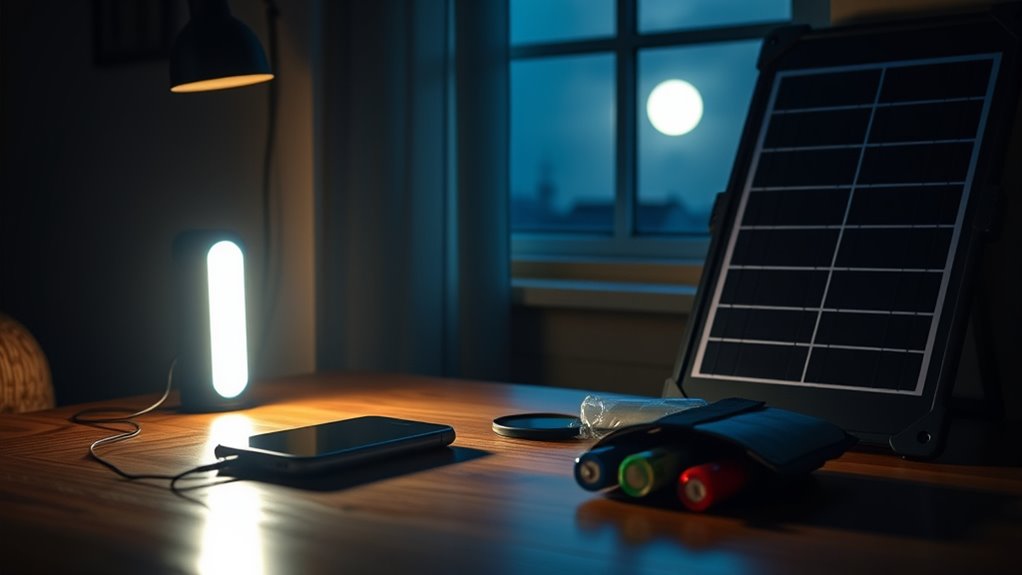
Having a reliable portable power source can make all the difference when the power’s out and your devices need charging. Power banks are a convenient option, allowing you to quickly recharge smartphones, tablets, and small gadgets. Look for high-capacity models to keep your devices running longer. For a more sustainable solution, consider portable solar panels that can harness sunlight to generate power. These panels work well in outdoor settings or if you’re away from electrical outlets for extended periods. Combining solar panels with power banks provides a versatile, eco-friendly way to stay connected during emergencies. Battery technologies are continually evolving to offer longer-lasting and more efficient energy storage options. Keep a few fully charged power banks on hand and, if possible, set up portable solar panels to recharge them, ensuring you always have a backup power source when you need it most. Utilizing smart charging features can also help optimize power usage and prolong battery life.
Tips for Conserving Battery Life
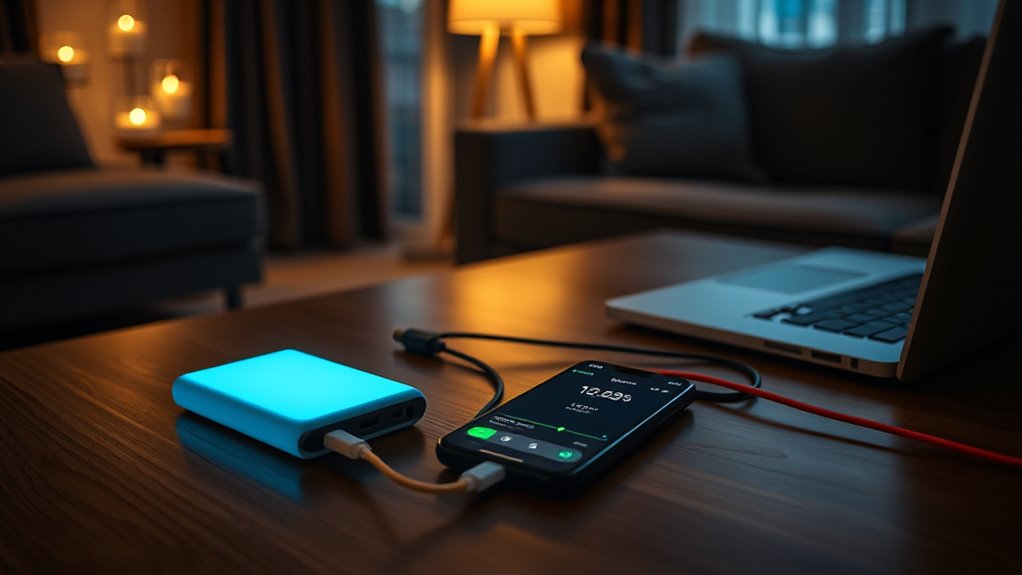
To make your batteries last longer during a power outage, you should actively manage your device settings and usage habits. Lower screen brightness, disable unnecessary notifications, and turn off Wi-Fi and Bluetooth when not in use. Use power-saving modes to extend battery life. Consider solar charging options to replenish batteries without grid power, especially for compatible devices. Regular power bank maintenance is vital; keep your power banks charged and stored in a cool, dry place. Avoid overusing your gadgets and limit background app activity to conserve energy. Additionally, understanding Free Floating concepts can help you optimize your outdoor gear and power sources for extended outages. Being aware of energy efficiency techniques can further enhance your device longevity. Implementing energy conservation strategies can significantly reduce power consumption and prolong device operation. Adopting smart power management techniques can help you prioritize essential functions and reduce unnecessary energy drain. These small adjustments can considerably extend your device’s operational time, ensuring you stay connected longer during an outage. Proper management helps you maximize your existing power sources and keeps essential devices running when you need them most. Exploring power management best practices can also provide additional ways to conserve energy and improve device performance during extended outages.
Setting Up a Backup Charging Station
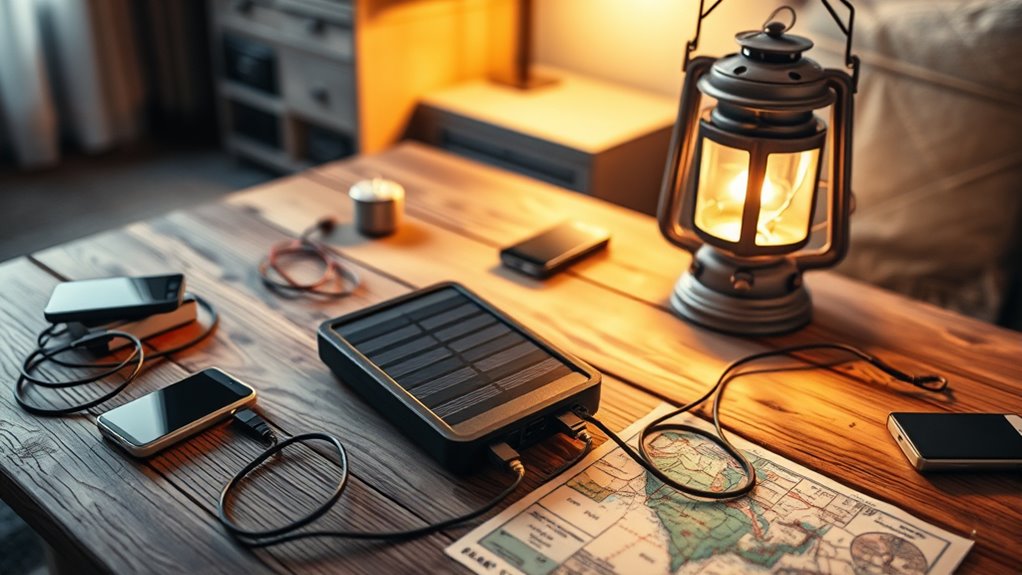
Setting up a backup charging station guarantees you stay connected when the main power source fails. Start with a reliable battery bank to store energy for when electricity is out. Pair it with a solar panel to keep the battery charged using sunlight, making your station truly independent. Position the solar panel in a sunny spot and connect it to the battery bank with the right cables and inverter. This setup allows you to charge your devices via USB or AC outlets without relying on grid power. Keep the battery bank fully charged during normal times, so you’re prepared for outages. Regularly check connections and ensure your solar panel is clean and unobstructed. Incorporating secure communication solutions can further protect your device data during outages. Additionally, choosing smart energy management devices can optimize your system’s efficiency and extend your backup power. To maximize your system’s lifespan, consider proper maintenance practices like inspecting cables and cleaning panels regularly. Properly battery management helps in maintaining the health and longevity of your battery bank. Utilizing high-efficiency solar panels can enhance energy collection even during less sunny days. With this system, you’ll maintain power for essential gadgets, even during prolonged outages.
Safety Guidelines for Using Power Equipment
Using power equipment safely is essential, especially when relying on backup systems during outages. Always follow generator safety protocols: operate your generator outdoors, away from windows and vents, to prevent carbon monoxide poisoning. Never overload your generator; check its wattage limits and avoid plugging in too many devices. Use surge protectors to shield sensitive gadgets from power spikes when connecting to backup power sources. Inspect cords and connections for damage before use, and keep them dry and clear of obstacles. Turn off equipment before plugging or unplugging to prevent electrical surges. Keep children and pets away from generators and cords. Regularly review safety guidelines to minimize risks, ensuring your power equipment keeps your gadgets running safely and efficiently during outages. Incorporating renewable energy solutions can enhance your preparedness and reduce reliance on fuel-powered generators. Additionally, understanding power management techniques can help optimize energy use and extend backup power duration during extended outages. Staying informed about energy storage options can further improve your ability to maintain essential functions when the grid is down.
Frequently Asked Questions
How Long Can My Gadgets Typically Run on a Portable Power Bank?
Your gadgets can typically run from a portable power bank for 3 to 24 hours, depending on the battery capacity and the device’s power consumption. Larger capacity banks, like 20,000mAh or more, provide longer backup, while smaller ones last less. Charging speed varies; fast-charging power banks refill quickly, ensuring you’re ready when needed. Always check your device’s power needs to estimate how long your gadgets will stay powered during an outage.
Which Gadgets Are Most Critical to Keep Charged During an Outage?
You’d think your phone’s just for fun, but during a power outage, it’s your lifeline. Keep emergency communication devices like your cell phone charged, along with essential medical devices. These gadgets guarantee you can call for help and stay safe. Prioritize charging your smartphone, portable charger, and medical gadgets, so you’re prepared to handle emergencies. After all, when the lights go out, these are the real essentials.
Can Solar Chargers Fully Replace Traditional Power Banks?
Solar chargers can’t fully replace traditional power banks yet because of differences in solar panel efficiency and power bank capacity. While solar chargers are eco-friendly and great for outdoor use, they often require more time to recharge your gadgets fully. High-capacity power banks provide instant, reliable power, especially during outages. So, it’s best to use solar chargers as a supplementary option and keep a good power bank handy for immediate needs.
What Are the Signs of a Faulty or Unsafe Power Backup Device?
Ever wondered if your backup device is safe? Signs include frequent power surges or overheating issues, which indicate problems. If your device feels unusually hot or sparks occur, it’s a red flag. These issues can compromise safety and damage your gadgets. Don’t ignore these signs—regularly inspect and replace faulty units to prevent potential hazards and guarantee reliable backup power when you need it most.
How Do Temperature Changes Affect the Performance of Backup Power Sources?
Temperature changes can substantially impact your backup power sources by affecting temperature stability and battery efficiency. When it gets too hot or cold, your batteries may not perform effectively, leading to reduced runtime or even failure. To keep your gadgets running during outages, store backup devices in temperature-controlled environments, avoid extreme temperatures, and guarantee proper ventilation. Maintaining stable temperatures helps preserve battery efficiency and ensures reliable power when you need it most.
Conclusion
Did you know that over 80% of people feel unprepared during power outages? By stocking essential devices, using portable power sources, and conserving battery life, you can stay connected and safe. Setting up a backup charging station and following safety guidelines make all the difference. Don’t wait until the lights go out—prepare now so you’ll be ready to keep your gadgets running when it matters most. Stay safe and powered up!